

 Engagement Rings
 Anniversary Rings
 Solitaire Rings
 Halo Rings
 Toi Moi Rings
 Three Stone Rings
 Nature Inspired Rings
 Rose Cut Rings
 Fancy Color Rings
 Antique Cut Rings
 Wedding Rings
 Wedding Band Rings
 Exclusive Lab Grown Diamond Rings
 All Lab Grown Diamond Ring
 Engagement Rings
 Three Stone Rings
 Fancy Color Rings
 Antique Cut Rings
 Daily Wear Rings
 Wedding Band Rings
 Exclusive Moissanite Rings
 Earrings
 Bracelet
 Pendant
 Necklace
 Men's Ring
 Bridal Sets
 Rings
 Earrings
 Tennis chain
 Cuban Chains
 Custom Pendant
 Custom Ring
 Custom Teeth Grillz
 Round
 Oval
 Cushion
 Marquise
 Pear
 Emerald
 Heart
 Princess
 Rose Cut
 Radiant
 Antique Cut
 Brooch
 Cufflink
 Keychain
 Unique Products
 +91-9265051773
 Virtual Appointment
 log in





Short answer: A heart shape is a modified brilliant cut, so it can sparkle beautifully, but it is one of the hardest shapes to cut well. Look for two even lobes, a clear cleft at the top, a sharp point and a length-to-width ratio close to 1:1. Hearts also read best at a decent size, because small hearts can look like a round or pear stone from a distance.
Few shapes say "love" as clearly as a heart. A heart shaped engagement ring is personal, a little daring and instantly recognizable. It is also a shape where small details make a big difference: the balance of the lobes, the depth of the cleft and the setting that protects the point. This guide walks you through what to look for, how to choose the size, color and setting, and how to decide between a lab grown diamond and moissanite.
Why Choose a Heart Shaped Ring?
A heart shape turns a classic symbol into a piece you wear every day. It suits people who want their ring to feel romantic and different from the round and oval stones they see most often.
- Meaning: the shape speaks for itself, which makes it a natural choice for an engagement or a milestone anniversary.
- Sparkle: as a modified brilliant, a well-cut heart has plenty of brilliance and fire.
- Individuality: hearts are less common than rounds and ovals, so your ring stands out.
- Versatility: a heart can look playful in a halo, modern in a bezel or vintage-inspired with milgrain details.
The trade-off is that a heart is less classic than a round. If you love it, that is exactly the point; if you want a ring that blends in, a round or oval may suit you better.
What Makes a Good Heart Shape
Symmetry is everything. Both halves should be the same size and shape, the cleft between the lobes should be distinct, and the point at the bottom should be crisp rather than rounded. Lobes that look flat or shoulders that bulge make the heart look lopsided, even when the stone is technically well graded.
| Length-to-width ratio | How the heart looks |
|---|---|
| Below 0.90 | Wide and squat |
| 0.90 – 1.10 | Classic, balanced heart (most popular) |
| Above 1.10 | Long and narrow |
A quick checklist for the outline
- Even lobes: fold the heart in your mind along its center line; the two halves should match.
- Clear cleft: the dip between the lobes should be visible but not so deep that it looks like two stones.
- Rounded lobes: the top curves should be full, not flat or squared off.
- Smooth wings: the sides running down to the point should be gently curved, without bulges.
- Sharp point: a crisp tip gives the heart its definition.
Ratio is partly a matter of taste. A slightly wider heart looks soft and sweet, while a slightly longer one looks more elegant on the finger. Within the classic range, choose the outline you find most beautiful.
How a Heart Shape Is Cut
A heart is cut from a rough crystal with a brilliant facet pattern, similar to a pear, with a cleft cut into the top. That cleft is what makes the shape hard to cut: the cutter must shape both lobes evenly while keeping the stone bright.
Like ovals and pears, hearts can show a darker area across the center, often called a bow tie. A strong bow tie makes the stone look dull, while a faint one is normal. Viewing a stone on video, or in clear photos taken from above, is the best way to judge it.
Cut grades are not always given for fancy shapes such as hearts, so your own eyes matter. Look at symmetry, polish and how evenly the light spreads across the stone.
Depth and spread
Two hearts of the same carat weight can look quite different in size. A stone cut too deep hides weight underneath, so it looks smaller face up and can appear darker. A stone cut too shallow looks large but may leak light and look glassy. Compare the length and width in millimeters, not only the carat weight, and favor a stone that looks bright across its whole surface.
Tip: When comparing heart shaped stones online, look at them face up at the same zoom level. Differences in lobe shape and symmetry are much easier to see side by side than one at a time.
Size, Color and Setting
Because the shape is complex, many jewelers suggest choosing a heart of around one carat or more so the outline is easy to see on the hand. Color can gather in the point and lobes, so if you want a very white look, choose a slightly higher color grade than you would for a round. The point is the most fragile spot, so a V-shaped prong or a bezel protecting it is a smart choice. Three- or five-prong settings are both common, and a halo makes a smaller heart look larger and adds sparkle.
Size
Below about one carat, the cleft and lobes become harder to see at a glance, and the stone can read as round or pear from a distance. If you prefer a smaller stone, a halo or a bezel with a clear outline helps define the shape.
Color
Fancy shapes with points and corners tend to show tint more easily than rounds. In white gold, a near-colorless or colorless grade keeps the heart bright. In yellow or rose gold, a slightly warmer grade can look lovely and blends with the metal.
Clarity
Brilliant faceting hides small inclusions well. An eye-clean stone is the practical goal. Pay attention to inclusions near the point, since they can weaken the area most exposed to knocks.
Setting Styles for Heart Shaped Rings
| Setting | Look | Best for |
|---|---|---|
| Three-prong solitaire | Open, minimal, shows the outline clearly | Classic look with maximum light |
| Five-prong solitaire | Extra prongs on the lobes | More security for daily wear |
| Bezel | Metal rim around the whole stone | Active lifestyles, modern style |
| Halo | Small stones trace the heart | Smaller hearts, extra sparkle |
| Three-stone or side stones | Heart framed by smaller stones | A fuller, symbolic design |
| Toi et moi | A heart paired with a second shape | A modern, two-stone story |
Whatever the style, protect the point. A V-prong or a bezel at the tip shields it from knocks, while prongs at the lobes keep the stone secure. Browse our lab grown halo rings or our toi et moi rings for ideas you can adapt to a heart.
Which way should the heart point?
Most heart rings are set with the point facing toward the fingertip, so the heart looks upright to the wearer. Some people prefer the point toward the wrist, so the heart looks upright to others. Neither is wrong; choose the view you like best and tell us when you order.
Choosing a Metal
Metal color changes the mood of a heart ring. White gold gives a crisp, modern frame and makes a colorless stone look its whitest. Yellow gold feels warm and classic. Rose gold is a natural partner for a heart and adds a soft, romantic glow.
Ivevar offers gold in 10K, 14K and 18K. 14K is a popular everyday choice because it is durable and holds prongs well, while 18K has a richer color. A white gold head on a rose or yellow gold band keeps the stone bright while giving you a warm band.
Design details that suit a heart
- Milgrain edges: tiny beaded borders add a vintage, romantic finish.
- Hidden halo: a row of small stones under the heart adds sparkle seen from the side.
- Pavé band: a line of small stones along the band adds shimmer without competing with the shape.
- Engraving: a date or a few words inside the band makes the ring even more personal.
How a Heart Looks on Different Hands
A heart is wider at the top than a pear or oval, so it covers more of the finger's width. That affects how it sits on different hands:
- Slim fingers: a moderate heart on a fine band looks delicate and sweet. Keep the stone from covering the finger edge to edge so the lobes stay visible.
- Wider fingers: a larger heart or a heart halo looks balanced and confident, and a slightly wider band suits the scale.
- Short fingers: a heart with a ratio toward the longer end of the classic range adds a little length.
- Active hands: a bezel or a low five-prong setting keeps the point safe without changing the look much.
Measure across the base of your ring finger and compare that width with the stone's measurements. It is the simplest way to picture how much of your finger the heart will cover.
Shop the styles in this guide


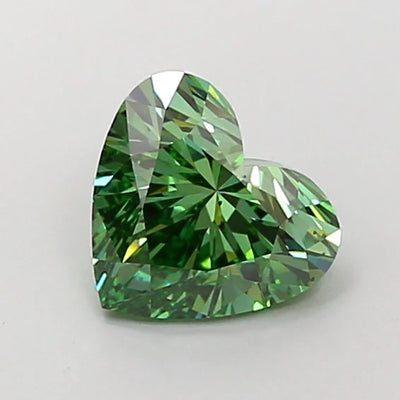


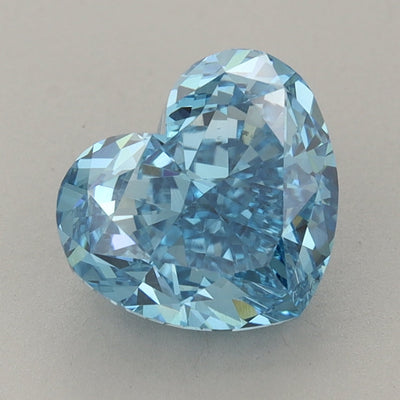


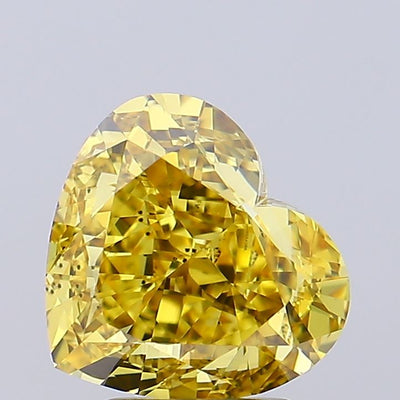
Lab Grown Diamond or Moissanite?
Both are durable enough for daily wear. A lab grown diamond is chemically the same as a mined diamond; IGI grades lab stones on the full 4Cs, while GIA has given only a Premium or Standard descriptor since October 1, 2025. Moissanite is a different gem with more colorful fire and a lower price. It is not a diamond, and at Ivevar we always label it as moissanite.
| Feature | Lab grown diamond | Moissanite |
|---|---|---|
| What it is | A real diamond, grown by CVD or HPHT | Silicon carbide, a separate gem |
| Hardness (Mohs) | 10 | 9.25 |
| Refractive index | About 2.42 | About 2.65 |
| Look | Classic brilliance and white sparkle | Stronger rainbow fire |
| Relative cost | Well below a similar mined diamond | Lower again |
Because a heart reads best at a good size, many couples choose lab grown or moissanite to get a larger, clearly defined heart within their budget. Lab grown diamonds are chemically, physically and optically the same as mined diamonds, and many of ours come with IGI certificates. See our lab diamond heart and moissanite heart collections to compare.
Heart vs Pear vs Round
Hearts are often compared with pears and rounds. Here is how they differ on the hand:
- Heart: romantic and distinctive, with a wide top and a single point. Reads best at a decent size and needs careful cutting.
- Pear: a teardrop with one rounded end and one point. It lengthens the finger and is easier to find well cut, but lacks the heart's cleft.
- Round: the classic choice with maximum sparkle and no points to protect. Timeless, but less personal in shape.
Hearts also differ in how they wear. A round has no points, so it is the easiest shape to live with. A pear has one point, like a heart, and needs the same protection there. A heart adds the cleft at the top, which collects a little more dirt and benefits from regular cleaning. None of this makes a heart impractical; it simply means choosing a protective setting and caring for the ring well.
If you are torn, a toi et moi ring that pairs a heart with a pear or round lets you have both.
Pairing a Wedding Band
A heart's wide lobes and pointed tip can leave a gap next to a straight band. That is fine if you like a clean, separate look. If you prefer the rings to sit together, consider these options:
- Curved or contour band: follows the outline of the heart and sits close to it.
- Notched band: has a small dip that makes room for the point.
- Low setting: if the heart sits low enough, a straight band can slide underneath it.
- Matching details: a pavé band echoes a halo, while a plain band keeps the focus on the heart.
Choose the band at the same time as the engagement ring, or tell us you plan to add one later, so the setting height works for both.
Wearing and Caring for a Heart Ring
A heart's point and cleft need a little extra attention. Clean the ring every week or two with warm water, mild soap and a soft brush, working gently into the cleft where lotion collects. Take the ring off for sport, gardening and heavy work, since a hard knock to the point is the most common cause of damage.
Have a jeweler check the prongs once or twice a year, especially the one protecting the point. Store the ring on its own in a soft pouch so it does not scratch, or get scratched by, other jewelry.
Buying a Heart Shaped Ring Online
- Check the outline: look at clear face-up images or video for even lobes and a crisp point.
- Read the measurements: compare length and width to see the ratio and how large the stone will look.
- Review the certificate: for lab grown diamonds, an IGI report lists the 4Cs and measurements.
- Confirm the setting: make sure the point is protected and choose which way the heart should face.
- Get your size right: measure carefully, because rings are made to order.
Ivevar delivers worldwide with free shipping and 30-day easy returns. We also make custom jewelry and offer virtual appointments, so you can see heart shaped stones on camera and design a ring around the one you love.
Shop at Ivevar


Find your heart in our lab diamond heart collection, explore the extra fire of our moissanite heart designs, or browse all our lab grown engagement rings.
Frequently Asked Questions
Are heart shaped engagement rings still popular?
They are a smaller niche than round or oval, which is part of their appeal: a heart feels personal and stands out.
What size heart shape should I choose?
Around one carat or larger lets the shape read clearly. Below that, a halo helps define the outline.
Which setting protects a heart shaped stone best?
A V-prong or bezel at the point protects its most fragile area, while prongs at the lobes keep the stone secure.
What is the best ratio for a heart shape?
Between about 0.90 and 1.10 gives the classic, balanced heart most people picture. Slightly wider looks softer; slightly longer looks more elegant.
Do heart shaped stones show color?
They can show a little more tint in the lobes and point than a round. Choose a higher color grade for white gold, or a warmer metal if you prefer a softer grade.
Should the point face my fingertip or my wrist?
Most people set the point toward the fingertip so the heart looks upright to them. It is a personal choice, so tell us which you prefer.
Is moissanite a diamond?
No. Moissanite is a separate gem made of silicon carbide. It is very hard and sparkly, and we always label it as moissanite.
Can I add a heart to a custom design?
Yes. We make custom jewelry, so you can choose a heart center stone with the setting, metal and band style you want.
Does a heart shaped ring need a special wedding band?
Not always. A straight band works with a low setting, while a curved or notched band sits closer to the heart if you want the rings to touch.
Is a heart a good choice for an anniversary ring?
Yes. Its meaning makes it a popular choice for anniversaries and promise rings as well as engagements.


