

 Engagement Rings
 Anniversary Rings
 Solitaire Rings
 Halo Rings
 Toi Moi Rings
 Three Stone Rings
 Nature Inspired Rings
 Rose Cut Rings
 Fancy Color Rings
 Antique Cut Rings
 Wedding Rings
 Wedding Band Rings
 Exclusive Lab Grown Diamond Rings
 All Lab Grown Diamond Ring
 Engagement Rings
 Three Stone Rings
 Fancy Color Rings
 Antique Cut Rings
 Daily Wear Rings
 Wedding Band Rings
 Exclusive Moissanite Rings
 Earrings
 Bracelet
 Pendant
 Necklace
 Men's Ring
 Bridal Sets
 Rings
 Earrings
 Tennis chain
 Cuban Chains
 Custom Pendant
 Custom Ring
 Custom Teeth Grillz
 Round
 Oval
 Cushion
 Marquise
 Pear
 Emerald
 Heart
 Princess
 Rose Cut
 Radiant
 Antique Cut
 Brooch
 Cufflink
 Keychain
 Unique Products
 +91-9265051773
 Virtual Appointment
 log in




Short answer: choose an oval with a length-to-width ratio of about 1.35 to 1.50, check the photos or video for a strong dark bow-tie shadow, aim for G color or better in white gold and eye-clean VS clarity, and pick a setting with a pave band or hidden halo for extra sparkle. Ovals look larger than rounds of the same carat weight and usually cost less per carat.
Oval engagement rings have become one of the most requested styles in the world. An oval diamond combines the sparkle of a round brilliant with a longer, more elegant outline that flatters the hand.
Buying an oval is a little different from buying a round, though. Two ovals with identical grades on paper can look quite different in real life because of their outline and the way they handle light. This guide explains exactly what to look for, from ratio and bow-tie to color, clarity, setting and metal, so you can choose an oval with confidence.
Why Choose an Oval?
- Looks bigger: an oval has a larger top surface than a round diamond of the same carat weight.
- Flatters the finger: the long shape makes fingers look slimmer.
- Brilliant sparkle: ovals are cut with brilliant facets, similar to a round diamond.
- Versatile: suits solitaire, halo, three stone and vintage styles.
- No sharp corners: the rounded outline has no points to chip, so it is practical for daily wear.
- Good value: ovals usually cost less per carat than rounds of similar quality.
The oval's balance of brilliance and length is the reason it works for so many people. It reads as a classic diamond from across a room, yet up close its outline feels softer and more graceful than a round. It also sits comfortably on fingers of almost any size, because you can adjust the ratio to suit the hand.
An oval is also a quietly distinctive choice. It is familiar enough to feel classic, yet different enough from the traditional round to feel personal.
Oval vs Other Popular Shapes
If you are still deciding on a shape, this comparison shows where the oval sits among the most popular choices.
| Shape | Look on the hand | Sparkle | Things to watch |
|---|---|---|---|
| Oval | Long, elegant, looks larger | High (brilliant facets) | Bow-tie, ratio |
| Round | Classic, symmetrical | Highest | Costs more per carat |
| Pear | Teardrop, elongating | High | Protect the point; bow-tie |
| Cushion | Soft square, vintage | High, chunkier flashes | Can look smaller face-up |
| Emerald | Long, sleek, architectural | Calm "hall of mirrors" | Shows inclusions more easily |
Choose an oval if you want the brilliance of a round with more length and finger coverage, and you prefer soft curves to points or corners. If you love the oval but want a little more drama, a pear gives a similar elongated look with one pointed end. If you want something calmer and more geometric, an emerald cut trades sparkle for long, clean flashes of light.
The Best Length-to-Width Ratio
The ratio describes how long the oval is compared with its width. Most buyers prefer between 1.35 and 1.50. Lower ratios look rounder and softer; higher ratios look longer and more dramatic. There is no wrong answer, only personal taste.
| Ratio | Look |
|---|---|
| 1.25 to 1.35 | Fuller, softer oval |
| 1.35 to 1.50 | Classic, most popular |
| 1.50 to 1.65 | Long, slim and dramatic |
To work out the ratio, divide the length by the width. A stone measuring 9.0 mm by 6.5 mm has a ratio of about 1.38. You will find both measurements on a grading report.
Matching the ratio to the hand
- Slim or long fingers: a classic 1.35 to 1.45 oval looks balanced and graceful.
- Shorter or wider fingers: a longer oval around 1.45 to 1.55 adds length and makes fingers look slimmer.
- Want a softer, vintage feel: a fuller oval around 1.30 pairs beautifully with halos and milgrain details.
- Love a bold, modern look: a slim oval above 1.50 makes a striking solitaire or east-west setting.
 Shown: Pave Setting Oval Cut Hidden Halo Lab Diamond Bridal Set
What Is the Bow-Tie Effect?
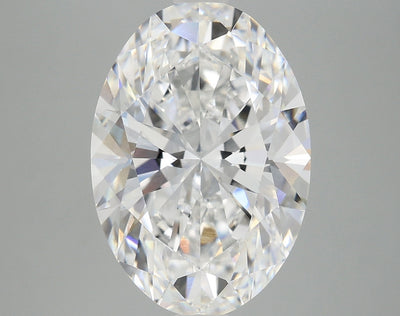
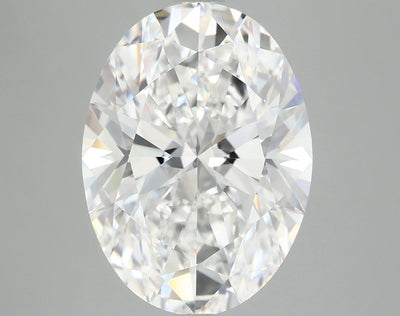
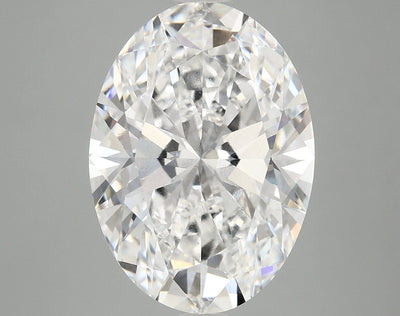
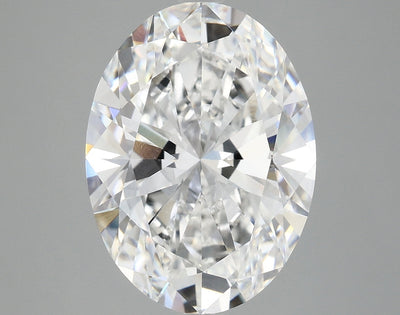
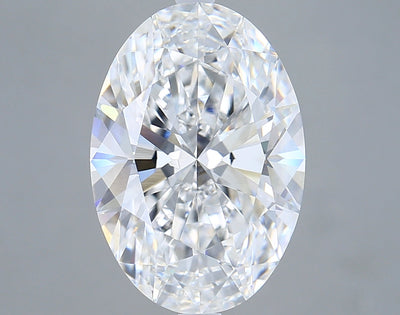
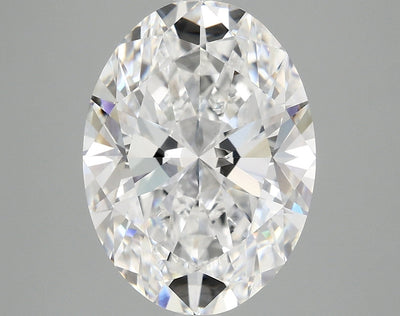
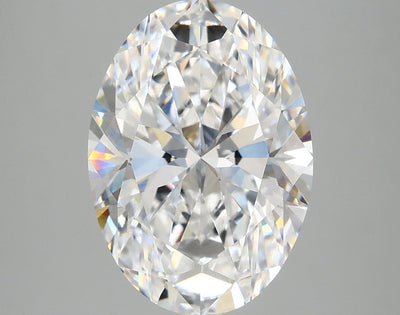
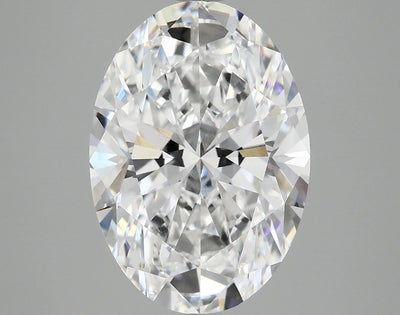
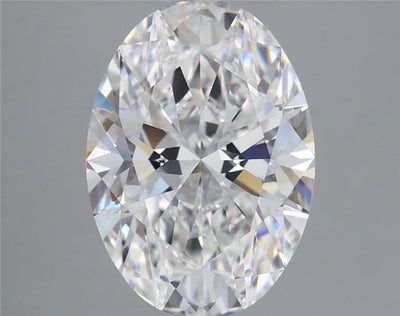
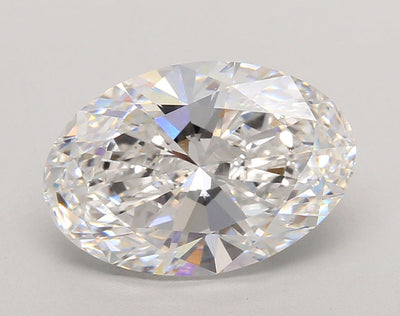
Many ovals show a darker area across the center shaped like a bow tie. A light bow-tie is normal and adds contrast, but a strong, dark one takes away sparkle. It does not appear on a grading report, so look at real photos or a video of the stone before you buy.
The bow-tie happens because of the oval's elongated shape. Light entering the center of the stone along its width does not always reflect straight back to your eye, so a band of the stone can look darker. Careful cutting reduces it, but almost every oval has some.
- Look at video, not just a still photo: as the stone moves, a mild bow-tie flickers between light and dark, while a strong one stays dark.
- Check under different lighting: a bow-tie looks stronger under a single overhead light and softer in diffused daylight.
- Compare stones side by side: differences are much easier to see when two ovals are next to each other.
The ratio also plays a part. Very long, slim ovals and very shallow ovals tend to show a stronger bow-tie, while well-proportioned stones in the classic range usually keep it mild. This is one more reason the 1.35 to 1.50 range is so popular.
Tip: Ask to see the stone in a virtual appointment. Watching an oval tilt slowly on camera tells you more about its bow-tie and sparkle than any number on the certificate.
Choosing Color, Clarity and Cut for an Oval
Color
Ovals can show a little warmth at their tips because the stone is shallower there and light travels a shorter path. In a white gold setting, D to G looks bright white. H can still look lovely, especially in yellow or rose gold, where the warm metal makes a faint tint hard to notice.
Clarity
Brilliant facets are good at hiding small inclusions, so you do not need the highest clarity grade. VS1 or VS2 stones are usually eye-clean in an oval. Pay attention to where any inclusion sits: one near the center of the table is more visible than one near the edge, where prongs can also cover it.
Cut and outline
Most grading reports do not give fancy shapes such as ovals an overall cut grade the way they do for rounds. Look instead at polish and symmetry (Excellent or Very Good), and judge the outline with your eyes. A good oval has evenly curved sides and ends, without flat "shoulders" near the tips or a lopsided outline.
Carat Weight and Face-Up Size
Because an oval spreads its weight across a longer outline, it shows more face-up area than a round of the same carat weight. That means you can often choose a slightly lighter oval and still get the size you want on the hand.
Carat weight is not the only measure, though. Two ovals of the same weight can look different in size if one is cut deeper than the other. A stone that is too deep hides weight underneath where you cannot see it, while one that is too shallow can look glassy. When comparing stones, check the length and width in millimetres, not just the carat number.
- Compare millimetres: length and width tell you how big the stone will look.
- Buy just under round weights: a 1.9 carat oval often costs less than a 2.0 carat and looks the same.
- Use the setting: a halo or a slim band makes any oval look larger.
Best Settings for Oval Diamonds
- Solitaire: clean and timeless, like our Classic Oval Solitaire.
- Hidden halo: a clean top view with sparkle on the side.
- Pave band: adds sparkle along the finger.
- Bridal set: an oval with a matching eternity band, like our Oval Bridal Ring Set.
- Halo: an oval halo makes the center look even larger and adds a soft, glamorous frame.
- Three stone: pear or tapered baguette side stones flatter an oval center.
- East-west: setting the oval horizontally across the finger gives a modern, unexpected look.
Think about how the setting will look from the side, too. A low setting is practical for daily life and lets a wedding band sit close, while a taller cathedral setting lifts the oval and lets more light in from the sides. Hidden halos and decorative galleries turn the side view into a feature.
Use four or six prongs, or a bezel, to protect the oval's edges. Four prongs placed at the diagonals show the most of the outline, while six prongs add security and keep the long sides held firmly. Browse our oval lab grown diamonds and lab grown diamond engagement rings.
Shop the styles in this guide






Choosing the Metal for an Oval Ring
- White gold: keeps a colorless oval looking icy and modern. Ideal for D to G stones.
- Yellow gold: gives a warm, classic look and softens any faint warmth at the tips of an H or near-colorless stone.
- Rose gold: romantic and flattering on many skin tones; suits vintage-style ovals with halos and milgrain.
- Mixed metals: a yellow or rose gold band with white gold prongs gives a warm band and a white-looking stone.
Ivevar handcrafts oval rings in 10K, 14K and 18K gold. 14K is the most popular balance of strength and color for everyday wear. 10K is the hardest and most scratch resistant, which suits very active wearers, while 18K has the richest color and is a little gentler on sensitive skin. White gold is usually finished with rhodium plating, which may need refreshing every few years to keep it bright.
Lab Grown Diamond or Moissanite Oval?
Both make beautiful oval engagement rings. The right choice depends on what matters most to you.
| Feature | Lab grown diamond | Moissanite |
|---|---|---|
| What it is | A real diamond, the same as mined | A different gemstone (silicon carbide) |
| Hardness (Mohs) | 10 | 9.25 |
| Sparkle | Classic white brilliance (RI about 2.42) | More colorful flashes (RI about 2.65) |
| Grading | 4Cs, IGI or GIA reports | Not graded like diamonds |
| Price | Higher | Lower |
Lab grown diamonds are grown by the CVD or HPHT method and are chemically, physically and optically the same as mined diamonds. Moissanite is the best value if you want a large, very sparkly oval and do not need it to be a diamond. Compare both in our lab diamond oval and moissanite oval collections.
Your Oval Buying Checklist
- Set your budget and choose lab grown diamond or moissanite.
- Pick a ratio between about 1.35 and 1.50, or outside it if you love a fuller or slimmer look.
- Watch a video of the actual stone and check the bow-tie.
- Check the outline for even curves and no flat shoulders.
- Choose color to suit the metal: G or better in white gold; H can work in yellow or rose gold.
- Aim for eye-clean clarity, usually VS1 or VS2.
- Read the report: for a lab grown diamond, look for an IGI or GIA report with measurements, polish and symmetry.
- Pick a setting with secure prongs, then plan the wedding band to match.
Pairing a Wedding Band With an Oval
Ovals are easy to pair with wedding bands. A straight band sits neatly beside a low solitaire, while a curved or contoured band follows the outline of a halo or a taller head. An eternity band adds a continuous line of sparkle, which is why oval bridal sets are so popular. If you want the rings to sit flush, choose them together; see our lab grown wedding bands.
Caring for an Oval Engagement Ring
An oval is one of the easiest shapes to live with, but every ring needs a little care to keep its sparkle.
- Clean it regularly: soak the ring in warm water with a drop of mild dish soap, then brush gently under the stone with a soft toothbrush. The large table of an oval shows fingerprints and lotion easily, and a clean stone sparkles far more.
- Check the prongs: look at the prongs at the ends of the oval every few months. If one looks bent or catches on a cloth, have it checked by a jeweler.
- Take it off for hard work: remove the ring for the gym, gardening, heavy cleaning and swimming in chlorinated water.
- Store it on its own: keep it in a soft pouch or its own compartment so it does not scratch other jewelry or get scratched.
- Plan a yearly check-up: a jeweler can tighten prongs, check pave stones and polish the metal so the ring looks new.
Shop Oval Engagement Rings at Ivevar
Ivevar handcrafts oval engagement rings with lab grown diamonds and moissanite in 10K, 14K and 18K gold. Many of our lab grown diamonds come with IGI certificates, shipping is free worldwide and every ring comes with 30-day easy returns. Book a virtual appointment to see oval stones on camera, or ask our team for a custom design with your favorite ratio and setting.
Frequently Asked Questions
Is an oval diamond more expensive than a round?
Usually no. Oval diamonds often cost less per carat than rounds of similar quality, and they look larger.
What color grade is best for an oval?
Ovals can show a little warmth at the tips. D to G looks bright white in white gold; H can look lovely in yellow or rose gold.
What is the best ratio for an oval engagement ring?
Most people prefer 1.35 to 1.50. Choose lower for a fuller, softer oval and higher for a longer, slimmer look.
Can you avoid the bow-tie completely?
Almost every oval has some bow-tie. The goal is a light one that adds contrast rather than a dark band that dulls the stone. A video of the actual stone is the best way to judge it.
Are oval diamonds durable?
Yes. Ovals have no sharp points or corners, so they are less likely to chip than pear, marquise or princess shapes. Secure prongs or a bezel keep the edges protected.
Do oval diamonds have a cut grade?
Fancy shapes such as ovals usually do not get an overall cut grade on a report. Check polish and symmetry and judge the outline and sparkle with your own eyes.
Is a moissanite oval a good choice?
Yes. Moissanite is very hard (9.25 on the Mohs scale) and very brilliant, and it gives you a large oval at a lower price. It is a different gemstone from diamond.
Do oval engagement rings make fingers look slimmer?
Yes. When an oval is set north to south along the finger, its length draws the eye up and down, which makes the finger look longer and slimmer. A higher ratio makes the effect stronger.
Can I get a custom oval ring?
Yes. Ivevar can create a custom design with your chosen stone, ratio, setting and metal. A virtual appointment is a good way to start.
Which setting suits an oval best?
A solitaire, hidden halo or pave band are the most popular. Halos make the oval look larger, and pear side stones make a beautiful three stone ring.
Author Bio
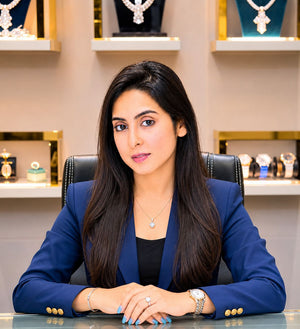
Aumsri Pradhan
Founder, Ivevar Luxury
Aumsri Pradhan leads Ivevar Luxury, a Surat-based brand that handcrafts lab grown diamond and moissanite jewelry in its own workshop, and shares practical buying guidance on the Ivevar blog. View author profile ›


