

 Engagement Rings
 Anniversary Rings
 Solitaire Rings
 Halo Rings
 Toi Moi Rings
 Three Stone Rings
 Nature Inspired Rings
 Rose Cut Rings
 Fancy Color Rings
 Antique Cut Rings
 Wedding Rings
 Wedding Band Rings
 Exclusive Lab Grown Diamond Rings
 All Lab Grown Diamond Ring
 Engagement Rings
 Three Stone Rings
 Fancy Color Rings
 Antique Cut Rings
 Daily Wear Rings
 Wedding Band Rings
 Exclusive Moissanite Rings
 Earrings
 Bracelet
 Pendant
 Necklace
 Men's Ring
 Bridal Sets
 Rings
 Earrings
 Tennis chain
 Cuban Chains
 Custom Pendant
 Custom Ring
 Custom Teeth Grillz
 Round
 Oval
 Cushion
 Marquise
 Pear
 Emerald
 Heart
 Princess
 Rose Cut
 Radiant
 Antique Cut
 Brooch
 Cufflink
 Keychain
 Unique Products
 +91-9265051773
 Virtual Appointment
 log in




Diamond Stud Earrings Size Guide: What Carat Looks Best?
by Aumsri Pradhan on Sep 27, 2026
Short answer: For everyday wear, most people choose studs of 0.50 to 1.00 carat each (1 to 2 carats total weight for the pair). For a bolder statement, go for 1.50 to 2.00 carats each. Always check whether a listing gives the weight per stone or for the pair, and compare studs by their diameter in millimetres, because that is what people actually see on your ear.
Diamond stud earrings are the one piece of jewelry almost everyone wears. They go with jeans and with a wedding outfit, they suit every age, and once you find the right pair you tend to wear them every day for years. That is exactly why size matters: a stud that looks too small feels forgettable, and one that looks too large can overpower your face or feel heavy by evening.
This diamond stud earrings size guide shows how big each carat size really is, how shape, setting and earlobe size change the look, and how to pick a pair you will be happy wearing every day.
First: What Does Total Carat Weight Mean?
Stud earrings are often sold by total carat weight (ctw), which adds both earrings together. So 1 ctw means two stones of about 0.50 carat each, not two 1 carat stones. Always check whether the listed weight is per stone or for the pair.
This one detail causes more surprise than anything else when studs arrive. A pair listed as "2 ct" can mean two 1 carat stones (each about 6.5 mm across) or two 1 carat-total halves of about 5.2 mm each. On the ear, those two pairs look very different.
- Per stone: the weight of each earring's diamond. Look for wording such as "1.00 ct each".
- Total carat weight (ctw or tcw): both stones added together. Divide by two to get each stone.
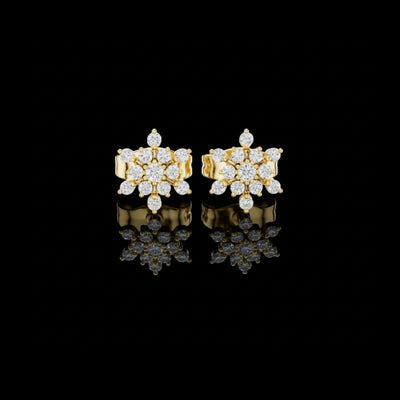
- Cluster or halo studs: the total weight includes every small diamond, so the centre stone is smaller than the total suggests.
Tip: When you compare pairs, convert everything to "carat per stone" and "millimetres per stone". It is the only way to compare a solitaire stud fairly with a cluster or a halo stud.
Stud Size Chart (Round, Per Stone)
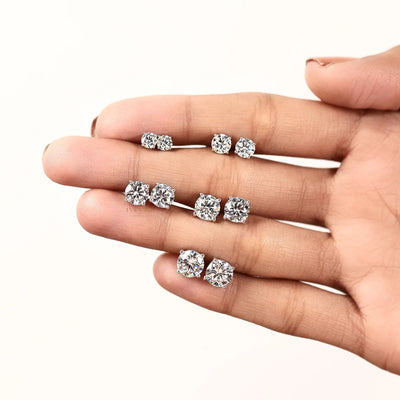
Round brilliant studs are the classic choice, so they make the best starting point. The table below shows the approximate diameter for each carat weight and the look you can expect.
| Carat per stone | Approx. diameter | Look |
|---|---|---|
| 0.25 ct | 4.1 mm | Delicate, great for second piercings |
| 0.50 ct | 5.2 mm | Classic everyday size |
| 0.75 ct | 5.8 mm | Noticeable but refined |
| 1.00 ct | 6.5 mm | Elegant statement |
| 1.50 ct | 7.4 mm | Bold |
| 2.00 ct | 8.1 mm | Very bold |
| 3.00 ct | 9.3 mm | Red-carpet size |
Sizes are approximate for well-cut round stones. See more shapes on our diamond size chart.
Notice that size does not grow in a straight line with weight. Doubling from 0.50 to 1.00 carat adds only about 1.3 mm to the diameter, because the extra weight is spread across the stone's depth as well as its width. That is why going up "just a little" in carats can cost more than it adds visually, and why a well-cut stone of a given weight can look larger than a deep, poorly cut one.
 Shown: Round Brilliant Cut Moissanite Classic Solitaire Stud Earrings
How Each Size Looks in Real Life
Numbers on a chart are hard to picture. Here is what each common size feels like when you wear it.
0.25 to 0.33 carat each
Small, bright and very easy to wear. These suit children and teenagers, second or third piercings, and anyone who wants a quiet sparkle. On a larger earlobe they can look a little lost, so they work best as part of a stack.
0.50 carat each (1 ctw)
This is the classic first "real" pair. At around 5.2 mm, they are clearly visible across a table but never flashy. They are an easy choice for office wear, everyday wear and gifting when you are unsure of someone's taste.
0.75 to 1.00 carat each (1.5 to 2 ctw)
Here studs start to look like a statement. A 1 carat stud is about the size of a pencil eraser, and it catches light from a distance. Many people who start with 0.50 carat studs upgrade to this range later.
1.50 to 2.00 carats each (3 to 4 ctw)
Bold and glamorous. These sizes suit evening wear, weddings and people who like their jewelry to be noticed. With larger stones, the setting and earring back become more important, because the earring carries more weight.
2.50 carats and above each
Very large studs look dramatic and suit fuller faces and larger earlobes best. Make sure the post is sturdy and the backs are secure, and expect the stone to cover most of a small earlobe.
Do Other Shapes Look Bigger Than Round?
Yes. Carat is a weight, not a size, and every shape carries its weight differently. Elongated shapes such as oval, pear and marquise spread their weight across a longer outline, so they usually show a larger face-up area than a round stone of the same weight. Deep shapes such as Asscher and cushion often look a little smaller.
| Shape | Looks vs. round (same carat) | Style on the ear |
|---|---|---|
| Round | Baseline | Maximum sparkle, timeless |
| Oval | Larger | Soft and slimming |
| Pear | Larger | Romantic, drop-like |
| Princess | Similar or slightly smaller | Crisp, modern square |
| Cushion | Slightly smaller | Soft square, vintage feel |
| Emerald and Asscher | Slightly smaller | Clean lines, mirror-like flashes |
| Heart | Similar | Playful and romantic |
If you want the biggest look for a set budget, oval and pear studs are hard to beat. If you want the most sparkle, round still leads. Step cuts such as emerald and Asscher show broad flashes of light rather than fiery sparkle, and they show clarity more openly, so choose a higher clarity grade for those shapes.
Shape also changes how a stud sits. Pear studs are usually worn with the point facing up or down; point down reads as a classic drop, point up as more modern. Ovals look best set vertically, which creates a gentle slimming line along the face.
Tips for Choosing Stud Size
- Small earlobes: 0.25 to 0.75 carat each looks balanced.
- Average earlobes: 0.50 to 1.25 carats each sits comfortably without crowding the lobe.
- Larger earlobes: 1.00 carat each and above keeps the stone from looking lost.
- Everyday office wear: 0.50 to 1.00 carat each.
- Weddings and events: 1.00 carat each and above.
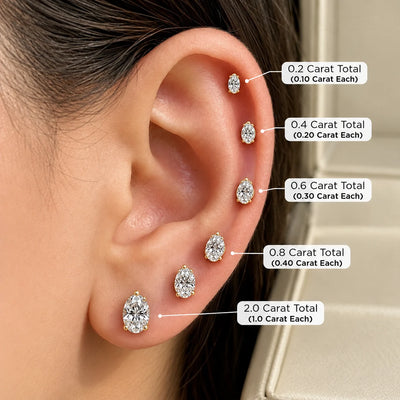
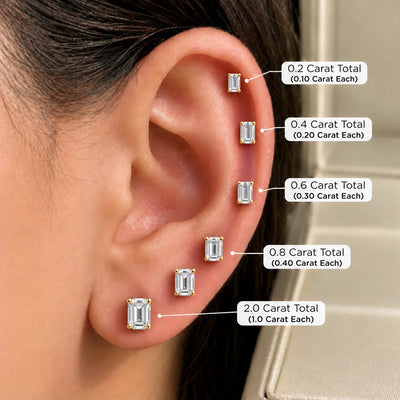
- Multiple piercings: graduate the sizes, largest in the first hole and smaller as you move up the ear.
- Try a paper test: draw circles of each diameter, cut them out and hold them to your ear in a mirror.
Face shape and hairstyle
Short hair and updos show studs completely, so even a modest size will be seen. Long, loose hair hides the ear much of the time, which is one reason people with long hair often go a size up. Round studs suit almost every face shape; ovals and pears add length and can balance a rounder face.
Age and lifestyle
For children and teenagers, small studs with secure backs are the practical choice. For busy daily wear, choose a size you will forget you are wearing. Save very large stones for when you want them to be the main event.
Lab Grown Diamond or Moissanite Studs?
Both make beautiful studs, and the size rules above apply to both. The key differences are in the stone itself.
- Lab grown diamonds are real diamonds. They are chemically, physically and optically the same as mined diamonds, grown by the CVD or HPHT method, and they score 10 on the Mohs hardness scale. Labs such as IGI and GIA grade them with the same 4Cs used for mined diamonds.
- Moissanite is a different gemstone (silicon carbide), not a diamond. It scores 9.25 on the Mohs scale, which is very durable for earrings, and has a higher refractive index (about 2.65 vs. about 2.42 for diamond), so it shows more colourful, rainbow-like flashes.
- Weight vs. size: moissanite is lighter than diamond, so a moissanite stone of the same millimetre size weighs a little less. That is why moissanite is often described by its diamond-equivalent size or by millimetres. Compare by millimetres and you will always compare like with like.
Earrings sit far from the eye and take little wear, so they are a smart place to choose a larger stone. Many people choose a bigger lab grown diamond or moissanite stud than they would in a mined diamond for the same budget. Browse lab diamond earrings or our moissanite fine jewelry earrings to compare.
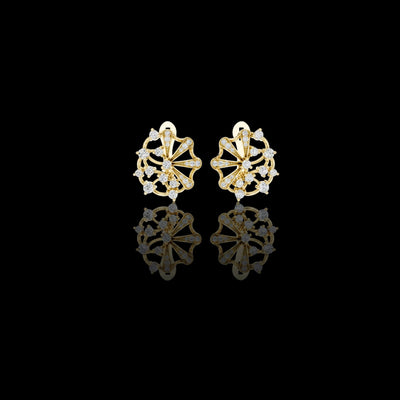
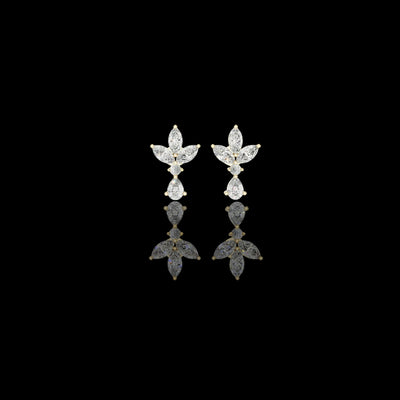
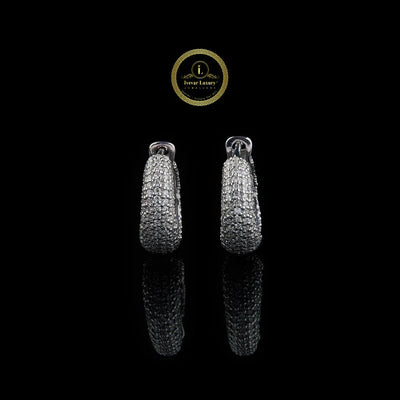
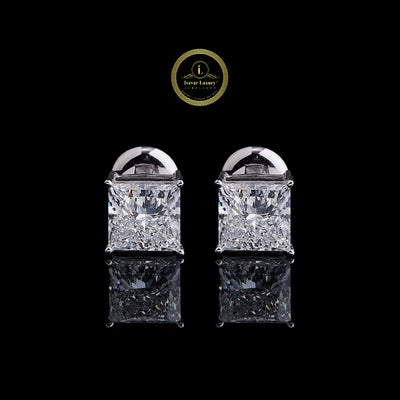
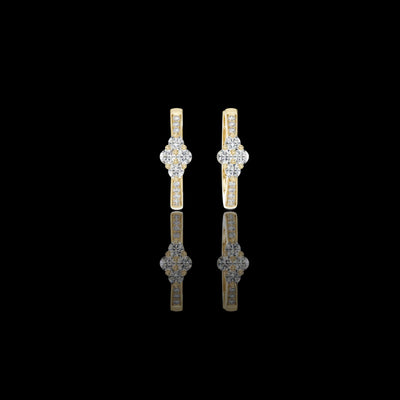
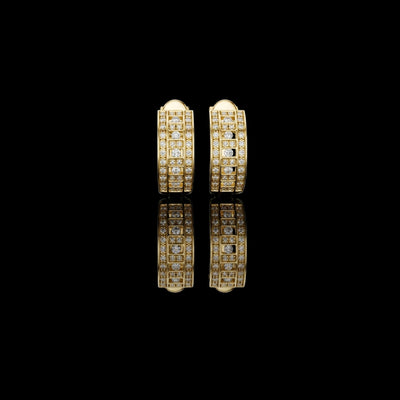
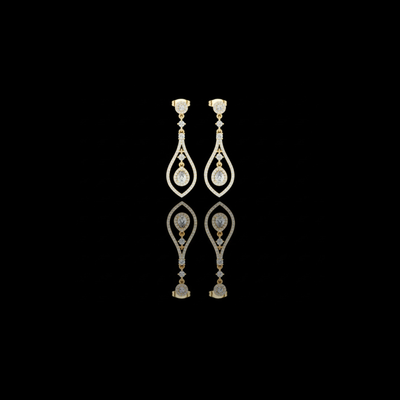
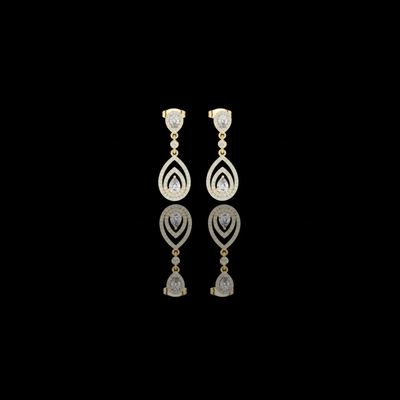
Shop the styles in this guide
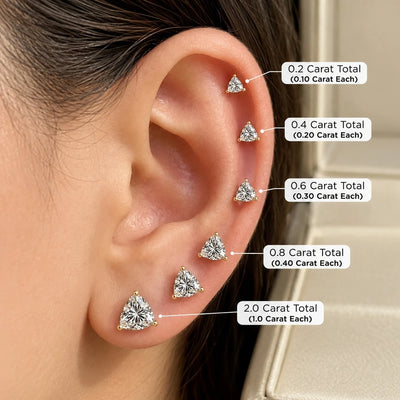
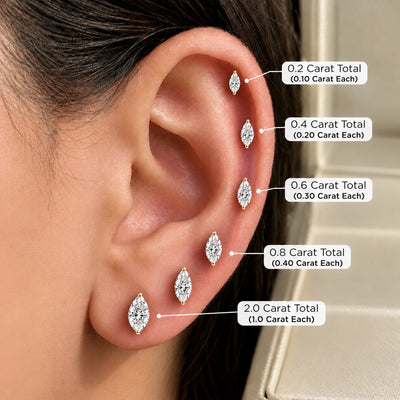
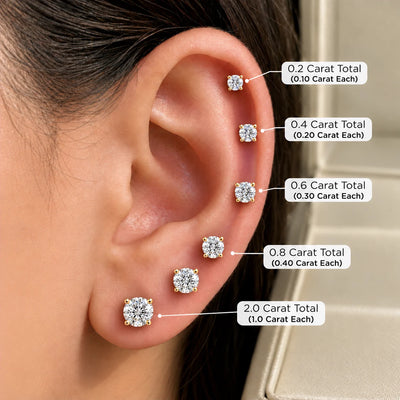
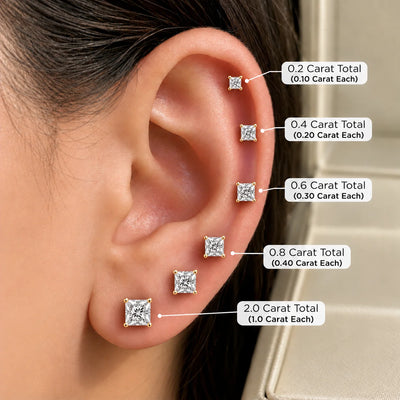
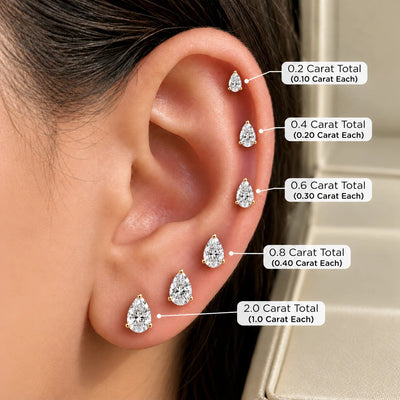
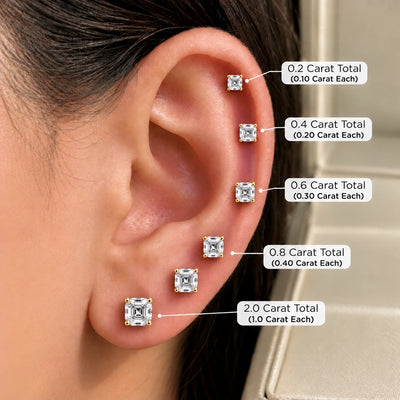
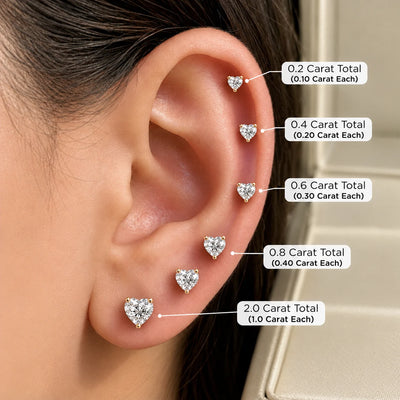
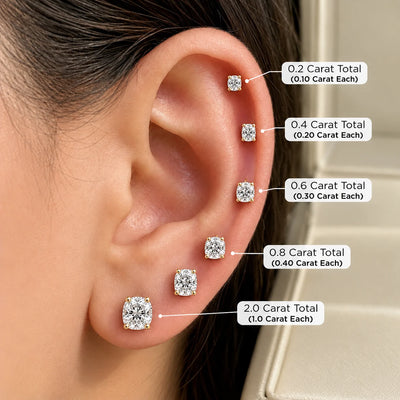

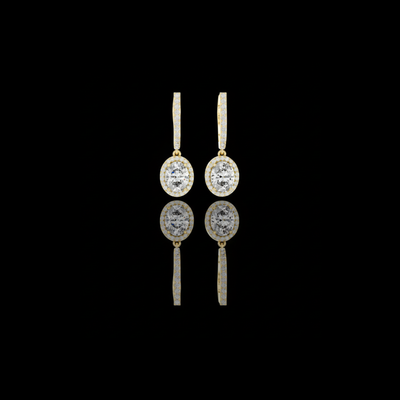
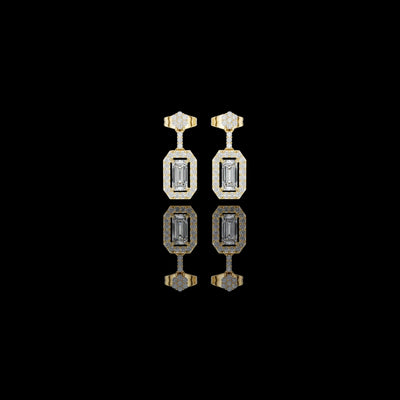
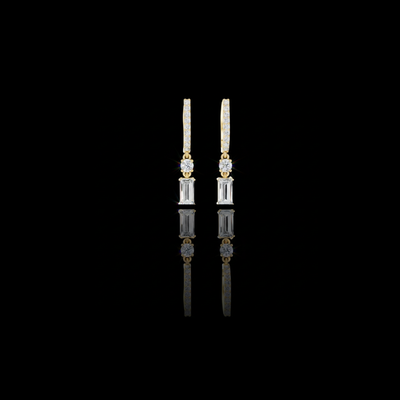
Which 4Cs Matter Most for Studs?
Studs are seen from a distance and from the front, which changes how you should spend on quality.
- Cut: the most important factor. A well-cut stone returns more light and looks larger and brighter. For round studs, choose Excellent or Ideal cut where available.
- Colour: in white gold or platinum-look settings, G to H colour looks white on the ear. In yellow or rose gold, I colour can look perfectly warm and bright.
- Clarity: because no one inspects your earlobe up close, an "eye-clean" stone is enough. VS2 or SI1 is usually eye-clean in brilliant cuts; choose VS2 or better for emerald and Asscher.
- Carat: pick the size that suits you first, then balance the other three Cs around it.
Matching matters too. The two stones in a pair should be close in colour, clarity and size so they look identical when worn. Many lab grown diamond studs come with IGI certificates, which show each stone's grades.
Backs and Settings
- Screw backs are the most secure and ideal for larger stones.
- Push backs are quick and comfortable for everyday wear.
- Four-prong settings show more stone; bezel settings feel smooth and protect the edges.
Choosing the right setting
The setting changes both the look and the apparent size of a stud.
- Four-prong basket: lets in the most light, and the stone looks slightly square from the front.
- Six-prong: keeps a round stone looking round and adds extra security.
- Martini setting: a cone-shaped basket that sits closer to the earlobe, helpful for larger stones that might tilt forward.
- Bezel: a rim of metal around the stone, smooth to the touch and very secure; the metal rim also makes the stud look a little larger.
- Halo: a ring of small stones around the centre can make the stud look noticeably bigger for its centre weight.
Tip: If a larger stud droops forward on your ear, the earring is usually too heavy for its back. Larger backs (often called disc or lifting backs) spread the weight across the earlobe and help the stone face forward.
Choosing the metal
Gold is offered in 10K, 14K and 18K. 14K is a popular balance of strength and colour for everyday studs, while 18K has a richer colour and a softer feel. White gold suits colourless stones; yellow and rose gold give a warmer, vintage look.
Shop lab grown diamond earrings, including our Oval Solitaire Studs, and moissanite stud earrings.
Shop Solitaire Stud Earrings
 Cushion Lab Diamond Studs
 Pear Lab Diamond Studs
 Heart Lab Diamond Studs
 Asscher Lab Diamond Studs
 Round Cluster Curved Studs
 Emerald Moissanite Studs
Swipe to see more → | View all earrings
Common Mistakes When Buying Studs
- Confusing ctw with per-stone weight: the most common reason studs look smaller than expected.
- Buying by carat alone: a poorly cut stone can look smaller and duller than a well-cut stone of lower weight.
- Overspending on clarity: flawless grades are invisible on the ear; put that budget into cut or size instead.
- Ignoring the back: a large stone on a light push back can loosen or droop. Choose screw backs for bigger studs.
- Forgetting the second piercing: if you plan to stack, choose a main pair that leaves room for smaller studs above.
Caring for Your Stud Earrings
Studs are worn close to the skin, so they pick up lotion, hairspray and natural oils that dull their sparkle. Soak them in warm water with a drop of mild dish soap, brush gently behind the stone with a soft toothbrush, rinse and pat dry. Clean the posts and backs as well, since this also keeps your piercings comfortable.
Check the backs every few weeks. Push backs can loosen over time; if one slides off easily, replace it. Have the prongs checked once a year, especially on larger studs. Store each pair separately so diamonds and moissanite do not scratch other jewelry.
Shop Stud Earrings at Ivevar
At Ivevar, we handcraft lab grown diamond and moissanite studs in 10K, 14K and 18K gold, with IGI certificates on many lab grown diamonds. We ship free worldwide and can help you compare sizes on a virtual appointment, or make a custom pair in the shape and size you want. Explore our earrings collection, lab diamond earrings and moissanite earrings. Please note that, for hygiene reasons, pierced earrings can only be returned if they are faulty, so it is worth checking the size carefully with the chart above before you order.
Frequently Asked Questions
What is the most popular stud earring size?
About 1 carat total weight (0.50 carat each) is one of the most popular everyday choices.
Do other shapes look bigger than round?
Yes. Oval and pear studs look larger than round studs of the same carat weight.
Is 1 carat total weight big enough for stud earrings?
For everyday wear, yes. Each stone is about 0.50 carat and 5.2 mm across, which is clearly visible but understated. If you want studs to be noticed from across a room, look at 0.75 to 1.00 carat each.
Are 2 carat studs too big for daily wear?
It depends on the meaning. Two carats total (1 carat each) is a popular daily size. Two carats per stone (about 8.1 mm) is very bold and best for people who like statement jewelry or have larger earlobes.
Should I choose screw backs or push backs?
Screw backs are the most secure and are best for larger or valuable studs. Push backs are faster to put on and are fine for smaller studs, as long as you check them regularly.
Can I wear stud earrings to sleep?
It is better not to. Sleeping in studs can bend posts, loosen backs and press prongs into your skin. Take them off at night and store them safely.
Do moissanite studs look like diamond studs?
From normal viewing distance they look very similar. Moissanite shows more colourful flashes because of its higher refractive index, which some people love and others notice. Lab grown diamonds look exactly like mined diamonds because they are diamonds.
What size studs should I buy as a gift?
If you do not know the person's taste, 0.50 carat each (1 ctw) in round is the safest choice. It is visible, elegant and suits almost every face, age and outfit. For a milestone gift such as an anniversary, 0.75 to 1.00 carat each feels more special without becoming too bold.
Do larger studs need a different post or back?
Yes. Heavier stones benefit from a thicker post, screw backs and, for very large studs, a larger lifting back that supports the stone so it faces forward instead of tilting down.
Can I return stud earrings?
Ivevar offers 30-day easy returns on most items, but pierced earrings are returnable only if they are faulty. Use the size chart and paper test before ordering, or book a virtual appointment if you are unsure.

Author Bio
Aumsri Pradhan
Founder, Ivevar Luxury
Aumsri Pradhan leads Ivevar Luxury, a Surat-based brand that handcrafts lab grown diamond and moissanite jewelry in its own workshop, and shares practical buying guidance on the Ivevar blog. View author profile ›


