Engagement Rings
 Anniversary Rings
 Solitaire Rings
 Halo Rings
 Toi Moi Rings
 Three Stone Rings
 Nature Inspired Rings
 Rose Cut Rings
 Fancy Color Rings
 Antique Cut Rings
 Wedding Rings
 Wedding Band Rings
 Exclusive Lab Grown Diamond Rings
 All Lab Grown Diamond Ring
 Engagement Rings
 Three Stone Rings
 Fancy Color Rings
 Antique Cut Rings
 Daily Wear Rings
 Wedding Band Rings
 Exclusive Moissanite Rings
 Earrings
 Bracelet
 Pendant
 Necklace
 Men's Ring
 Bridal Sets
 Rings
Rings
 Earrings
 Tennis chain
 Cuban Chains
 Custom Pendant
 Custom Ring
 Custom Teeth Grillz
 Round
Round
 Oval
Oval
 Cushion
 Marquise
 Pear
Pear
 Emerald
 Heart
Heart
 Princess
 Rose Cut
 Radiant
 Antique Cut
 Brooch
 Cufflink
 Keychain
 Unique Products
 +91 9265051773
 Virtual Appointment
 log in



Men's Diamond Bracelets: Styles From Classic to Iced Out
by Ankit Koshiya on Sep 29, 2026

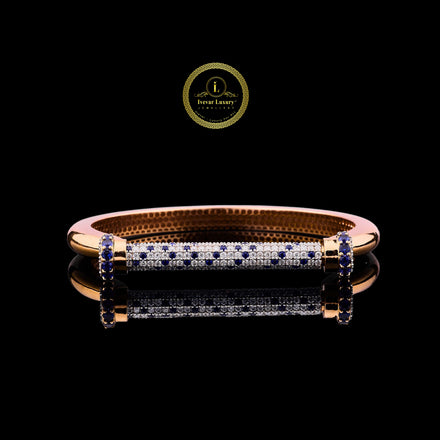
Short answer: Men's diamond bracelets run from the classic tennis bracelet — a clean line of stones — to the fully iced-out Cuban link. Tennis bracelets suit refined, everyday luxury; Cuban links and pavé styles deliver bold hip-hop presence. Fit matters most: the bracelet should slide over your hand but sit close on the wrist, usually 7 to 8.5 inches. Lab grown diamonds and moissanite make both styles attainable at real-world budgets.
- ✓ Tennis bracelets are the classic. A single clean line of diamonds — refined, versatile, and easy to wear daily.
- ✓ Cuban links are the statement. Thick interlocking links, often fully iced out, for maximum presence.
- ✓ Fit is everything. It should pass over your hand with slight resistance and rest close on the wrist — typically 7 to 8.5 inches for men.
- ✓ Box clasps with safety latches protect your investment. Never trust a simple spring clasp on a diamond bracelet.
- ✓ Lab grown diamonds stretch the budget. More carats and more ice for the same money, with zero visual difference.
The New Rules of Men's Diamond Bracelets
Men's diamond bracelets have moved from niche to mainstream. What was once reserved for red carpets and rap videos is now everyday wear — stacked with a watch at the office, worn solo on a night out, layered for weekends. The modern rule is simple: wear what matches your presence. A slim tennis bracelet reads as quiet confidence; a thick iced-out Cuban link announces itself. Neither is wrong; they just say different things.
The shift is partly about stones. Lab grown diamonds and moissanite have made genuine, brilliant stones accessible at every budget, so the choice is now about design rather than compromise. The barrier was price, not taste — and that barrier is gone.
The Classics: Tennis Bracelets and Link Bracelets
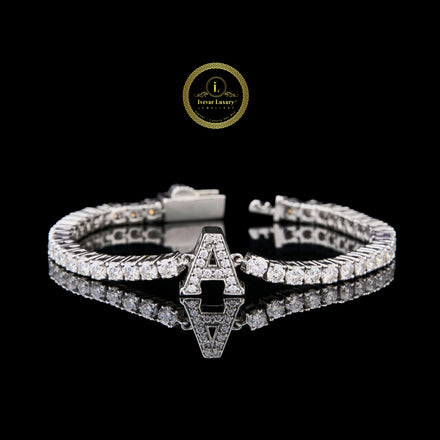
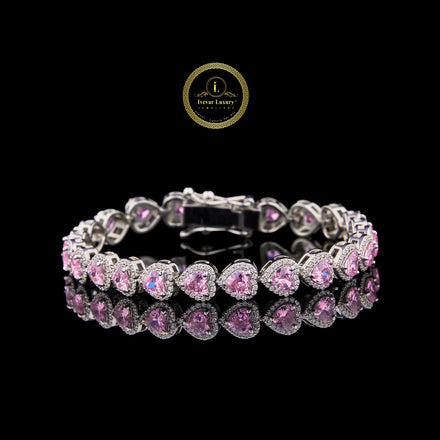
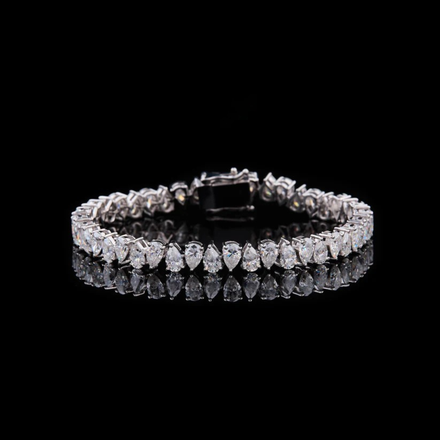
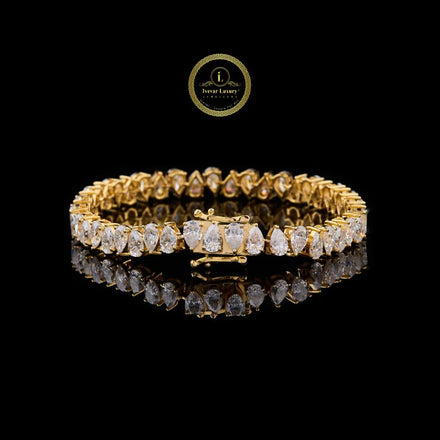
The tennis bracelet remains the foundation of men's diamond jewelry: a continuous line of individually set stones, usually round brilliants, flowing unbroken around the wrist. On men it works best in slightly bolder proportions than women's versions — larger stones, a wider setting, a heavier clasp. It pairs naturally with a watch, sits comfortably under a cuff, and never looks out of place, from boardrooms to weddings.
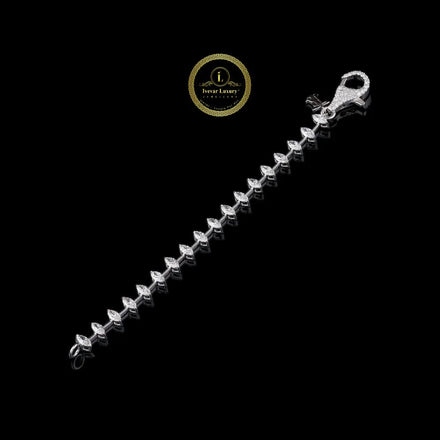
Link bracelets — curb, Figaro, and mariner styles set with or without stones — offer a middle ground. A plain gold curb link with diamond accents, or a two-tone link bracelet with pavé stations, gives texture and masculinity without full ice. These styles are also the most durable daily wearers: their interlocking construction handles an active lifestyle better than delicate settings, and they age beautifully as the gold develops character.

Cuban Link and Iced-Out Styles
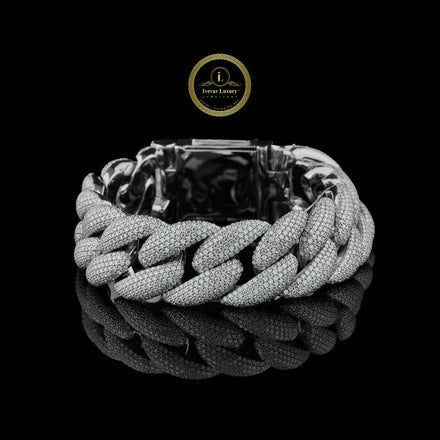
The Miami Cuban link is the undisputed king of bold men's jewelry: thick, interlocking, twisted links that lie flat and catch light from every angle. Fully iced-out versions — every visible surface pavé-set with diamonds — are the signature hip-hop luxury look, worn by artists and athletes as the ultimate wrist statement. A 10 to 12-millimeter iced Cuban link is unmistakable from across the room.
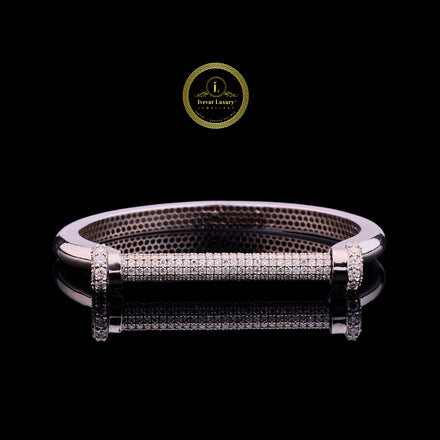
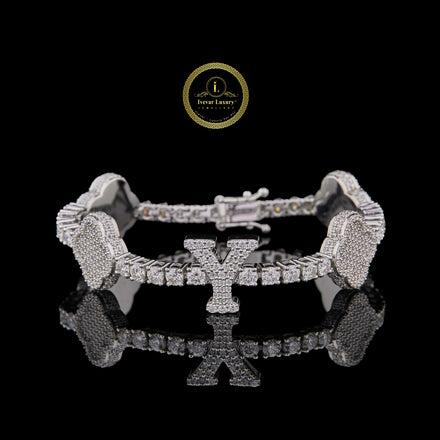
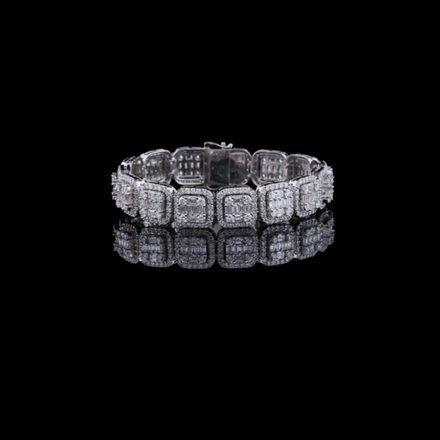
Iced-out styling extends beyond Cubans. Tennis bracelets get the bust-down treatment with larger stones and denser settings; name and medallion bracelets let you wear your identity in diamonds. If full ice feels like too much for daily wear, start with a partially iced piece — a Cuban link with pavé on the outer face only, or a tennis bracelet in a moderate carat weight. You get the presence at a fraction of the weight and price, and you can always go bolder later.
Sizing, Fit, and How a Bracelet Should Sit
Fit is the most practical decision you will make. Measure your wrist snugly with a tape or string, then add half an inch to three-quarters of an inch for the bracelet length — that gives you a close fit with natural movement. Most men land between 7.5 and 8.5 inches. The bracelet should slide over your hand with slight resistance and rest on the wrist without spinning freely or hanging down onto the hand.
A bracelet that is too loose bangs against desks and doorframes — the fastest way to loosen stones — while one that is too tight restricts movement and looks uncomfortable. Tennis bracelets should sit close with minimal drape; Cuban links can wear slightly looser since their weight keeps them in place. When in doubt between sizes, choose the smaller: jewelers can almost always add a link, but a bracelet that starts too loose only gets looser as it stretches.

Choosing Stones and Metals for a Masculine Look
For stones, lab grown diamonds are the smart money in men's bracelets: chemically identical to mined diamonds, available in every size, and priced so you can afford the carat weight that makes a bracelet look intentional rather than timid. Moissanite is the budget king of ice — even more fire per dollar — and an excellent choice for fully iced-out pieces where stone count is high. Either way, insist on well-cut stones; in pavé and tennis settings, cut quality is what separates brilliant from dull.
Metal choice sets the tone. Yellow gold is the classic hip-hop luxury metal — warm, rich, and unmistakable. White gold and platinum tones read cooler and more contemporary, pairing well with silver watches and modern wardrobes. Two-tone pieces split the difference and match everything. For daily wear, 14k gold hits the sweet spot of hardness and value; 18k is richer in color but softer, better suited to pieces that won't take daily knocks.
Styling: Watches, Stacks, and Occasions
The watch-and-bracelet combination is the cornerstone of men's wrist styling. The bracelet should complement the watch, not fight it: a slim tennis bracelet beside a dress watch, a chunky Cuban link with a bold sports watch or standing alone. Keep metals in the same family unless you are deliberately mixing — then commit to it across the whole stack.
Stacking follows one principle: vary width and texture. A thin tennis bracelet plus a medium Cuban link plus a beaded piece creates a stack with rhythm; three identical bracelets just look like one thick one. For formal occasions, pare back to a single refined piece. And remember the one-statement rule: if the bracelet is iced out, let it be the star and keep rings and necklaces quieter.
| Bracelet style | Vibe | Best for |
|---|---|---|
| Tennis bracelet | Refined, clean, timeless | Daily wear, office, formal events |
| Miami Cuban link | Bold, powerful, unmistakable | Statement wear, nights out |
| Iced-out pavé | Maximum flash, hip-hop luxury | Making an entrance, performances |
| Link / curb with accents | Masculine, textured, versatile | Active lifestyles, casual stacking |
| Name / ID bracelet | Personal, custom, one-of-one | Signature piece, gifting |
Shop Our Best Sellers


Swipe to see more → | View all best sellers
Frequently Asked Questions
What is the most popular men's diamond bracelet style?
The tennis bracelet and the Miami Cuban link share the crown: tennis for refined everyday wear, iced-out Cuban links for bold statement styling. Your lifestyle and wardrobe decide which is yours.
How should a men's bracelet fit?
Measure your wrist snugly and add half to three-quarters of an inch. The bracelet should slide over your hand with slight resistance and sit close on the wrist without spinning freely — most men wear 7.5 to 8.5 inches.
Tennis bracelet vs Cuban link: which should I choose?
Choose tennis for versatility and understatement — it works with suits and watches. Choose Cuban link for presence and hip-hop luxury attitude. Many men eventually own both: tennis for daily, Cuban for nights out.
Are iced-out bracelets real diamonds?
Quality iced-out pieces use real stones — typically lab grown diamonds or moissanite pavé-set in solid gold. Avoid anything described only as "iced" with no stone disclosure; reputable jewelers always state the stone type.
What wrist size do men's bracelets come in?
Most men's diamond bracelets are made or adjustable between 7 and 9 inches, with 8 inches the most common stock size. Custom sizing is widely available, so always buy your actual measurement rather than settling.
Can men wear diamond bracelets every day?
Absolutely — tennis and link bracelets are built for it. Choose secure box clasps with safety latches, solid (not hollow) links for heavier styles, and remove the bracelet for heavy manual work, contact sports, and swimming.
How do I clean a diamond bracelet?
Soak in warm water with mild dish soap, gently brush with a soft toothbrush — especially around pavé settings where residue hides — rinse and pat dry. Have the clasp and stone tightness checked by a jeweler once a year.
Sources
- Gemological Institute of America (GIA)
- JCK — Jewelry Industry News
- ELLE — Jewelry & Style
- Vogue — Jewelry & Fashion

Aumsri Pradhan is the founder of Ivevar Luxury, a Surat-based fine jewelry brand that designs and handcrafts lab grown diamond and moissanite jewelry in its own workshop. She leads the brand's design and customer experience, from engagement rings and bridal sets to custom pieces made to each client's story. Through the Ivevar blog, she shares practical guidance on lab grown diamonds, moissanite, diamond grading and ring design to help buyers choose with confidence.