

 Engagement Rings
 Anniversary Rings
 Solitaire Rings
 Halo Rings
 Toi Moi Rings
 Three Stone Rings
 Nature Inspired Rings
 Rose Cut Rings
 Fancy Color Rings
 Antique Cut Rings
 Wedding Rings
 Wedding Band Rings
 Exclusive Lab Grown Diamond Rings
 All Lab Grown Diamond Ring
 Engagement Rings
 Three Stone Rings
 Fancy Color Rings
 Antique Cut Rings
 Daily Wear Rings
 Wedding Band Rings
 Exclusive Moissanite Rings
 Earrings
 Bracelet
 Pendant
 Necklace
 Men's Ring
 Bridal Sets
 Rings
 Earrings
 Tennis chain
 Cuban Chains
 Custom Pendant
 Custom Ring
 Custom Teeth Grillz
 Round
 Oval
 Cushion
 Marquise
 Pear
 Emerald
 Heart
 Princess
 Rose Cut
 Radiant
 Antique Cut
 Brooch
 Cufflink
 Keychain
 Unique Products
 +91-9265051773
 Virtual Appointment
 log in





Short answer: Men usually choose 4 to 6 mm stones and a slightly looser fit than women, about half to three quarters of an inch over the wrist measurement. A box clasp with a safety latch is a must. Lab grown diamond gives you real diamond with a crisp white sparkle; moissanite is a separate gemstone with more rainbow fire at a lower price. Solid 10K or 14K gold is the most durable choice for daily wear.
The tennis bracelet has become one of the most popular pieces of men's jewelry because it is simple: one clean line of matching stones around the wrist. It works with a watch, with a T-shirt, with a suit and on its own. This guide explains how to size a tennis bracelet for a man's wrist, which stone size and setting to choose, how lab grown diamond and moissanite compare, which metal lasts best and how to check quality before and after you buy.
What makes a tennis bracelet
A tennis bracelet is a flexible line of matching stones, each set in its own small link so the bracelet bends around the wrist without gaps. The design is simple, which is why it works for men: it reads as clean and confident rather than flashy, and it sits well next to a dress shirt cuff or a plain T-shirt.
What separates a tennis bracelet from other diamond bracelets is that the stones are the whole design. There is no chain between them and no central motif. That makes stone matching and link quality very visible: every stone should look the same size and color, and the bracelet should move like fabric rather than a stiff band.
Each link is a small metal box or cup holding one stone, joined to the next by a hinge. Good links are cut so they can flex in every direction and lie flat against the wrist. Poorly made links bind, leave gaps between stones, or kink when the bracelet is bent, which is why it pays to look closely at how a bracelet drapes before you judge the stones.
Size and fit for men
Larger stones read better on a man's wrist: 4 to 6 mm looks balanced, and wider multi-row designs look bolder. Measure your wrist snugly and add about half an inch to three quarters of an inch for a comfortable fit that still stays in place.
Check the clasp. A box clasp with a safety latch is standard on quality tennis bracelets and keeps it closed if it catches on something.
How to measure your wrist
- Use a soft tape or a strip of paper: wrap it around your wrist just above the wrist bone, where a bracelet naturally sits.
- Keep it snug, not tight: the tape should lie flat against the skin without pressing in.
- Mark and measure: mark where the end meets, then measure the length against a ruler.
- Add your comfort allowance: add about half an inch for a closer fit, or three quarters of an inch for a looser, more relaxed drape.
| Wrist measurement | Close fit | Relaxed fit |
|---|---|---|
| 6.5 inches | 7 inches | 7.25 inches |
| 7 inches | 7.5 inches | 7.75 inches |
| 7.5 inches | 8 inches | 8.25 inches |
| 8 inches | 8.5 inches | 8.75 inches |
Wider and multi-row bracelets take up more room around the wrist, so lean toward the relaxed fit for those. If you wear a watch on the same arm, a slightly looser fit lets the bracelet sit beside it without rubbing.
Tip: Measure the wrist you will actually wear the bracelet on. Many men wear a watch on one wrist and a bracelet on the other, and the two wrists can differ slightly in size.
Choosing the stone size
Stone size is the single biggest style decision on a tennis bracelet. On a man's wrist, very small stones can look delicate, while large stones give the bold, iced look most men are after.
| Stone size | Look on a man's wrist | Good for |
|---|---|---|
| Around 3 mm | Subtle, fine line | Office wear, pairing with a watch |
| 4 to 5 mm | Balanced, clearly visible | The most versatile everyday choice |
| 6 mm and up | Bold and iced | A statement piece worn alone |
| Multi-row | Wide band of sparkle | Maximum presence on the wrist |
Larger stones also mean fewer stones per inch, so each one is more visible. Check that the stones are evenly matched, since any difference in size or color shows more on a bigger stone.
Stone shape
Round stones are the classic tennis bracelet shape and give the most sparkle. Princess cut stones make a squared, edgy line that many men like. Cushion cuts sit in between, with a softly squared outline and strong sparkle. The selection further down the page includes all three.
Lab grown diamond or moissanite?
Lab grown diamond is real diamond and gives a classic white sparkle. Lab grown diamonds are grown by CVD or HPHT and are chemically, physically and optically the same as mined diamonds, rating 10 on the Mohs hardness scale. Moissanite is a separate gemstone, not diamond, with more rainbow fire at a lower price. It rates 9.25 on the Mohs scale, so it is also very durable.
For lab grown diamonds, IGI gives full 4Cs grading, while GIA labels lab grown stones only as Premium or Standard. Many lab grown diamonds in our jewelry come with IGI certificates; check each listing for what is included.
| Feature | Moissanite | Lab grown diamond |
|---|---|---|
| What it is | Silicon carbide, its own gemstone | Real diamond |
| Hardness (Mohs) | 9.25 | 10 |
| Sparkle | More rainbow fire (refractive index about 2.65) | Crisp white brilliance (about 2.42) |
| Relative cost | Lower, so you can go larger | Several times more for the same design |
Which one suits you? If you want the biggest stones and most sparkle for your budget, moissanite is hard to beat. If you want to know that every stone is diamond, or you are buying a gift where that matters, choose lab grown diamond.
Single row or multi-row?
A single row is the classic tennis bracelet: one line of stones, clean and easy to wear with anything. Multi-row designs place two or three rows side by side, making a wider band that covers more of the wrist and catches more light.
| Style | Look | Best for |
|---|---|---|
| Single row | Clean, classic line | Everyday wear, wearing with a watch, a first bracelet |
| Double row | Noticeably wider, more sparkle | A step up in presence without going fully iced |
| Triple row | Wide band of ice | A statement piece worn on its own |
Multi-row bracelets usually use smaller stones in each row, so the total effect is a field of glitter rather than individual stones. They are heavier and wider, so lean toward a relaxed fit, and remember that more rows mean more stones to set and a higher price. If you plan to wear the bracelet every day next to a watch, a single row is usually the more comfortable choice.
Setting styles compared
- Four-prong: shows the most stone and lets in the most light, so it sparkles the hardest. Prongs can snag on knit sleeves.
- Bezel: a thin rim of metal wraps each stone. It looks sleek and modern and protects the edges, with a little less sparkle.
- Channel: stones sit between two metal rails for a smooth, low profile that suits an active wrist.
- Multi-row: two or three rows of smaller stones make a wider band that stands out more than a single row.
Some designs add a slider clasp or adjustable section, which lets you fine-tune the fit. For a bracelet worn every day, bezel and channel settings are the most practical because there are no raised prongs to catch on cuffs. For the most sparkle, prong settings win.
Think about your daily routine when choosing. If you type all day, wear knitwear or work with your hands, a smooth bezel or channel setting will catch less and need less attention. If the bracelet is mainly for evenings and events, the extra light from open prongs is worth it. Whichever setting you choose, the metal around each stone should be even and neatly finished, with no prong noticeably shorter or thinner than the rest.
Choosing the metal
Ivevar bracelets are made to order in 925 sterling silver or in 10K to 18K gold. Silver is the lightest on the budget and fine for occasional wear. Solid gold is heavier and better for daily wear, and 10K or 14K is harder than 18K, which helps the small links hold up. White gold blends with white stones for an all-ice look, while yellow gold gives warm contrast.
| Metal | Strengths | Best for |
|---|---|---|
| 925 sterling silver | Most affordable, bright white | Occasional wear, trying a bold size |
| 10K gold | Hardest gold option | Daily wear on an active wrist |
| 14K gold | Balance of color, strength and value | The most popular all-round choice |
| 18K gold | Richest color | Careful wear and special occasions |
Match the bracelet's metal color to your watch where you can. A white gold bracelet beside a steel watch, or yellow gold beside a gold watch, looks deliberate and clean.
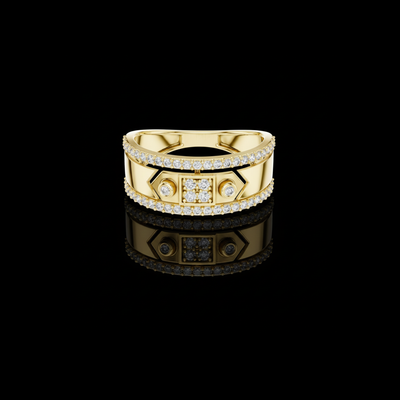
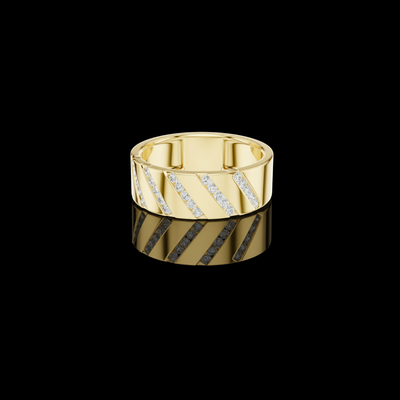
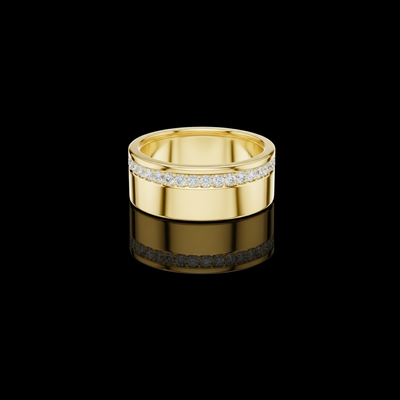
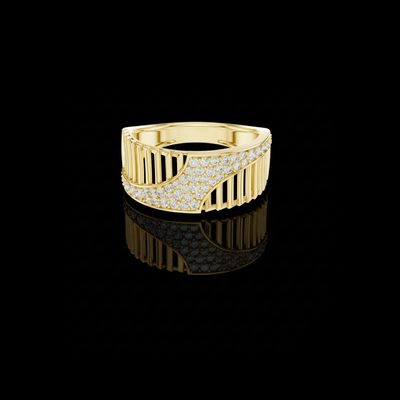
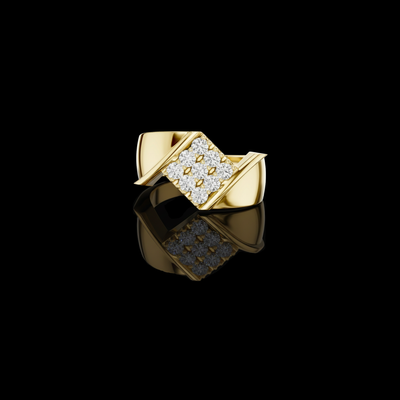
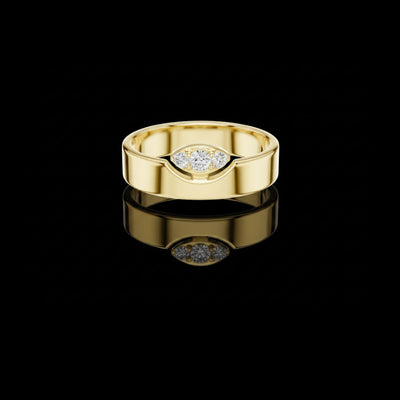
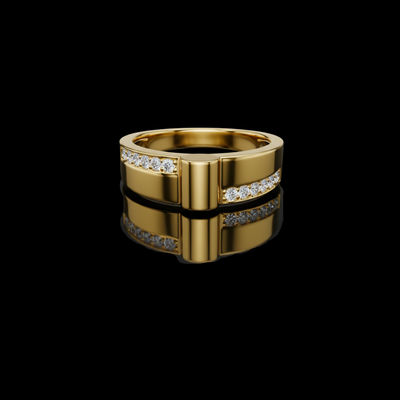
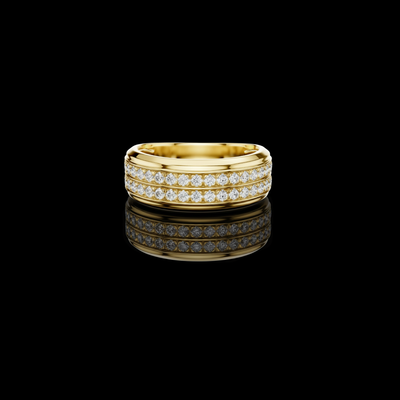
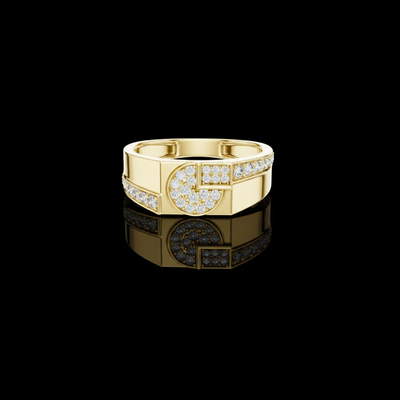
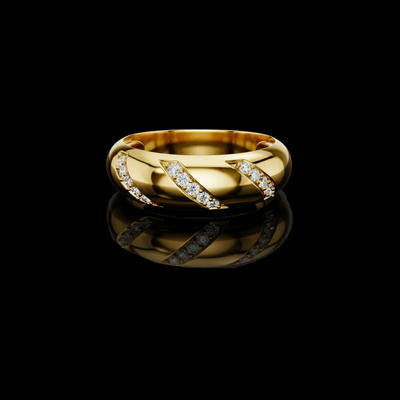
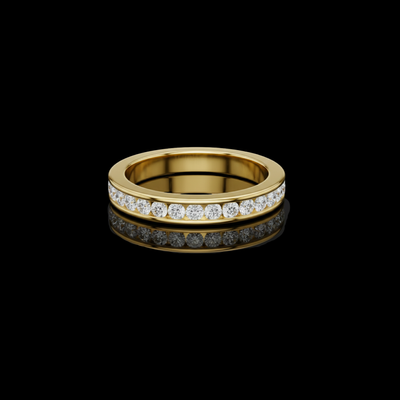
Shop the styles in this guide

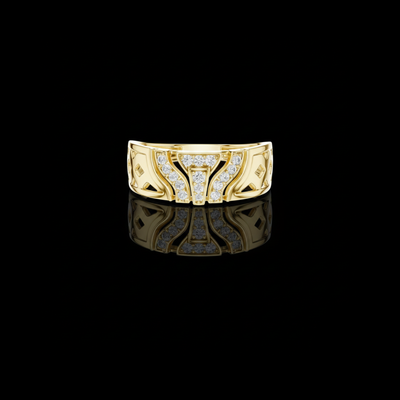
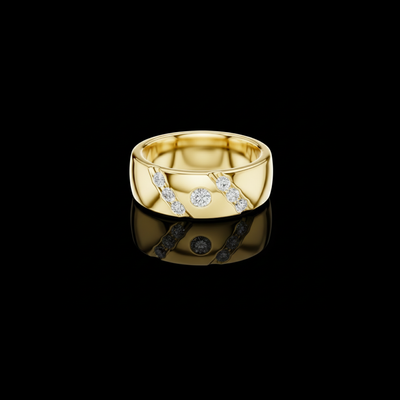
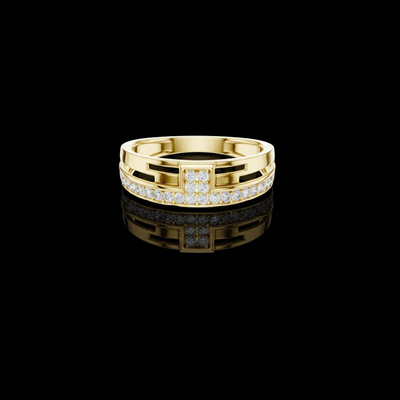
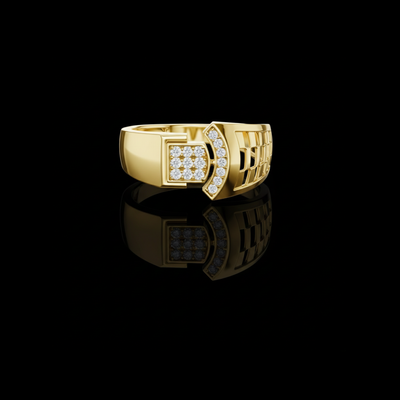
Clasps and security
A tennis bracelet's clasp does a lot of work, because a bracelet takes knocks all day. The standard is a box clasp: a folded tongue that clicks into a box. Quality bracelets add one or two safety features on top.
- Side safety latch: a small hinged loop that folds over a post on the side of the clasp, so the bracelet stays on even if the box clasp opens.
- Figure-eight safety: a small loop under the clasp that locks over a post as a second catch.
- Hidden clasp: a clasp set with stones so it blends into the line of the bracelet.
Always close the safety latch, not just the main clasp. Every few months, check that the clasp still clicks firmly; a loose click is a sign it needs tightening.
How to wear a tennis bracelet
A men's tennis bracelet is easy to style, but a few habits make it look its best.
- With a watch: wear it on the opposite wrist for balance, or on the same wrist below the watch with a little space so they do not rub.
- Stacked: pair it with a Cuban bracelet in the same metal for a layered look. See our lab grown hip hop bracelets and moissanite hip hop bracelets.
- Matched with a chain: a tennis chain at the neck and a tennis bracelet at the wrist create a clean, matching set. Compare our lab grown tennis chains and moissanite tennis chains.
- Dressed up: a single row with 3 to 4 mm stones peeks out from a shirt cuff without overpowering a suit.
What affects the cost
Price depends mostly on the stone type, the total carat weight, the number of rows and the metal. A lab grown diamond bracelet usually costs several times more than the same design in moissanite, and moving from silver to gold, or from 10K to 18K, raises the price further. Longer lengths also need more stones and metal.
Total carat weight (TCW) is the combined weight of every stone in the bracelet. It is a useful comparison between bracelets of the same stone type, but remember that moissanite is lighter than diamond, so compare stone size in millimeters across stone types. Check the live price on each product page as you change stone, metal and length.
If you are working to a budget, these choices bring the price down without spoiling the look:
- Choose moissanite: the biggest single saving, especially on bracelets with many stones.
- Stay with one row: a single row of larger stones often looks bolder than a multi-row band of tiny ones.
- Pick 10K or 14K gold: they cost less than 18K and are harder for daily wear.
- Get the length right: an accurate wrist measurement avoids paying for extra length you do not need.
How to check quality and care for it
Look for stones that are evenly matched in size and color, links that move freely without kinks, and a secure clasp. To clean it, soak it in warm water with mild soap, brush gently with a soft toothbrush, rinse and dry. Take it off before the gym or swimming, and store it flat on its own. Our jewelry care guide has more tips. Compare styles in our lab diamond bracelets and moissanite bracelets.
- Lay it flat: the stones should form a straight, even line with no gaps or tilted stones.
- Drape test: hold it by one end. It should hang in a smooth line, not bend stiffly at any link.
- Listen for rattles: gently shake it near your ear. A rattle can mean a loose stone.
- Check the back: the underside should be smooth and finished, without sharp edges against the skin.
Buying from Ivevar
Every bracelet is made to order in India. You choose the stone, metal and length on the product page, and we ship worldwide with free shipping. Bracelets come with 30-day easy returns, so you can check the fit and finish in person. If you want a custom design, such as a specific stone size, length or a matching chain, book a virtual appointment to talk it through and see stones on camera before you order. A tennis bracelet is also a popular gift; our lab grown gifts for him are a good place to start.
Shop at Ivevar


Swipe to see more → | View all best sellers
FAQ
What stone size should a men's tennis bracelet have?
4 to 6 mm suits most men. Go bigger or multi-row for a bolder statement.
How loose should it fit?
About half to three quarters of an inch over your wrist measurement, so it moves but does not slide over your hand.
Is a moissanite tennis bracelet a diamond bracelet?
No. Moissanite is its own gemstone. It sparkles brightly but is not diamond.
Which metal is best for wearing every day?
Solid 10K or 14K gold. It is harder than 18K and silver, so the links and prongs hold up better to daily wear.
Can I wear a tennis bracelet with a watch?
Yes. Wear it on the other wrist, or on the same wrist with a little space below the watch so the stones and watch case do not scratch each other.
Why is it called a tennis bracelet?
The name became popular after a well-known tennis player's bracelet came loose during a match. It is a reminder of why a secure clasp with a safety latch matters.
Are lab grown diamond tennis bracelets certified?
Many lab grown diamonds in our jewelry come with IGI certificates. Check each listing for exactly what is certified on that bracelet.
Is a single row or multi-row bracelet better for men?
A single row of 4 to 6 mm stones is the most versatile. Multi-row bracelets are bolder and best worn on their own as a statement piece.
Can I shower in my tennis bracelet?
It is best to take it off. Soap and shampoo leave a film behind the stones, and hot water and knocks are hard on clasps and settings.
Aumsri Pradhan, Founder of Ivevar. About the founder


