

 Engagement Rings
 Anniversary Rings
 Solitaire Rings
 Halo Rings
 Toi Moi Rings
 Three Stone Rings
 Nature Inspired Rings
 Rose Cut Rings
 Fancy Color Rings
 Antique Cut Rings
 Wedding Rings
 Wedding Band Rings
 Exclusive Lab Grown Diamond Rings
 All Lab Grown Diamond Ring
 Engagement Rings
 Three Stone Rings
 Fancy Color Rings
 Antique Cut Rings
 Daily Wear Rings
 Wedding Band Rings
 Exclusive Moissanite Rings
 Earrings
 Bracelet
 Pendant
 Necklace
 Men's Ring
 Bridal Sets
 Rings
 Earrings
 Tennis chain
 Cuban Chains
 Custom Pendant
 Custom Ring
 Custom Teeth Grillz
 Round
 Oval
 Cushion
 Marquise
 Pear
 Emerald
 Heart
 Princess
 Rose Cut
 Radiant
 Antique Cut
 Brooch
 Cufflink
 Keychain
 Unique Products
 +91-9265051773
 Virtual Appointment
 log in




Platinum Wedding Bands: Pros, Cons & White Gold Alternatives
by Aumsri Pradhan on Sep 29, 2026

Short answer: Platinum is a naturally white, dense and very durable metal, usually 90–95% pure in jewelry. It never needs plating, rarely causes skin reactions, and develops a soft patina over time. It is heavier and usually more expensive than gold for the same design. Ivevar does not currently offer platinum; our closest alternatives are 14K and 18K white gold bands, which give the same bright white look for less.
Platinum has a reputation as the most prestigious wedding band metal, and much of that reputation is earned. But it is not the right choice for everyone. Its weight, price and the way it ages all matter for a ring you will wear every day.
This guide explains what platinum really is, how it compares with white gold in daily life, what drives the price of a band, and how to decide which white metal suits your hands, your budget and your style.
Platinum vs White Gold
At a glance, a polished platinum band and a freshly plated white gold band look almost identical. The differences show up in weight, upkeep and cost:
| Feature | Platinum | White gold |
|---|---|---|
| Color | Naturally white | Rhodium plated for bright white |
| Weight | Heavier | Lighter |
| Upkeep | Occasional polishing | Replating from time to time |
| How it ages | Soft satin patina | Plating wears, warm tone shows |
| Skin sensitivity | Rarely an issue | Depends on the alloy |
| Price | Usually higher | Usually lower |
Is Platinum Worth It?
Choose platinum if you want a naturally white metal that lasts for generations and you like a heavier feel. Choose white gold if you want the same look for less, and do not mind occasional replating.
Platinum makes the most sense when:
- You never want to replate: the white color is the metal itself, so there is no coating to wear away.
- You love a weighty ring: some people find the heft reassuring and luxurious.
- You have very sensitive skin: high-purity platinum is one of the gentlest metals to wear.
White gold makes more sense when:
- Budget matters: you can put the difference toward larger or more stones.
- You prefer a lighter ring: especially for a wide band or an eternity band worn every day.
- You want a crisp, mirror-white finish at all times: fresh rhodium plating is brighter than a worn platinum patina.
A quick self-test
Ask yourself three questions. Will you mind visiting a jeweler every so often to refresh a white finish? Do you enjoy the feel of a heavy ring, or do you forget a light one is there? And would you rather spend more on metal or on stones? If you answered no, heavy and metal, platinum fits you. If you answered yes, light and stones, white gold is likely the better buy.
What Makes Platinum Different
Platinum is one of the densest precious metals, so a platinum band feels solid and weighty on the hand. It is used in jewelry at high purity, which is why it keeps its white color without a coating. When platinum is scratched, the metal moves aside instead of wearing away, so over the years the surface turns from bright polish to a soft, satin look that many people like. A jeweler can polish it back to a high shine.
That behavior is often misunderstood. Platinum is not harder than gold in the sense of resisting scratches; it actually shows fine surface marks quite readily. What it does well is hold on to its metal. Prongs and edges keep their mass over decades because scratches push metal around rather than removing it. That is why platinum has long been prized for settings that hold valuable stones.
Platinum purity marks
Platinum jewelry is usually stamped with its purity. A mark such as "950" or "PT950" means 95% platinum, and "900" or "PT900" means 90%. The rest is a small amount of another metal that adjusts the hardness. Either purity is a genuine platinum ring.
How platinum looks after years of wear
A new platinum band leaves the workshop with a bright polish. Within months of daily wear, fine marks build up and the surface takes on a soft, slightly gray satin sheen, often called a patina. Some people treat this as part of the ring's story and leave it alone. Others have the band polished every few years. Both are fine; polishing does not remove meaningful amounts of metal from platinum the way it can from softer alloys.
How White Gold Compares in Daily Wear
White gold is gold mixed with white metals and then usually rhodium plated. The plating gives a crisp, bright white that looks very close to platinum. On a wedding band, which rubs against desks, steering wheels and other rings every day, the plating slowly wears on the edges and the warmer gold beneath can start to show. A fresh coat of rhodium restores the color. 14K white gold is a little harder than 18K, so it handles knocks well on a band you never take off.
| White gold karat | Gold content | Everyday wear |
|---|---|---|
| 10K | About 41.7% | Hardest, lowest metal cost |
| 14K | About 58.3% | Strong all-rounder for daily bands |
| 18K | 75% | Richer in gold, slightly softer |
For most people choosing a white metal band they will wear every day, 14K white gold is the practical sweet spot. It is strong, lighter than platinum, and its plating can be renewed whenever the color starts to warm.
How to Choose Between Them
- Choose platinum if you want a naturally white metal, enjoy a heavy feel and are happy to pay more for it.
- Choose 14K white gold if you want a bright white look, a lighter band and a strong, everyday metal for less.
- Choose 18K white gold if you prefer a higher gold content and a slightly richer base color under the plating.
- Consider yellow or rose gold if you would rather skip replating altogether, since those colors need no coating.
- Consider 925 sterling silver if you want a white metal band on a tight budget and are happy to polish it now and then.
Tip: If your engagement ring is already white gold, a white gold band will match its color and wear at the same rate. Mixing platinum and white gold in one stack can look slightly different once the plating starts to wear.
Sensitive Skin
Platinum rarely causes skin reactions. Some white gold alloys contain nickel, which can irritate sensitive skin, while others use different white metals. If you have a known metal allergy, ask which alloy is used before you order.
Rhodium plating also acts as a barrier between the alloy and your skin, so many people with mild sensitivity wear white gold comfortably while the plating is fresh. Itching that starts after months of wear can be a sign that the plating has thinned and the ring needs replating. If you react to nickel, yellow and rose gold are also worth considering, since they do not rely on white metals for their color.
Best Band Styles for a White Metal
White metals make colorless stones look especially icy, because there is no warm reflection from the metal. These styles show that off well:
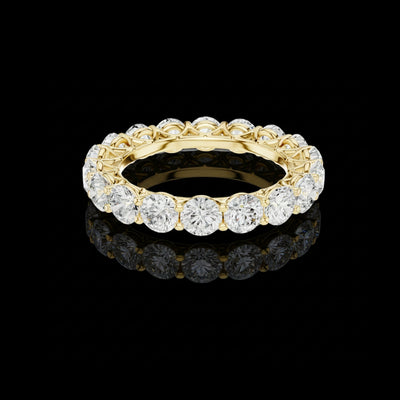
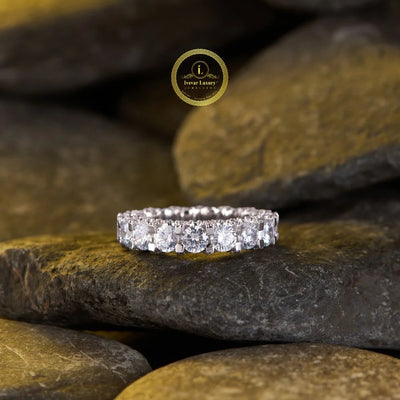
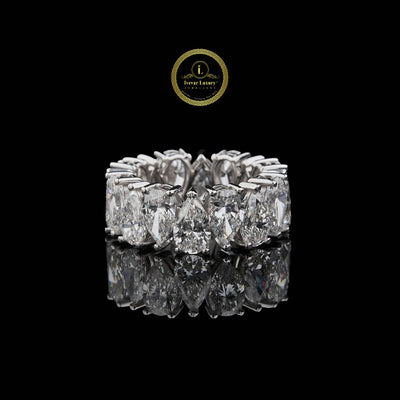
- Eternity bands: a continuous row of stones that sparkles from every angle. See our lab diamond eternity rings and moissanite eternity rings.
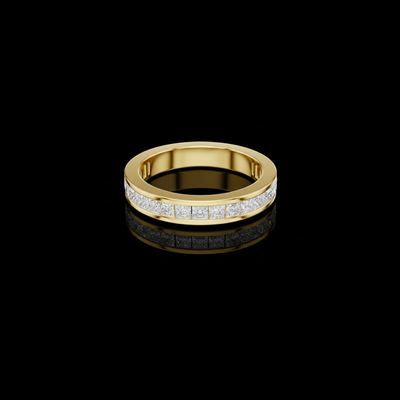
- Channel-set bands: stones held between two walls of metal, smooth to the touch and well protected for daily wear.
- Chevron and curved bands: shaped to sit snugly against a solitaire or halo engagement ring.
- Plain polished bands: the purest expression of a white metal, timeless for both partners.
- Brushed men's bands: a satin finish that hides fine scratches and suits a modern look.
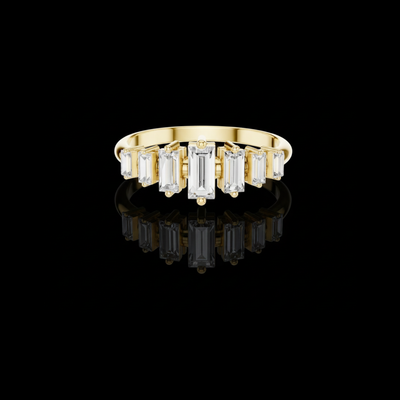
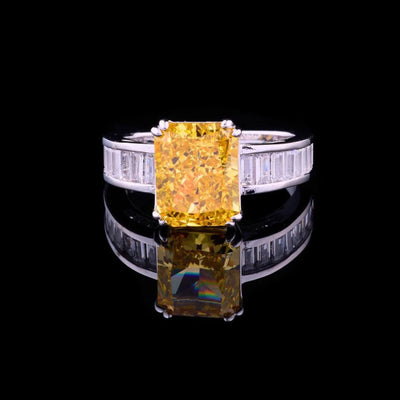
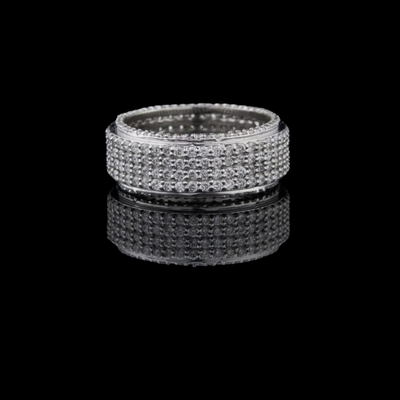
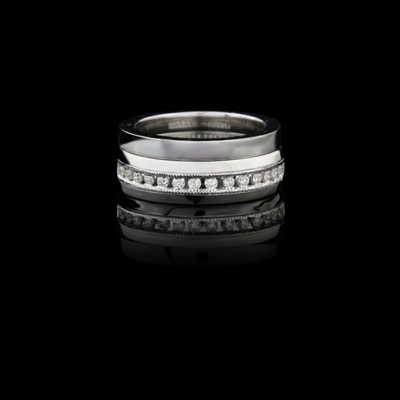
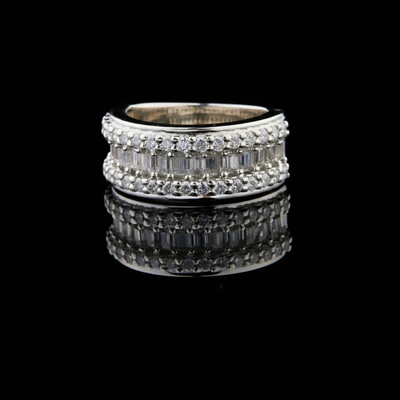
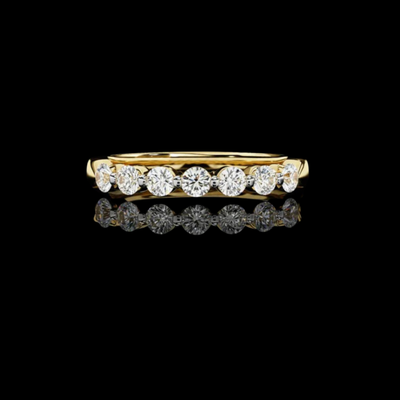
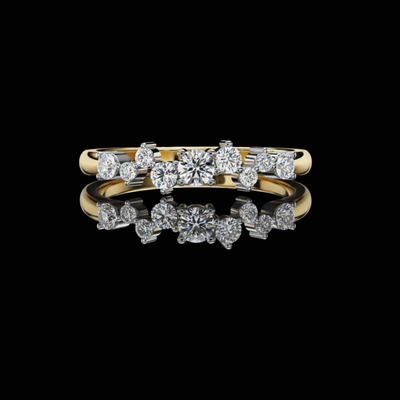
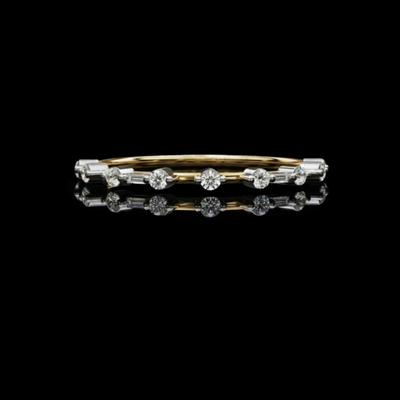
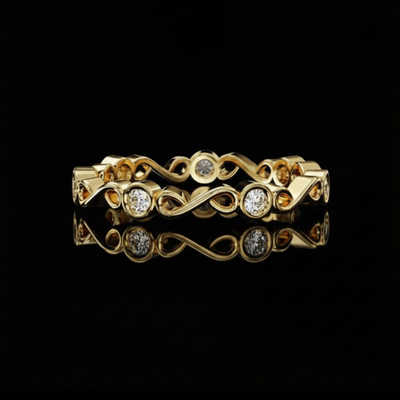
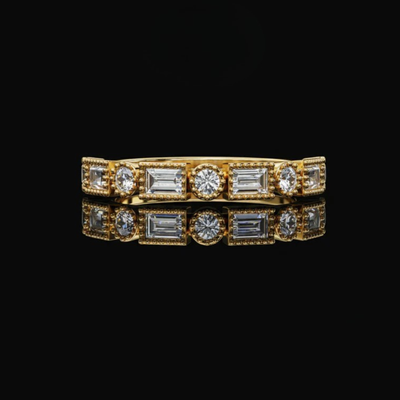
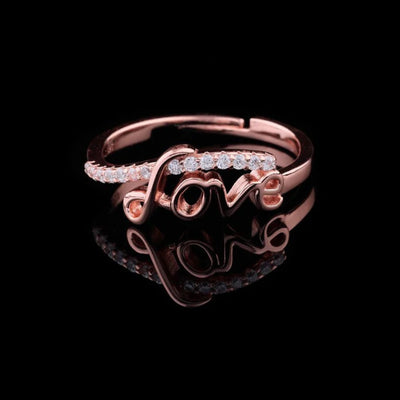
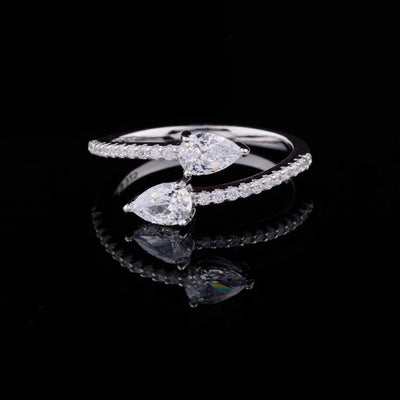
Shop the styles in this guide


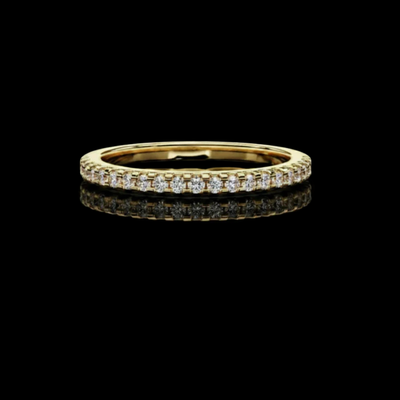
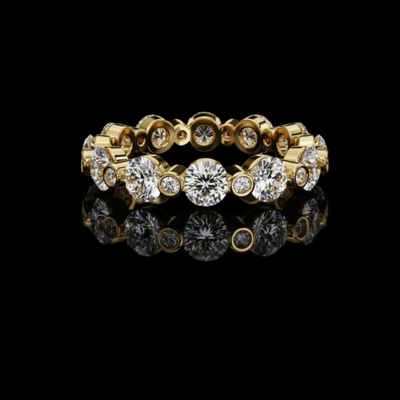
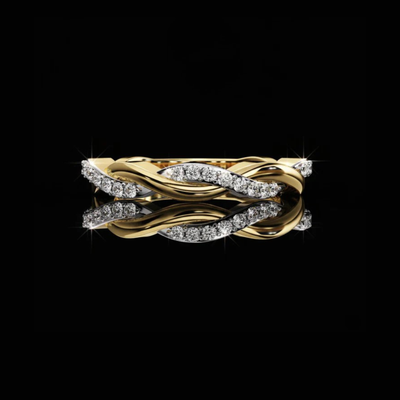
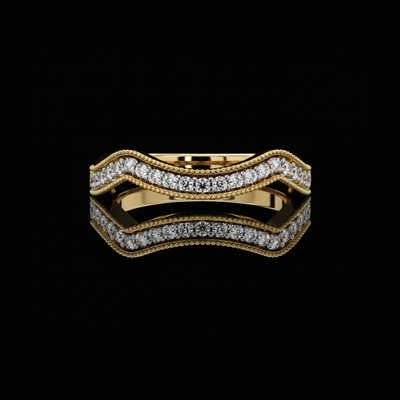

Matching a White Band to Your Engagement Ring
A wedding band spends its whole life pressed against an engagement ring, so the two should suit each other in color, height and shape.
Metal and color
The simplest rule is to match the metal. A white gold band beside a white gold engagement ring will look identical and wear at the same pace, so the plating on both can be renewed together. If your engagement ring is platinum and your band is white gold, they will match when the white gold is freshly plated, but the white gold can look slightly warmer between replatings.
Height and shape
Look at how low the center stone of your engagement ring sits. If it sits low, a straight band may leave a gap or push against the setting. A curved or chevron band can wrap around the center stone so the two rings sit flush. If the engagement ring has a raised setting, almost any straight band will slide neatly underneath.
Width
Many people choose a band close to the width of the engagement ring's shank so the stack looks balanced. A much wider band can overpower a delicate solitaire, while a very thin band can look lost beside a bold halo.
Platinum and White Metals for Men's Bands
Men's bands tend to be wider and thicker, which makes the metal choice even more noticeable. A wide platinum band is very heavy and sits at the top of the price range. Some men love that substantial feel; others find it uncomfortable for all-day wear.
- Brushed white gold: a satin finish hides scratches and makes plating wear less obvious, a smart choice for active hands.
- Polished white gold with flush-set stones: a few lab grown diamonds or moissanite set into the surface add sparkle with nothing to snag.
- 925 sterling silver: a budget-friendly white metal for a first band or a spare travel ring, though softer and prone to tarnish.
Browse our lab grown diamond men's rings for white gold options with stones.
Choosing Stones for a White Band
Most stone-set wedding bands use lab grown diamonds or moissanite. Both are durable enough for a ring you never take off.
Lab grown diamonds are real diamonds, chemically, physically and optically the same as mined diamonds, grown by the CVD or HPHT method. They rate 10 on the Mohs scale. In a white metal setting, their crisp white brilliance looks especially clean.
Moissanite is a separate gemstone, not a diamond. It rates 9.25 on the Mohs scale and has a refractive index of about 2.65, compared with diamond's 2.42, so it shows more colorful fire. It usually costs less than lab grown diamond of the same size, which can offset the cost of a heavier metal.
Settings that suit daily wear
In any white metal, the setting decides how well the stones are protected. Channel and bezel settings surround the stones with metal and are the most practical for busy hands. Shared-prong and pavé settings let more light into the stones and look more delicate, but they need a quick check now and then to make sure every stone is secure.
What Drives the Price of a Band
Whatever the metal, the cost of a wedding band depends on how much metal it uses (width and thickness), the purity of the metal, the stones and how many there are, and the labor needed to set them. A wide platinum band uses a lot of a heavy, costly metal, which is why it sits at the top of the range. A slim white gold band with moissanite or lab grown diamond wedding bands can give the same look for much less.
Weight is the hidden factor. Because platinum is so dense, the same ring design simply contains more grams of metal in platinum than in gold. Even before stones are added, that extra weight pushes the price up. Platinum is also more demanding to cast and finish, which can add to the making cost.
- Metal and weight: denser and higher-purity metals cost more per ring.
- Width and thickness: a 6 mm band uses noticeably more metal than a 3 mm band.
- Stones: the number, size and type of stones, plus the labor to set each one.
- Design detail: milgrain, engraving and sculpted shapes take extra handwork.
Fit and Care
Dense, wide bands can feel snug, so check your size on our ring size chart and consider a comfort-fit inner edge. Clean any band with warm, soapy water and a soft brush, and see our jewelry care guide for storage tips. If you want a bright white band with moissanite stones, explore our moissanite wedding bands in white gold.
Caring for a white gold band
- Clean gently: warm water, mild soap and a soft brush, then dry with a lint-free cloth.
- Avoid harsh chemicals: remove the ring for chlorine pools, bleach and abrasive cleaners, which can dull plating and alloys.
- Store separately: keep it in its own pouch so diamonds and moissanite in other jewelry do not scratch it.
- Replate when needed: once the edges look slightly creamy, a jeweler can apply fresh rhodium.
Tip: Stacked rings rub against each other all day. If you wear a band beside an engagement ring, check both for wear along the touching edges when you clean them.
Shop at Ivevar
While we do not currently offer platinum, our white gold bands give you the same bright white look in 14K or 18K, with free shipping, worldwide delivery and 30-day easy returns. Browse our lab grown diamond wedding bands and moissanite wedding bands, or book a virtual appointment to talk through a custom design.


FAQ
Is platinum better than white gold?
It is more durable and never needs plating, but it is heavier and usually costs more.
Does platinum scratch?
Yes, but the metal is displaced rather than lost, creating a soft patina that can be polished.
Does Ivevar sell platinum bands?
Not currently. We offer 925 silver and 10K, 14K and 18K gold.
How often does white gold need replating?
It depends on how hard the ring is worn. Have it replated when you notice a warmer tone showing through on the edges.
Can you tell platinum and white gold apart by looking?
When both are freshly polished, it is very hard. Platinum feels noticeably heavier in the hand, and the purity stamp inside the band confirms the metal.
Is 14K or 18K white gold closer to platinum?
Once plated, both look the same. 14K is a little harder for daily wear, while 18K has more gold and a slightly warmer base under the rhodium.
Is platinum hypoallergenic?
High-purity platinum rarely causes reactions, which makes it a good choice for sensitive skin. If you have a known allergy, always check the full alloy.
Which stones look best in a white metal band?
Colorless lab grown diamonds and moissanite both look bright and icy in white gold or platinum, because the metal adds no warm tint.
Why is a platinum band heavier than a gold one?
Platinum is much denser than gold alloys, so the same ring design contains more metal by weight. That extra weight is part of why platinum bands usually cost more.
Can a white gold band be made to look like platinum again?
Yes. Polishing and fresh rhodium plating bring back a bright white finish that looks very close to polished platinum.


