

 Engagement Rings
 Anniversary Rings
 Solitaire Rings
 Halo Rings
 Toi Moi Rings
 Three Stone Rings
 Nature Inspired Rings
 Rose Cut Rings
 Fancy Color Rings
 Antique Cut Rings
 Wedding Rings
 Wedding Band Rings
 Exclusive Lab Grown Diamond Rings
 All Lab Grown Diamond Ring
 Engagement Rings
 Three Stone Rings
 Fancy Color Rings
 Antique Cut Rings
 Daily Wear Rings
 Wedding Band Rings
 Exclusive Moissanite Rings
 Earrings
 Bracelet
 Pendant
 Necklace
 Men's Ring
 Bridal Sets
 Rings
 Earrings
 Tennis chain
 Cuban Chains
 Custom Pendant
 Custom Ring
 Custom Teeth Grillz
 Round
 Oval
 Cushion
 Marquise
 Pear
 Emerald
 Heart
 Princess
 Rose Cut
 Radiant
 Antique Cut
 Brooch
 Cufflink
 Keychain
 Unique Products
 +91-9265051773
 Virtual Appointment
 log in




GRA-Certified Moissanite: What the Certificate Really Means
by Aumsri Pradhan on Sep 29, 2026

Short answer: A GRA certificate is a document that often comes with moissanite. It lists the stone's details, such as shape, size, color and clarity, and a report number, sometimes also laser-inscribed on the stone. It is useful as a record, but it is usually supplied through the moissanite manufacturer or seller, so it is not the same as independent grading from labs like GIA or IGI, which do not grade moissanite.
Many moissanite listings mention "GRA certified" as if it were a mark of quality. It is better to think of the card as a label: it tells you what the stone is meant to be and gives it an identity number, but it does not carry the weight of an independent diamond grading report. This guide explains what is printed on a GRA certificate, what it does and does not prove, how to read it, and what actually protects you when you buy moissanite.
What a GRA Certificate Shows
A typical GRA card or report for moissanite lists:
- Shape and cut: round brilliant, oval, emerald and so on, sometimes with a cut grade such as "Excellent".
- Measurements and approximate weight: the stone's dimensions in millimeters and a carat figure, which may be the actual weight or a diamond-equivalent size.
- Color grade: usually on a D–Z style scale borrowed from diamonds.
- Clarity grade: terms such as VVS1 or VS, again borrowed from diamond grading.
- Report number: an identity code, often inscribed on the girdle (the thin outer edge of the stone).
- Stone type: a statement that the stone is moissanite.
Some cards also include a photo of a stone, a QR code or a web address where you can look up the report number. That lookup confirms that the number exists in the issuer's records; it does not mean an independent lab examined your stone.
What It Does Not Prove
GRA is not an internationally recognized independent gemological laboratory in the way GIA and IGI are for diamonds, and there is no single, strictly regulated "GRA" standard. Treat the certificate as a description of the stone and proof that it is moissanite, not as an independent quality guarantee.
In practice, that means a GRA report does not prove:
- Independent grading: the grades are not set by a lab with no stake in the sale.
- Consistent standards: a "D VVS1" from one supplier may not look identical to a "D VVS1" from another.
- Cut quality: an "Excellent" cut label is not backed by the detailed proportion measurements found on major diamond reports.
- Value: the report is not an appraisal and says nothing about resale or insurance value.
| A GRA report can tell you | A GRA report cannot tell you |
|---|---|
| The stone is sold as moissanite | That an independent lab confirmed the grades |
| Its shape and measurements | How well it is cut compared with other stones |
| The color and clarity it is claimed to have | That those grades match another supplier's grades |
| A report number to match to the stone | What the stone or ring is worth |
Why Moissanite Comes With GRA Reports
The major independent labs that grade diamonds, such as GIA and IGI, do not issue grading reports for moissanite. Moissanite is a lab-made gemstone with a very consistent appearance, and the market never developed a demand for independent grading the way it did for diamonds, where small differences in color and clarity change the price a great deal.
Moissanite suppliers filled that gap with their own paperwork. A GRA card is a convenient way to give each stone an identity and a simple description that buyers already understand, because it uses familiar diamond terms. That is helpful, as long as you read it as a description rather than a verdict.
For you as a buyer, the useful takeaway is simple: with moissanite, the certificate rarely changes much. Two stones with the same claimed grade can look slightly different, and two stones with different grades can look almost identical on the hand. Your own eyes, good photos and a fair return policy matter more.
Reading the Color and Clarity Grades
Moissanite reports borrow the letters and terms used for diamonds, which makes them easy to read but can suggest more precision than there is. In general:
- Color: D, E and F mean colorless; G, H and I mean near-colorless, which can show a slight warm tint in larger stones or in daylight.
- Clarity: grades such as VVS or VS mean any inclusions are very hard or hard to see under magnification. Most jewelry moissanite is eye-clean.
Because these grades are not set by an independent lab, compare stones by looking at them in photos and video, not only by the letters on a card.
| Grade on the card | What it means | What to look for |
|---|---|---|
| D, E, F color | Colorless | An icy look in white gold or silver |
| G, H, I color | Near-colorless | A faint warmth, softened by yellow or rose gold |
| VVS clarity | Inclusions very hard to see at 10x | Clean to the eye |
| VS clarity | Inclusions hard to see at 10x | Usually clean to the eye |
Tip: Ask for a video of the actual stone or ring taken in daylight and indoors. It tells you more about color and sparkle than any letter grade, and it is the best way to compare two stones with the same card.
Checking the Report Number
If your stone has a report number, it is worth a quick check when the piece arrives.
- Find the inscription: under a 10x loupe, look along the girdle. The number is tiny and may be hidden by prongs once the stone is set.
- Match the card: the inscribed number should match the number printed on the certificate.
- Compare measurements: a jeweler can measure a loose stone, or the visible face of a set stone, and compare it with the card.
- Use the lookup if offered: some cards include a QR code or website. A match shows the record exists, nothing more.
Do not worry if you cannot see the inscription in a finished ring. Prongs and bezels often cover part of the girdle, and a jeweler can still identify the stone as moissanite by other means.
How a Gemologist Identifies Moissanite
You do not need a certificate to know whether a stone is moissanite. A gemologist can tell in a few minutes. Moissanite is double refractive, so under a loupe the back facet edges look doubled when viewed at an angle, something diamond does not show. Basic thermal testers can mistake moissanite for diamond because both move heat well, so jewelers use a dedicated moissanite tester that measures electrical conductivity instead.
Other clues help too. Moissanite has a higher refractive index than diamond, about 2.65 compared with 2.42, and it splits light into more rainbow color. It is also slightly less dense than diamond. Together, these properties make moissanite easy to identify for anyone with basic gem testing tools, which is why the certificate is not the only, or even the main, way to confirm what you own.
Moissanite vs Lab Diamond Paperwork
Lab grown diamonds are real diamonds, made by CVD or HPHT, and can be graded by independent labs in the same way as mined diamonds. Moissanite is a different gemstone, silicon carbide, rated 9.25 on the Mohs scale compared with 10 for diamond, so its paperwork works differently. If an independent grading report matters a lot to you, that is one reason some buyers choose a lab diamond. Our moissanite vs lab grown diamond vs diamond guide covers the other differences.
| Point | GRA moissanite report | IGI or GIA lab diamond report |
|---|---|---|
| Who issues it | Supplied through the manufacturer or seller | An independent gemological lab |
| Grading standard | Borrowed diamond terms; varies | The lab's published 4Cs system |
| Growth method stated | Not usually | Identified as lab grown, often with CVD or HPHT noted |
| Effect on price | Small | Large; grades drive diamond pricing |
At Ivevar, many of our lab grown diamonds come with IGI certificates. If you want that level of independent documentation, browse our lab grown diamonds or compare lab diamond engagement rings side by side with moissanite.
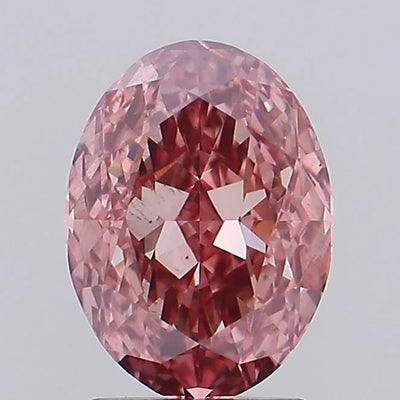
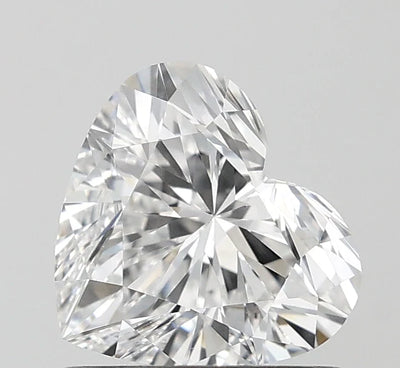
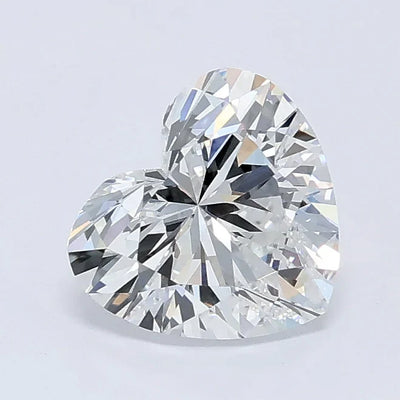
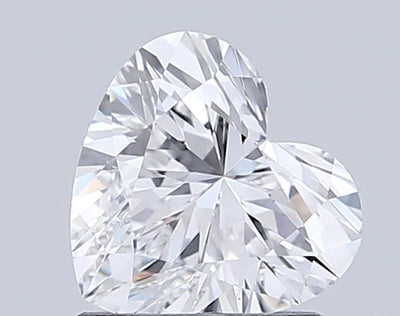
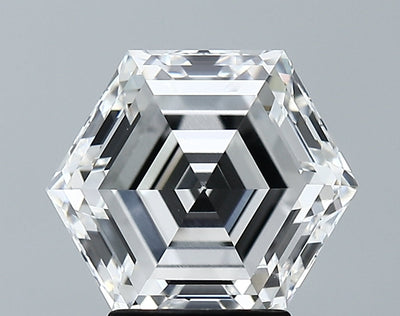
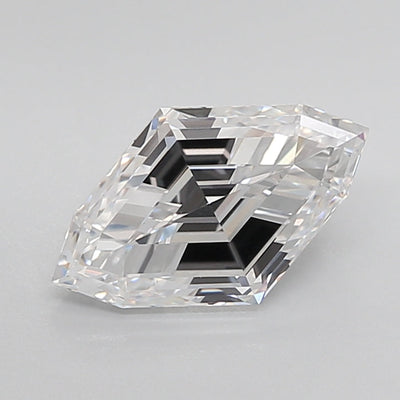
Shop the styles in this guide


How to Buy Moissanite With Confidence
- Clear naming: buy from a seller who describes the stone clearly as moissanite, never as "diamond" or a vague "simulant".
- Real photos: ask for real photos or video of the actual piece.
- Return policy: check the return policy before you buy.
- Metal details: confirm the metal is solid gold or 925 sterling silver, not plated base metal.
- Independent check: if you want independent confirmation, a local gemologist can test and identify moissanite.
Watch for a few red flags as well. Be cautious if a listing calls moissanite a "diamond", promises that a GRA card makes the stone "certified like a diamond", or offers no way to return the piece. A good seller explains what the paperwork is and is not.
Judging Quality With Your Own Eyes
Because the paperwork is limited, it pays to know how to check a moissanite yourself. You do not need special tools for most of this.
- Look in daylight: near a window, away from direct sun, color is easiest to judge. Compare the stone with a sheet of white paper; a colorless stone should look crisp and icy, with no obvious yellow or gray.
- Check the sparkle evenly: tilt the piece slowly. A well-cut stone flashes across its whole face, without a dark center or a dull "window" you can see straight through.
- Look at the outline: the shape should be symmetrical, with straight sides on step cuts and a clean point on pears and marquises.
- Inspect the setting: prongs should sit snugly over the edge of the stone, with no gaps, and the stone should not move when touched.
If the piece passes these checks, it is a good stone, whatever the card says.
Certificate, Appraisal or Receipt: Which Is Which?
Buyers often mix up three different documents. Each does a different job, and it helps to know which one you need.
- Grading report or certificate: describes the stone itself, such as its shape, size, color and clarity. For moissanite this is usually a GRA card; for diamonds it is a report from a lab such as IGI or GIA.
- Appraisal: a written estimate of what the finished piece would cost to replace, prepared by an appraiser. It covers the stone, the metal and the workmanship, and it is what insurers usually want.
- Receipt or invoice: proof of what you paid, when and to whom. It is the simplest record for returns, servicing and many insurance policies.
A GRA card is not a replacement for the other two. Keep all three together if you have them. If you plan to insure a moissanite ring, ask your insurer what they need before you buy, so you know whether an appraisal is required.
It is also worth knowing that "certified" on its own is not a protected word. It only tells you that someone issued a document. The useful questions are always who issued it, what they examined, and whether they had any interest in the sale.
Questions to Ask the Seller
A few direct questions will tell you more about a moissanite purchase than the certificate itself:
- Who issues the report? A good seller will tell you plainly that it is a supplier report, not independent lab grading.
- Is the carat weight actual or diamond-equivalent? Moissanite is lighter than diamond, so the two figures differ, and the millimeter size is what you will see.
- Can I see the actual piece? Ask for photos or video of the ring or pendant you will receive, not only a stock image.
- What metal is it? Confirm the karat or 925 silver stamp, and whether white gold is rhodium plated.
- What happens if I am not happy? Check the return window, who pays shipping, and any exceptions.
At Ivevar the answers are simple: our moissanite is always sold as moissanite, pieces are made to order in 925 sterling silver or 10K, 14K or 18K gold, delivery is worldwide with free shipping, and you have 30-day easy returns. Pierced earrings are returnable only if faulty, for hygiene reasons. If you would like to see a stone before ordering, you can book a virtual appointment.
What Matters More Than the Paper
For most buyers, the cut, the setting and the metal make a bigger difference to how a piece looks and lasts than any certificate. A well-cut stone in a secure setting will outshine a higher-graded stone in a poor one. Ivevar pieces are made to order in 925 sterling silver or 10K to 18K gold, and the price depends mainly on stone size, design and metal. Browse moissanite engagement rings to compare cuts and settings.
- Cut: even facets and good symmetry give bright, lively sparkle across the whole stone.
- Setting: secure prongs or a bezel protect the stone and keep it in place for years.
- Metal: 14K gold is a strong, popular choice for daily wear; 18K is richer in color but softer.
- Seller support: worldwide delivery, free shipping and 30-day easy returns at Ivevar mean you can judge the piece in person before you decide.
Ready to see moissanite for yourself? Start with our moissanite solitaire rings, explore all moissanite jewelry, or book a virtual appointment if you would like help choosing a stone or a custom design.
Shop Moissanite at Ivevar


FAQ
Is a GRA certificate real?
It is a real document describing the stone, but it is not independent lab grading like GIA or IGI.
Do GIA or IGI grade moissanite?
No. They grade diamonds. A gemologist can still identify moissanite.
Should I buy moissanite without a GRA certificate?
You can, from a trusted seller who clearly discloses it as moissanite and offers returns.
Can a diamond tester tell moissanite from diamond?
A basic thermal tester often cannot. A moissanite tester, which checks electrical conductivity, or a gemologist with a loupe can.
Does a GRA certificate add value to moissanite?
Very little. It is a helpful record, but it does not change resale value or make the stone an investment.
Can I insure moissanite jewelry with a GRA certificate?
Insurers usually ask for a purchase receipt or an appraisal. The GRA card can support your description of the stone, but it is not an appraisal.
Why does my GRA card say "D VVS1" when the stone looks slightly warm?
Grades on supplier reports are not independently verified, and lighting changes how color looks. Judge the stone in daylight and, if you are unhappy, use the return policy.
What should I keep with my moissanite jewelry?
Keep the receipt, any certificate, and clear photos of the piece. Together they make it easy to describe, insure or service later.
Does moissanite need a certificate to be resold?
No. Any jeweler can identify moissanite with a tester or loupe. A certificate and receipt simply make the piece easier to describe.
Aumsri Pradhan is the founder of Ivevar Luxury, a Surat-based fine jewelry brand that designs and handcrafts lab grown diamond and moissanite jewelry in its own workshop.


