

 Engagement Rings
 Anniversary Rings
 Solitaire Rings
 Halo Rings
 Toi Moi Rings
 Three Stone Rings
 Nature Inspired Rings
 Rose Cut Rings
 Fancy Color Rings
 Antique Cut Rings
 Wedding Rings
 Wedding Band Rings
 Exclusive Lab Grown Diamond Rings
 All Lab Grown Diamond Ring
 Engagement Rings
 Three Stone Rings
 Fancy Color Rings
 Antique Cut Rings
 Daily Wear Rings
 Wedding Band Rings
 Exclusive Moissanite Rings
 Earrings
 Bracelet
 Pendant
 Necklace
 Men's Ring
 Bridal Sets
 Rings
 Earrings
 Tennis chain
 Cuban Chains
 Custom Pendant
 Custom Ring
 Custom Teeth Grillz
 Round
 Oval
 Cushion
 Marquise
 Pear
 Emerald
 Heart
 Princess
 Rose Cut
 Radiant
 Antique Cut
 Brooch
 Cufflink
 Keychain
 Unique Products
 +91-9265051773
 Virtual Appointment
 log in




Short answer: Moissanite is worth it if you want a large, brilliant, durable stone on a budget. It is very hard (9.25 on the Mohs scale), it does not cloud or fade, and it costs far less than a diamond of the same size. It is not the best choice if having a real diamond, an IGI or GIA report, or a traditional white sparkle is important to you.
Is moissanite worth it? For many buyers, yes. Moissanite offers huge sparkle and everyday durability at a fraction of a diamond's price. But it is not the right choice for everyone, so here are the honest pros and cons, plus what to check before you buy.
We make both moissanite and lab grown diamond jewelry, so we have no reason to push one over the other. The goal of this guide is to help you work out which stone fits your taste, your budget and the way you live.
The Pros of Moissanite
- Great value: a large moissanite costs far less than a diamond of the same size.
- Very durable: 9.25 on the Mohs hardness scale, second only to diamond among popular gemstones, so it suits daily wear.
- Intense sparkle: moissanite shows more fire (rainbow flashes) than diamond.
- Consistent quality: lab-created moissanite is usually near-colorless with very high clarity.
- No mining: jewelry-grade moissanite is created in a lab.
- Stable for life: it does not turn cloudy, fade or change color with age.
The value point is the one most buyers notice first. Because moissanite costs much less per stone, you can choose a bigger center stone, add a halo, or pick a fully set eternity band without your budget getting out of hand.
Where the savings go
The money you save on the stone does not have to disappear. Many buyers put it toward a higher karat of gold, a hand-finished setting or a matching wedding band. Others keep the ring simple and spend the difference on the wedding, a trip or savings. Either way, the lower stone cost gives you more choices.
The Cons of Moissanite
- It is not a diamond: if the word diamond matters to you or your partner, choose a lab grown diamond instead.
- Different sparkle: in bright sunlight, the rainbow effect can be noticeable, especially in stones over 2 carats.
- Low resale value: moissanite is bought to wear and enjoy, not to resell.
- Grading is less standard: moissanite is not graded by IGI or GIA the way diamonds are.
- Double refraction: under magnification, facet edges can look slightly doubled, most visible in step cuts such as emerald.
None of these is a flaw in the stone itself. They are differences that matter to some people and not to others. If you love the look and you are buying to wear, most of the cons fall away.
A note on resale
Think of moissanite like a well-made watch or a good pair of shoes: you buy it to use and enjoy, not to sell later. The same is true of lab grown diamonds. If you expect to sell a piece in a few years, no lab-created stone is a good fit, and that should guide your choice more than sparkle or size.
Moissanite vs Diamond at a Glance
- Hardness: moissanite is 9.25 on the Mohs scale; diamond, natural or lab grown, is 10.
- Brilliance: moissanite has a higher refractive index than diamond (about 2.65 vs 2.42), so it returns a lot of light.
- Fire: moissanite splits light into more colorful flashes, while diamond shows a crisper mix of white and color.
- Composition: moissanite is silicon carbide; diamond is pure carbon.
- Weight: moissanite is lighter than diamond, so stones are usually sold by millimeter size or as a "diamond equivalent" weight.
| Feature | Moissanite | Lab Grown Diamond |
|---|---|---|
| Material | Silicon carbide | Carbon (real diamond) |
| Mohs hardness | 9.25 | 10 |
| Refractive index | About 2.65 | About 2.42 |
| Sparkle | Strong rainbow fire | Classic white brilliance |
| Grading | Brand or seller report | IGI or GIA report |
| Relative cost | Lowest | Moderate |
For a side-by-side look at all three stones, see moissanite vs lab grown diamond vs diamond.
Moissanite vs Cubic Zirconia
People sometimes lump moissanite in with cubic zirconia (CZ) because both are lab-made and both look like diamond. They are very different stones, and the difference matters for anything you plan to wear often.
- Hardness: CZ is about 8 to 8.5 on the Mohs scale, so it scratches more easily and its facet edges wear down over years. Moissanite at 9.25 keeps sharp, polished facets.
- Appearance over time: worn CZ can start to look cloudy because of tiny scratches on the surface. Moissanite keeps its brilliance with simple cleaning.
- Sparkle: moissanite has a higher refractive index, so it looks brighter and livelier.
- Cost: CZ is the cheapest option and suits costume or short-term jewelry. Moissanite costs more but is made to last a lifetime.
If you want something to wear every day for decades, especially an engagement ring, moissanite is worth the step up from CZ.
How to tell them apart
Side by side, CZ tends to look slightly softer and more glassy, while moissanite looks brighter and more fiery. CZ is also noticeably heavier for its size. A multi-tester will identify moissanite, and a jeweler can tell the two apart quickly with a loupe. The simplest check is the seller's description: a reputable seller will always say exactly which stone you are buying.
What Affects the Cost of Moissanite Jewelry
- Stone size: larger stones cost more, though the jump is much gentler than with diamonds.
- Color grade: colorless grades cost a little more than near-colorless ones.
- Cut and shape: precise faceting shows off the stone's fire; some fancy shapes take more rough material to cut.
- Metal: 925 sterling silver keeps the total low, while 10K, 14K and 18K gold add value and long-term durability.
- Setting: halos, pave bands and hidden details add stones and labor.
Because the stone itself is relatively affordable, the metal and the design often make up a bigger share of the total than they would with a diamond ring. That is good news: it means you can put more of your budget into a well-made setting that will hold the stone securely for years.
How to Judge Moissanite Quality
The 4Cs that describe diamonds (cut, color, clarity and carat) are a useful way to look at moissanite too, with a few differences.
Color
Moissanite is sold in colorless and near-colorless grades, and some sellers use the same D-to-Z style letters as diamonds. Colorless stones look icy white and suit white gold or 925 sterling silver. Near-colorless stones can show a faint warmth that blends nicely into yellow or rose gold. Larger stones show color more easily, so it is worth choosing a colorless grade above roughly 2 carats diamond equivalent.
Clarity
Lab-grown moissanite usually has very high clarity, with no inclusions visible to the eye. Under magnification, some stones show tiny needle-like inclusions, which are normal and do not affect durability or how the stone looks on the hand.
Cut
Cut has the biggest effect on how good moissanite looks. A well-proportioned stone returns light evenly across its face; a poorly cut one can look glassy or show dark patches. Good cutters also orient the stone to reduce the doubled-facet effect of double refraction when you look straight down through the table.
Size
Because moissanite is lighter than diamond, compare stones by millimeter measurement. That is the size people actually see, and it is the only fair way to compare a moissanite with a diamond.
Tips for Buying Moissanite
- Compare by size: compare stones by millimeter size, not just carat, so you know how large the stone will look on the hand.
- Match color to metal: choose a colorless grade if you plan to set it in white gold, as warmer tones show more against a white metal.
- Pick the right cut: round brilliant for maximum fire, oval or pear to look longer on the finger, emerald for a calmer, mirror-like look.
- Check documentation: ask what quality documentation comes with the stone and what it actually covers.
- Look at the setting: prongs should be even and secure, and pointed shapes should have their tips protected.
- Check the labeling: the stone should be sold clearly as moissanite, never as "diamond" or a vague trade name.
Tip: If you are deciding between two sizes, go by how the stone looks on the hand rather than by the number. A well-cut medium stone in a slim band often looks bigger than a larger stone in a heavy setting.
 Shown: Marquise Cut Moissanite Classic Solitaire Stud Earrings
Shop the styles in this guide

Is Moissanite Worth It for Each Type of Jewelry?
The answer can change depending on what you are buying.
| Piece | Worth it? | Why |
|---|---|---|
| Engagement ring | Yes, if a real diamond isn't required | Bigger center stone, durable for daily wear |
| Eternity band | Strong yes | Many stones, so savings add up |
| Stud earrings | Strong yes | Sparkle difference is hard to see at ear level |
| Tennis bracelet | Strong yes | Dozens of stones at a manageable price |
| Hip hop pendants and chains | Yes | Fully iced look without a diamond budget |
| Heirloom or investment piece | Probably not | Low resale value; consider a lab grown diamond |
Choosing a Shape and Setting
Moissanite comes in every popular shape, and the shape you pick changes how much fire you see and how the ring wears.
- Round: the most brilliant shape and the safest classic choice. It shows the most fire. Browse round moissanite.
- Oval: looks larger for its size and makes fingers appear longer.
- Emerald: long step facets give a calm, mirror-like flash rather than a burst of rainbow color.
- Pear and marquise: elegant and elongating, but protect the points with V-prongs or a bezel.
- Cushion and radiant: softer corners with plenty of sparkle; a good middle ground between round and emerald.
For settings, a solitaire shows off the center stone, a halo adds extra sparkle around it, and a bezel gives the best protection for active hands. Four or six prongs both work well; six prongs hold a round stone a little more securely, while four show more of the stone.
Who Should Choose Moissanite?
- Budget-minded couples: couples who want a bigger center stone within a set budget.
- Sparkle lovers: anyone who loves colorful, fiery sparkle.
- Everyday wearers: buyers of everyday pieces such as stud earrings, tennis bracelets and pendants.
- Travelers: people who want a beautiful travel or backup ring.
Moissanite may not be right for you if your partner has always dreamed of a diamond, if you want a ring that might be passed down with a grading report, or if you strongly prefer a calm, white sparkle over colorful fire. In those cases, a lab grown diamond is usually the better fit.
How Moissanite Holds Up Over Time
Moissanite does not cloud, fade or change color with age. When a moissanite ring looks dull, the cause is almost always a film of lotion, soap or skin oil on the back of the stone. Soak it in warm water with a drop of mild dish soap, brush gently behind the stone with a soft toothbrush, rinse and pat dry. Our jewelry care guide covers metal care and storage too.
Because it is so hard, moissanite resists scratches from everyday contact. It can still chip if struck hard at a weak point such as a pointed tip, so a protective setting is a smart choice for marquise, pear and princess shapes.
Simple habits that keep it bright
- Last on, first off: put your ring on after lotion and perfume, and take it off before the gym, gardening or cleaning.
- Store it separately: moissanite can scratch softer gems and gold, so give each piece its own pouch.
- Check the prongs: have a jeweler look at the setting about once a year, especially on a ring you wear every day.
Moissanite or Lab Grown Diamond?
If you like the idea of a lab-created stone but want a real diamond, a lab grown diamond is the middle ground. It is chemically, physically and optically the same as a mined diamond, grown by CVD or HPHT, and often graded by IGI or GIA, yet it costs much less than a mined stone. Read our full comparison, Lab Grown Diamond vs Moissanite, or browse moissanite engagement rings.
A simple way to decide: if you would be happy telling people "it's moissanite", and you love the sparkle, moissanite gives you the most for your money. If you would rather say "it's a diamond", choose a lab grown diamond engagement ring.
Three common situations
- Tight budget, big stone wanted: moissanite lets you reach the size you want without stretching your finances.
- Partner wants "a diamond": choose a lab grown diamond, and consider moissanite for matching earrings or a bracelet later.
- Travel or backup ring: a moissanite copy of your main ring gives you the look without worrying about losing the original on holiday.
Shop Moissanite at Ivevar
Ivevar handcrafts moissanite jewelry in 10K, 14K and 18K gold and 925 sterling silver, and every piece is clearly labeled as moissanite. Browse all moissanite, compare moissanite solitaire rings, or book a virtual appointment to design something custom. We ship free worldwide and offer 30-day easy returns.
FAQ
Will moissanite last forever?
Yes. With normal care, moissanite keeps its hardness, color and sparkle for a lifetime.
Does moissanite pass a diamond tester?
It can pass a basic thermal tester, but multi-testers that also check electrical conductivity identify it as moissanite.
Can people tell moissanite from a diamond?
Most people cannot at a normal viewing distance. A trained eye may notice the stronger rainbow flashes, especially in larger stones and in direct sunlight.
Is moissanite a fake diamond?
No. Moissanite is a gemstone in its own right, not a diamond imitation like cubic zirconia. It simply looks similar to a diamond.
Is moissanite good for an engagement ring?
Yes. It is hard enough for daily wear and keeps its sparkle. The main question is whether having a real diamond matters to you or your partner.
Does moissanite turn yellow?
Modern colorless moissanite does not turn yellow. Some stones can show a faint warm tint in certain lights, so choose a colorless grade for white gold.
Is moissanite better than cubic zirconia?
For lasting jewelry, yes. Moissanite is much harder, sparkles more and keeps its polish, while cubic zirconia can scratch and look cloudy over time.
Can moissanite be set in sterling silver?
Yes. 925 sterling silver is an affordable choice for earrings and pendants. For rings worn every day, gold holds the stone more securely over the years.
Can I wear moissanite every day?
Yes. At 9.25 on the Mohs scale it resists everyday scratches. Just clean it regularly and take it off for heavy work.
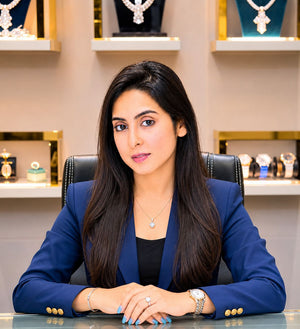
Author Bio
Aumsri Pradhan
Founder, Ivevar Luxury
Aumsri Pradhan leads Ivevar Luxury, a Surat-based brand that handcrafts lab grown diamond and moissanite jewelry in its own workshop, and shares practical buying guidance on the Ivevar blog. View author profile ›


