Engagement Rings
 Anniversary Rings
 Solitaire Rings
 Halo Rings
 Toi Moi Rings
 Three Stone Rings
 Nature Inspired Rings
 Rose Cut Rings
 Fancy Color Rings
 Antique Cut Rings
 Wedding Rings
 Wedding Band Rings
 Exclusive Lab Grown Diamond Rings
 All Lab Grown Diamond Ring
 Engagement Rings
 Three Stone Rings
 Fancy Color Rings
 Antique Cut Rings
 Daily Wear Rings
 Wedding Band Rings
 Exclusive Moissanite Rings
 Earrings
 Bracelet
 Pendant
 Necklace
 Men's Ring
 Bridal Sets
 Rings
Rings
 Earrings
 Tennis chain
 Cuban Chains
 Custom Pendant
 Custom Ring
 Custom Teeth Grillz
 Round
Round
 Oval
Oval
 Cushion
 Marquise
 Pear
Pear
 Emerald
 Heart
Heart
 Princess
 Rose Cut
 Radiant
 Antique Cut
 Brooch
 Cufflink
 Keychain
 Unique Products
 +91 9265051773
 Virtual Appointment
 log in



What Is Moissanite? The Complete Beginner's Guide
by Aumsri Pradhan on Sep 29, 2026

Short answer: Moissanite is a gemstone made of silicon carbide. It was first found in a meteor crater, but almost all moissanite in jewelry today is grown in a lab. It is not a diamond, yet it looks very similar: it is extremely hard (9.25 on the Mohs scale), shows more colorful fire than a diamond, and costs far less than a diamond of the same size.
- ✓ What it is: silicon carbide (SiC), a different material from diamond, which is pure carbon.
- ✓ Hardness: 9.25 on the Mohs scale, second only to diamond (10) among popular gemstones.
- ✓ Sparkle: more than twice the dispersion (colorful fire) of diamond, so it flashes more rainbow color.
- ✓ Durability: suits everyday wear, including engagement rings, and does not turn cloudy.
- ✓ Value: costs a fraction of a mined or lab grown diamond of similar size.
Where Moissanite Comes From
In 1893, French chemist Henri Moissan examined tiny crystals from the Canyon Diablo meteor crater in Arizona. He first thought they were diamonds, but later identified them as silicon carbide. The mineral was named moissanite in his honor.
Natural moissanite is extremely rare, found only in tiny grains. Gem-quality moissanite became possible once scientists learned to grow large, clear silicon carbide crystals in a lab, and it entered the jewelry market in the late 1990s. Early stones often had a yellow or green tint; today's moissanite is available colorless.
Moissanite vs Diamond: The Key Differences
| Property | Moissanite | Diamond |
|---|---|---|
| Material | Silicon carbide | Carbon |
| Hardness (Mohs) | 9.25 | 10 |
| Refractive index | 2.65–2.69 | 2.42 |
| Dispersion (fire) | 0.104 | 0.044 |
| Refraction | Double refractive | Single refractive |
| Weight for the same size | About 10% lighter | Heavier |
The biggest visible difference is sparkle. Moissanite's higher dispersion creates more rainbow flashes, especially in sunlight. Some people love this; others prefer the crisper white sparkle of a diamond. Because moissanite is double refractive, cutters orient the stone so the facets do not look doubled from the top.
Because moissanite is lighter than diamond, it is usually sold by millimeter size, or by "diamond equivalent weight", rather than by carat weight alone.

Is Moissanite a Real Diamond?
No. Moissanite is a real gemstone, but it is not a diamond and should never be sold as one. It is often called a diamond alternative or diamond simulant, because it looks similar while being a different material. Lab grown diamonds are a different product again: they are real diamonds made of carbon, just created in a lab.
One practical point: moissanite conducts heat much like diamond, so some basic thermal diamond testers read it as diamond. Testers that also measure electrical conductivity, or a jeweler's inspection for double refraction, can tell them apart.
How to Choose Moissanite
- Color: colorless (often described as D–F) looks icy white; near-colorless (G–I) shows a slight warmth that suits yellow and rose gold.
- Cut: a well-cut stone controls the rainbow flashes and looks bright rather than glassy. Round and oval cuts are the most popular.
- Size: compare stones by millimeter measurement, since carat weights are not directly comparable with diamond.
- Certificate: many moissanite pieces come with a GRA certificate. It records the stone's details, but it is usually supplied through the seller and is not the same as independent grading from a lab such as GIA or IGI.
- Metal: choose 14K or 18K solid gold for rings you will wear every day.

Caring for Moissanite
Moissanite does not turn cloudy or change color over time. If it looks dull, the cause is almost always a film of lotion, soap or skin oil. Soak it in warm water with a drop of mild dish soap, brush gently behind the stone with a soft toothbrush, rinse and dry. Have the setting checked by a jeweler once a year so the stone stays secure.
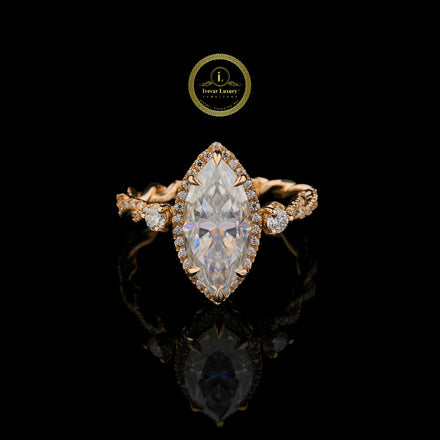
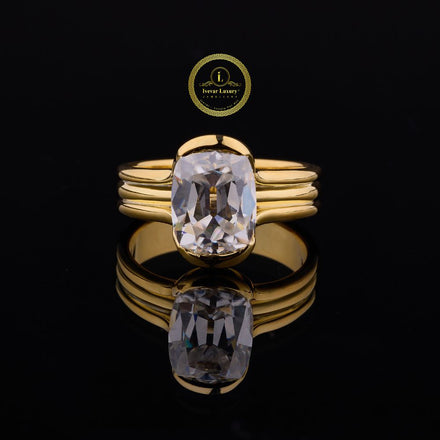
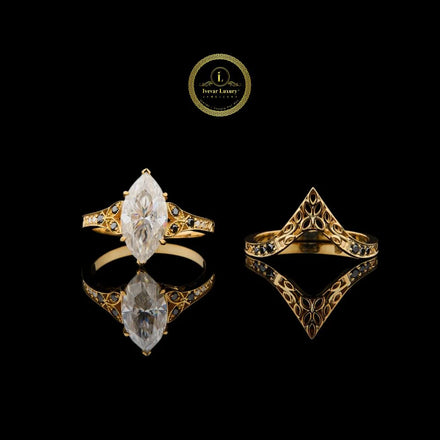
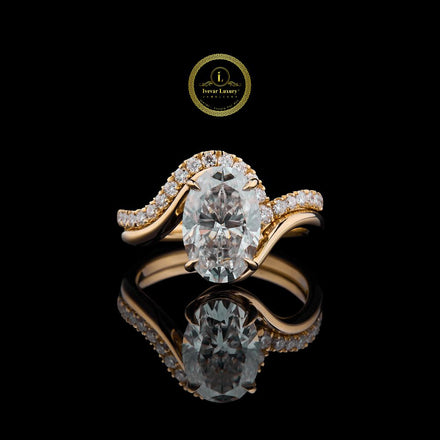
Shop Moissanite at Ivevar


Swipe to see more →
Frequently Asked Questions
What is moissanite made of?
Silicon carbide (SiC). Diamond is pure carbon, so the two are different materials.
Is moissanite natural or lab-made?
Natural moissanite exists but is extremely rare and tiny. Moissanite used in jewelry is lab-grown.
Does moissanite sparkle more than diamond?
It shows more colorful fire, because its dispersion is more than twice that of diamond. Diamond shows crisper white sparkle. Which looks better is a matter of taste.
Is moissanite good for an engagement ring?
Yes. At 9.25 on the Mohs scale it is hard enough for daily wear, and it keeps its sparkle for life with regular cleaning.
Will moissanite get cloudy?
No. Moissanite does not cloud or change color. A dull look comes from dirt and oil on the surface, which cleaning removes.
Can a diamond tester detect moissanite?
Basic thermal testers can mistake moissanite for diamond. Testers that measure electrical conductivity, or a trained jeweler, can tell them apart.
Sources

Aumsri Pradhan is the founder of Ivevar Luxury, a Surat-based fine jewelry brand that designs and handcrafts lab grown diamond and moissanite jewelry in its own workshop. She leads the brand's design and customer experience, from engagement rings and bridal sets to custom pieces made to each client's story. Through the Ivevar blog, she shares practical guidance on lab grown diamonds, moissanite, diamond grading and ring design to help buyers choose with confidence.