

 Engagement Rings
 Anniversary Rings
 Solitaire Rings
 Halo Rings
 Toi Moi Rings
 Three Stone Rings
 Nature Inspired Rings
 Rose Cut Rings
 Fancy Color Rings
 Antique Cut Rings
 Wedding Rings
 Wedding Band Rings
 Exclusive Lab Grown Diamond Rings
 All Lab Grown Diamond Ring
 Engagement Rings
 Three Stone Rings
 Fancy Color Rings
 Antique Cut Rings
 Daily Wear Rings
 Wedding Band Rings
 Exclusive Moissanite Rings
 Earrings
 Bracelet
 Pendant
 Necklace
 Men's Ring
 Bridal Sets
 Rings
 Earrings
 Tennis chain
 Cuban Chains
 Custom Pendant
 Custom Ring
 Custom Teeth Grillz
 Round
 Oval
 Cushion
 Marquise
 Pear
 Emerald
 Heart
 Princess
 Rose Cut
 Radiant
 Antique Cut
 Brooch
 Cufflink
 Keychain
 Unique Products
 +91-9265051773
 Virtual Appointment
 log in




What Is a Dutch Marquise Diamond? The Elongated Cut Explained
by Aumsri Pradhan on Sep 29, 2026

Short answer: A Dutch marquise is an elongated shape with pointed ends like a marquise, but with straighter, angular sides that give it a hexagon-like outline and an antique feel. It suits buyers who love long, finger-slimming stones but want something more architectural than the classic curved marquise. At Ivevar you can choose it in lab grown diamond or moissanite, set in 10K, 14K or 18K gold.
What Is a Dutch Marquise?
A Dutch marquise is a long, narrow gemstone shape with a point at each end. Where a classic marquise has two smooth, curved sides, a Dutch marquise has sides made of straight edges that meet at angles. Look at one from above and the outline reads as a stretched hexagon: two points at the ends, plus soft corners along each side.
You will also see the shape described as an elongated hexagon, a hexagon marquise or an antique marquise. Names vary between cutters and sellers, so it is worth looking at the outline in photos or video rather than relying on the label alone.
The appeal is simple. It keeps the length and drama of a marquise, which makes fingers look longer, but the crisp angles give it a vintage, almost Art Deco character. It looks less like a modern brilliant and more like a stone cut by hand for an heirloom ring.
Dutch Marquise vs Classic Marquise
A classic marquise has smooth, curved sides that meet at two points, like a boat or an eye. A Dutch marquise keeps the two points but breaks the curve into flatter facets along the sides, so the outline looks more geometric. Faceting varies by cutter: some use brilliant-style facets for sparkle, others use broader step or rose-cut style facets for an old-world glow.
Because the shape is less standardised, two Dutch marquise stones can look quite different. Judge each one on its own proportions and how evenly light spreads across it.
| Feature | Classic marquise | Dutch marquise |
|---|---|---|
| Sides | Smooth curves | Straighter, angular edges |
| Outline | Boat or eye shape | Elongated hexagon look |
| Typical faceting | Brilliant | Brilliant, step or rose-cut style |
| Bow-tie shadow | Common across the middle | Often softer, depends on faceting |
| Style | Classic, vintage glamour | Antique, architectural |
| Best for | Maximum sparkle and length | A distinctive, heirloom look |
How Faceting Changes the Look
The outline is only half the story. The way the facets are arranged decides whether a Dutch marquise flashes like a modern brilliant or glows like an old-cut stone. When you compare stones, ask which style you are looking at.
Brilliant-style faceting
Many small triangular and kite-shaped facets break light into lots of bright flashes. This gives the most sparkle and hides small inclusions well. It is the closest in feel to a classic marquise or an oval.
Step-style faceting
Long, parallel facets run along the stone like steps, similar to an emerald cut. The result is fewer, broader flashes of light and a clean, glassy look sometimes called a "hall of mirrors" effect. Step facets show the inside of the stone clearly, so clarity matters more.
Rose-cut style faceting
A flat or shallow back with a domed, faceted top. The stone shows a soft, candle-like glow rather than intense sparkle, and it often looks bigger face up for its weight because it is so shallow. Rose-cut Dutch marquise stones are popular in vintage-inspired and nature-inspired rings.
Tip: If you love sparkle, ask for a brilliant-style Dutch marquise. If you want the stone to look like it came from an antique ring, a step or rose-cut style will get you closer.
How to Judge a Dutch Marquise
There is no single "ideal" grade for this shape, so you need to use your eyes. These checks will help you tell a well-cut stone from a lopsided one.
- Symmetry: both points should line up on one straight axis, and both halves should mirror each other. Uneven sides or one fatter end are easy to spot once the stone is set.
- Sharp, matching points: the two tips should be similar in angle. A point that is rounded off or chipped will look clumsy and is harder to protect.
- Even light: turn the stone in photos or video. Light should spread across the whole face rather than leaving a dark patch in the centre or at the ends.
- Length-to-width ratio: a ratio around 1.8 to 2.1 gives the elongated look most people want. More on this below.
- Face-up size: an elongated stone often looks larger than a round of the same carat weight because more of its weight sits in the visible outline.
For lab grown diamonds, ask for the grading report. IGI reports give full 4Cs grades for lab grown diamonds: cut, colour, clarity and carat. GIA also grades lab grown diamonds, using a simpler descriptive system. Moissanite is a separate gemstone, not a diamond, so it is not graded on the diamond colour and clarity scale in the same way.
Colour and clarity tips for this shape
Elongated stones tend to show a little more colour at the points, where the stone is narrow and light travels a shorter path. If you are choosing a lab grown diamond for a white gold setting, a near-colourless grade keeps the ends looking crisp. Yellow and rose gold are more forgiving, because warm metal reflects into the stone anyway.
With step or rose-cut faceting, inclusions are easier to see, so aim for an eye-clean stone. With brilliant faceting you can usually go a little lower in clarity without seeing any difference.
Length-to-Width Ratio Guide
The length-to-width ratio is the stone's length divided by its width. It is the single biggest factor in how long and slim a Dutch marquise looks on the hand. There is no right answer, only personal taste and hand shape.
| Ratio | Look on the hand | Good for |
|---|---|---|
| 1.6 to 1.8 | Shorter and wider, close to an elongated hexagon | Smaller hands, or anyone who wants a softer outline |
| 1.8 to 2.1 | The classic Dutch marquise look | Most people; balances length and presence |
| 2.1 and above | Very long and slim, needle-like points | Long fingers, east-west settings, statement rings |
A longer ratio makes the stone look bigger face up, but it also makes the points finer and more exposed. Keep that in mind when you choose a setting.
Settings That Protect the Points
The two points are the most fragile part of any marquise-style stone. Even diamond, which scores 10 on the Mohs hardness scale, can chip at a thin tip if it takes a hard knock. Hardness resists scratching, not impact, so a good setting is the best insurance.
- V-tip prongs: a V-shaped prong cups each point. This is the most common way to protect a Dutch marquise while keeping the stone open to light.
- Half bezel: metal wraps the two pointed ends while the long sides stay open. It gives strong protection with a modern, clean look.
- Full bezel: a rim of metal surrounds the whole stone. It is the most secure option for active hands and shows off the hexagon outline with a crisp border.
- Hidden halo: a row of small stones sits under the centre stone, visible from the side. It adds sparkle from the profile without changing the outline from above.
- East-west setting: the stone sits sideways across the finger. It feels fresh and stacks well with other rings, and the points are less likely to catch on things.
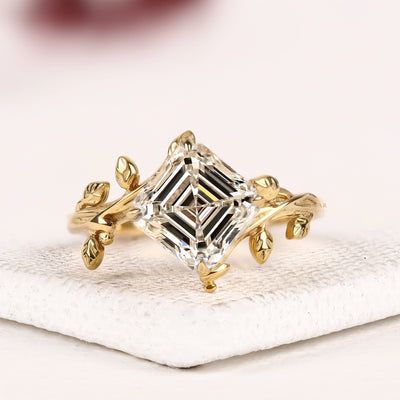
Pavé or twisted bands add sparkle along the shank, while a plain band keeps the focus on the shape itself. Nature-inspired designs with leaves and vines suit the vintage feel of the cut especially well.
Lab Grown Diamond or Moissanite?
Both stones work beautifully in a Dutch marquise. The right choice depends on how you want it to look and what matters most to you.
Lab grown diamonds are real diamonds. They are chemically, physically and optically the same as mined diamonds, grown in a lab using the CVD or HPHT method. Many of Ivevar's lab grown diamonds come with IGI certificates.
Moissanite is a different gemstone made of silicon carbide. It is very hard at 9.25 on the Mohs scale, and it has a higher refractive index than diamond, about 2.65 compared with about 2.42. In practice that means more fiery, rainbow-coloured flashes, especially in sunlight. Some people love that extra colour; others prefer the whiter brilliance of diamond.
| Feature | Lab grown diamond | Moissanite |
|---|---|---|
| What it is | Real diamond (carbon) | Separate gemstone (silicon carbide) |
| Mohs hardness | 10 | 9.25 |
| Refractive index | About 2.42 | About 2.65 |
| Sparkle | Bright white brilliance with balanced fire | Strong rainbow fire |
| Grading | IGI and GIA grade lab grown diamonds | Not graded on the diamond 4Cs scale |
| Budget | Higher | Lower for the same size |
Because the Dutch marquise is often bought for its look rather than its carat weight, moissanite is a popular way to get a large, eye-catching stone. A lab grown diamond suits anyone who wants a diamond with a grading report.
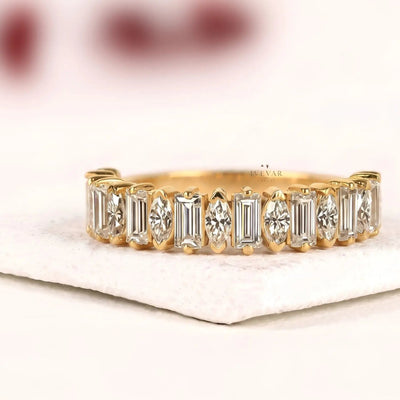
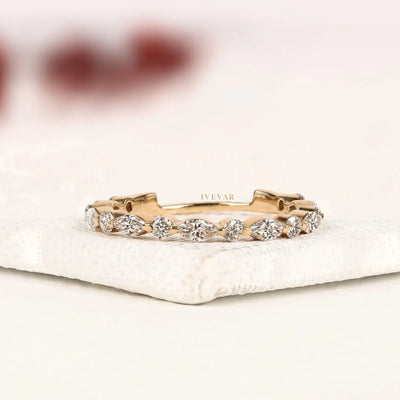
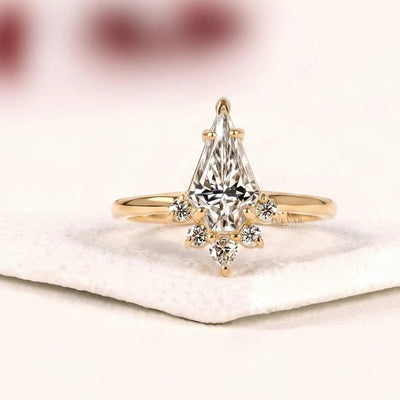
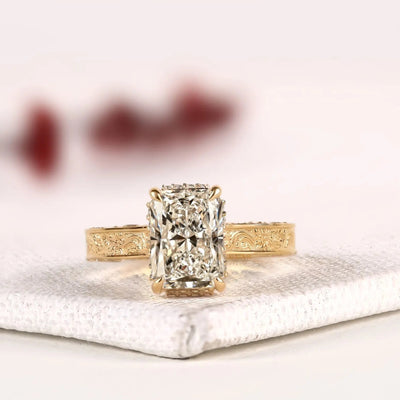
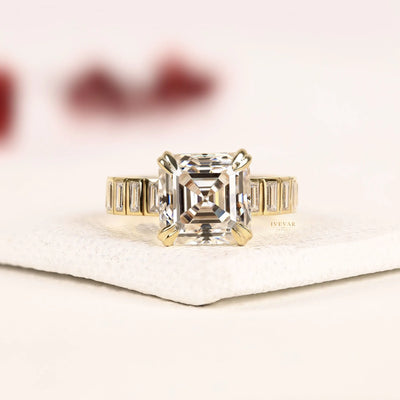
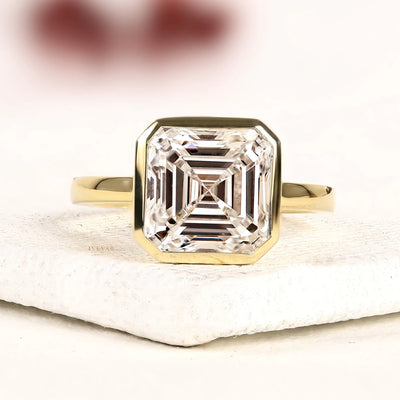
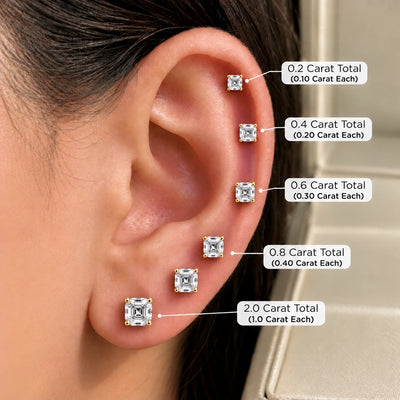
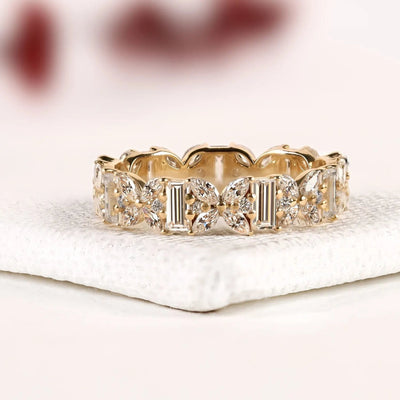
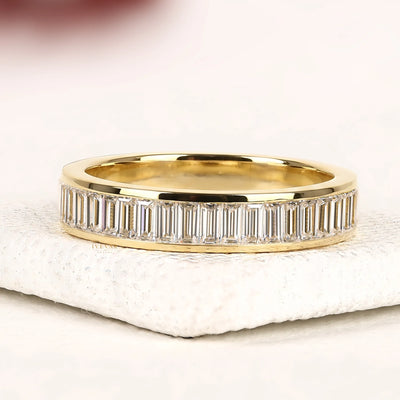
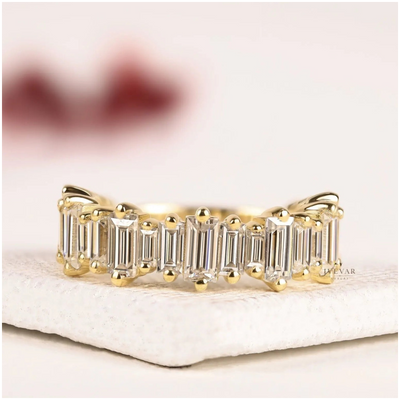
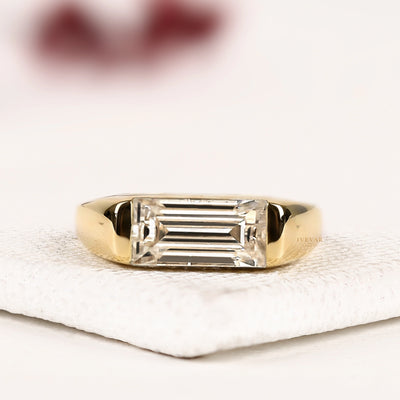
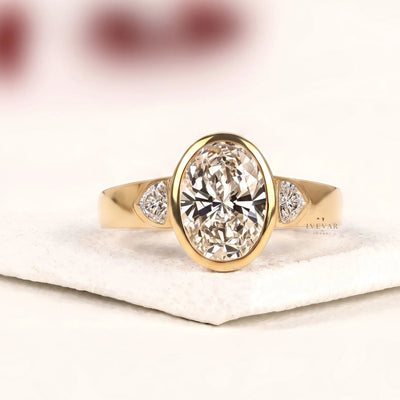
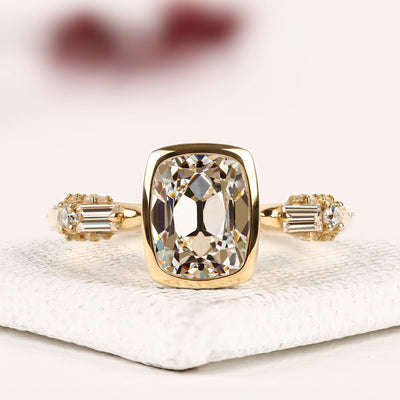
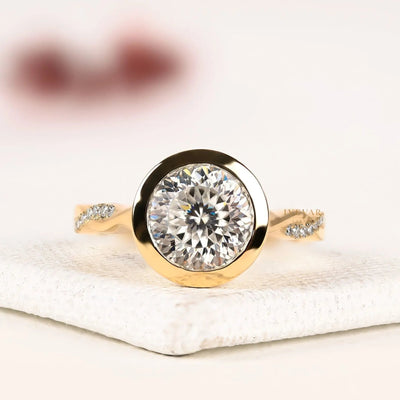
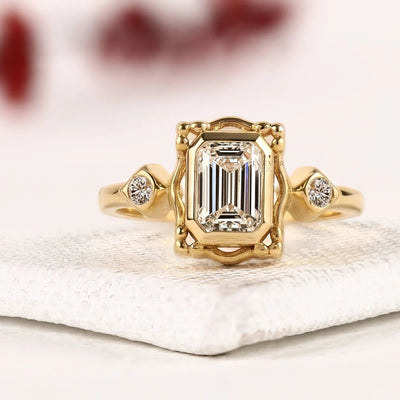
Shop the styles in this guide



Choosing the Metal and Wedding Band
Ivevar makes rings in 10K, 14K and 18K gold, in yellow, white and rose tones. Each one changes the mood of a Dutch marquise.
- Yellow gold: warm and traditional. It leans into the antique character of the shape and suits vintage and nature-inspired designs.
- White gold: cool and bright. It makes a colourless stone look as white as possible and gives the angles a sharp, modern edge.
- Rose gold: soft and romantic. It flatters warmer skin tones and pairs well with rose-cut style faceting.
- Karat: 10K is the most durable for daily wear, 14K balances durability and colour, and 18K has the richest gold tone but is a little softer.
Pairing a wedding band
A long, pointed stone can leave a gap next to a straight wedding band. That is fine if you like a little space, but many people want the band to sit flush.
- Contour band: a band with a gentle curve or V that follows the shape of the centre stone.
- Bridal set: an engagement ring and band designed together, so they fit neatly without guesswork.
- Raised setting: if the centre stone sits high enough, a straight band can slide underneath it.
- Stacking bands: thin bands on either side frame the stone and make a slim Dutch marquise look bolder.
Decide on the band before you choose the engagement ring setting, because the setting height and basket shape decide what will fit later.
Caring for a Dutch Marquise Ring
The care routine is the same as for any fine ring, with extra attention to the points.
- Clean regularly: soak in warm water with a drop of mild dish soap, brush gently behind the stone with a soft toothbrush, rinse and pat dry.
- Check the tips: look at the V-tips or bezel every few months. If a prong looks lifted or the stone moves, stop wearing the ring until a jeweller checks it.
- Take it off for hard work: gym sessions, gardening and moving furniture are the times a point is most likely to take a knock.
- Store it separately: diamond and moissanite can scratch other jewelry and each other, so keep the ring in its own pouch or box slot.
Tip: An east-west or bezel-set Dutch marquise is the easiest version to live with every day, because the points are tucked away or fully wrapped in metal.
Choosing the Right Size
Carat weight tells you how heavy a stone is, not how big it looks. With a Dutch marquise, the outline and depth matter as much as the weight, so two stones of the same carat can look quite different on the hand.
- Measure in millimetres: ask for the length and width of the stone. These numbers tell you far more about the look than carat weight alone.
- Think about finger coverage: a long stone can reach close to the knuckle on smaller fingers. Hold a strip of paper cut to the stone's length against your finger to see how it sits.
- Balance with the band: a slim band makes the centre stone look larger, while a wide or heavily set band can make it look smaller.
Dutch Marquise Beyond Engagement Rings
The shape is not only for engagement rings. Its long, angular outline works well wherever you want movement and a vintage touch.
In earrings, Dutch marquise stones look elegant as studs set vertically, or as drops that draw the eye down and lengthen the neck. In a pendant, a single stone hanging point-down makes a simple, modern necklace. In bands, small Dutch marquise stones set end to end or in a chevron pattern create a distinctive eternity or stacking ring that pairs naturally with a matching centre stone.
Is a Dutch Marquise Right for You?
Choose a Dutch marquise if you want an elongated stone that looks different from the ovals and pears you see everywhere, and you like vintage or geometric design. It is a good fit for anyone who wants their ring to look custom without being unusual for its own sake.
It may not be the best pick if you want the most sparkle possible from every angle, or if you work with your hands all day and do not want to think about protecting the points. In that case, an oval or a cushion shape is more forgiving.
If you are torn, ask for a virtual appointment. Seeing the stone move on video, next to a classic marquise, makes the difference obvious within seconds. Ivevar also makes custom jewelry, so you can choose the ratio, faceting style, setting and metal that suit you.
Shop at Ivevar


Swipe to see more → | View all best sellers
Explore the full range of Dutch marquise cut jewelry, compare it with the curved outline in our lab diamond marquise and moissanite marquise collections, or browse our lab diamond engagement rings. Every order comes with free worldwide shipping and 30-day easy returns.
FAQ
Is a Dutch marquise the same as a marquise?
No. Both have two points, but a Dutch marquise has straighter, angular sides instead of smooth curves, which gives it an elongated hexagon outline.
Does Ivevar sell Dutch marquise rings?
Yes. Ivevar offers Dutch marquise rings in both moissanite and lab grown diamond, including solitaires, half bezel settings, hidden halos, nature-inspired designs and bridal sets.
Which report is best for a lab grown Dutch marquise?
IGI reports give full 4Cs grades for lab grown diamonds. GIA also grades lab grown diamonds but uses a simpler descriptive system. Many Ivevar lab grown diamonds come with an IGI certificate.
Does a Dutch marquise have a bow-tie?
It can. Brilliant-style stones may show a dark band across the middle, like a classic marquise. Step and rose-cut styles usually show it less. Check photos or video before you buy.
What length-to-width ratio should I choose?
Around 1.8 to 2.1 gives the classic elongated look. Go lower for a softer, wider outline or higher for a long, slim statement stone.
Is a Dutch marquise durable enough for everyday wear?
Yes, as long as the points are protected with V-tip prongs or a bezel. Diamond and moissanite are both very hard, but any thin tip can chip from a hard knock.
Will a straight wedding band sit flush with a Dutch marquise?
Often not, unless the stone sits high. A contour band or a matching bridal set is the easiest way to get a neat fit.
Does a Dutch marquise look bigger than a round stone?
Usually, yes. Its elongated outline spreads more of the weight across the face, so it tends to look larger than a round of the same carat weight.
Aumsri Pradhan, Founder of Ivevar. About the founder


