

 Engagement Rings
 Anniversary Rings
 Solitaire Rings
 Halo Rings
 Toi Moi Rings
 Three Stone Rings
 Nature Inspired Rings
 Rose Cut Rings
 Fancy Color Rings
 Antique Cut Rings
 Wedding Rings
 Wedding Band Rings
 Exclusive Lab Grown Diamond Rings
 All Lab Grown Diamond Ring
 Engagement Rings
 Three Stone Rings
 Fancy Color Rings
 Antique Cut Rings
 Daily Wear Rings
 Wedding Band Rings
 Exclusive Moissanite Rings
 Earrings
 Bracelet
 Pendant
 Necklace
 Men's Ring
 Bridal Sets
 Rings
 Earrings
 Tennis chain
 Cuban Chains
 Custom Pendant
 Custom Ring
 Custom Teeth Grillz
 Round
 Oval
 Cushion
 Marquise
 Pear
 Emerald
 Heart
 Princess
 Rose Cut
 Radiant
 Antique Cut
 Brooch
 Cufflink
 Keychain
 Unique Products
 +91-9265051773
 Virtual Appointment
 log in




Short answer: Brilliant cuts (round, oval, cushion, pear, marquise, princess, radiant, heart) use many triangular and kite-shaped facets to create maximum sparkle and hide inclusions well. Step cuts (emerald, Asscher, baguette) use long, parallel rectangular facets that create a "hall of mirrors" effect with broad flashes of light and a sleek, elegant look. Step cuts show clarity and color more easily, so choose VS clarity or better and a slightly higher color grade.
Every diamond shape falls into one of a few faceting families, and the family matters as much as the outline. Two stones of the same carat weight can look completely different on the hand depending on whether they were cut as brilliants or as step cuts. This guide explains how each style handles light, which grades to buy for each, how they compare in lab grown diamond and moissanite, and how to choose the right one for your ring, band or earrings.
Brilliant vs Step Cut at a Glance
Here is the quick comparison. The sections below explain each point in detail.
| Feature | Brilliant cut | Step cut |
|---|---|---|
| Facet style | Triangles and kites radiating from the center | Parallel rectangular "steps" |
| Sparkle | Lots of small, lively flashes | Broad, calm flashes |
| Look | Bright and fiery | Sleek, glassy and elegant |
| Hides inclusions | Very well | Less well |
| Shows body color | Less | More |
| Shapes | Round, oval, pear, marquise, cushion, princess, radiant, heart | Emerald, Asscher, baguette |
| Best clarity | VS2 or eye-clean SI1 | VS1 or better |
How Brilliant Cuts Handle Light
A brilliant cut is designed to bounce as much light as possible back to your eye. Its facets are small triangles and kite shapes that fan out from the center of the stone. When light enters the top, it hits the angled pavilion facets underneath and is reflected back up through the crown in many directions at once.
That arrangement produces three effects jewelers talk about:
- Brilliance: the bright white light returned to your eye.
- Fire: flashes of rainbow color, created as the stone splits white light into its spectral colors.
- Scintillation: the twinkling pattern of light and dark that moves as you move the stone.
The round brilliant is the most refined version of this design, which is why it remains the benchmark for sparkle. Fancy brilliant shapes such as oval, pear and marquise use the same idea in an elongated outline. Because the facets are small and busy, the eye reads a lively, glittering surface rather than looking deep into the stone. That busy pattern is the main reason brilliants hide inclusions so well.
Browse round lab grown diamonds if you want the classic, highest-sparkle brilliant.
How Step Cuts Handle Light
A step cut works differently. Its facets are long rectangles arranged in rows that run parallel to the edges of the stone, like the steps of a staircase. The table (the flat top facet) is usually large and open, and the corners are often cropped.
Instead of many small flashes, light moves through a step cut in broad planes. As you tilt the stone, wide bands of light and dark switch on and off across the facets. This is the "hall of mirrors" effect: you seem to look down into the stone through a series of reflecting layers.
The three classic step cuts
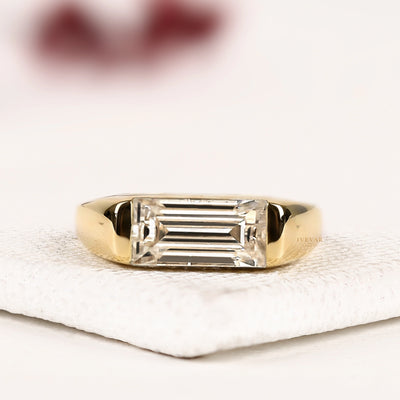
- Emerald cut: a rectangle with cut corners and a large table. It looks long and slender on the finger and is the best-known step cut.
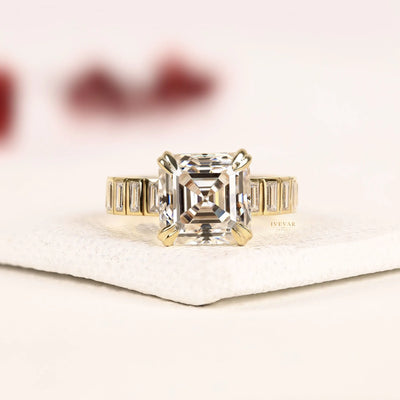
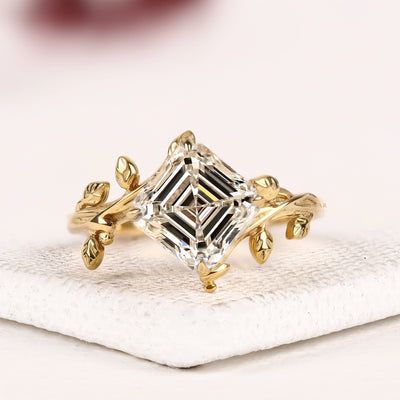
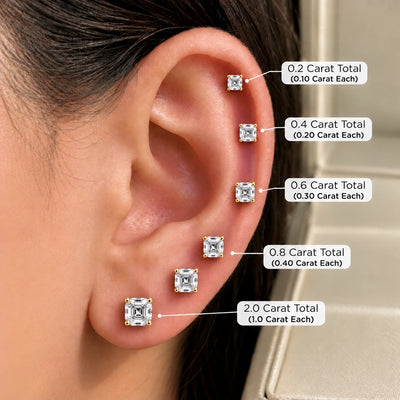
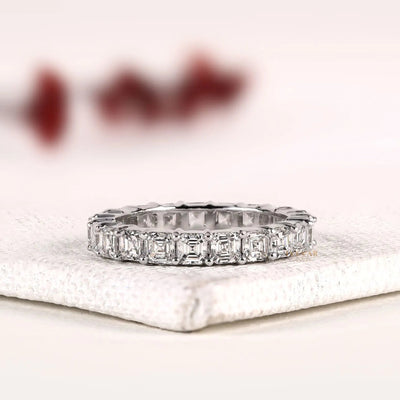
- Asscher cut: a square step cut with deeply cropped corners and a higher crown. Viewed from above, the steps create a windmill-like pattern that draws the eye to the center.
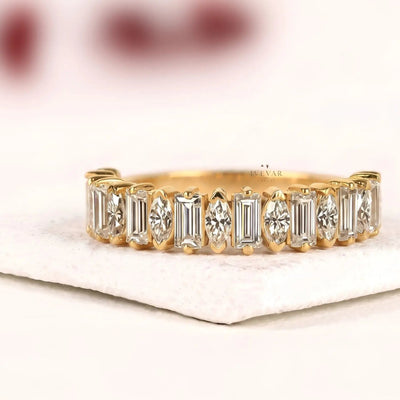
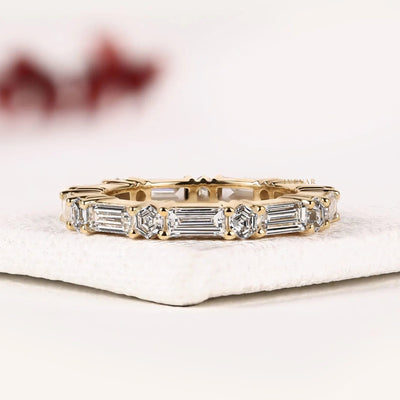
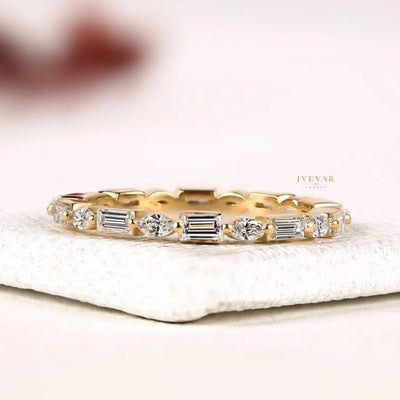
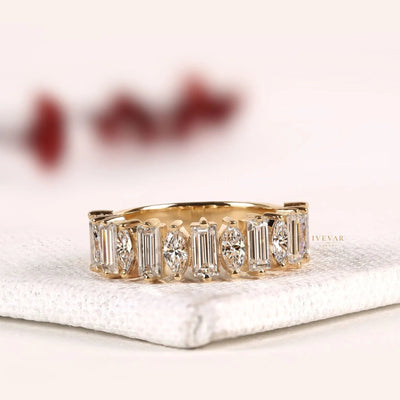
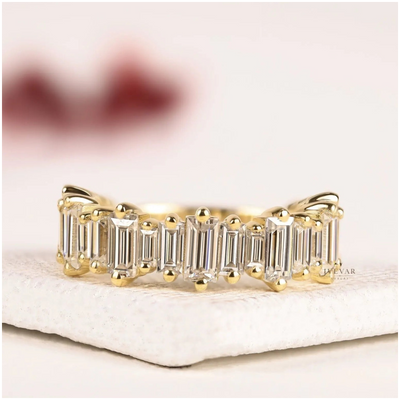
- Baguette: a long, narrow rectangle with few facets. Baguettes are mostly used as side stones and in eternity bands.
Step cuts trade glitter for clarity of line. The result is a calm, architectural look that suits Art Deco design, minimalist settings and anyone who finds round brilliants a little too busy.
Mixed Cuts
Some shapes combine both styles. Strictly speaking, a mixed cut has brilliant-style facets on one part of the stone and step facets on another. In everyday use, the term also covers shapes like the radiant and princess, which have the square or rectangular outline of a step cut but brilliant-style faceting inside. They blend sharp, clean lines with strong sparkle.
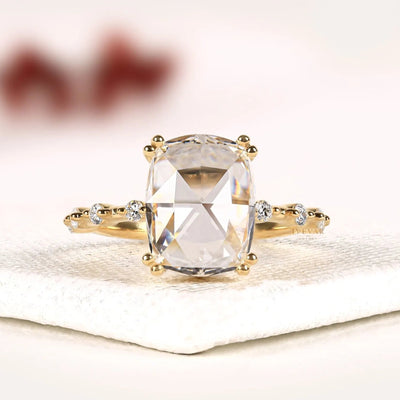
Cushion cuts come in two main looks. The "crushed ice" cushion has many small facets and a sparkly, glittery face. The larger-faceted "antique" cushion has bigger, chunkier flashes that feel closer to vintage stones.
Mixed cuts are a good middle ground if you love the shape of an emerald cut but want more sparkle, or if you want a squarish stone that is more forgiving on clarity. A radiant cut, for example, gives you a rectangular outline similar to an emerald cut while hiding inclusions almost as well as a brilliant. See radiant cut lab diamonds for this look.
 Shown: Asscher Cut Lab Diamond Wedding Band
Clarity and Color: Why Step Cuts Need Higher Grades
This is the most important practical difference for buyers. A step cut's large, open table and long facets act like a window into the stone. Inclusions that would disappear in the busy pattern of a brilliant can be easy to see in an emerald or Asscher cut.
Body color behaves the same way. Brilliants scatter light so much that a faint warm tint is harder to notice. Step cuts show the stone's true color more honestly, especially in larger sizes and at the corners.
| Grade | Brilliant cut | Step cut |
|---|---|---|
| Clarity sweet spot | VS2, or SI1 if eye-clean | VS1 or VS2 checked closely |
| Inclusions to avoid | Dark crystals under the table | Anything under the table, plus feathers near the corners |
| Color in white gold | G to H usually looks white | F to G for a crisp white look |
| Color in yellow or rose gold | H to I often works well | G to H often works well |
These are starting points rather than fixed rules. Your eye, the size of the stone and the metal all affect the final look. The bigger the step cut, the more the grades matter.
Tip: With any step cut, ask for a video or clear photos of the actual stone, not just a certificate. Clarity grades describe the size and number of inclusions, but only the stone itself shows you where they sit and whether you can see them.
Many of our lab grown diamonds come with IGI certificates, which list clarity, color and a plotted diagram of inclusions. That diagram is especially useful for step cuts, because you can see whether a feature sits under the table or near an edge.
Size, Spread and Proportions
Carat weight tells you how heavy a stone is, not how big it looks. Faceting style affects how much of that weight shows on top.
How big each style looks
- Elongated shapes look larger: emerald, oval, pear and marquise cuts spread their weight over a longer outline, so they often look bigger from above than a round of the same weight.
- Asscher cuts look compact: their square outline and higher crown keep more weight in depth, so they can look smaller face-up than an emerald cut of the same weight.
- Rounds are the reference: a well-cut round brilliant balances size and sparkle, which is why it is the standard everything else is compared to.
Length-to-width ratio
For rectangular and elongated stones, the length-to-width ratio controls the outline. A more elongated emerald cut looks slim and elegant and lengthens the finger. A shorter ratio looks closer to square. For Asscher cuts, look for an outline that reads as a true square. There is no "correct" ratio; choose the outline you like when you see it on the hand.
Depth also matters. A stone that is too deep for its shape carries hidden weight in the pavilion and looks small for its carat. A stone that is too shallow can lose light through the bottom and look glassy or dull. A good cutter balances the two.
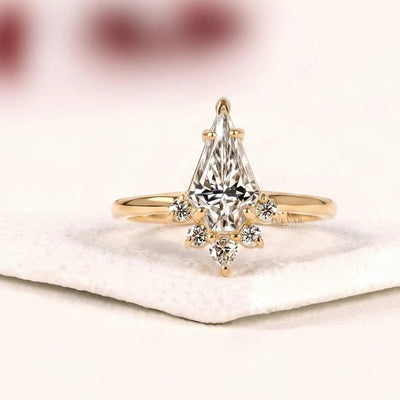
Shop the styles in this guide


Who Should Choose Each?
Brilliant cuts
- Sparkle lovers: anyone who wants maximum light and fire.
- Value seekers: buyers who want to stretch the budget by choosing an eye-clean lower clarity grade.
- Everyday wearers: lively flashes stand out in office light, candlelight and sunlight alike.
- Classic tastes: a round or oval brilliant solitaire never looks dated.
Step cuts
- Vintage and Art Deco fans: emerald and Asscher cuts are tied to that era's geometric style.
- Minimalists: anyone who prefers clean lines and calm reflections to glitter.
- Detail-focused buyers: people happy to pay for higher clarity and color grades.
- Stackers: step cut bands sit neatly next to other rings and create a tailored look.
If you are unsure, try both styles on. Many people who assume they want the most sparkle end up drawn to the quiet confidence of an emerald cut, and the reverse happens too.
Lab Grown Diamond or Moissanite?
Both brilliant and step cuts are available in lab grown diamond and moissanite, and the material changes how each style looks.
Lab grown diamonds are chemically, physically and optically the same as mined diamonds. A step cut lab diamond shows the same crisp hall-of-mirrors look as a mined one, and a brilliant lab diamond has the same balance of white light and fire. Lab diamonds are graded by labs such as IGI and GIA on the same 4Cs.
Moissanite is a different gemstone, not a diamond. Its refractive index is about 2.65, compared with about 2.42 for diamond, and it shows more fire. In brilliant cuts this produces strong rainbow flashes, especially in sunlight. In step cuts, the extra fire turns the broad step reflections into wider flashes of color, which some people love and others find less classic than a diamond's cooler look.
| Factor | Lab grown diamond | Moissanite |
|---|---|---|
| Hardness (Mohs) | 10 | 9.25 |
| Refractive index | About 2.42 | About 2.65 |
| Brilliant cut look | Balanced white light and fire | Strong rainbow fire |
| Step cut look | Crisp, icy hall of mirrors | Colorful flashes across the steps |
Both materials are hard enough for everyday wear. Compare the looks in our moissanite emerald cuts and lab diamond emerald cuts.
Step Cuts in Bands, Earrings and Settings
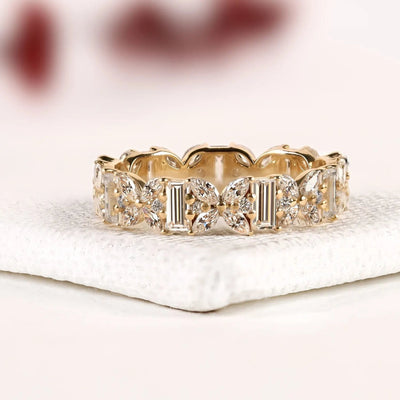
Baguettes and Asscher cuts make striking eternity bands, with seamless rows of light that look like a continuous strip of ice. Because each stone is a clean rectangle or square, they sit edge to edge with almost no gap. Emerald cut studs look polished and modern, and pair well with both workwear and evening outfits. Read baguette wedding bands.
Setting tips for each style
- Protect the corners: step cuts with sharp corners are safest in prongs or V-tips that cover each corner. Cropped corners on emerald and Asscher cuts already reduce the risk of chipping.
- Bezels suit both: a bezel wraps the stone in metal for a sleek look and good protection, ideal for active lifestyles.
- Channel settings for baguettes: baguettes are often set in channels, with metal walls holding the long sides.
- Prongs for brilliants: four or six prongs let in the most light and show off a brilliant's sparkle.
Choosing the metal
White gold makes a colorless step cut look crisp and icy. Yellow and rose gold add warmth and can make a near-colorless stone look slightly warmer, which suits vintage designs. We work in 10K, 14K and 18K gold, so you can choose the balance of durability and richness of color you prefer.
Tip: If you want a step cut look but are working with a tighter budget, consider a baguette or emerald cut band as an accent next to a brilliant center stone. You get the clean lines of a step cut where they matter most, without paying for a large, high-clarity step cut center.
Step Cuts at Ivevar
We cut and hand-set brilliant and step cut lab grown diamonds and moissanite in our Surat workshop. Every piece ships worldwide with free shipping and 30-day easy returns, and many of our lab grown diamonds come with IGI certificates. If you want a specific shape, ratio or setting, our custom jewelry service can build it for you, and we offer virtual appointments so you can see stones on video before you decide. Browse emerald cut jewelry for step cut designs or lab diamond engagement rings for brilliant and mixed cuts.
Shop Step Cut Jewelry
 Asscher Wedding BandShop Now
 Baguette Hexagon EternityShop Now
 Baguette Stacking BandShop Now
 Baguette Eternity in GoldShop Now
 Emerald Cut StudsShop Now
 Baguette and Round EarringsShop Now
Swipe to see more → | View emerald cut jewelry
Frequently Asked Questions
Which sparkles more, brilliant or step cut?
Brilliant cuts show more small, lively sparkle. Step cuts give broader, calmer flashes of light and a glassy, mirror-like look.
Do step cuts show inclusions more?
Yes. Their large table and long facets act like a window into the stone. Choose VS1 or better, or a carefully checked VS2.
Is a radiant cut a step cut?
No. It is usually called a mixed cut: it has the rectangular outline of a step cut with brilliant-style faceting, so it sparkles much more than an emerald cut.
Is a princess cut a brilliant or step cut?
A princess cut is a square brilliant. It has a sharp-cornered square outline but brilliant-style faceting, so it sparkles strongly and hides inclusions well.
What is the hall of mirrors effect?
The layered reflections you see when looking into a step cut. Its long parallel facets create bands of light and dark that switch on and off as the stone moves.
Are step cuts in style?
Yes, especially emerald cut solitaires, Asscher cuts and baguette bands. Their clean geometric look has stayed popular for decades.
Does a step cut need a higher color grade?
Usually, yes. Step cuts show body color more than brilliants. In white gold, F to G gives a crisp white look; in yellow or rose gold you can often go a grade or two lower.
Which looks bigger for its carat weight?
Elongated shapes such as emerald, oval and marquise cuts usually look larger from above. Asscher cuts tend to look more compact because more of their weight sits in depth.
Are step cuts good for moissanite?
They work well, but moissanite's extra fire turns the broad step reflections into colorful flashes. If you want a cooler, icier step cut look, a lab grown diamond is closer to the classic style.
The Bottom Line
Choose brilliant cuts for maximum sparkle and easier clarity, step cuts for sleek elegance and clean lines, or mixed cuts like the radiant for a bit of both. Whichever you pick, buy the grades that suit the style: step cuts reward higher clarity and color, while brilliants let you save on both.
Related Guides

Author Bio
Aumsri Pradhan
Founder, Ivevar Luxury
Aumsri Pradhan is the founder of Ivevar Luxury, a Surat-based fine jewelry brand that designs and handcrafts lab grown diamond and moissanite jewelry in its own workshop. She leads the brand's design and customer experience, from engagement rings and bridal sets to custom pieces made to each client's story. Through the Ivevar blog, she shares practical guidance on lab grown diamonds, moissanite, diamond grading and ring design to help buyers choose with confidence.


