

 Engagement Rings
 Anniversary Rings
 Solitaire Rings
 Halo Rings
 Toi Moi Rings
 Three Stone Rings
 Nature Inspired Rings
 Rose Cut Rings
 Fancy Color Rings
 Antique Cut Rings
 Wedding Rings
 Wedding Band Rings
 Exclusive Lab Grown Diamond Rings
 All Lab Grown Diamond Ring
 Engagement Rings
 Three Stone Rings
 Fancy Color Rings
 Antique Cut Rings
 Daily Wear Rings
 Wedding Band Rings
 Exclusive Moissanite Rings
 Earrings
 Bracelet
 Pendant
 Necklace
 Men's Ring
 Bridal Sets
 Rings
 Earrings
 Tennis chain
 Cuban Chains
 Custom Pendant
 Custom Ring
 Custom Teeth Grillz
 Round
 Oval
 Cushion
 Marquise
 Pear
 Emerald
 Heart
 Princess
 Rose Cut
 Radiant
 Antique Cut
 Brooch
 Cufflink
 Keychain
 Unique Products
 +91-9265051773
 Virtual Appointment
 log in




Short answer: For most everyday engagement rings, 14K gold is the best balance: it is durable, holds prongs securely, has a warm, classic color and costs less than 18K. 10K gold is the toughest and most affordable, but its color is paler and it contains more alloy, which matters if her skin is sensitive. 18K gold has the richest color and the most pure gold, but it is softer, so it shows scratches sooner and suits sturdier designs.
The karat you pick changes how the ring looks, how it wears over decades, how heavy it feels and what it costs. The stone gets most of the attention when you shop, but the metal is what holds that stone in place every single day. This guide explains what each karat really means, how 10K, 14K and 18K compare in daily life, and how to match the right one to her style, her skin and the stone you choose.
What Does Karat Mean?
Karat (K) measures how much pure gold is in the metal, out of 24 parts. Pure 24K gold is bright and beautiful, but it is far too soft for an engagement ring: it bends, dents and lets prongs open up. So jewelers mix gold with other metals such as silver, copper, zinc or palladium. These alloy metals add strength and decide the final color.
The higher the karat, the more of the ring is pure gold. That is why karat is often stamped inside the band as a number out of 1,000: 417 for 10K, 585 for 14K and 750 for 18K.
| Feature | 10K | 14K | 18K |
|---|---|---|---|
| Pure gold content | 41.7% | 58.3% | 75% |
| Common stamp | 10K or 417 | 14K or 585 | 18K or 750 |
| Durability | Hardest, most scratch resistant | Strong and durable | Softer, scratches more easily |
| Color | Paler yellow | Rich, classic | Deepest, most vibrant |
| Price | Lowest | Mid | Highest |
| Allergy risk | Higher (more alloy) | Low for most people | Lowest |
| Best for | Budget, very active wear | Everyday engagement rings | Rich color, sensitive skin |
In the US, 10K is the lowest karat that can legally be sold as "gold." In India, 22K is the traditional choice for gold jewelry, but it is too soft to hold a diamond or moissanite securely in prongs for years of daily wear. That is why diamond engagement rings worldwide are usually made in 14K or 18K.
 Shown: Handcrafted 14K Gold Ring with Natural Rose Cut Diamond and Double Halo
10K vs 14K vs 18K in Everyday Wear
All gold scratches. Over time, every gold ring develops fine marks on the surface, often called a patina. The difference between karats is how quickly that happens and how the metal behaves under pressure.
Scratches and dents
Because 10K is more than half alloy, it is the hardest of the three and resists everyday knocks best. 14K is close behind and handles normal life, including desk work, cooking and the gym, very well. 18K is noticeably softer, so it picks up scratches sooner and a thin band can bend out of round if it takes a hard hit.
Prongs and stone security
Prongs are the small claws that grip the stone. They take the most stress on any engagement ring. In 14K, prongs keep their shape well. In 18K, the same prongs can wear down faster, so jewelers often make them slightly thicker. Whatever karat you choose, have the prongs checked by a jeweler from time to time, and right away if the stone ever feels loose or a prong catches on clothing.
Weight and feel
Pure gold is a very dense metal, so higher karats feel heavier. The same design in 18K weighs more on the finger than it does in 10K or 14K. Many people like that solid, luxurious feel; others prefer a lighter ring for all-day comfort.
Tip: If she works with her hands, plays sport or rarely takes her ring off, lean towards 14K. If she loves a deep gold color and is gentle with jewelry, 18K is a lovely choice in a sturdy setting.
Which Karat Should You Choose?
Choose 14K if...
You want an everyday engagement ring that balances durability, color and price. It is the default choice for most engagement rings because it does nothing badly: strong enough for prongs and thin pavé bands, golden enough to look rich, and kinder on the budget than 18K.
Choose 10K if...
Budget is the priority or the ring will face heavy daily wear. 10K is also a sensible pick for a promise ring or a second band you plan to wear hard. Check for metal sensitivity first, since 10K contains more alloy, and remember the color is noticeably lighter next to higher karats.
Choose 18K if...
You love a deep, rich gold color, she has sensitive skin, or you want the most pure gold you can wear daily. Choose a sturdy design with thicker prongs or a bezel, and a band that is not too thin. 18K also pairs beautifully with vintage and heirloom-style designs.
How Karat Affects Gold Color
Karat applies to every gold color. 14K white gold and 14K rose gold have the same gold content as 14K yellow gold; only the alloy metals change the color. Still, karat changes how each color looks.
- Yellow gold: the higher the karat, the deeper and more saturated the yellow. 18K yellow has a buttery, rich tone; 10K looks lighter and slightly cooler.
- Rose gold: the pink color comes from copper. Lower karats contain more copper, so 10K and 14K rose gold often look pinker, while 18K rose gold is softer and more golden.
- White gold: gold is naturally yellow, so white gold is alloyed with white metals and usually plated with rhodium for a bright white finish. 18K white gold has more gold in it, so it can look a little warmer underneath once the plating wears.
Rhodium plating on white gold wears thin over time, especially on the underside of the band. Re-plating is a routine jeweler service that restores the bright white color. Yellow and rose gold do not need plating.
For a deeper look at choosing the color itself, see our guides to yellow gold vs white gold and rose gold engagement rings.
Sensitive Skin and Metal Allergies
Pure gold rarely causes skin reactions. When someone reacts to a gold ring, the cause is usually one of the alloy metals, most often nickel, which is used in some white gold alloys.
- Higher karat means less alloy: 18K has the least alloy of the three, so it is usually the gentlest option.
- Ask about nickel: if she is sensitive, ask whether the white gold alloy is nickel-free.
- Yellow and rose gold: these normally use silver, copper and zinc rather than nickel, so they are often fine for sensitive skin even in 14K.
- Watch for the signs: redness, itching or a dark mark under the band can point to a reaction or to soap trapped under the ring. Clean the ring and her finger first before deciding.
If you are not sure whether she has sensitivities, think about her other jewelry. If she happily wears gold earrings or a gold chain every day, she is unlikely to react to a 14K ring of the same color.
Matching Karat to Your Stone and Setting
The metal and the stone work as a team. Both lab grown diamonds and moissanite are hard enough for everyday wear (diamond is 10 on the Mohs scale, moissanite is 9.25), so the metal around them is usually the part that wears first.
| Ring style | Good karat choice | Why |
|---|---|---|
| Classic solitaire | 14K or 18K | Simple setting; choose 18K for richer color |
| Thin pavé band | 14K | Holds tiny stones securely on a slim band |
| Halo or hidden halo | 14K | Many small prongs benefit from harder metal |
| Bezel setting | 18K | Metal rim protects the stone; softer gold is easy to set |
| Large center stone | 14K, sturdy prongs | Prongs carry more weight and stress |
| Active lifestyle | 10K or 14K | Best resistance to knocks and scratches |
Color pairing matters too. Colorless stones look crisp and icy in white gold. Yellow and rose gold add a soft warmth around the stone, which is why many buyers choose a near-colorless lab diamond or moissanite for a yellow gold ring and save the budget for size or cut. Browse lab grown solitaire rings or moissanite engagement rings to see how different metals change the look.
Price: Where the Money Goes
The difference in price between karats comes mainly from the amount of pure gold. 18K contains more gold than 14K, and 14K more than 10K, so the same design costs more as the karat rises. Heavier designs, such as wide bands, cathedral settings and bridal sets, show the biggest difference.
- Small, delicate rings: the karat difference is modest because there is little metal.
- Chunky or detailed rings: more gold means a bigger gap between 14K and 18K.
- Matching bands: plan the wedding band in the same karat and color so the two rings wear and age evenly side by side.
If the budget is tight, 14K usually gives the best return: you keep strong prongs and a rich color, and can put the savings towards a better stone.
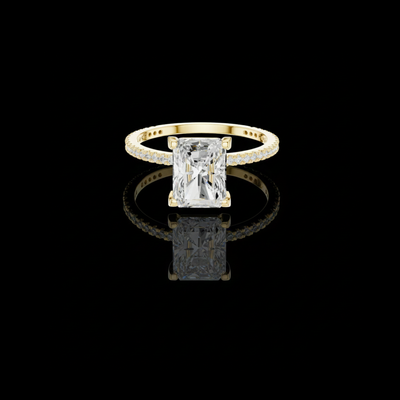
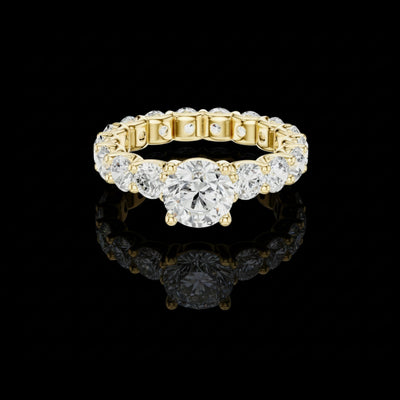
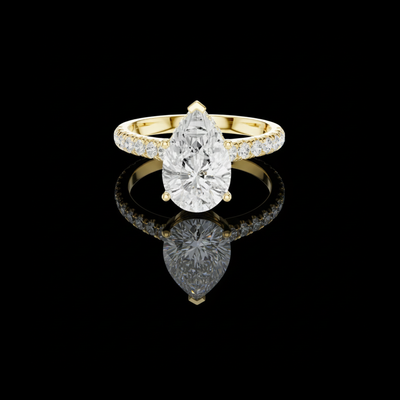
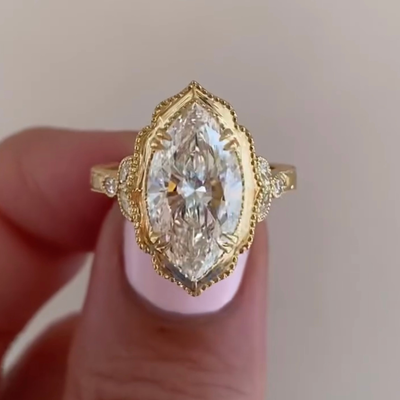
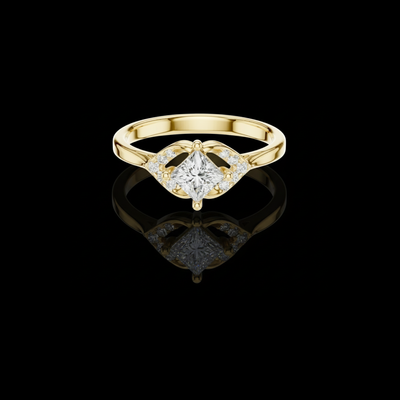
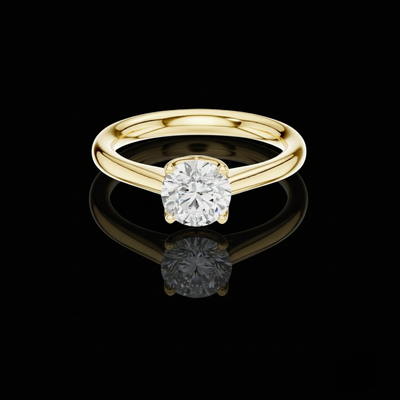
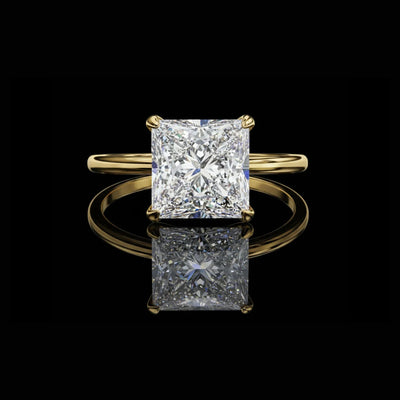
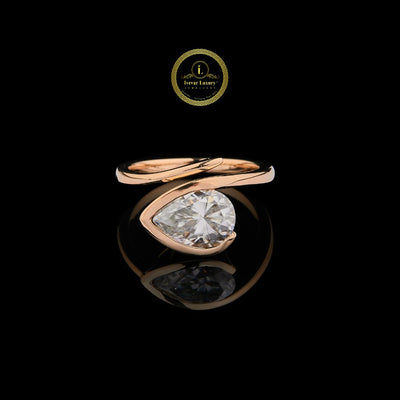
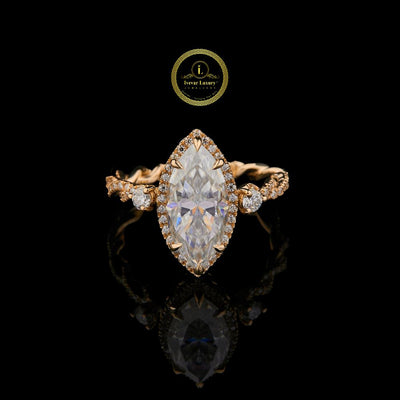
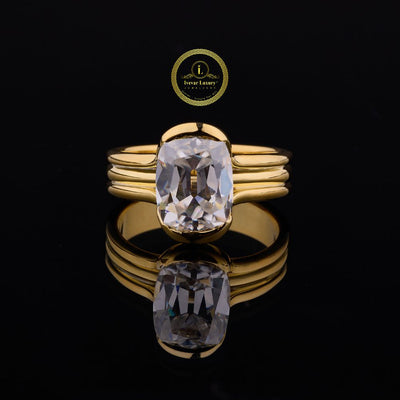
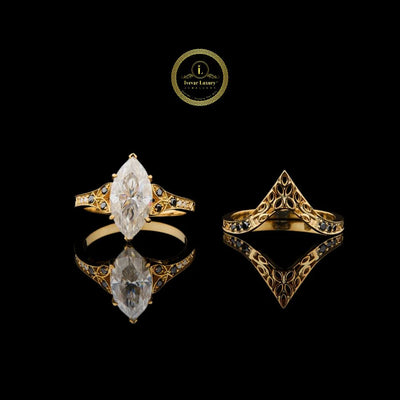
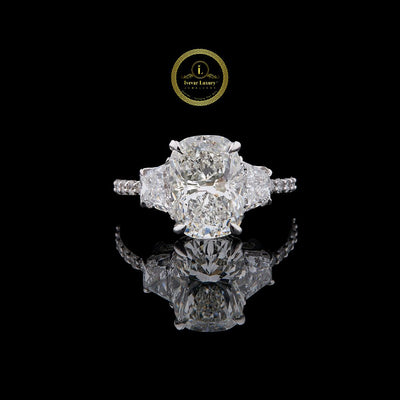
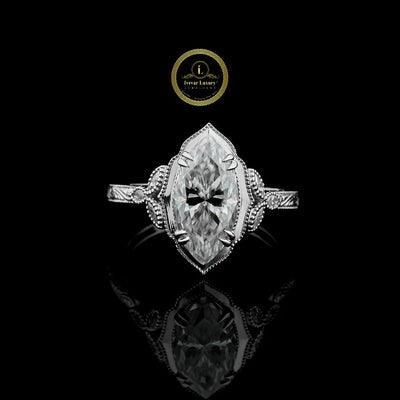
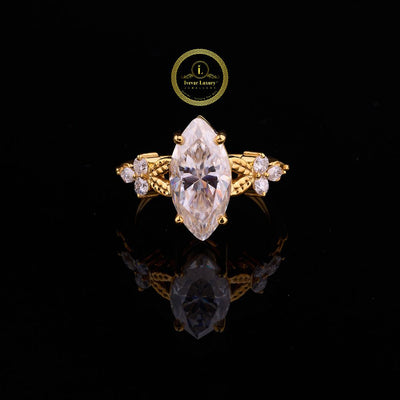
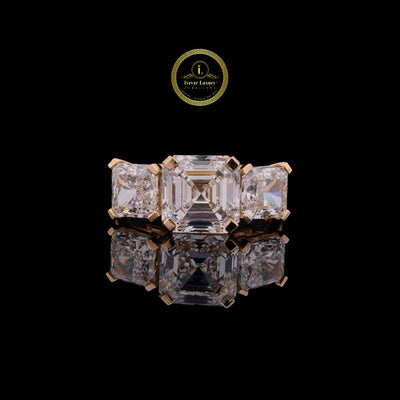
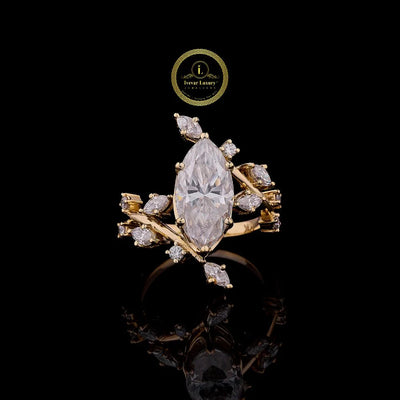
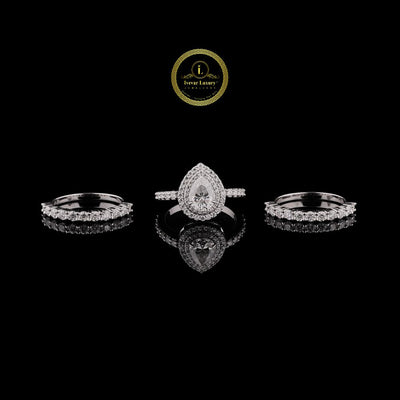
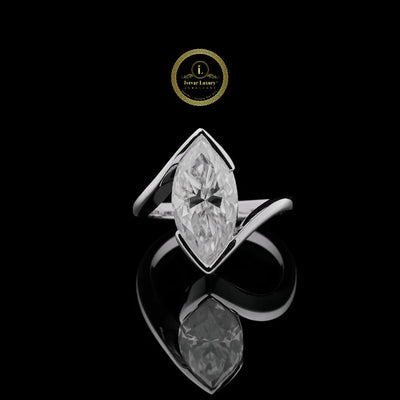
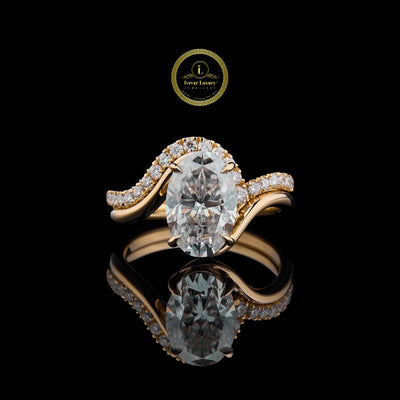
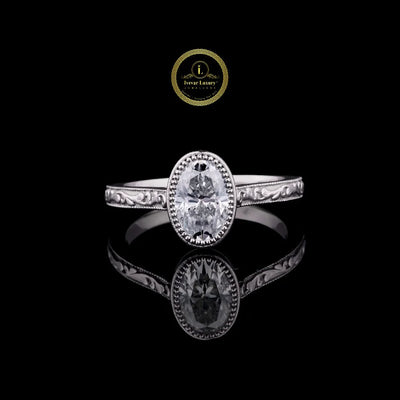
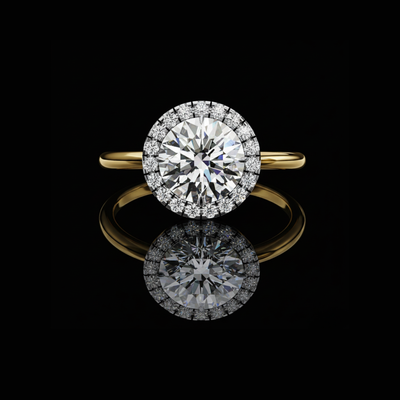
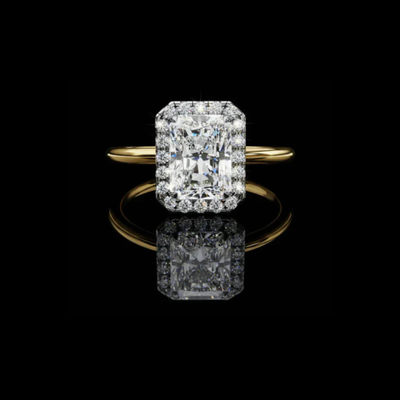
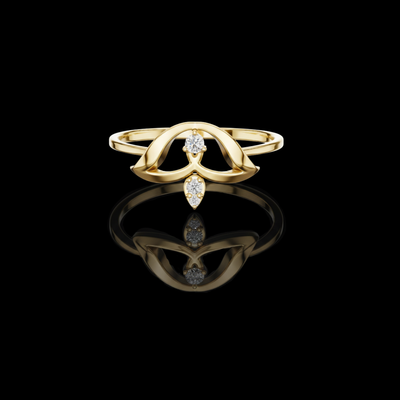
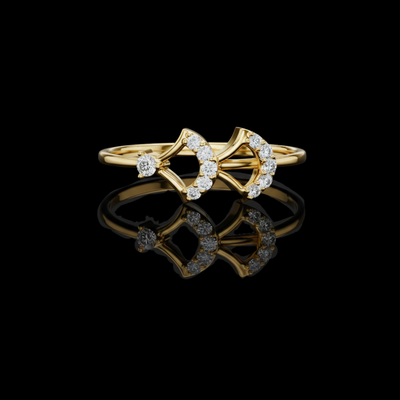
Shop the styles in this guide
Caring for a Gold Engagement Ring
- Clean it gently: soak in warm water with a little mild dish soap, then brush gently with a soft toothbrush and dry with a lint-free cloth.
- Remove it for hard work: gym weights, gardening and moving furniture are the most common causes of dents and bent prongs.
- Avoid chlorine: pool and hot-tub chlorine and strong household cleaners can damage gold alloys over time.
- Store it separately: keep it in its own pouch or box so harder stones on other jewelry cannot scratch it.
- Book a check-up: have a jeweler inspect prongs and polish the band periodically, and re-plate white gold when it starts to look yellowish.
Tip: Buy the wedding band in the same karat as the engagement ring. When two different karats rub together every day, the softer one wears faster and the colors may not match.
Solid Gold vs Plated Gold
Karat only tells the full story when the ring is solid gold all the way through. Some lower-priced rings are made of silver or brass with a thin layer of gold on the surface. They can look similar on day one, but they behave very differently over years of wear.
- Solid gold: the whole ring is 10K, 14K or 18K. It can be polished, resized by a jeweler and repaired, and the color goes all the way through.
- Gold vermeil: sterling silver with a thicker gold layer. It is a good fashion option, but the layer can wear through on the inside of a ring worn every day.
- Gold plated or gold filled: a base metal with a gold coating. Fine for occasional jewelry, but not built to hold a valuable center stone for life.
For an engagement ring you will wear daily for decades, choose solid gold. If a listing gives a karat but also mentions silver, "plated" or "vermeil," the karat refers only to the coating.
How to Check the Karat When You Buy
You do not need special tools to buy with confidence. A few simple checks go a long way:
- Read the product details: a clear listing names the karat, the gold color and whether the metal is solid gold.
- Look for the stamp: most gold rings carry a small mark inside the band, such as 14K or 585. The stamp is a quick reference, not a guarantee on its own.
- Keep the paperwork: save the invoice and any stone certificate together. They matter for insurance, resizing and resale.
- Ask questions: a good jeweler will happily tell you which alloy is used, whether white gold is rhodium plated and how much the finished ring weighs.
Gold Jewelry at Ivevar
We craft our fine jewelry in 10K, 14K and 18K gold in our Surat workshop, in yellow, white and rose gold, set with lab grown diamonds (many with IGI certificates) or moissanite. Not sure which karat suits her? Book a virtual appointment and we will show you the options on camera, or ask us about a custom design. Every piece ships worldwide with free shipping and 30-day easy returns.
Browse our lab grown diamond engagement rings, moissanite engagement rings and fine jewelry to compare designs in each metal.
Shop 14K Gold Jewelry
 14K Gold Double Halo RingShop Now
 14K Gold Twin Diamond BraceletShop Now
 14K Rose Cut Link BraceletShop Now
 14K Rose Cut Halo PendantShop Now
 14K Yellow Trillion PendantShop Now
 Oval Halo Green Lab DiamondShop Now
Swipe to see more → | View all fine jewelry
FAQ
Is 14K or 18K better for an engagement ring?
14K is better for most people because it is more durable and holds prongs well over years of daily wear. 18K is lovely if you want a deeper gold color or she has sensitive skin; pair it with a sturdy setting.
Is 10K gold real gold?
Yes. It contains 41.7% pure gold and is the minimum karat that can be sold as gold in the US. It is genuine solid gold, just with more alloy than 14K or 18K.
Will 18K gold bend?
It is softer, so thin bands and fine prongs can wear or bend faster under hard knocks. Choose a band that is not too thin and slightly thicker prongs or a bezel setting.
Which karat is best for sensitive skin?
Higher karats like 18K contain less alloy and are usually gentler. Nickel-free white gold, or yellow and rose gold, also help.
Why not use 22K gold for an engagement ring?
22K is beautiful for plain gold jewelry, but it is too soft to grip a diamond or moissanite securely for everyday wear. Prongs can open and the band can lose its shape.
Does 14K gold tarnish?
Solid 14K gold does not rust and does not tarnish the way silver does. It can look dull from lotions and soap film, which a gentle wash removes.
Can I tell the karat by looking at a ring?
Not reliably. Look for the stamp inside the band (10K/417, 14K/585 or 18K/750) and keep the product details or invoice from the jeweler.
Should the wedding band match the engagement ring's karat?
Ideally, yes. Matching karat and color means the two rings look the same and wear at the same rate when worn together.
The Bottom Line
14K gold is the everyday sweet spot, 10K is the budget and durability pick, and 18K is the luxury color choice. Match the karat to her lifestyle, her skin and the style of ring, keep the band in the same karat, and give the prongs an occasional check-up so the ring lasts a lifetime.
Related Guides
Author Bio
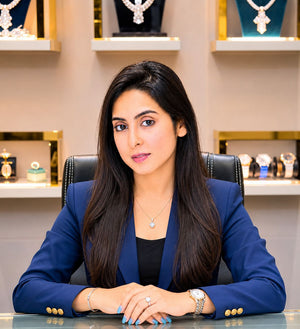
Aumsri Pradhan
Founder, Ivevar Luxury
Aumsri Pradhan is the founder of Ivevar Luxury, a Surat-based fine jewelry brand that designs and handcrafts lab grown diamond and moissanite jewelry in its own workshop. She leads the brand's design and customer experience, from engagement rings and bridal sets to custom pieces made to each client's story. Through the Ivevar blog, she shares practical guidance on lab grown diamonds, moissanite, diamond grading and ring design to help buyers choose with confidence.


