

 Engagement Rings
 Anniversary Rings
 Solitaire Rings
 Halo Rings
 Toi Moi Rings
 Three Stone Rings
 Nature Inspired Rings
 Rose Cut Rings
 Fancy Color Rings
 Antique Cut Rings
 Wedding Rings
 Wedding Band Rings
 Exclusive Lab Grown Diamond Rings
 All Lab Grown Diamond Ring
 Engagement Rings
 Three Stone Rings
 Fancy Color Rings
 Antique Cut Rings
 Daily Wear Rings
 Wedding Band Rings
 Exclusive Moissanite Rings
 Earrings
 Bracelet
 Pendant
 Necklace
 Men's Ring
 Bridal Sets
 Rings
 Earrings
 Tennis chain
 Cuban Chains
 Custom Pendant
 Custom Ring
 Custom Teeth Grillz
 Round
 Oval
 Cushion
 Marquise
 Pear
 Emerald
 Heart
 Princess
 Rose Cut
 Radiant
 Antique Cut
 Brooch
 Cufflink
 Keychain
 Unique Products
 +91-9265051773
 Virtual Appointment
 log in





Short answer: $1,500 is where solid gold becomes possible. At this budget you can usually choose between a lab grown diamond of around 1 carat in 10K gold, a larger moissanite center in 14K gold, or a much bigger lab grown diamond in 925 sterling silver if carat size matters more than metal. Put the money into a well-cut center stone, choose the metal that fits your daily life, and keep the setting simple so the stone gets the budget. Check each product page for current prices, since gold and stone prices change.
Real Options Under $1,500
At $1,500 the question changes from "what can I afford?" to "what matters most?" Here are the realistic routes and what each one gives you.
| Option | What you get | Trade-off |
|---|---|---|
| Lab grown diamond in 10K gold | A real diamond, around 1 carat, in solid gold | 10K gold is paler than 14K |
| Moissanite in 14K gold | A larger center and richer gold color | A different gem, not a diamond |
| Large lab grown diamond in silver | The biggest real diamond for the money | Silver is softer and needs more care |
| Smaller lab diamond with pavé, in gold | Extra sparkle along the band | A smaller center stone |
Every one of these is a smart buy. The right one depends on whether you value a real diamond, the size of the stone, or the metal most. Prices change with gold and stone markets, so check the product page before you buy.
Where the money goes
A ring price has two parts. The center stone is the first: lab grown diamonds cost far less than mined diamonds of the same quality, and moissanite costs less again. The metal is the second, and it moves the total more than most people expect. The same design costs more in 14K than in 10K gold, more in 18K than in 14K, and least in sterling silver. Halos, pavé bands and side stones add small stones and labor on top. Knowing this makes it easy to see where to save and where to spend.
Tip: Decide your non-negotiable before you browse. If it is "a real diamond in gold", the lab grown diamond in 10K gold is your ring. If it is "the biggest stone", look at moissanite in gold or a lab diamond in silver.
Three Smart Ways to Spend $1,500
Lab grown diamond in 10K gold
A real diamond in solid gold. 10K is the hardest-wearing gold, though paler in color than 14K. A round, oval or pear center of around 1 carat in a simple solitaire setting is a ring that will look right for decades. Best for buyers who want a real diamond and a ring that needs little worry. Browse our lab grown solitaire rings to compare styles.
Moissanite in 14K gold
A bigger stone and a richer gold color for the same money. Moissanite is hard (9.25 on the Mohs scale), very brilliant and shows more colorful fire than diamond. It is a great choice if you want a bold center and a warm, rich metal, and best for buyers who care more about size and sparkle than about owning a diamond. See our moissanite solitaire rings.
Large lab grown diamond in silver
The biggest diamond for the budget, but silver is softer and needs more care. Prongs should be checked often, and the ring should come off for hard tasks. Many couples choose this route and plan to move the stone into a gold setting later. Best for buyers who want the most diamond now and are happy to upgrade the metal for an anniversary.
Solitaire or Halo?
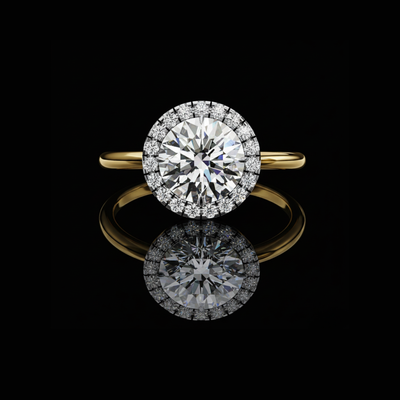
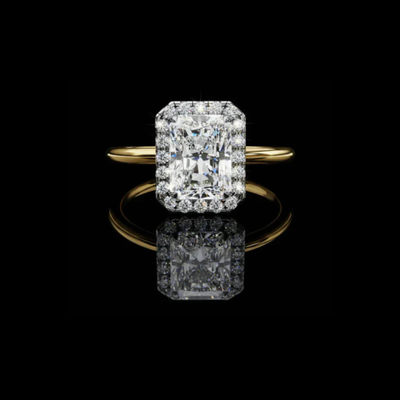
A solitaire puts the whole budget into the center stone and is easy to pair with any wedding band. A halo surrounds a smaller center with small stones, making it look larger and adding sparkle. At this budget, a clean solitaire in gold is usually the most timeless choice.
| Style | Strengths | Consider |
|---|---|---|
| Solitaire | Timeless; all budget in the center stone | Less sparkle around the stone |
| Hidden halo | Clean top view, sparkle from the side | More small stones to check |
| Halo | Center looks larger from above | Smaller center for the same money |
| Pavé band | Shine along the finger | Harder to resize |
If you love sparkle but want a timeless look, a hidden halo is the best compromise. It keeps the top view of a solitaire while adding a ring of small stones beneath the center. Browse classic halos in our lab grown halo rings.
A Note on Stones
A lab grown diamond is a real diamond grown in a lab. It is chemically, physically and optically the same as a mined diamond, and it scores 10 on the Mohs scale. Lab diamonds are grown by CVD or HPHT, and both methods make real diamonds. IGI grades lab stones on the full 4Cs, while GIA has given only a Premium or Standard descriptor since October 1, 2025.
Moissanite is a different gem (silicon carbide) with more colorful fire. Its refractive index is about 2.65, higher than diamond's 2.42, which is why it flashes more rainbow color. It is not a diamond, and at Ivevar we always label it as moissanite.
| Feature | Lab grown diamond | Moissanite |
|---|---|---|
| What it is | Real diamond | Silicon carbide, a different gem |
| Hardness (Mohs) | 10 | 9.25 |
| Look | White brilliance with fire | Stronger rainbow fire |
| Grading | IGI or GIA report | Not graded on the diamond scale |
| Best for | A real diamond in gold | The biggest look in 14K gold |
10K or 14K Gold?
At $1,500 you can often choose between 10K and 14K gold. Both are solid gold that will not tarnish. The difference is in color, hardness and price.
- 10K gold: contains the most alloy, so it is the hardest-wearing and the most affordable gold. Its color is a little paler. A great choice for active hands.
- 14K gold: richer color with good durability. The most popular gold for engagement rings.
- 18K gold: the deepest color and a luxurious feel, but softer and more expensive. Usually beyond this budget with a larger center.
Whichever karat you choose, try to match your wedding band to it. Rings of different karats rub together and the softer one wears faster.
Yellow, white or rose?
White gold makes a colorless stone look whiter and suits modern styles. Yellow gold is warm and classic and forgives a stone with a hint of warmth, so you can choose a slightly lower color grade. Rose gold is soft and romantic. Choose the color your partner already wears most.
Choosing a Setting for Daily Life
The best setting is the one that suits how your partner lives. A $1,500 ring will be worn every day, through work, travel and chores, so comfort and security matter as much as looks.
Prongs
Four prongs show the most stone and give a clean, open look. Six prongs hold the stone more securely and make a round look rounder, which is reassuring for a larger center. Pointed shapes such as pear and marquise need a V-prong or a prong on each point to protect the tips.
Profile height
A high setting lets in more light from the side and looks dramatic, but it catches on knits, hair and gloves. A low setting sits closer to the finger and is more comfortable for people who type, cook, lift or work with their hands. Look at the side view before you buy.
Bezel for active hands
A bezel wraps a thin rim of metal around the whole stone. It is the most protective, snag-free setting and a smart choice for nurses, athletes, new parents and anyone who is hard on their jewelry. Diamond is the hardest gem, but hardness is resistance to scratching, not to knocks, so a bezel protects the edge from chips.
Choosing Grades Wisely
With a lab grown diamond, the right grades make a $1,500 ring look far more expensive.
- Cut: choose Excellent or Ideal for rounds. Cut is what makes a stone sparkle and look its size.
- Color: G to H looks white once set. In yellow or rose gold, H to I is usually fine.
- Clarity: VS1 to SI1 is often eye-clean. Check a photo or video to be sure.
- Carat: a stone just under a round number, such as 0.90 to 0.99 carats, can save money and looks nearly the same.
- Certificate: many Ivevar lab grown diamonds come with IGI certificates listing these grades.
Shop the styles in this guide
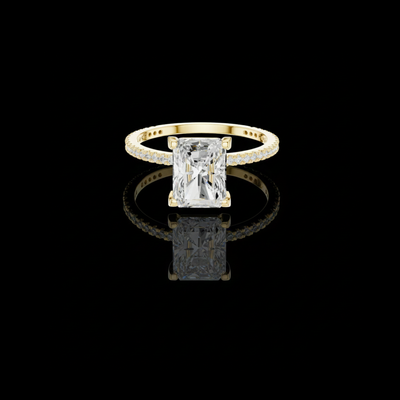
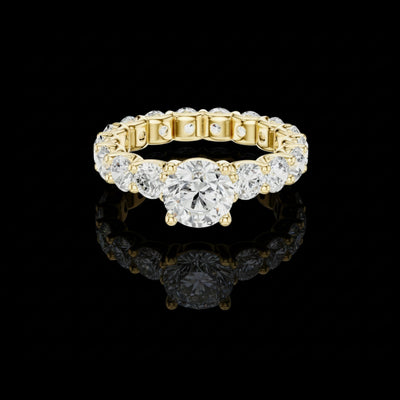
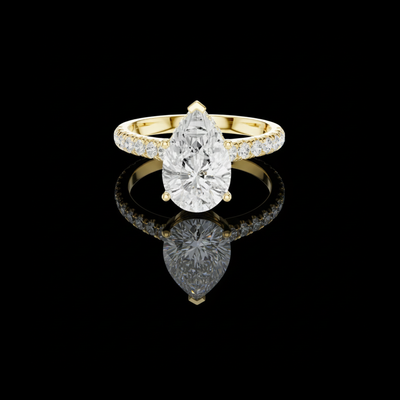
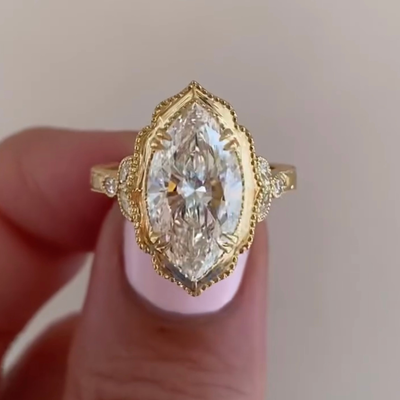
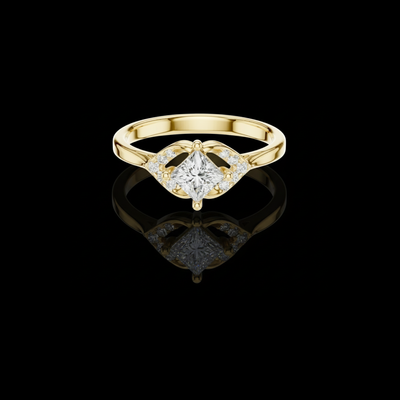
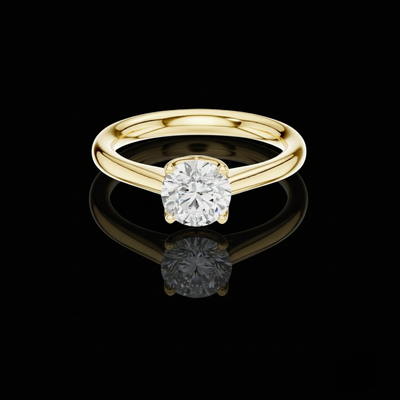
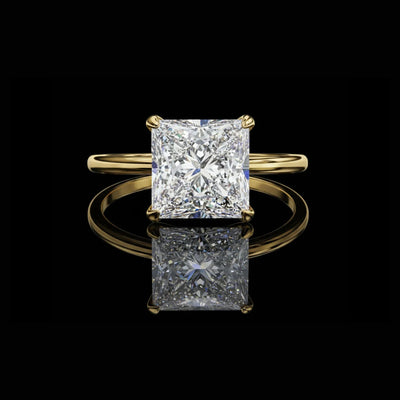
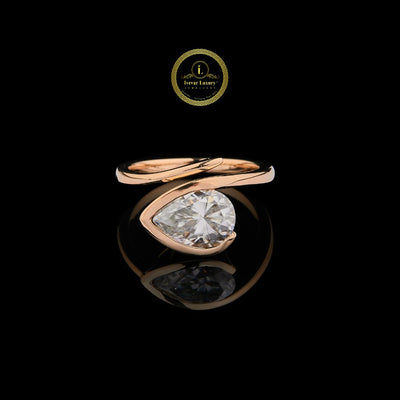
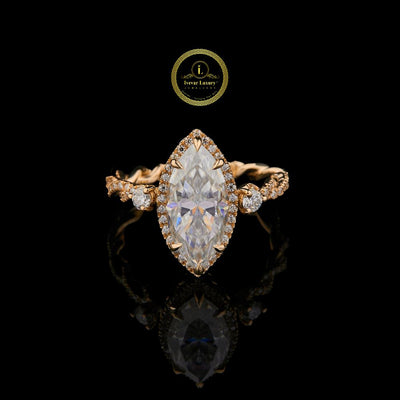
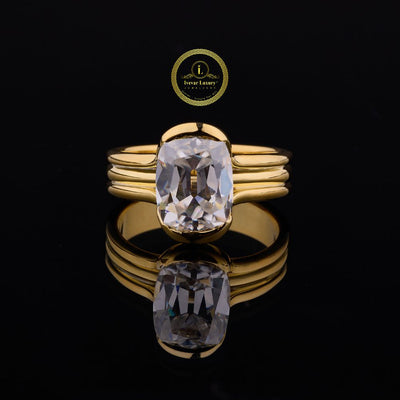
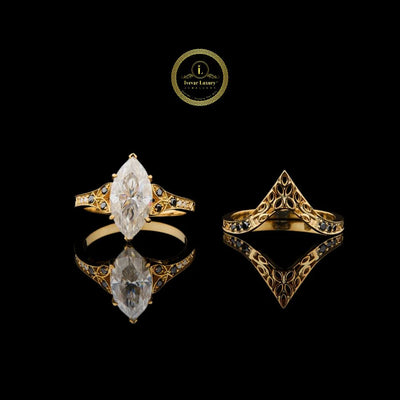
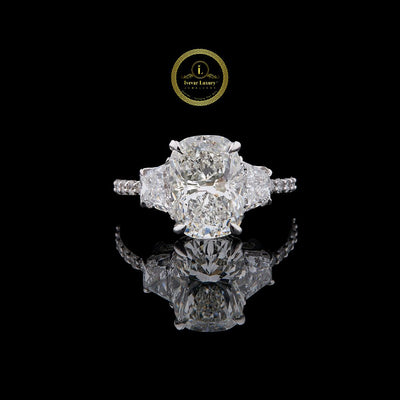
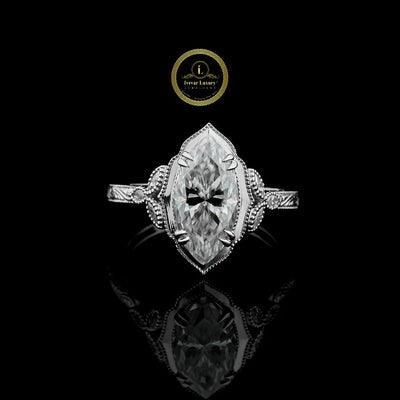
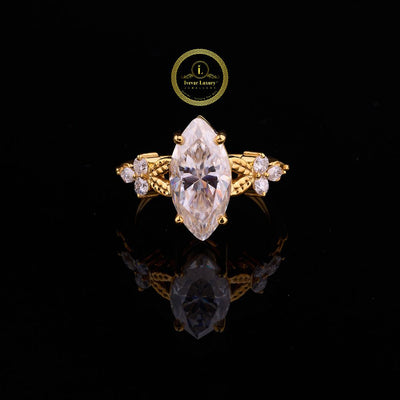
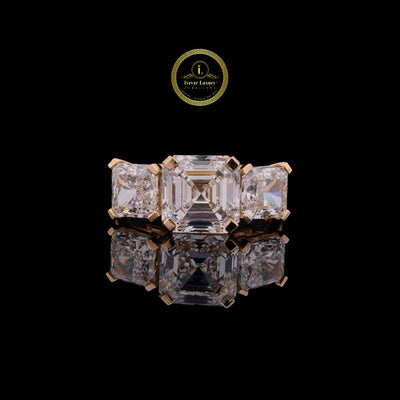
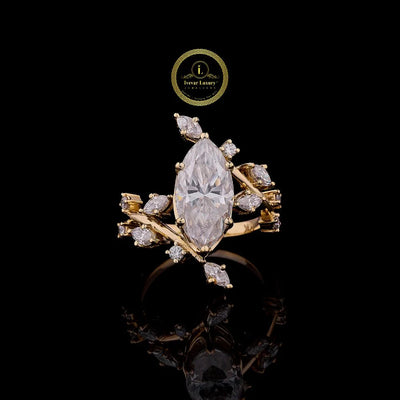
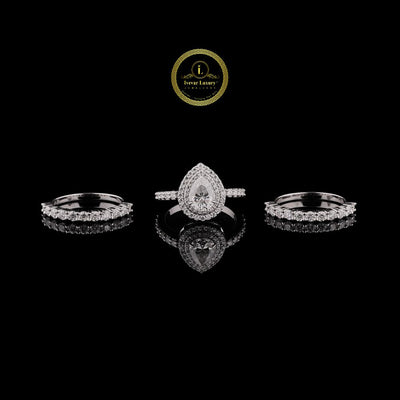
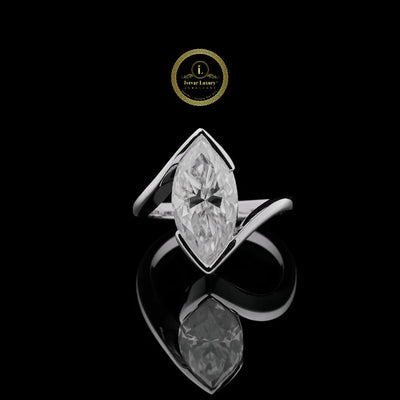
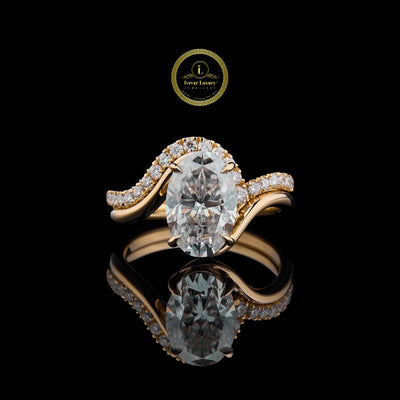
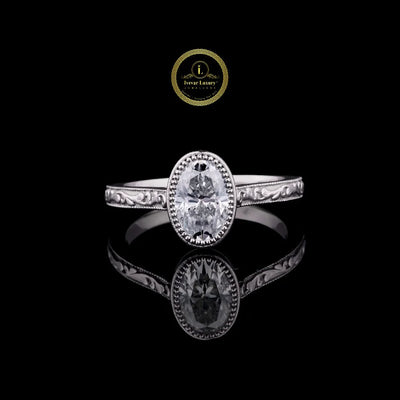
Style Guide: Shapes and Looks at $1,500
The shape sets the mood of the ring. Here is how the most popular shapes work at this budget.
- Round: classic and the most sparkling. A safe choice that suits every hand and every setting.
- Oval: looks larger than a round of the same weight and makes the finger look longer. Very popular at this budget.
- Pear: romantic and a little unusual. Protect the point with a V-prong.
- Emerald: calm, mirror-like flashes and a clean Art Deco look. Choose higher clarity, since step cuts show inclusions.
- Cushion: soft corners and a vintage feel. Lovely in a halo.
- East-west: an oval, pear or emerald set sideways across the finger for a modern twist.
If you are unsure which shape your partner prefers, look at the jewelry they already wear and the styles they save or admire. Someone who loves clean, simple pieces usually suits a round or emerald; someone drawn to vintage pieces often loves a cushion or oval with milgrain detail.
For a minimal look, pair any of these with a slim plain band. For a classic look, choose a six-prong round solitaire. For a romantic look, try a cushion halo or a pear with a pavé band.
How to Make $1,500 Look Like More
- Choose an elongated shape: oval, pear and marquise give more finger coverage per carat.
- Keep the band slim: a thin band makes the center stone look larger.
- Use white metal prongs: they blend into a colorless stone and enlarge its outline.
- Add a hidden halo: side sparkle without the cost of a full halo.
- Clean it often: lotion and skin oils dull any gem. A clean stone sparkles more and looks larger.
Mistakes to Avoid
- Buying size over cut: a large, poorly cut stone looks dull and smaller than a well-cut stone of lower weight.
- Paying for invisible grades: D color and very high clarity cost more but look the same once set.
- Ignoring daily life: a tall setting catches on clothes; choose a lower profile or bezel for active hands.
- Mixing karats: wedding and engagement rings of different karats wear unevenly.
- Guessing the size: measure carefully at the end of the day, or borrow a ring your partner already wears.
- Calling moissanite a diamond: it is a beautiful gem in its own right. Buy it for what it is.
Pairing a Wedding Band
Think about the wedding band now, even if you buy it later. A simple solitaire pairs with almost any band. A plain band in the same metal gives a clean, classic stack, while a pavé or half-eternity band adds sparkle and makes the set look fuller. Low settings, halos and some cathedral designs may need a curved or notched band to sit flush.
Matching the karat and color of both rings keeps them wearing evenly and looking like a set. If the budget is tight now, choose the engagement ring first and add the band closer to the wedding. Browse our lab grown wedding bands to see which styles sit well beside a solitaire.
Buying With Confidence
Before you order, ask for the stone's measurements in millimeters, the grading report for a lab grown diamond, and photos or video of the actual ring if possible. Ivevar ships worldwide with free shipping and offers 30-day easy returns, so you can see the ring on your hand before you decide. If you want a specific shape, setting or metal, we make custom jewelry and offer virtual appointments to talk it through.
Getting the ring size right
Measure the finger at the end of the day, when it is slightly larger, and avoid measuring cold hands. If your partner already wears a ring on the right finger, borrow it and measure its inside diameter. Remember that wider bands feel tighter, and that the ring must slide over the knuckle. A plain band is easier to adjust later than a pavé or eternity band, so take extra care with sparkly bands.
Caring for the ring
Clean it weekly in warm water with a drop of mild dish soap and a soft toothbrush. Take it off for the gym, gardening and cleaning with harsh chemicals. Have the prongs checked once a year, or every few months for silver, and sooner if the ring starts catching on fabric, which is often the first sign of a lifted prong.
Store the ring on its own in a soft pouch or a separate box compartment, because diamond can scratch other jewelry and other diamonds. If you chose silver, wipe it with a polishing cloth to keep tarnish away, and avoid harsh chemical dips that can damage stones and settings.
Shop at Ivevar


Ready to choose? Explore our lab grown diamond engagement rings and filter by metal to find the options that fit a $1,500 budget, or start with the solitaires above.
Frequently Asked Questions
Can I get a lab grown diamond ring in gold for $1,500?
Yes. A lab grown diamond solitaire of around 1 carat in 10K gold can fit this budget. Check each product page for current prices.
What is the biggest stone I can get for $1,500?
A large moissanite center in 14K gold, or a large lab grown diamond in sterling silver. Moissanite gives the biggest look in gold; silver gives the biggest real diamond.
Is 10K gold good for an engagement ring?
Yes. It is the most durable solid gold, with a slightly lighter color than 14K or 18K.
Is a solitaire or halo better at $1,500?
A solitaire puts the whole budget into the center stone and stays timeless. A halo makes a smaller center look larger and adds sparkle. A hidden halo offers some of both.
Is a lab grown diamond a real diamond?
Yes. It is chemically, physically and optically the same as a mined diamond. Only its origin is different.
Does moissanite look like a diamond?
It looks similar at a glance, but it shows more rainbow fire, especially in sunlight. It is a different gem, not a diamond.
What shape gives the most size for $1,500?
Oval, pear and marquise look larger from above than a round of the same weight.
Should I choose 10K or 14K gold at $1,500?
Choose 10K if durability and getting a lab grown diamond into gold matter most. Choose 14K if you want a richer color, which often pairs best with a moissanite center at this budget.
Can I get a custom ring for $1,500?
Often, yes. Share your budget in a virtual appointment and we will suggest stone, shape and metal combinations that fit, in 10K, 14K or 18K gold.
Can I return the ring if it is not right?
Yes. Ivevar offers 30-day easy returns and free worldwide shipping.


