

 Engagement Rings
 Anniversary Rings
 Solitaire Rings
 Halo Rings
 Toi Moi Rings
 Three Stone Rings
 Nature Inspired Rings
 Rose Cut Rings
 Fancy Color Rings
 Antique Cut Rings
 Wedding Rings
 Wedding Band Rings
 Exclusive Lab Grown Diamond Rings
 All Lab Grown Diamond Ring
 Engagement Rings
 Three Stone Rings
 Fancy Color Rings
 Antique Cut Rings
 Daily Wear Rings
 Wedding Band Rings
 Exclusive Moissanite Rings
 Earrings
 Bracelet
 Pendant
 Necklace
 Men's Ring
 Bridal Sets
 Rings
 Earrings
 Tennis chain
 Cuban Chains
 Custom Pendant
 Custom Ring
 Custom Teeth Grillz
 Round
 Oval
 Cushion
 Marquise
 Pear
 Emerald
 Heart
 Princess
 Rose Cut
 Radiant
 Antique Cut
 Brooch
 Cufflink
 Keychain
 Unique Products
 +91-9265051773
 Virtual Appointment
 log in





Short answer: A well-cut 2 carat round stone is about 8.1 mm across. That is twice the weight of a 1 carat but only about 25% wider, because the extra weight also goes into depth. Price depends mostly on whether you choose a lab grown diamond, a mined diamond or moissanite, and then on the metal. Lab grown diamonds make 2 carats far more affordable than mined stones, and moissanite costs less again.
Two carats is the size many people picture when they imagine a statement engagement ring. It is clearly larger than the classic 1 carat, yet still easy to wear every day. This guide explains how big 2 carats really looks, what drives the price, which shapes and settings work best, and how to choose quality that shows at this size.
How Big Does 2 Carats Look?
Carat is a measure of weight, not size. One carat equals 0.2 grams. What you see on the hand is the stone's face-up spread in millimeters, and that depends on both the weight and the shape.
On most fingers, a 2 carat round covers a good part of the finger width and reads as a bold, confident ring. Oval and emerald shapes look even larger for the same weight because they are longer. If you want the biggest look, an oval or elongated shape set north-south is hard to beat.
| Shape | Approximate face-up size at 2 ct | How it looks |
|---|---|---|
| Round | About 8.1 mm across | Classic, maximum sparkle |
| Oval | About 10 x 7 mm | Looks larger, lengthens the finger |
| Emerald | About 8.5 x 6.3 mm | Long, clean lines and mirror-like flashes |
| Cushion | About 7 mm | Softer outline, sits a little smaller |
| Pear | About 11 x 7 mm | Long and elegant, very finger-flattering |
These sizes are typical for well-cut stones; each stone's exact measurements depend on its proportions. Always check the millimeter measurements on the grading report, not just the carat weight. A stone that is cut too deep hides weight underneath and looks smaller from the top.
Finger size changes the effect too. On a slim finger, a 2 carat round can cover most of the width and look dramatic. On a larger hand, it looks balanced and elegant. If you are unsure, compare a printed size chart against the ring finger, or ask to see stones on camera during a virtual appointment.
2 Carats Compared with Nearby Sizes
Because diameter grows more slowly than weight, the jump from one carat size to the next looks smaller than the numbers suggest. This table shows typical diameters for well-cut round stones.
| Carat weight (round) | Typical diameter | Visible difference |
|---|---|---|
| 1 ct | About 6.5 mm | The classic benchmark |
| 1.5 ct | About 7.4 mm | Noticeably fuller than 1 ct |
| 2 ct | About 8.1 mm | Bold, covers much of the finger |
| 2.5 ct | About 8.8 mm | A clear step up in presence |
| 3 ct | About 9.3 mm | Statement size |
Diamond prices often step up at popular weights such as 1.5, 2 and 3 carats, because demand clusters at round numbers. A stone a little under the mark, such as 1.90 carats, can look almost identical on the hand. If size matters more than the number on the certificate, ask to compare stones just below 2 carats as well.
Think too about the ring as a whole. A thin band makes the center stone look larger by contrast, while a wide, heavy band can make it look smaller. A halo adds visual spread, and a high setting makes the stone more noticeable from the side.
What a 2 Carat Ring Costs
Two rings with the same 2 carat weight can sit at very different prices. Four things set the cost:
- The type of stone: mined diamonds cost several times more per carat than lab grown diamonds. Moissanite is a different gem and costs less again.
- The quality of the stone: cut, color and clarity grades move the price within each type.
- The metal: 18K gold contains more pure gold than 14K, and 14K more than 10K, so the price rises with karat.
- The setting: a pavé band, hidden halo or side stones add more metal and more small stones than a plain solitaire.
| Choice | Relative cost at 2 ct | What to know |
|---|---|---|
| Mined diamond | Highest | Natural origin; resale is better than lab grown but still below retail |
| Lab grown diamond | Much lower than mined | Same chemical, physical and optical properties as a mined diamond |
| Moissanite | Lowest | Different gem with more rainbow fire; hardness 9.25 |
Ivevar specializes in lab grown diamond and moissanite rings in 10K, 14K and 18K gold. Check each product page for current prices and stone details, and contact us for a quote on a custom or larger stone.
Tip: If you are deciding between metals, keep the stone fixed and compare only the metal. That shows you exactly what the upgrade from 14K to 18K costs on the same design.
Lab Grown Diamond, Mined Diamond or Moissanite?
At 2 carats, the choice of stone shapes both the price and the look.
- Lab grown diamond: a real diamond grown by the CVD or HPHT method. It is chemically, physically and optically the same as a mined diamond, with a hardness of 10. Many larger stones come with an IGI report grading the full 4Cs.
- Mined diamond: the same material, formed in the earth. Choose it if natural origin matters to you and the budget allows.
- Moissanite: silicon carbide, a different gem. Its refractive index of about 2.65 is higher than diamond's 2.42, so it shows more colorful flashes, especially in sunlight. It is very hard at 9.25 on the Mohs scale, but it is not a diamond.
If you love classic white sparkle, a lab grown diamond gives you the real thing at a far lower price than mined. If you love bold rainbow fire and want the lowest cost, moissanite engagement rings are worth a look.
Best Shapes at 2 Carats
Shape changes the personality of a 2 carat ring more than any other choice.
Oval
Oval gives the largest-looking stone and lengthens the finger. Look at photos or video before buying, because some ovals show a dark "bow-tie" across the middle. A good oval has an even, lively sparkle from end to end. Browse lab diamond ovals to compare outlines.
Round
Round gives the most sparkle and suits every setting. Its 57 or 58 facets are designed to return as much light as possible, and it hides color and small inclusions well. It is the safest choice if you are buying as a surprise.
Emerald
Emerald shows a clean, mirror-like look with long flashes of light. Its open facets make inclusions easier to see, so choose higher clarity for this shape. A higher color grade also helps, because tint is easier to notice in step cuts.
Cushion, Pear and Radiant
Cushion has a soft square outline with big, chunky sparkle. Pear combines the brilliance of a round with the length of an oval, and needs a V-prong to protect its point. Radiant mixes the clean outline of an emerald with brilliant-style sparkle, and hides small inclusions well.
Choosing Quality That Shows at 2 Carats
As stones get bigger, color and clarity become easier to see. That does not mean you need the top grades. It means you should aim for grades that look clean and bright on the hand.
| Grade | Sensible choice at 2 ct | Why |
|---|---|---|
| Cut | Excellent or Ideal | The biggest effect on sparkle |
| Color | D to H | G or H look white, especially in yellow gold |
| Clarity | VS2 or better | Usually eye-clean in brilliant shapes |
| Clarity (emerald, Asscher) | VS1 or better | Step cuts show inclusions more |
Mistakes to Avoid at This Size
- Chasing carat over cut: a poorly cut 2 carat looks duller and can look smaller than a well-cut 1.8 carat.
- Paying for invisible grades: D color and flawless clarity cost more but look the same as good near-colorless, eye-clean stones once set.
- Ignoring fluorescence: faint or none is safest; strong blue fluorescence can make a few stones look slightly hazy in daylight.
- Skipping the measurements: two 2 carat stones can face up at different sizes, so compare millimeters, not just weight.
Ask for an independent report. For lab grown diamonds, IGI grades the full 4Cs. Check the report number on the lab's website, and compare the measurements with the listing.
Settings That Suit 2 Carats
A larger stone deserves a secure setting. Six prongs or four sturdy claw prongs hold a 2 carat well. A cathedral setting lifts the stone for more light, while a lower setting is less likely to catch on clothing. A slim or pavé band keeps the focus on the center stone.
- Solitaire: the cleanest look and the easiest to pair with a wedding band. See our lab grown solitaire rings.
- Hidden halo: a ring of small stones under the center adds sparkle from the side without changing the top view.
- Halo: a visible halo makes a 2 carat look even larger, though it changes the stone's outline.
- Three stone: side stones add width and presence. Keep them smaller so the center stays the focus.
- Bezel: a metal rim gives the most protection, ideal for active hands.
Shop the styles in this guide


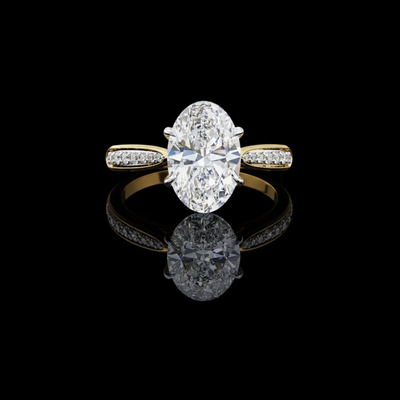
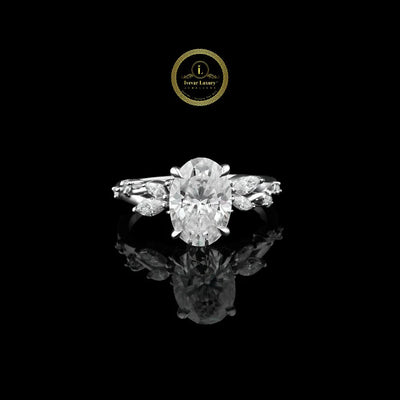


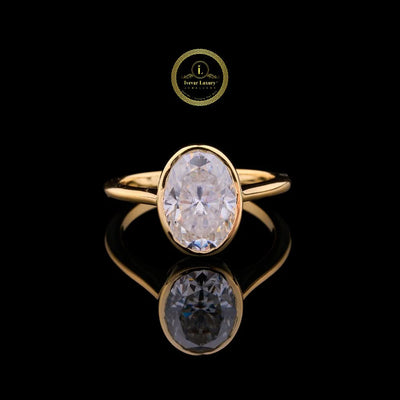


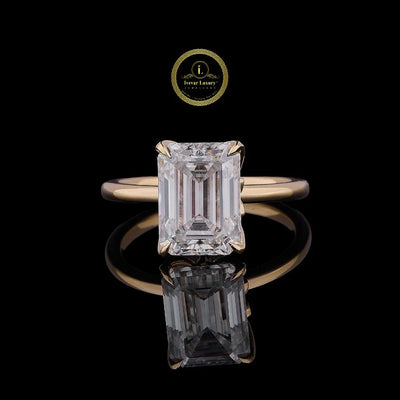


Choosing the Metal
Ivevar makes rings in 10K, 14K and 18K gold. 14K is the most popular everyday choice because it is harder and resists scratches. 18K has a richer yellow color and contains 75% pure gold, which some people with sensitive skin prefer. 10K is the most durable and affordable. White gold is usually rhodium plated for a bright white finish and needs re-plating every so often. Yellow and rose gold do not.
Skin tone and existing jewelry are good guides. If your partner mostly wears silver-colored pieces, white gold will sit naturally beside them. If they wear warm, golden tones, yellow or rose gold will feel familiar from the first day. Rose gold also suits vintage-style settings and softer shapes such as cushion and oval.
A near-colorless stone set in yellow or rose gold looks white because the warm metal masks a faint tint. In white gold, the contrast is sharper, so a slightly higher color grade is worth considering.
Wearing a 2 Carat Ring Every Day
A 2 carat ring is comfortable for daily life with a few simple habits.
- Take it off for heavy tasks: gym sessions, gardening and moving furniture can knock the stone or bend a prong.
- Clean it often: lotion and soap build up under the stone and dull its sparkle. Warm water, mild soap and a soft brush work well.
- Check the prongs: have a jeweler check them about once a year.
- Store it alone: diamond can scratch other jewelry, so keep it in its own pouch or compartment.
Tip: If you work with your hands, choose a lower setting or a bezel. The stone will look just as large from the top and will catch far less on gloves and sweaters.
Pairing a 2 Carat Ring with a Wedding Band
Think about the band before you finalize the engagement ring. A high cathedral setting often lets a straight band sit flush underneath. A low setting may need a curved or notched band. If you want a perfect fit with no guesswork, a matching bridal set solves the problem. Browse lab grown wedding bands to see styles that sit well beside a solitaire.
A Simple Buying Checklist
Use these steps to move from browsing to a confident decision.
- Set the budget: include the engagement ring and, if you want a matching look, the wedding band.
- Choose the stone type: lab grown diamond, mined diamond or moissanite, based on look, meaning and budget.
- Pick the shape: think about your partner's style. Look at the rings they already wear and the pieces they admire.
- Set minimum grades: excellent cut, near-colorless color and eye-clean clarity cover most buyers well.
- Choose the setting and metal: match the setting to daily life and the metal to skin tone and existing jewelry.
- Confirm the ring size: borrow a ring your partner wears on the ring finger, or ask a close friend for help.
- Check the paperwork: read the grading report, the return policy and the delivery time before you order.
When the ring arrives, compare it with the report straight away. Look at it in daylight and indoor light, and at arm's length, because that is how most people will see it. Ivevar's 30-day easy returns give you time to be sure.
Getting the Ring Size Right
A heavier center stone makes a loose ring roll to one side, so fit matters more at 2 carats than with a slim band. Measure at normal room temperature, since fingers swell in heat and shrink in the cold. If the ring has a wide or pavé band, it will feel tighter than a thin band of the same size, so mention the band width when you choose.
If the ring is a surprise, trace the inside edge of a ring your partner already wears on the correct finger, or press it into a bar of soap to keep the outline. A jeweler can then measure the size accurately. Getting this right the first time saves stress later and keeps the stone sitting straight on the finger.
Shop at Ivevar
Ivevar crafts lab grown diamond and moissanite engagement rings with worldwide delivery, free shipping and 30-day easy returns. Start with our lab grown engagement rings, or book a virtual appointment to see 2 carat stones on camera before you choose.


Frequently Asked Questions
How much does a 2 carat engagement ring cost at Ivevar?
It depends on the stone type, the metal and the setting. Lab grown diamond rings cost far less than mined ones, and moissanite costs less again. Check each product page for current prices.
How wide is a 2 carat round diamond?
About 8.1 mm when well cut, roughly 25% wider than a 1 carat.
Is a 2 carat ring too big for everyday wear?
Not usually. Choose secure prongs and a lower profile if you work with your hands, and it will be comfortable every day.
Which shape looks biggest at 2 carats?
Elongated shapes such as oval, pear and marquise look largest for their weight because they spread across more of the finger.
Is a 2 carat lab grown diamond a real diamond?
Yes. It is chemically, physically and optically the same as a mined diamond. Only its origin is different.
What clarity do I need for a 2 carat diamond?
VS2 or better is usually eye-clean in round and oval shapes. For emerald and Asscher cuts, aim for VS1 or better.
Can I tell moissanite from diamond?
Moissanite shows more rainbow-colored fire, especially in sunlight. A trained jeweler with a tester can confirm which is which.
Do Ivevar lab grown diamonds come with a certificate?
Many of our lab grown stones come with IGI certificates. Check the product page for the details of each stone.


