

 Engagement Rings
 Anniversary Rings
 Solitaire Rings
 Halo Rings
 Toi Moi Rings
 Three Stone Rings
 Nature Inspired Rings
 Rose Cut Rings
 Fancy Color Rings
 Antique Cut Rings
 Wedding Rings
 Wedding Band Rings
 Exclusive Lab Grown Diamond Rings
 All Lab Grown Diamond Ring
 Engagement Rings
 Three Stone Rings
 Fancy Color Rings
 Antique Cut Rings
 Daily Wear Rings
 Wedding Band Rings
 Exclusive Moissanite Rings
 Earrings
 Bracelet
 Pendant
 Necklace
 Men's Ring
 Bridal Sets
 Rings
 Earrings
 Tennis chain
 Cuban Chains
 Custom Pendant
 Custom Ring
 Custom Teeth Grillz
 Round
 Oval
 Cushion
 Marquise
 Pear
 Emerald
 Heart
 Princess
 Rose Cut
 Radiant
 Antique Cut
 Brooch
 Cufflink
 Keychain
 Unique Products
 +91-9265051773
 Virtual Appointment
 log in





Short answer: A well-cut 1.5 carat round stone is about 7.3–7.4 mm across, clearly larger than a 1 carat (about 6.5 mm) on the hand. With lab grown diamonds it is one of the best value sizes: the price climbs gently from 1 to 1.5 carats, so you get a visibly bigger stone without a big jump in cost. Prioritize cut, pick near-colorless color and eye-clean clarity, and choose a six-prong or low cathedral setting. If you want an even bigger look for less, a 1.5 carat moissanite is a beautiful alternative, but it is a different gem, not a diamond.
Why 1.5 Carats Is a Sweet Spot
With mined diamonds, prices jump steeply as carat weight rises, and they jump hardest at round numbers like 1, 1.5 and 2 carats. Lab grown diamonds have a much gentler price curve, so stepping up from 1 to 1.5 carats costs relatively little while giving a visibly bigger stone.
That extra half carat matters more than it sounds. Because carat is a weight, not a width, a 1.5 carat round is only about 1 mm wider than a 1 carat. But on the finger that millimeter reads as a real step up: the stone covers more of the finger, catches more light and looks substantial without looking flashy.
A 1.5 carat also works with almost every shape and setting, from a slim solitaire to a halo. It is large enough to stand on its own and small enough to feel comfortable for daily wear. For many buyers it is the size where "big enough" and "easy to wear" meet.
- Visible upgrade: noticeably larger than 1 carat, especially in elongated shapes.
- Gentle price step: with lab grown diamonds, the jump from 1 to 1.5 carats is modest.
- Flexible: suits solitaires, halos, three-stone rings and east-west settings.
- Wearable: still sits comfortably on most fingers with a low or medium profile.
Should you buy just under 1.5 carats?
Because prices tend to step up at round weights, a stone of 1.40 to 1.49 carats can cost noticeably less than a full 1.50 carat, while the difference in width is a fraction of a millimeter that nobody can see on the hand. This trick works best with mined diamonds, where the jumps are steepest. With lab grown diamonds the saving is smaller, but it is still worth comparing a few weights around 1.5 carats before you decide.
How Big Does a 1.5 Carat Look?
A round 1.5 carat measures about 7.3 to 7.4 mm across when well cut. Other shapes spread the same weight differently. Oval, pear and marquise stones are longer and narrower, so they cover more of the finger and look larger from above than a round of the same weight. Emerald and Asscher cuts carry more weight in their depth, so they can look a little smaller face-up.
Finger size also changes the look. On a slim finger (around US size 4 to 5), a 1.5 carat looks bold. On a larger finger, it looks balanced and classic. If you are unsure, compare it with the sizes on either side:
| Carat weight (round) | Approx. diameter | How it looks |
|---|---|---|
| 1.00 ct | 6.4–6.5 mm | Classic and elegant |
| 1.25 ct | 6.8–6.9 mm | A subtle step up |
| 1.50 ct | 7.3–7.4 mm | Clearly larger; a confident look |
| 2.00 ct | 8.0–8.2 mm | Bold statement size |
Sizes are typical for a well-cut round. A stone cut too deep hides its weight underneath and faces up smaller than these figures, which is one reason cut grade matters so much.
Tip: Ask for the stone's measurements in millimeters, not just its carat weight. Two 1.5 carat stones can face up quite differently, and the millimeter size tells you what you will actually see on the hand.
What Sets the Price of a 1.5 Carat Ring
The price of a 1.5 carat engagement ring comes from two parts: the center stone and the setting. For the stone, the gem type matters most. Lab grown diamonds cost far less than mined diamonds of the same grade, and moissanite costs less again. Within lab grown diamonds, cut, color and clarity grades move the price, and a certificate adds confidence.
For the setting, the metal matters most. At Ivevar, the same design costs more in 18K gold than 14K, and more in 14K than 10K, because higher karats contain more pure gold. Extra stones in a pavé band or halo add to the total as well. Prices change with gold and stone markets, so always check each product page for the current price.
| Price factor | Effect on cost | Where to save |
|---|---|---|
| Gem type | Biggest single factor | Lab grown or moissanite instead of mined |
| Metal karat | Rises from 10K to 14K to 18K | 14K balances color and cost |
| Cut grade | Higher grades cost more | Do not save here; cut drives sparkle |
| Color and clarity | Top grades carry a premium | Near-colorless and eye-clean look the same |
| Setting detail | Halo and pavé add stones | A plain solitaire band |
Choosing Color and Clarity at 1.5 Carats
A larger stone shows more of its color and inclusions, so grades matter a bit more at 1.5 carats than at 1 carat. The good news is that you do not need top grades to get a stone that looks flawless to the eye.
- Cut: choose Excellent or Ideal for round stones. This is where the sparkle comes from, so it is worth the money.
- Color: D to F is colorless; G to H is near-colorless and looks white once set, especially in white gold. In yellow or rose gold, G to I often looks perfect.
- Clarity: VS1 or VS2 is usually eye-clean at this size. SI1 can be eye-clean too, but check a photo or video first.
- Certificate: look for an IGI or GIA report. Many Ivevar lab grown diamonds come with IGI certificates that list the full grades.
Lab grown diamonds can be grown by CVD (chemical vapor deposition) or HPHT (high pressure, high temperature). Both methods make real diamonds, and the grading report matters more than the growth method.
Best Settings and Shapes at 1.5 Carats
A six-prong setting holds a larger round stone securely and makes it look rounder. Cushion and oval shapes look generous at this size. Because a 1.5 carat stone sits higher, a cathedral or low-profile setting is worth comparing for comfort if you work with your hands.
- Solitaire: the purest way to show off a 1.5 carat. Browse our lab grown solitaire rings for four- and six-prong styles.
- Hidden halo: adds sparkle from the side while keeping a clean solitaire look from above.
- Halo: makes a 1.5 carat look closer to a 2 carat from above, at the cost of a busier look.
- Three-stone: small side stones widen the ring and add meaning without overwhelming the center.
- Bezel: the most protective option if you are hard on your hands.
Which shape to choose at 1.5 carats
- Round: the most sparkle of any shape and the most classic look. It suits every setting and every hand.
- Oval: looks larger than a round of the same weight and makes the finger look longer. See options in our lab diamond oval collection. Check for a "bow-tie", a darker band across the middle that some ovals show.
- Cushion: soft square corners and a romantic, slightly vintage feel. It looks lovely in a halo or with milgrain details.
- Emerald: long step-cut facets give a calm, mirror-like flash rather than sparkle. Because step cuts show inclusions more clearly, choose VS clarity or better.
- Pear: a teardrop that flatters the finger. Protect the point with a V-prong.
- Radiant: a rectangle with brilliant faceting, so it combines a modern outline with lots of sparkle.
Elongated shapes such as oval, pear and marquise give the most finger coverage per carat, so they are the smart pick if you want your 1.5 carat to look as large as possible.
Getting the Most Sparkle
Cut matters more than a few extra points of weight. A well-cut stone reflects more light and looks brighter and larger than a poorly cut one of the same carat. For lab grown diamonds, an IGI report shows the full cut, color and clarity grades; GIA has given only a Premium or Standard descriptor for lab grown diamonds since October 1, 2025.
Beyond cut, a few simple choices boost sparkle:
- Keep it clean: lotion and skin oils dull a diamond fast. A soak in warm soapy water and a soft brush restore the shine.
- Choose open settings: prongs let more light reach the stone than a full bezel.
- Mind the depth: a stone that is too deep looks darker in the middle and smaller from above.
- Pick white metal for colorless stones: white gold prongs keep a colorless stone looking icy.
Shop the styles in this guide


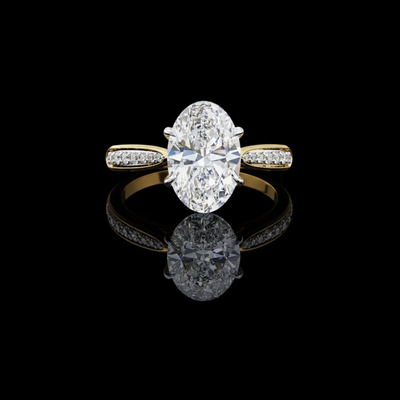
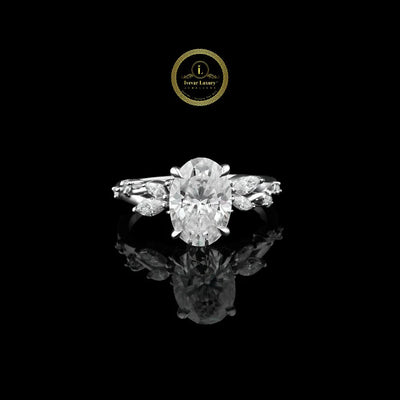


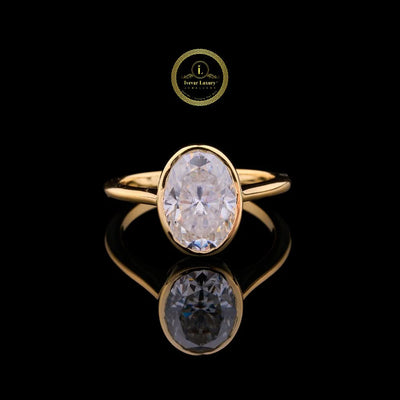


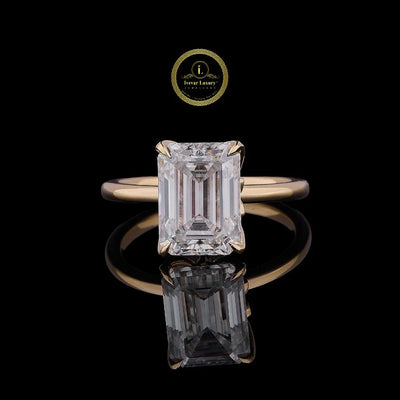


Choosing the Metal for a 1.5 Carat Ring
The metal frames the stone and decides how the ring wears over decades. Ivevar makes engagement rings in 10K, 14K and 18K gold, each in yellow, white and rose.
Karat
10K gold has the most alloy, which makes it the hardest-wearing and the most affordable, with a slightly paler color. 14K is the most popular balance of rich color and durability. 18K has the deepest color and a luxurious feel, but it is softer, so it shows scratches sooner and prongs need checking more often.
Color
White gold makes a colorless or near-colorless stone look its whitest and gives a crisp, modern look. Yellow gold feels warm and classic, and it is forgiving of slightly warmer stone colors. Rose gold is soft and romantic and flatters most skin tones. A popular option is a yellow or rose band with white gold prongs, which keeps the stone looking bright while the band adds warmth.
Band width
A slim band, around 1.8 to 2 mm, makes a 1.5 carat center look bigger by contrast. A wider band feels sturdier and suits larger fingers or bold styles. If you plan to wear a wedding band alongside it, choose widths that look balanced together.
Lab Grown Diamond or Moissanite at 1.5 Carats?
A lab grown diamond is a real diamond, chemically, physically and optically the same as a mined one. It scores 10 on the Mohs hardness scale and has the classic white sparkle and rainbow fire of a diamond. Moissanite is a different gem (silicon carbide). It scores 9.25 on the Mohs scale, which is still excellent for daily wear, and its higher refractive index (about 2.65 versus 2.42 for diamond) gives it more colorful fire.
Moissanite costs less again than lab grown diamond, so buyers who want a bigger look on the same budget often choose it. At Ivevar we always label it as moissanite, never as a diamond. Compare styles in our moissanite solitaire rings.
| Feature | Lab grown diamond | Moissanite |
|---|---|---|
| What it is | Real diamond | Silicon carbide, a different gem |
| Hardness (Mohs) | 10 | 9.25 |
| Sparkle | White brilliance with balanced fire | Stronger rainbow fire |
| Grading | IGI or GIA report | Not graded on the diamond scale |
| Price | Lower than mined diamond | Lower than lab grown diamond |
Keeping a 1.5 Carat Ring Looking New
A larger stone is a bigger target for everyday knocks and grime, so a few habits keep it secure and sparkling for decades.
- Weekly clean: soak for 15 minutes in warm water with a drop of mild dish soap, brush gently under the stone with a soft toothbrush, rinse and dry with a lint-free cloth.
- Take it off for hard work: remove the ring for the gym, gardening, moving furniture and cleaning with harsh chemicals such as bleach.
- Watch for snags: if the ring starts catching on fabric, a prong may have lifted. Stop wearing it and have it checked.
- Yearly check: ask a jeweler to inspect prongs and any pavé stones once a year.
- Store it separately: diamond scratches other jewelry and other diamonds, so keep it in its own pouch or box compartment.
A diamond is the hardest gem, but hardness only means resistance to scratching. A sharp blow on the edge can still chip it, which is why the setting and these simple habits matter.
1.5 Carat Buying Checklist
Before you order, run through this short list:
- Set your budget for stone and metal together: the metal karat can change the total as much as a small change in stone grade.
- Choose cut first: Excellent or Ideal for rounds.
- Check millimeter size: confirm the stone faces up the way you expect.
- Read the certificate: match the report number to the stone where possible.
- Confirm ring size: measure the finger at the end of the day, when it is slightly larger.
- Know the return policy: Ivevar offers 30-day easy returns and free worldwide shipping, so you can see the ring in person.
If you want something specific, such as a particular shape in a particular setting, Ivevar makes custom jewelry and offers virtual appointments to talk it through.
Shop at Ivevar


Browse our full range of lab grown diamond engagement rings to see 1.5 carat options in every shape, or start with the solitaires above. Every ring can be made in 10K, 14K or 18K gold.
Frequently Asked Questions
How big is a 1.5 carat diamond?
A well-cut round 1.5 carat is about 7.3 to 7.4 mm across, roughly 1 mm wider than a 1 carat.
How much does a 1.5 carat lab grown engagement ring cost?
It depends mainly on the metal and the stone's grades. Lab grown diamonds cost far less than mined diamonds of the same size and quality, and 10K gold costs less than 14K or 18K. Check each Ivevar product page for current prices.
Is 1.5 carat better value than 2 carat?
It depends on your budget. 1.5 carat looks clearly larger than 1 carat, and a 2 carat adds another visible step. With lab grown diamonds, both are within reach for many buyers, so choose by look and comfort.
What color and clarity should I choose for 1.5 carats?
G to H color and VS1 to VS2 clarity look white and clean to the eye for most people. Put the savings into cut quality.
Will a 1.5 carat stone snag on things?
It sits a little higher than a 1 carat, so it can catch on knits. A low-profile setting or a bezel reduces this.
Does a 1.5 carat look big on a small finger?
Yes. On a slim finger it looks bold, especially in an oval or pear shape. A thin band makes it look even larger.
Is a 1.5 carat moissanite the same size as a 1.5 carat diamond?
Not exactly. Moissanite is lighter than diamond, so moissanite is often sold by millimeter size or by "diamond equivalent" weight. Compare millimeter sizes to be sure.
Is a 1.5 carat lab grown diamond a real diamond?
Yes. Lab grown diamonds are made of carbon in the same crystal structure as mined diamonds, so they are chemically, physically and optically the same. Only their origin is different.
Can I get a 1.5 carat lab diamond with a certificate?
Yes. Many Ivevar lab grown diamonds come with IGI certificates that grade cut, color, clarity and carat weight.


