

 Engagement Rings
 Anniversary Rings
 Solitaire Rings
 Halo Rings
 Toi Moi Rings
 Three Stone Rings
 Nature Inspired Rings
 Rose Cut Rings
 Fancy Color Rings
 Antique Cut Rings
 Wedding Rings
 Wedding Band Rings
 Exclusive Lab Grown Diamond Rings
 All Lab Grown Diamond Ring
 Engagement Rings
 Three Stone Rings
 Fancy Color Rings
 Antique Cut Rings
 Daily Wear Rings
 Wedding Band Rings
 Exclusive Moissanite Rings
 Earrings
 Bracelet
 Pendant
 Necklace
 Men's Ring
 Bridal Sets
 Rings
 Earrings
 Tennis chain
 Cuban Chains
 Custom Pendant
 Custom Ring
 Custom Teeth Grillz
 Round
 Oval
 Cushion
 Marquise
 Pear
 Emerald
 Heart
 Princess
 Rose Cut
 Radiant
 Antique Cut
 Brooch
 Cufflink
 Keychain
 Unique Products
 +91-9265051773
 Virtual Appointment
 log in




Short answer: A custom engagement ring is made in seven main steps: consultation, stone selection, design sketch, CAD (computer-aided design) rendering, approval, handcrafting (casting, stone setting and polishing), and final quality checks with photos or video before shipping. Most custom rings take about 3 to 6 weeks from approved design to delivery, depending on complexity. The most important step for you is the CAD approval, because it lets you see and adjust every detail before anything is made.
Designing a custom engagement ring sounds complicated, but with a good jeweler it is an exciting, guided process. Here is exactly what happens behind the scenes at a workshop like ours, what you will be asked to decide at each stage, and how to avoid the small mistakes that cause delays.
The Custom Ring Process Step by Step
| Step | What happens | Your role |
|---|---|---|
| 1. Consultation | Discuss style, budget, size and timeline | Share inspiration photos and ideas |
| 2. Stone selection | Choose a certified center stone and any accents | Compare options and reports |
| 3. Sketch | Designer turns ideas into a concept | Give feedback |
| 4. CAD rendering | A precise 3D model of the ring | Review top and side views |
| 5. Approval | Final changes to proportions and details | Approve the design |
| 6. Handcrafting | Casting, setting, polishing and finishing | Sit back |
| 7. Quality check | Inspection, photos or video, then shipping | Confirm and receive your ring |
You are involved most at the start. Once the design is approved, the work moves to the bench, and your job is simply to wait for the finished photos.
Step 1: Consultation
It starts with a conversation. Bring screenshots, sketches or even photos of a family heirloom. A good jeweler will ask about her style, the shape she loves, her metal preference, your budget, her ring size and your proposal date.
What to prepare
- Inspiration images: Three to five photos that share a common look are more useful than twenty that point in different directions.
- Likes and dislikes: "No yellow gold" or "she hates rings that snag on sweaters" is just as helpful as what she loves.
- Budget range: A clear range lets the designer suggest where to spend and where to save.
- Ring size: Even an estimate helps the designer plan the band and setting.
- Deadline: Your proposal date shapes the whole schedule.
At Ivevar, consultations can happen by email, chat or a virtual appointment, so you can see stones and settings on video wherever you are in the world.
Questions to ask your jeweler
- Who makes the ring? An in-house workshop means your designer can talk directly to the setters.
- How many CAD revisions are included? Knowing this up front avoids surprises.
- Will I see the finished ring before it ships? Photos or video are the best final check.
- What is the return policy for custom work? Policies differ for made-to-order pieces, so ask early.
Step 2: Choosing the Stone
Next, you select the center stone. For lab grown diamonds, we recommend an IGI report that lists the cut, color, clarity and carat. You might also choose accent stones, a colored gem, or a second stone for a toi et moi design. Learn more about buying a loose lab grown diamond.
Lab grown diamond or moissanite?
| Feature | Lab grown diamond | Moissanite |
|---|---|---|
| What it is | Real diamond, grown by CVD or HPHT | A separate gemstone (silicon carbide) |
| Hardness (Mohs) | 10 | 9.25 |
| Refractive index | About 2.42 | About 2.65 |
| Grading | IGI or GIA reports | Not graded on the diamond 4Cs scale |
Lab grown diamonds are chemically, physically and optically the same as mined diamonds. Moissanite is not a diamond, but it is very durable and shows more colorful fire. Either works beautifully in a custom design. Browse lab grown diamonds or moissanite to compare shapes.
Why the stone comes before the design
Every stone has its own exact measurements. A setting designed for a 7.5 mm oval will not fit a 7.8 mm one perfectly. Choosing the stone first lets the designer build the prongs, basket or bezel around its true size, which gives a more secure and better-looking result.
Step 3: Sketch and Concept
The designer creates a quick sketch or concept that captures the overall look: shape, setting style, band width and any special details such as engraving, a hidden halo or a unique gallery.
This is the stage for big ideas. Do you want a split shank, a twisted band, a nature-inspired leaf motif, or a hidden stone only she knows about? It costs nothing to explore options in a sketch, so this is when to ask "what if." The sketch does not need to be perfect; it is there to agree on direction before the precise design work begins.
Popular custom details
- Hidden halo: A ring of small stones under the center stone, visible from the side.
- Engraving: Initials, a date or a short phrase inside the band.
- Gallery details: Decorative metalwork under the stone, such as a heart or a crown shape.
- Mixed metals: White gold prongs on a yellow gold band, for example.
- Heirloom stones: Reusing a family diamond in a new setting.
Step 4: CAD Rendering
CAD software creates a precise 3D model built around your stone's exact measurements. You will usually see the ring from the top, the side and at an angle. This is where you check proportions: prong size, band thickness, setting height and how a wedding band will sit alongside.
How to review a CAD
- Check the side view: It shows the setting height and whether a straight band can sit flush.
- Look at the band width: Ask for the measurement in millimeters, not just how it looks on screen.
- Count and size the prongs: Prongs that are too thin wear faster; too thick can hide the stone.
- Imagine it on the hand: Renders are often enlarged, so compare against a real-size printout.
- Ask about metal weight: A heavier band feels more solid; a lighter one feels delicate.
 Shown: Three Stone Emerald Cut Moissanite With Double Halo Anniversary Ring
Tip: CAD renderings are usually shown much larger than real life, which can make prongs and pave look chunkier than they will be. Ask the designer to show the ring at actual size on a hand image, or print it at 100% scale.
Keep in mind what a CAD cannot show. It is a model of the metalwork, so the stone in the render is a stand-in. The real sparkle, color and character of your stone come from the grading report and the stone's own photos and video, which is why it helps to review both side by side.
Step 5: Approval and Changes
Ask for changes until it feels right. Common tweaks include lowering the setting, thinning the band, adjusting prong style, or adding a hidden detail. Once you approve, the design is locked in for production.
Take your time here. A small change at this stage takes a few minutes of design work; the same change after casting can mean starting again. If you are unsure about a detail, ask to see two versions side by side. It is also a good moment to confirm the metal (10K, 14K or 18K gold, and which color), the final ring size and any engraving text, spelled exactly as you want it.
Choosing the metal
- 10K gold: About 41.7% gold. The hardest-wearing option, with a slightly paler color.
- 14K gold: About 58.5% gold. A popular balance of rich color and everyday durability.
- 18K gold: 75% gold. The deepest color and most luxurious feel, a little softer than 14K.
Each karat is available in yellow, white and rose gold. White gold suits icy, colorless stones; yellow and rose gold give a warmer, more vintage look.
Mistakes to avoid at approval
- Approving from the top view only: Most fit problems show up in the side view.
- Guessing the size: Confirm it before casting, because some designs are hard to resize later.
- Too many ideas in one ring: A hidden halo, engraving, twisted band and pave can compete. Pick the details that matter most.
Step 6: Handcrafting
Casting
The CAD model is 3D printed in wax or resin, then used to cast the ring in your chosen metal, such as 14K or 18K gold. The printed model is set in a mold, the wax or resin is melted out, and molten gold is poured into the space it leaves behind. This is often called lost-wax casting, and it is how most fine jewelry is made.
Cleaning and filing
The raw casting comes out rough. A jeweler removes the casting sprue, files the surfaces, and checks the shank, prongs and gallery for any flaws before stones are added.
Stone setting
A skilled setter secures the center stone and any pave or side stones by hand, checking each one for security and alignment. Prongs are bent and shaped over the stone, bezels are pushed around its edge, and pave stones are set in tiny seats cut into the metal. This step takes the most skill and time, especially for designs with many small stones.
Polishing and finishing
The ring is cleaned, polished, and given any final finishes such as engraving, milgrain or rhodium plating on white gold. Rhodium gives white gold its bright, mirror-like finish; over years of wear it can be refreshed by a jeweler.
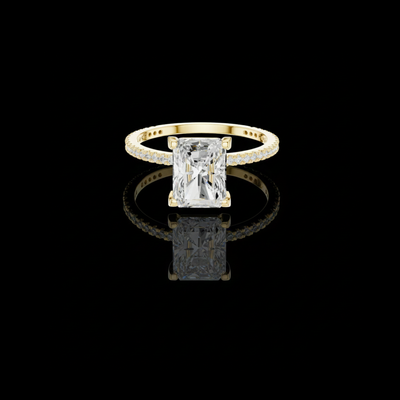
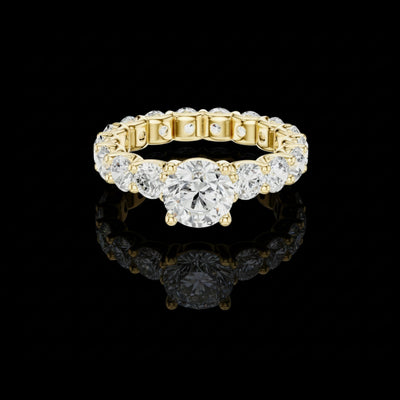
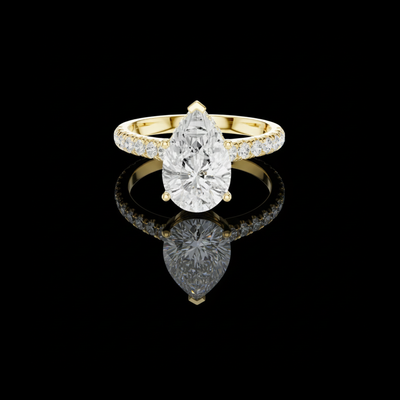
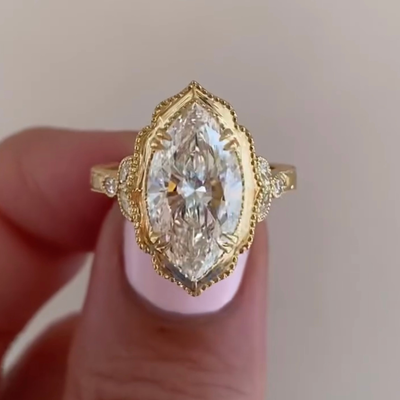
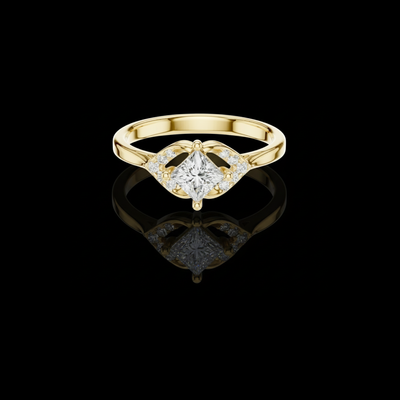
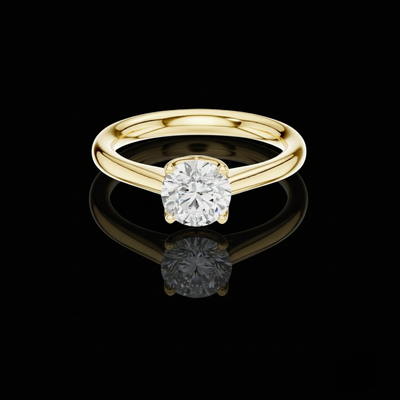
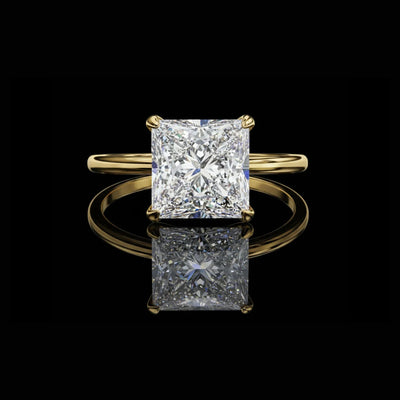
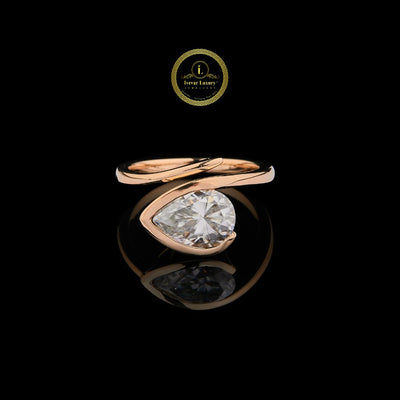
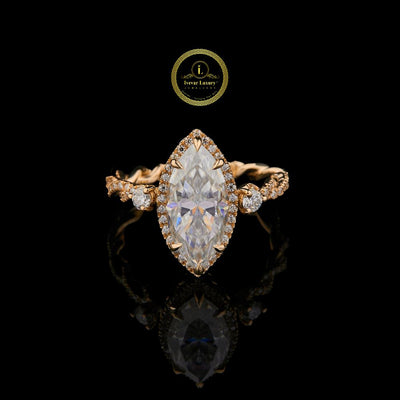
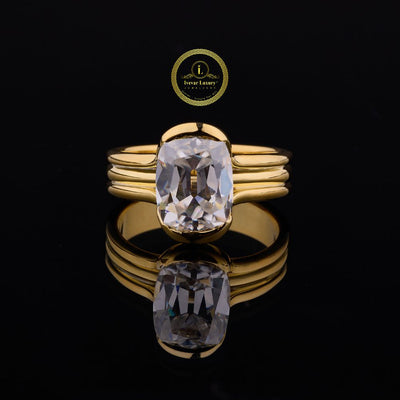
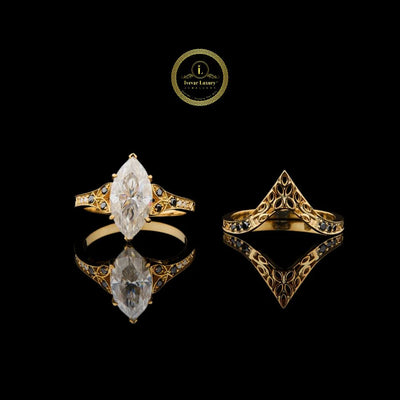
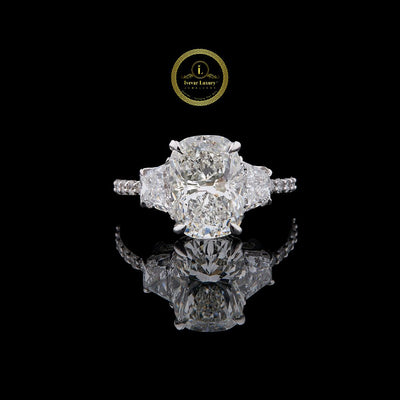
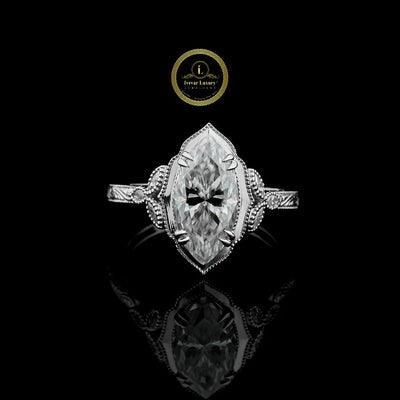
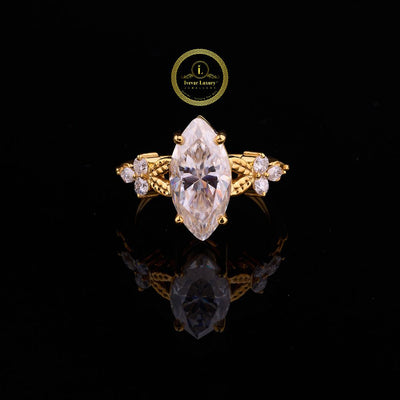
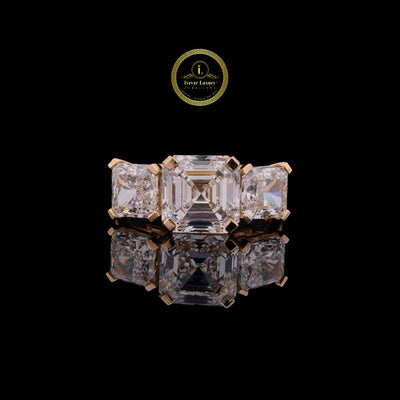
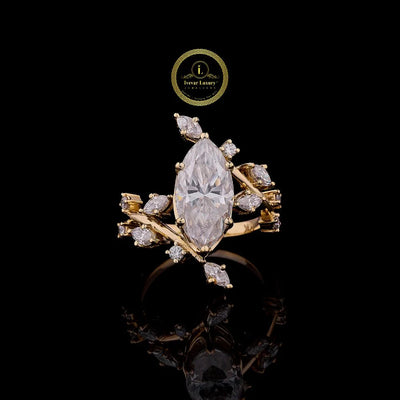
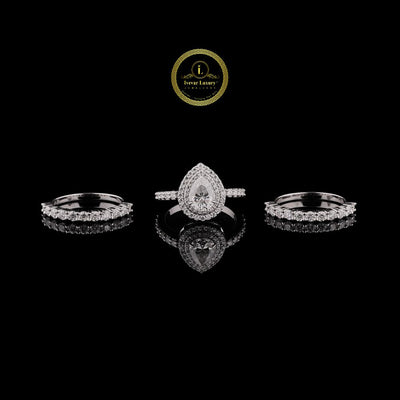
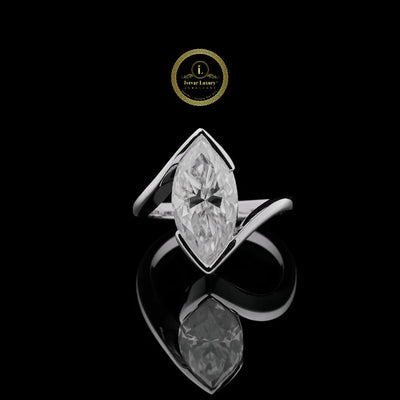
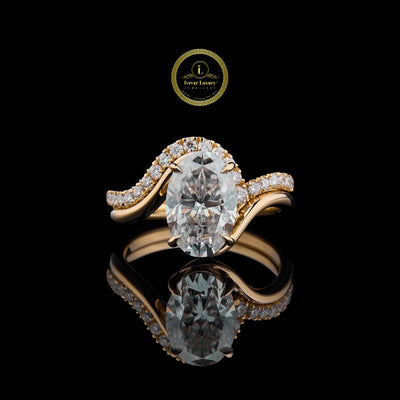
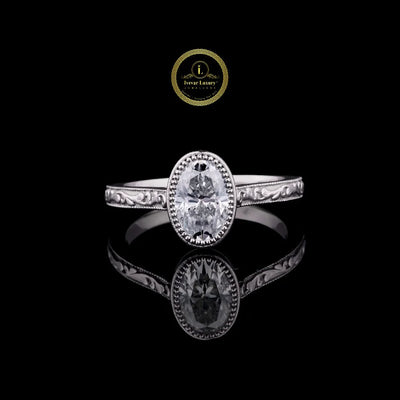
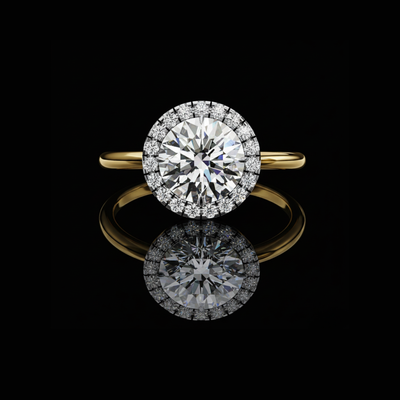
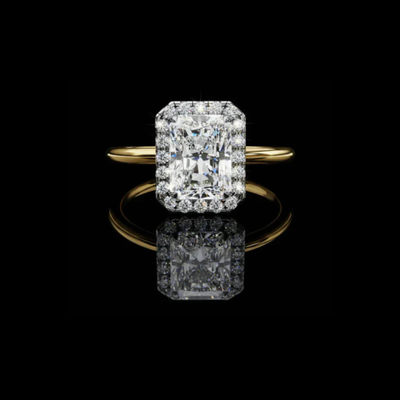
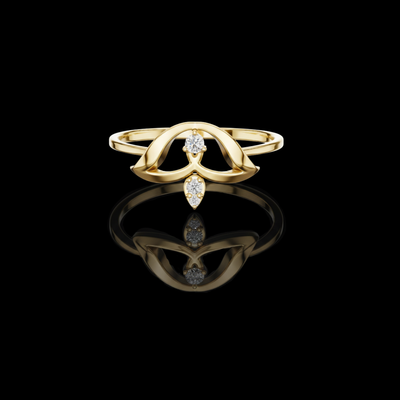
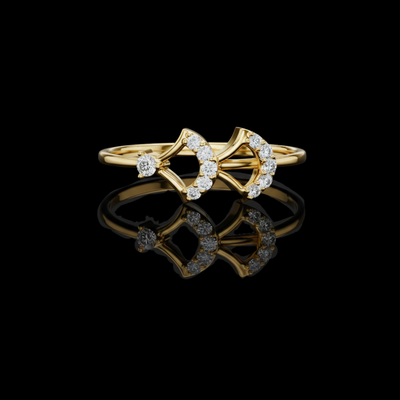
Shop the styles in this guide
Step 7: Quality Check and Delivery
Before shipping, the ring is inspected for stone security, finish and size. At Ivevar, we share photos or a video of your finished ring so you can see it before it leaves our workshop.
What gets checked
- Stone security: Every stone is checked for movement.
- Prong tips: Smoothed so they do not catch on fabric.
- Size: Measured against the ordered ring size.
- Finish: Checked for marks, porosity or uneven polish.
- Paperwork: Grading report and documents matched to the stone.
Rings are then packed and shipped worldwide with free shipping and tracking.
Caring for your new ring
Clean the ring every couple of weeks with warm water, a drop of mild soap and a soft toothbrush, paying attention to the underside of the stone where lotion and dust collect. Take it off for the gym, gardening and swimming, and have a jeweler check the prongs once a year. Store it separately so harder stones do not scratch other jewelry.
How Long Does a Custom Ring Take?
Timing depends on design complexity and stone availability, but plan for roughly 3 to 6 weeks after CAD approval, plus shipping. If you have a proposal date, tell your jeweler early and allow extra time around holidays. See our engagement ring timeline guide.
The biggest delays usually happen before production: waiting on feedback, changing the stone, or several rounds of CAD revisions. Replying quickly and deciding on the stone early are the easiest ways to keep things moving.
Tip: If your proposal date is close, ask whether a lightly customized version of an existing design is possible. Using a proven setting with your chosen stone and metal can save design time while still feeling personal.
Custom vs Ready-Made: Which Is Right for You?
| Factor | Custom ring | Ready-made ring |
|---|---|---|
| Design | Fully personal, one of a kind | Chosen from existing styles |
| Timeline | Longer; allow several weeks | Faster |
| Involvement | You approve sketch and CAD | Pick and order |
| Best for | A specific vision or heirloom stone | A style you already love |
If a ready-made design is 90% right, a lightly customized version (a different metal, center stone or band) can be a good middle ground. Browse lab grown engagement rings for starting points.
Tips for a Smooth Custom Order
- Focus your inspiration: Collect 3 to 5 images that share a common style.
- Know the size: Know her ring size, or plan for resizing.
- Set a budget: Decide your budget range before choosing the stone.
- Check the profile: Always review the side view in the CAD.
- Ask about policies: Ask what the return or remake policy is for custom work.
- Keep records: Save the CAD files, grading report and receipt together for insurance.
Custom Rings at Ivevar
Every custom ring is designed and handcrafted in our own workshop in Surat, India. You work directly with our team, approve a CAD design before production, and receive photos or a video before shipping, with free worldwide shipping. Many of our lab grown diamonds come with IGI certificates, and we work in 10K, 14K and 18K gold. Explore our exclusive lab grown diamond rings or contact us to start your design.
Shop Custom and Exclusive Ring Designs
 Three Stone Emerald Double HaloShop Now
 Emerald Scalloped Halo RingShop Now
 Emerald Three Stone RingShop Now
 Custom Monogram Signet RingShop Now
 Custom Initial Letter RingShop Now
 Custom Royal Iced Out RingShop Now
Swipe to see more → | View exclusive designs
Frequently Asked Questions
Is a custom engagement ring more expensive?
Not always. Custom work lets you control where the budget goes, and many designs cost similar to ready-made rings.
What is CAD in jewelry?
Computer-aided design: a precise 3D model of the ring that you approve before it is made.
Can I use my own stone?
Often yes. Ask your jeweler; they will check the stone's condition and measurements first.
Can I make changes after approving the CAD?
Small changes may be possible before casting; after casting, changes are harder and may cost more.
How do I know the ring will look like the CAD?
Ask for photos or video of the finished ring before shipping, which we provide at Ivevar.
Can I see the stone before it is set?
Yes. Ask for photos or a video of the loose stone, along with its grading report, before you approve the design. It is the best way to confirm the stone is exactly the one you chose.
Can I design a custom ring without visiting the store?
Yes. The whole process can happen online, with consultations by message or virtual appointment and CAD files shared by email.
What if I don't know her ring size?
Give your best estimate and tell the designer. Some designs are easier to resize than others, such as plain bands compared with full eternity bands, so it helps to know early.
Can I add a matching wedding band later?
Yes. Keeping the CAD file makes it much easier to design a band that fits perfectly against the engagement ring.
Is a custom ring a good idea for a surprise proposal?
Yes, with a little planning. Gather clues about her style from her current jewelry and saved photos, borrow a ring she already wears to check the size, and start early so there is time for CAD revisions before your date.
The Bottom Line
A custom engagement ring follows a clear path: consult, choose the stone, design, approve the CAD, handcraft and inspect. Take your time with the CAD, plan around your proposal date, and you will receive a ring that is truly one of a kind.
Related Guides
- When to buy an engagement ring before proposing
- Engagement ring settings explained
- Best engagement ring for your hand shape
Author Bio
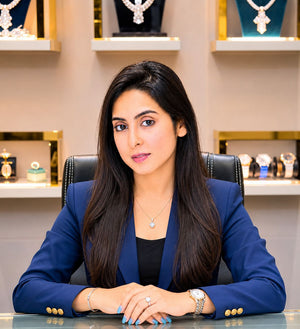
Aumsri Pradhan
Founder, Ivevar Luxury
Aumsri Pradhan is the founder of Ivevar Luxury, a Surat-based fine jewelry brand that designs and handcrafts lab grown diamond and moissanite jewelry in its own workshop. She leads the brand's design and customer experience, from engagement rings and bridal sets to custom pieces made to each client's story. Through the Ivevar blog, she shares practical guidance on lab grown diamonds, moissanite, diamond grading and ring design to help buyers choose with confidence.


