Engagement Rings
 Anniversary Rings
 Solitaire Rings
 Halo Rings
 Toi Moi Rings
 Three Stone Rings
 Nature Inspired Rings
 Rose Cut Rings
 Fancy Color Rings
 Antique Cut Rings
 Wedding Rings
 Wedding Band Rings
 Exclusive Lab Grown Diamond Rings
 All Lab Grown Diamond Ring
 Engagement Rings
 Three Stone Rings
 Fancy Color Rings
 Antique Cut Rings
 Daily Wear Rings
 Wedding Band Rings
 Exclusive Moissanite Rings
 Earrings
 Bracelet
 Pendant
 Necklace
 Men's Ring
 Bridal Sets
 Rings
Rings
 Earrings
 Tennis chain
 Cuban Chains
 Custom Pendant
 Custom Ring
 Custom Teeth Grillz
 Round
Round
 Oval
Oval
 Cushion
 Marquise
 Pear
Pear
 Emerald
 Heart
Heart
 Princess
 Rose Cut
 Radiant
 Antique Cut
 Brooch
 Cufflink
 Keychain
 Unique Products
 +91 9265051773
 Virtual Appointment
 log in



Lab Grown Diamond Engagement Ring Styles: Every Setting Ranked
by Ankit Koshiya on Sep 29, 2026

Short answer: The classic solitaire still ranks #1 — timeless, secure, and the best showcase for the stone itself. Hidden halo with pavé takes #2 for maximum sparkle per dollar, three-stone ranks #3 for symbolism and finger coverage, bezel #4 for active lifestyles, vintage-inspired #5 for character, and bypass/split-shank #6 for modern flair. The "best" setting is the one that fits your lifestyle, your finger, and how much sparkle versus simplicity you want.
- ✓ #1 Classic solitaire: timeless, easiest to clean, puts 100% of attention on the center diamond.
- ✓ #2 Hidden halo + pavé: secret sparkle under the stone plus a diamond-lined band — the best value glow-up.
- ✓ #3 Three-stone: past, present, future symbolism with serious finger coverage.
- ✓ #4 Bezel: the most protective setting — ideal for active hands and low-profile wear.
- ✓ #5 Vintage-inspired: milgrain, engraving, and filigree for old-soul character.
How We Ranked These Settings
Rankings are subjective, so here is the rubric: timelessness (will it still look right in 30 years?), versatility, durability, and value (visual impact per dollar, especially with lab grown diamonds). A setting that scores across all four lands near the top; one that is gorgeous but fragile, or trendy but limiting, lands lower.
One more note: lab grown diamonds change the value equation for every setting here. Because the center stone costs a fraction of a mined equivalent, you can afford a larger diamond in a simple solitaire or a fully pavé shank that would have blown the budget with a mined stone.
#1 The Classic Solitaire: Still Unbeatable
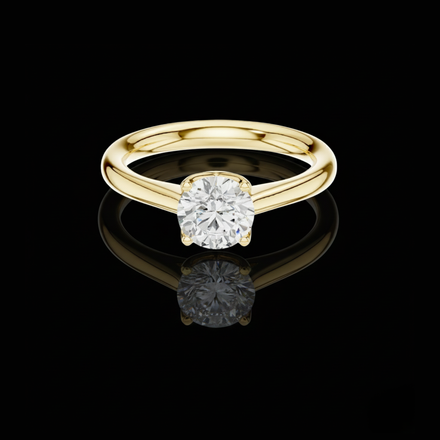
The solitaire — one diamond, four or six prongs, a clean band — has been the default engagement ring for over a century, and it earns the top spot by being the hardest to get wrong. It flatters every shape, suits every hand, stacks with any wedding band, and never looks dated. It is also the easiest setting to clean, resize, and repair.
The solitaire is also where lab grown diamonds shine brightest. The money you save versus mined goes straight into carat weight or quality — a two-carat lab grown solitaire with excellent cut costs what a fraction of a carat would in mined. Cathedral and six-prong variations keep the classic fresh without leaving the category.

#2 Hidden Halo with Pavé: Maximum Sparkle Per Dollar
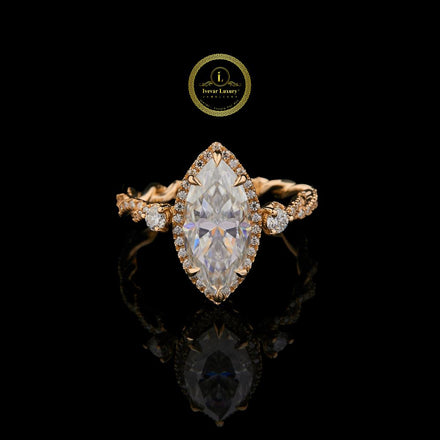
The hidden halo — small diamonds tucked beneath the center stone's girdle, visible from the side but not the top — is the cleverest setting of the modern era. From above it reads as a clean solitaire; from the side it erupts in sparkle. Add a pavé band and the ring glows from every angle while keeping the classic top-down profile.
It ranks #2 because it delivers the visual richness of a full halo without the bulk. The trade-offs are manageable: more small stones mean more maintenance checks, and pavé bands cannot be resized as freely. But for sparkle lovers who want a solitaire's elegance with a secret fireworks show, nothing beats it.
#3 Three-Stone: Symbolism With Presence
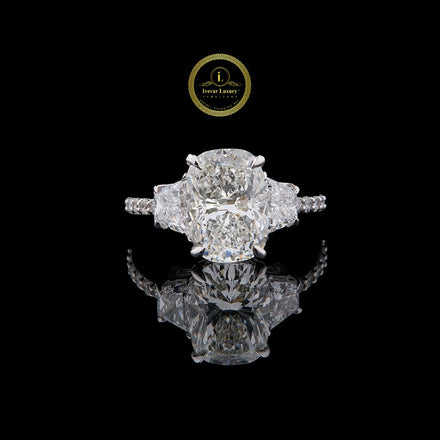
Three-stone rings carry the "past, present, future" narrative, and the two side stones add roughly 30–50% more finger coverage than a solitaire of the same center weight. Pear sides feel romantic; baguettes feel architectural and Art Deco.
Three-stone settings suit larger centers particularly well, which makes them a natural partner for lab grown diamonds — the affordable center weight lets you build a genuinely substantial ring. The setting sits slightly higher and wider than a solitaire, so it is less ideal for very active hands, but for presence and meaning per dollar it is hard to beat.
#4 Bezel: The Practical Champion
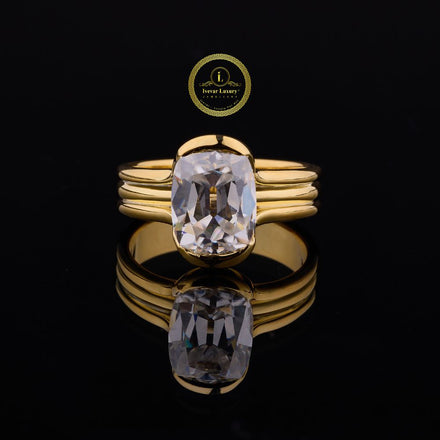
A bezel wraps a rim of metal completely around the diamond's edge — the most protective setting in jewelry. No exposed girdle to chip, no prongs to snag, and a smooth low profile. For nurses, athletes, new parents, and anyone rough on their hands, the bezel is the correct engineering choice.
Why #4 and not higher? The metal rim covers the stone's edge, slightly reducing visible spread — though a well-cut lab grown diamond still performs beautifully. Modern partial bezels and bezel-set halos have closed much of the style gap. If your lifestyle is hard on jewelry, rank this #1 for yourself regardless of our list.

#5 Vintage-Inspired: Character and Craft
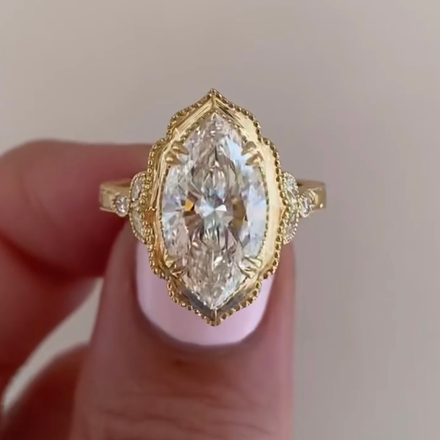
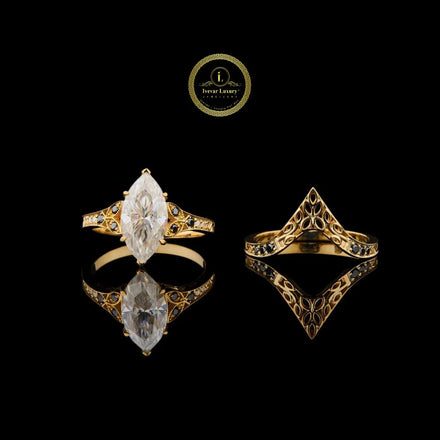
Milgrain beading, hand engraving, filigree galleries — vintage-inspired settings bring old-world romance to modern lab grown stones. They rank #5 for specificity, not lack of beauty: a style you choose because you love it. The fine detail rewards close inspection.
The practical notes: intricate settings need slightly more care — engraving collects lotion, filigree can snag — and very ornate designs pair best with classic cuts like cushion, oval, and emerald. But paired with a lab grown center, a vintage-inspired setting delivers heirloom character at a price impossible with mined stones.
#6 Bypass and Split-Shank: Modern With an Edge
Bypass settings sweep the band past the center stone asymmetrically; split-shank designs divide the band into two strands that frame the diamond. Both are contemporary, dynamic, and great at adding diamond real estate — split shanks in particular often carry pavé down both strands, doubling the sparkle surface of the band.
They land at #6 because they are the most taste-specific and least timeless — beautiful now, but more tied to current fashion than the five above. They also complicate wedding-band pairing and can visually narrow the center stone. Choose them if modern asymmetry is genuinely your style; just know you are buying fashion as well as jewelry.
| Rank | Setting | Strengths | Watch out for |
|---|---|---|---|
| 1 | Classic solitaire | Timeless, easy care, max light to stone | Exposed girdle; prongs need checks |
| 2 | Hidden halo + pavé | Huge sparkle, solitaire profile from top | More maintenance; harder to resize |
| 3 | Three-stone | Symbolism, extra finger coverage | Wider profile; sits higher |
| 4 | Bezel | Most protective, snag-free, low profile | Slightly less visible spread |
| 5 | Vintage-inspired | Character, craftsmanship, romance | Needs gentler care; taste-specific |
| 6 | Bypass / split-shank | Modern, dynamic, extra band sparkle | Trendy; tricky wedding-band pairing |
Matching the Setting to Your Life
Use the ranking as a starting point, then filter by reality. Work with your hands? Move bezel to the top. Love vintage style? Vintage-inspired jumps to #1 for you. Want the most ring for the money? Hidden halo plus pavé with a lab grown center is the value king. Stacking bands? The solitaire's slim profile plays nicest.
And remember that settings are not permanent — heads can be rebuilt and shanks restyled down the road. But choosing well now means decades of loving the ring as-is. When in doubt, the classics are classic for a reason: the solitaire earned its century at the top by being right for the most people, most of the time.
Shop Our Best Sellers


Swipe to see more → | View all best sellers
Frequently Asked Questions
What is the most popular engagement ring setting?
The classic solitaire remains the most popular setting worldwide — timeless and the best showcase for the center diamond. Pavé solitaires and hidden halos are the fastest-growing variations.
Which setting makes a diamond look biggest?
Halos add the most perceived size, followed by three-stone settings and pavé bands. An oval or marquise in a solitaire also faces up larger than a round of equal carat weight.
What is the most secure engagement ring setting?
The bezel, which encircles the stone in metal. Six-prong solitaires are the most secure prong style; four-prong settings show more stone but need regular checks.
Is a hidden halo the same as a regular halo?
No. A regular halo rings the stone at table level and enlarges it from above. A hidden halo sits below the girdle — invisible from the top, sparkling from the side.
Can pavé bands be resized?
Usually only slightly — diamonds along the shank complicate resizing. Buy pavé and eternity-style bands in your most confident size.
Which setting is best for an active lifestyle?
Bezel first, then low-profile solitaires and flush-set designs. Avoid high settings and exposed three-stone arrangements if your hands take daily knocks.
Do lab grown diamonds work in every setting?
Yes — lab grown diamonds are physically identical to mined diamonds, so any setting that holds a natural diamond holds one, with savings left for larger stones or more elaborate settings.
Sources
- GIA — Gemological Institute of America
- The Knot — Engagement Ring Style Guides
- Brides — Wedding and Engagement Jewelry
- JCK — Jewelry Industry News
- PriceScope — Diamond and Jewelry Community

Aumsri Pradhan is the founder of Ivevar Luxury, a Surat-based fine jewelry brand that designs and handcrafts lab grown diamond and moissanite jewelry in its own workshop. She leads the brand's design and customer experience, from engagement rings and bridal sets to custom pieces made to each client's story. Through the Ivevar blog, she shares practical guidance on lab grown diamonds, moissanite, diamond grading and ring design to help buyers choose with confidence.