

 Engagement Rings
 Anniversary Rings
 Solitaire Rings
 Halo Rings
 Toi Moi Rings
 Three Stone Rings
 Nature Inspired Rings
 Rose Cut Rings
 Fancy Color Rings
 Antique Cut Rings
 Wedding Rings
 Wedding Band Rings
 Exclusive Lab Grown Diamond Rings
 All Lab Grown Diamond Ring
 Engagement Rings
 Three Stone Rings
 Fancy Color Rings
 Antique Cut Rings
 Daily Wear Rings
 Wedding Band Rings
 Exclusive Moissanite Rings
 Earrings
 Bracelet
 Pendant
 Necklace
 Men's Ring
 Bridal Sets
 Rings
 Earrings
 Tennis chain
 Cuban Chains
 Custom Pendant
 Custom Ring
 Custom Teeth Grillz
 Round
 Oval
 Cushion
 Marquise
 Pear
 Emerald
 Heart
 Princess
 Rose Cut
 Radiant
 Antique Cut
 Brooch
 Cufflink
 Keychain
 Unique Products
 +91-9265051773
 Virtual Appointment
 log in




Should You Shop for the Ring Together? 2026 Couples' Data
by Ankit Koshiya on Sep 29, 2026

Short answer: For most couples today, yes. Wedding industry surveys over recent years keep finding that a large share of couples choose the ring together or with the wearer's direct input, and that share keeps growing. Shopping together removes the biggest risks (wrong style, wrong size, wrong budget), and it does not have to kill the romance: most couples still keep the proposal itself a surprise. If you want both, use a hybrid: shortlist together, then make the final choice alone.
Not long ago the script was fixed: one partner secretly bought a ring, got down on one knee, and hoped for the best. That script still exists, but it is no longer the default. This guide looks at why couples now shop together, the honest pros and cons of each approach, the hybrid methods that keep the surprise alive, and a practical plan for shopping as a team, whether you visit a showroom or book a virtual appointment from home.
- Shopping together is mainstream: choosing the ring as a couple is now a normal, widely shared approach, not an exception.
- It cuts risk: the person who wears the ring every day gets a say in shape, metal, setting and size.
- The surprise survives: most couples collaborate on the ring and still keep the proposal moment a secret.
- Budget talks help: agreeing on a range up front stops overspending on things that do not matter to you.
- Hybrids work best for many: shortlist together, finalize solo, or propose with a placeholder and design the real ring afterwards.
What the Data Says
The traditional secret purchase is fading. Couples' surveys from major wedding publications have repeatedly found that a large share of couples shop for the engagement ring together or with the recipient's input, and jewelers describe the same shift on the shop floor: shared Pinterest boards, joint appointments and "we picked it out together" stories are now completely ordinary. Among younger couples especially, the ring is treated as a shared decision, much like choosing a wedding venue or a home.
We have not quoted a single headline percentage here on purpose. Different surveys ask different questions (Did you shop together? Did your partner give input? Did they choose the final ring?), so the numbers vary. The direction, though, is consistent: more input from the wearer, more open conversations about budget, and fewer completely blind purchases.
The reasons are practical as much as cultural. An engagement ring is expensive and is worn every day for decades, so getting it wrong costs money and goodwill. Social media has made people's tastes far more specific. Someone with a saved board full of oval halos in yellow gold knows exactly what they want, which makes secret guessing riskier than it was a generation ago. And with lab grown diamonds giving couples more choice at every budget, many couples now plan the purchase together the way they would plan any big financial decision.

Why the Old Script Changed
Several shifts have pushed couples toward shopping together. None of them is about romance dying. They are about information and choice.
- Taste is visible: saved posts, boards and screenshots show exactly which shapes and settings someone loves, and which they would never wear.
- Couples marry later and share finances: many already live together and split big costs, so a large purchase made in secret can feel odd.
- More choice means more decisions: lab grown diamond or moissanite, 10K, 14K or 18K gold, solitaire, halo or three-stone. The menu is long, and the wearer usually has opinions.
- Online buying made it easy: couples can browse together on a sofa, compare videos of stones and book a virtual appointment without taking a day off work.
- Proposals are more equal: many couples see the engagement as a joint decision and want the ring to reflect that.
The Case for Shopping Together
The strongest argument is simple: the wearer has the ring on their hand every single day, so their preferences should lead. Choosing together removes the most common ring-buying mistakes in one go: the wrong style, the wrong size, a metal colour that does not suit their skin, or a high setting that catches on everything at work. It is common sense that a ring chosen with the wearer's input is less likely to need an exchange or a restyle after the proposal.
There is a money upside too. An open budget conversation prevents the classic trap of overspending on features the wearer does not care about, such as a bigger halo, while missing the ones they do, such as a particular shape or a thinner band. It also lets you decide together where the money goes: carat weight, colour grade, metal or design details.
Then there is the experience itself. Many couples describe ring shopping as one of their favourite memories from before the engagement: trying on dozens of styles, learning what suits a hand versus what looks good on a screen, and debating halos over coffee afterwards. Trying rings on teaches things no article can, such as how a 2-carat oval actually looks on a particular finger, whether a high or low setting feels better, and how yellow gold looks against their skin.

The Case for the Solo Surprise (and the Hybrids)
The fully surprise proposal still has real magic, and some people genuinely want the traditional experience of being given a ring chosen just for them. If your partner has dropped clear hints, or if you know their taste very well, buying solo can be deeply romantic. The key is doing your homework: study their saved photos, ask a close friend or sibling, notice what they try on "just for fun", and check what jewelry they already wear every day.
The smartest approach for many couples is the hybrid: shortlist together, finalize solo. Browse and try on rings together so you learn their size, favourite shapes and setting style. Then choose the final stone and design on your own, so the actual ring and the proposal both stay a surprise. Other hybrids work well too: they pick the setting and you pick the diamond, or you propose with a simple placeholder ring and design the real one together afterwards. You keep the romance and remove most of the risk.
| Approach | Pros | Cons |
|---|---|---|
| Fully together | Perfect fit and style; a shared memory | No surprise about the ring itself |
| Hybrid shortlist | Low risk plus a real surprise | Needs discipline to keep the final choice secret |
| Full surprise | Maximum romance and tradition | Highest risk of the wrong style or size |
| Placeholder, then design | Surprise moment plus a perfect final ring | Two steps; you pay for a placeholder |
Which Approach Fits You?
There is no single right answer. Use these questions to find the approach that suits your relationship.
- Do they have a very specific taste? If they already know the exact shape, metal and setting they want, shop together or use the hybrid. Guessing is a gamble.
- Have you already talked about marriage openly? If you have, a joint shopping trip will feel natural rather than spoiling anything.
- Do they love traditional surprises? If being handed a ring chosen just for them matters, go solo, but research carefully, or use a placeholder.
- Is the budget shared? If you combine finances, a joint decision is usually fairer and less stressful.
- Do they wear much jewelry? People who wear little jewelry often have strong opinions about comfort and height, which are hard to guess.
- How confident are you on ring size? If you have no reliable way to learn it, shopping together, even once, solves that instantly.
How to Have the Conversation
If you want to shop together but worry it will ruin the romance, frame it well: "I want the proposal to be a complete surprise, but I want the ring to be exactly right, so let's look together." Most people find this more romantic, not less, because it shows you care about their everyday happiness more than your own surprise plan.
Set a budget range openly before you start. Nothing spoils a fun appointment like silent sticker shock. It also helps the jeweler show you suitable options straight away, rather than starting with stones outside your range.
During the appointment, let them try everything, including styles you both assumed they would dislike. Hands surprise people: the ring someone loves on their finger is often not the one they loved in photos. Take photos of favourites, note sizes and, if you are doing the hybrid, agree which decisions are theirs (for example, shape and setting style) and which are yours (the final stone and the proposal plan). Then keep your part secret.
Tip: Agree on a "no peeking" rule for the hybrid. Once the shortlist is made, the wearer stops browsing that jeweler's site and leaves the final choice, and the timing, to the proposer.
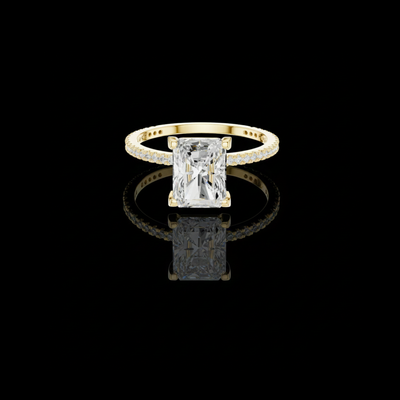
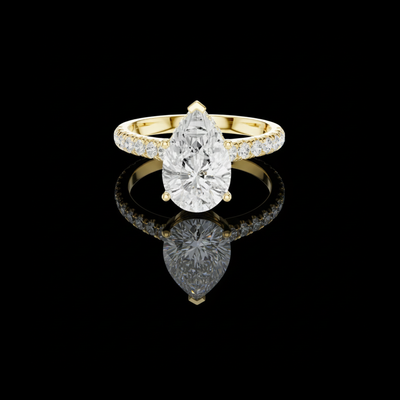
Shop the styles in this guide
A Step-by-Step Plan for Shopping Together
A little structure turns ring shopping from a stressful errand into a good day out. Here is a simple plan that works in a showroom or on a video call.
- Collect inspiration separately: each of you saves 10 to 15 photos of rings you like. Comparing them shows patterns quickly, such as a love of elongated shapes or warm gold.
- Agree on a budget range: pick a comfortable range, not a single number, and decide whether it includes the wedding band.
- Choose the stone type: decide between a lab grown diamond and moissanite (more on this below).
- Narrow the shape: round, oval, emerald, cushion, pear, marquise and radiant all look different on the hand. Try at least three.
- Pick the setting style: solitaire, halo, three-stone, pavé band or bezel. This affects sparkle, height and everyday comfort.
- Choose the metal: yellow, white or rose gold, in 10K, 14K or 18K.
- Measure the ring size properly: measure at the end of the day, when fingers are slightly larger, and in a band width similar to the final ring.
- Shortlist two or three rings: then decide whether you finish together or hand over to the proposer.
Lab Grown Diamond or Moissanite? Decide Together
One of the biggest choices couples now make together is the stone itself. Both options are real gemstones with clear strengths, and talking about them openly usually leads to a better decision than one partner guessing.
A lab grown diamond is a real diamond: chemically, physically and optically the same as a mined diamond, grown using the CVD or HPHT process. It scores 10 on the Mohs hardness scale and is graded on the 4Cs (cut, colour, clarity and carat) by labs such as IGI and GIA. Moissanite is a different gemstone, silicon carbide. It is not a diamond and is not graded on the diamond scale, but it is very hard (9.25 on the Mohs scale) and has a higher refractive index than diamond (about 2.65 versus about 2.42), which gives it strong, colourful sparkle.
| Question | Lab grown diamond | Moissanite |
|---|---|---|
| Is it a diamond? | Yes, identical to a mined diamond | No, a separate gemstone |
| Hardness (Mohs) | 10 | 9.25 |
| Sparkle | Classic white brilliance with fire | More colourful, rainbow-like fire |
| Grading | 4Cs, often with an IGI report | Not graded on the diamond scale |
| Best for | Couples who want a true diamond | Couples who want maximum size and fire for the budget |
Browse both side by side before deciding: our lab grown diamond engagement rings and moissanite engagement rings come in the same popular shapes and settings, so it is easy to compare like with like.
Shopping Together Online and Long Distance
Not every couple can visit a showroom together, and many no longer need to. Online shopping makes joint decisions easier in some ways: you can compare dozens of designs side by side, watch videos of the same ring and send each other links at midnight.
- Book a virtual appointment: at Ivevar you can see rings and stones on a live video call, ask questions and compare options in real time, from anywhere.
- Use a shared shortlist: a simple shared note or chat thread with links keeps both of you on the same page.
- Check the returns policy together: Ivevar offers 30-day easy returns, which takes the pressure off a long-distance decision.
- Consider custom: if you cannot find the exact ring, custom jewelry lets you combine the shape, setting and metal you both like.
- Plan delivery: Ivevar ships worldwide with free shipping, so the proposer can have the ring delivered discreetly to a safe address.
Common Mistakes Couples Make
- Skipping the budget talk: walking in without a range leads to awkward moments and rushed decisions.
- Trusting photos over hands: always try a style on, or see it on a hand in video, before ruling it in or out.
- Guessing the ring size: a ring that spins or will not pass the knuckle spoils the moment. Measure properly.
- Ignoring daily life: a tall setting may snag for someone who works with their hands, cooks a lot or plays sport.
- Forgetting the wedding band: check how the engagement ring will sit next to a band before you commit, especially with curved or wide designs. A matching wedding band is easier to plan at the same time.
- Letting one voice win everything: the wearer's comfort should lead, but the proposer's ideas about the moment matter too.
Tip: If you disagree, try each favourite on for a full minute, then step back and look at the hand in a mirror. A ring that still feels right after a minute usually wins.
Shop Our Best Sellers


Swipe to see more → | View all best sellers
Ready to start your search together? Explore our lab grown diamond engagement rings, compare them with our moissanite engagement rings, or look at lab grown solitaire rings if you both love a clean, timeless look. Every Ivevar order includes free worldwide shipping and 30-day easy returns, many lab grown diamonds come with IGI certificates, and you can book a virtual appointment or ask about a custom design whenever you are ready.
FAQ
Do most couples shop for the ring together?
Shopping together, or with the wearer's direct input, is now very common. Wedding industry surveys over recent years have consistently found that many couples choose the ring jointly, and jewelers say the trend keeps growing, especially among younger buyers.
Does shopping together ruin the surprise?
Not necessarily. Most couples keep the proposal itself a surprise: the timing, the place and often the final ring details. The hybrid approach (shortlist together, finalize solo) keeps the magic while removing most of the risk.
Are rings chosen together returned less often?
It makes sense that they would be. The most common reasons for exchanging a ring after the proposal are the wrong style and the wrong size, and both are much less likely when the wearer helped choose.
How do I bring up ring shopping without spoiling things?
Frame it as wanting the ring to be perfect: suggest keeping the proposal a surprise while choosing the ring together. Most people find this more romantic, not less.
Should we discuss budget before shopping?
Yes. Agree on a comfortable range before any appointment. It prevents awkward moments and helps the jeweler show you the right options from the start.
What if we disagree on the style?
The wearer's comfort and taste should lead, because they wear it every day for decades. In practice, disagreements often disappear once you try rings on, because seeing a ring on the hand settles debates that photos started.
Is a placeholder proposal ring a good idea?
It can be. You get the full surprise moment, then design the real ring together. Make it clear the placeholder is temporary and plan the real shopping soon after.
How can I find out my partner's ring size secretly?
Borrow a ring they wear on the same finger and have it measured, ask a close friend or family member, or notice the size when they try rings on "for fun". If in doubt, shopping together once removes the guesswork.
Can we shop together if we live in different cities?
Yes. Share a shortlist online and book a virtual appointment so you can both see the rings on a live video call. Free worldwide shipping and 30-day easy returns make a remote decision less stressful.
Should we choose a lab grown diamond or moissanite together?
It is a good decision to make jointly. A lab grown diamond is a real diamond, identical to a mined one; moissanite is a different gemstone with more colourful sparkle. Seeing both side by side usually makes the preference clear.
Sources
- The Knot — Jewelry & Engagement Studies
- WeddingWire — Couples' Survey Data
- Brides — Ring Shopping Trends
- Jewelers of America
- Gemological Institute of America (GIA)

Aumsri Pradhan is the founder of Ivevar Luxury, a Surat-based fine jewelry brand that designs and handcrafts lab grown diamond and moissanite jewelry in its own workshop. She leads the brand's design and customer experience, from engagement rings and bridal sets to custom pieces made to each client's story. Through the Ivevar blog, she shares practical guidance on lab grown diamonds, moissanite, diamond grading and ring design to help buyers choose with confidence.


