Engagement Rings
 Anniversary Rings
 Solitaire Rings
 Halo Rings
 Toi Moi Rings
 Three Stone Rings
 Nature Inspired Rings
 Rose Cut Rings
 Fancy Color Rings
 Antique Cut Rings
 Wedding Rings
 Wedding Band Rings
 Exclusive Lab Grown Diamond Rings
 All Lab Grown Diamond Ring
 Engagement Rings
 Three Stone Rings
 Fancy Color Rings
 Antique Cut Rings
 Daily Wear Rings
 Wedding Band Rings
 Exclusive Moissanite Rings
 Earrings
 Bracelet
 Pendant
 Necklace
 Men's Ring
 Bridal Sets
 Rings
Rings
 Earrings
 Tennis chain
 Cuban Chains
 Custom Pendant
 Custom Ring
 Custom Teeth Grillz
 Round
Round
 Oval
Oval
 Cushion
 Marquise
 Pear
Pear
 Emerald
 Heart
Heart
 Princess
 Rose Cut
 Radiant
 Antique Cut
 Brooch
 Cufflink
 Keychain
 Unique Products
 +91 9265051773
 Virtual Appointment
 log in



Colored Gemstone Engagement Rings: Sapphire, Emerald & More
by Ankit Koshiya on Sep 29, 2026

Short answer: Sapphire is the most popular colored gemstone for engagement rings — hard enough for daily wear (9 on the Mohs scale), rich in color, and storied by royalty. Emerald brings lush green but needs gentler handling (7.5–8), ruby brings passion and rarity, and fancy-colored lab grown diamonds and moissanite open up vivid yellows, greens, and blues at accessible prices. Choose sapphire or ruby for durability, emerald for romance, and always set softer stones in protective settings like halos or bezels.
- ✓ Sapphire is the safest colored choice. At 9 on the Mohs scale, it is nearly as hard as diamond and takes daily wear beautifully.
- ✓ Emerald is softer and needs care. At 7.5–8 with natural inclusions, it suits halo or bezel settings and a gentler lifestyle.
- ✓ Ruby is the rarest of the big three. Fine red rubies are among the most valuable gems on earth — lab grown ruby makes the look attainable.
- ✓ Lab grown colored stones change the math. Vivid blue, green, and yellow lab grown diamonds and colored moissanite deliver saturated color for far less.
- ✓ Protective settings extend a gemstone's life. Halos and bezels shield softer stones; high prongs expose them.
Sapphire: The Royal Standard
No gemstone owns the colored engagement ring conversation like sapphire. The deep cornflower blue of the famous royal sapphire ring turned a whole generation toward blue, but sapphire's appeal runs deeper than one famous proposal. Sapphires come in nearly every color — blue, pink, yellow, teal, even color-changing — while ranking 9 on the Mohs hardness scale, second only to diamond and moissanite among popular gems. That hardness means a sapphire center stone can survive decades of daily wear with minimal risk of scratching or chipping.
Shop for saturation and even color over size — a vivid medium-dark blue outshines a larger washed-out stone every time. Lab created sapphires offer superb color at a fraction of natural prices. Pair blue sapphire with diamond accents in 14K or 18K white gold for the classic royal look, or yellow gold for vintage warmth.

Emerald: Lush Green, Handle With Love
Emerald's rich green is unmatched — no other gem captures that deep garden color. But emerald demands respect. At 7.5 to 8 on the Mohs scale, it is significantly softer than sapphire, and nearly all emeralds carry natural inclusions (the trade affectionately calls them "jardin," French for garden). These inclusions are part of emerald's character, but they also mean the stone is more vulnerable to knocks.
The smart move is setting: a halo of diamonds or a smooth bezel wraps the emerald in protection while amplifying its presence. Avoid high exposed prongs if you choose emerald. Note that most natural emeralds are oil-treated to improve clarity — standard and accepted — while lab grown emeralds deliver the same lush green without treatments and with better durability.
Ruby: Passion and Rarity
Ruby is sapphire's sister — both are corundum — but fine red ruby is far rarer and often more expensive than diamond of the same size. The most prized shade, a vivid slightly-purplish red, commands extraordinary prices in top natural stones. Like sapphire, ruby ranks 9 on the Mohs scale, making it fully suitable for everyday engagement wear.
Because natural ruby prices climb so steeply, lab grown ruby is the practical route: identical chemistry, excellent color, and a price that leaves room for a beautiful setting. Ruby pairs gorgeously with yellow gold, which deepens its warmth, and with diamond halos that make the red appear even more saturated by contrast.
Beyond the Big Three: Fancy Colors
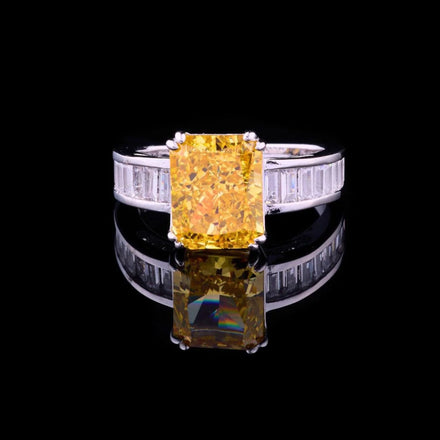
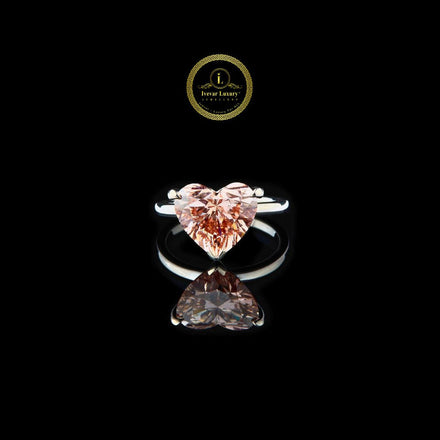
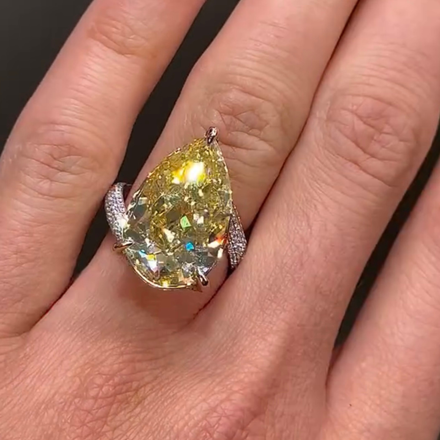
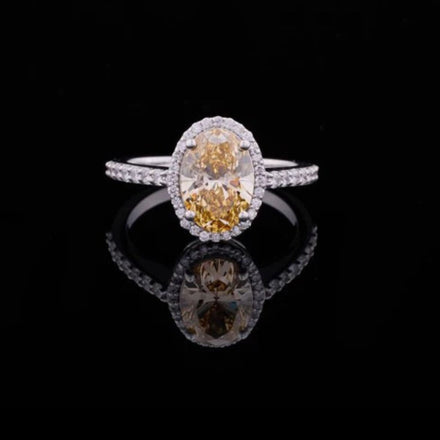
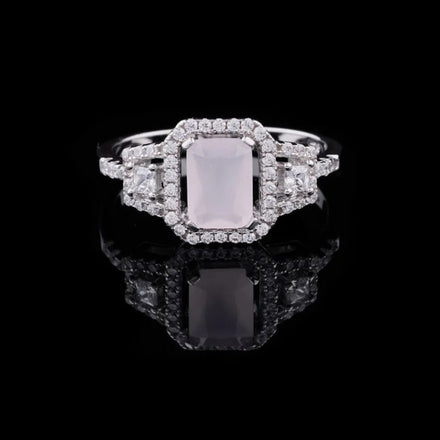
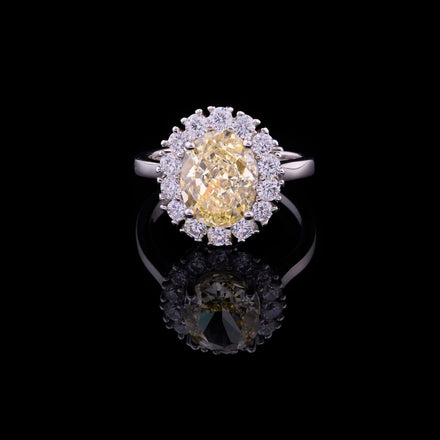
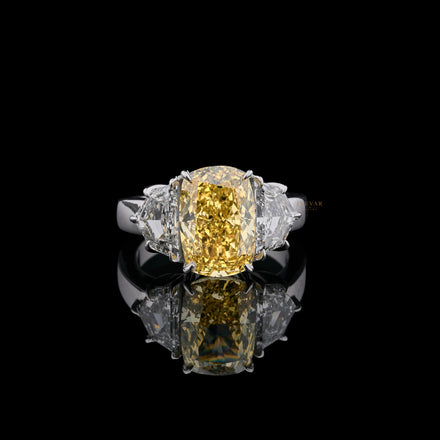
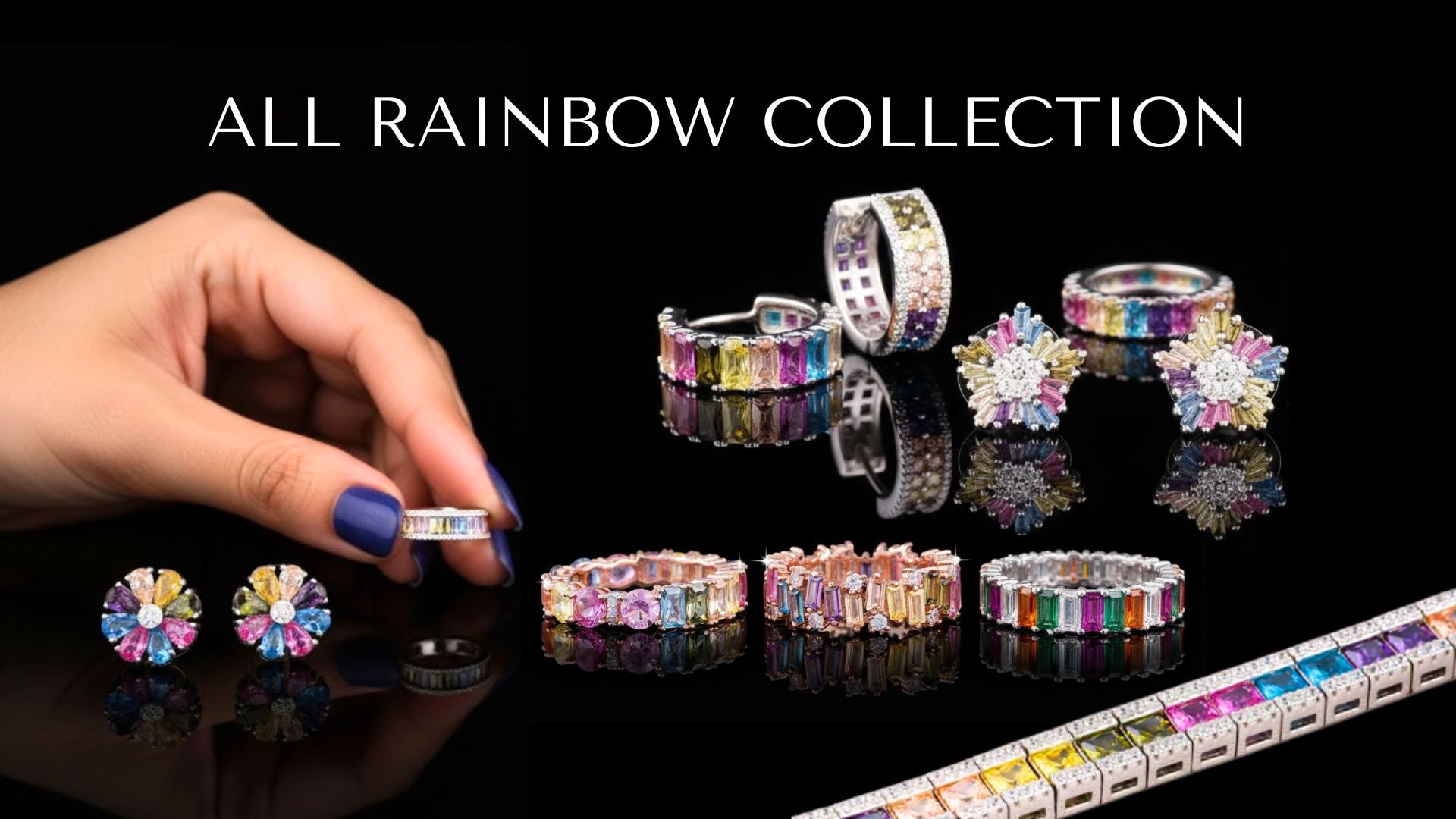
The colored engagement ring world extends well past sapphire, emerald, and ruby. Fancy yellow diamonds — from soft champagne to vivid canary — bring sunshine to a ring and are among the most affordable fancy colors in lab grown form. Pink and peach tones, whether pink sapphire or morganite, suit romantic vintage-inspired designs. Teal and green-blue sapphires feel modern and distinctive, while fancy green lab grown diamonds echo emerald at a fraction of the cost.
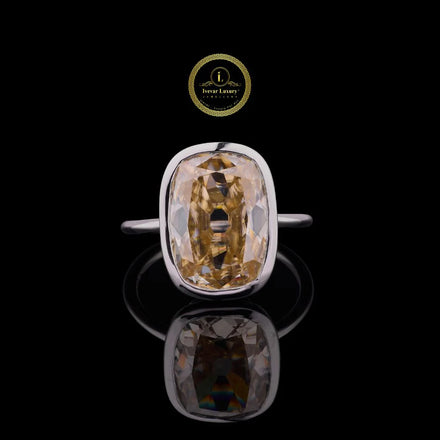
Moissanite adds another dimension: it can be grown in vivid fancy colors, including intense yellows and greens, with the same 9.25 hardness as white moissanite. A fancy vivid yellow cushion moissanite center delivers a look that would cost many thousands in natural fancy diamond, for a genuinely accessible price.

Durability: What the Mohs Scale Means for Your Ring
An engagement ring is worn every day for decades, so hardness matters more here than in any other jewelry. The Mohs scale runs from 1 (talc) to 10 (diamond). For daily wear, stones at 8 and above are comfortable choices: diamond (10), moissanite (9.25), sapphire and ruby (9). Emerald (7.5–8) is the edge case — wearable, but it wants a protective setting and a wearer who will take the ring off for the gym, gardening, and heavy housework.
Softer popular gems like morganite (7.5), aquamarine (7.5–8), and opal (5.5–6.5) are beautiful but risky as everyday centers — they scratch, chip, and cloud with abrasion. If your heart is set on one, consider a sturdier lookalike: pink sapphire instead of morganite, blue spinel instead of aquamarine. The color you love, in a stone that lasts.
| Gemstone | Mohs hardness | Daily-wear rating | Best setting |
|---|---|---|---|
| Sapphire | 9 | Excellent | Any — solitaire, halo, three-stone |
| Ruby | 9 | Excellent | Any — halo intensifies the red |
| Emerald | 7.5–8 | Good with care | Halo or bezel for protection |
| Fancy color lab diamond | 10 | Excellent | Any — the toughest option |
| Colored moissanite | 9.25 | Excellent | Any — vivid color, great value |
Choosing the Right Colored Stone for You
Start with honesty about your lifestyle. If you never take your ring off, lean sapphire, ruby, fancy color lab diamond, or colored moissanite — stones that forgive daily life. If you love emerald's green enough to remove the ring for workouts and chores, emerald will reward you with unmatched color. Then think about metal: cool white metals make blues and greens pop, while yellow gold warms up reds and yellows and gives every colored stone a vintage glow.
Finally, remember that color grading is personal. Unlike diamonds, colored stones have no universal grading scale, so buy with your eyes: view the stone in daylight, check that the color is even, and make sure it still looks rich indoors. Lab grown options give you consistent, saturated color without the gamble of natural color zoning.
Shop Our Best Sellers


Swipe to see more → | View all best sellers
Frequently Asked Questions
What is the most durable colored gemstone for an engagement ring?
Sapphire and ruby, both at 9 on the Mohs scale. They are the only colored gemstones that approach diamond-like scratch resistance, making them the safest everyday choices. Fancy color lab grown diamonds (10) and colored moissanite (9.25) are even tougher.
Can I wear an emerald engagement ring every day?
Yes, with care. Emerald is softer (7.5–8) and naturally included, so choose a protective halo or bezel setting, remove the ring for sports and heavy chores, and have it checked by a jeweler annually.
Are lab grown colored gemstones real?
Yes. Lab grown sapphires, rubies, emeralds, and colored diamonds have the same chemical composition and crystal structure as their natural counterparts. They are real gemstones, not simulants — only their origin differs.
Why is ruby so expensive compared to sapphire?
Fine natural red ruby is geologically rarer than fine blue sapphire, and top-quality material commands premium prices. Lab grown ruby sidesteps this entirely, delivering rich red color at a small fraction of the natural cost.
Do colored gemstones hold their value like diamonds?
Generally no — the resale market favors white diamonds. Buy a colored engagement ring because you love the color, not as an investment. Lab grown colored stones make this an easy decision since you pay for beauty, not speculation.
What metal looks best with a blue sapphire?
14K or 18K white gold makes blue sapphires look vivid and crisp — the classic royal pairing. Yellow gold gives sapphire a warm, vintage character. Rose gold works beautifully with pink sapphires.
Can colored gemstones be set with diamond accents?
Absolutely, and it is the most popular approach. Diamond halos and accent stones frame the color, add sparkle, increase finger coverage, and — in the case of halos — physically protect softer center stones like emerald.
Sources
- GIA — Gemological Institute of America
- International Gem Society — Gemstone Guides
- The Knot — Engagement Ring Style Guides
- Brides — Wedding and Engagement Jewelry
- JCK — Jewelry Industry News

Aumsri Pradhan is the founder of Ivevar Luxury, a Surat-based fine jewelry brand that designs and handcrafts lab grown diamond and moissanite jewelry in its own workshop. She leads the brand's design and customer experience, from engagement rings and bridal sets to custom pieces made to each client's story. Through the Ivevar blog, she shares practical guidance on lab grown diamonds, moissanite, diamond grading and ring design to help buyers choose with confidence.