

 Engagement Rings
 Anniversary Rings
 Solitaire Rings
 Halo Rings
 Toi Moi Rings
 Three Stone Rings
 Nature Inspired Rings
 Rose Cut Rings
 Fancy Color Rings
 Antique Cut Rings
 Wedding Rings
 Wedding Band Rings
 Exclusive Lab Grown Diamond Rings
 All Lab Grown Diamond Ring
 Engagement Rings
 Three Stone Rings
 Fancy Color Rings
 Antique Cut Rings
 Daily Wear Rings
 Wedding Band Rings
 Exclusive Moissanite Rings
 Earrings
 Bracelet
 Pendant
 Necklace
 Men's Ring
 Bridal Sets
 Rings
 Earrings
 Tennis chain
 Cuban Chains
 Custom Pendant
 Custom Ring
 Custom Teeth Grillz
 Round
 Oval
 Cushion
 Marquise
 Pear
 Emerald
 Heart
 Princess
 Rose Cut
 Radiant
 Antique Cut
 Brooch
 Cufflink
 Keychain
 Unique Products
 +91-9265051773
 Virtual Appointment
 log in




Short answer: A three stone engagement ring features a center stone flanked by two side stones. It is often said to represent a couple's past, present and future. Popular combinations include an oval center with pear side stones, an emerald center with baguettes or trapezoids, and a round center with smaller rounds. The side stones add width, sparkle and a larger overall look, so choose them in proportion to the center and plan your wedding band early.
Three stone rings feel meaningful and substantial on the hand. They tell a story, they fill the finger more than a solitaire, and they give you many ways to personalize the design, from the shapes of the side stones to their color. This guide covers the meaning, the most popular combinations, how to size and match the stones, the best settings, and how to pair a wedding band.
The Meaning of a Three Stone Ring
The most common interpretation is past, present and future: the story you share so far, your life together now, and what is still to come. That's why three stone rings are popular both as engagement rings and as anniversary rings, when a couple wants to celebrate the years behind them and the years ahead.
Some couples choose other meanings:
- Friendship, love and fidelity: three qualities that hold a relationship together.
- A growing family: two partners and a child, or a ring that marks the birth of a first baby.
- Personal stones: side stones in birthstone colors, or stones that represent each partner around a shared center.
There's no rule. The meaning is whatever the two of you decide it is, which is part of the appeal.
Three stone rings as anniversary gifts
Because of the past, present and future meaning, a three stone ring is a natural choice for a milestone anniversary or a push present. If she already has a solitaire engagement ring, a three stone ring worn on the right hand, or stacked beside the wedding set, adds to the story without replacing the original ring.
Popular Three Stone Combinations
| Center | Side stones | Look |
|---|---|---|
| Oval | Pears | Soft, romantic, elongating |
| Emerald | Baguettes or trapezoids | Art Deco, elegant |
| Round | Rounds | Classic, symmetrical |
| Radiant or cushion | Marquise or half moons | Bold, modern |
| Princess | Princess or trillions | Crisp, geometric |
| Pear | Small rounds or tapered baguettes | Graceful, unusual |
Matching side stone shapes to the center
Side stones look best when their outline works with the center. Curved centers like oval and round suit curved side stones like pears and rounds. Step-cut centers like emerald and Asscher suit step-cut sides like baguettes, tapered baguettes and trapezoids, which share the same clean, mirror-like flashes. Brilliant-cut squares and rectangles, such as radiant, cushion and princess, pair well with bright trillions, half moons or marquise sides for a bolder look.
Mixing shapes for contrast
You don't have to follow the rules. A round center with pear sides, or an oval with trillions, gives an eye-catching contrast. The key is balance: the side stones should point the eye back toward the center rather than pull attention away.
Choosing the center stone first
Start with the center. Decide its shape, size and quality, then design the side stones around it. For lab grown diamonds, prioritize cut, since a well-cut center has the brightness to hold its own next to two side stones. Check the grading report for color and clarity, then choose side stones to match. Elongated centers, such as oval, emerald and radiant, make the whole ring longer and slimmer on the finger; round and cushion centers give a wider, more balanced line.
How to Size the Side Stones
As a rough guide, side stones often look balanced when each one is clearly smaller than the center, often somewhere around a third to a half of the center's carat weight. Too large and they compete with the center; too small and they disappear. Shape matters as much as weight: pears and marquise sides look larger for their weight because they are elongated, while baguettes look slimmer.
A jeweler can show you proportions in a CAD design before the ring is made. Ask to see two or three versions side by side, with slightly different side stone sizes, and pick the one that looks right to you.
Tip: Judge the proportions on the hand, not just on paper. Side stones that look small in a photo can look generous on a slim finger, and the reverse on a larger hand.
 Shown: Oval Cut Lab Diamond Engagement Three Stone Ring with Side Pear Stones
Spacing and height
Look at how close the stones sit. Tightly spaced stones read as one continuous line of sparkle; a little space between them gives each stone its own presence. The side stones are usually set slightly lower than the center, which lifts the center visually and helps the ring sit more comfortably next to a band.
Matching Color, Clarity and Cut
In a three stone ring, the stones sit right next to each other, so differences show more than in a solitaire. Good matching makes the ring look like one design rather than three separate stones.
- Color: keep the side stones within a grade or two of the center. A white center next to warmer side stones can make the center look tinted, or vice versa.
- Clarity: side stones can be slightly lower clarity than the center, as long as they look clean to the eye. Small inclusions are hard to see in smaller stones.
- Cut and brightness: all three stones should have similar sparkle. A dull side stone next to a bright center is very noticeable.
- Certificates: the center stone is often graded by IGI or GIA. Smaller side stones are usually matched by the jeweler rather than individually certified.
When you receive the ring, look at it in daylight and under indoor light. The three stones should look like a matched set from every angle, with no stone noticeably darker, warmer or less lively than the others. If one stands out, ask the jeweler about it before you wear the ring.
Best Settings for a Three Stone Ring
Prong setting
The most common choice. Prongs let light into all three stones for maximum sparkle. Use V-prongs on any pointed side stones, such as pears or marquise, to protect the tips.
Bezel or half bezel
A metal rim around each stone gives excellent protection and a smooth, modern look. It's a good option for active hands.
Three stone with halo
A halo around the center, or around all three stones, adds sparkle and makes the whole ring look larger. It's a glamorous choice for anyone who loves a bold ring.
Pavé or plain band
A pavé band adds sparkle along the shoulders, while a plain band keeps the focus on the three stones and makes the ring easier to pair with a wedding band.
Choosing the metal
White gold makes white stones look their brightest and suits a crisp, modern design. Yellow gold gives a warm, vintage feel and is a classic match for emerald centers with baguettes. Rose gold softens the look and pairs well with pear side stones. Two-tone designs, with a white gold head on a yellow or rose gold band, keep the stones looking white while giving the finger a warm color. 14K gold is a practical everyday choice because it is harder than 18K; 18K has a richer color; 10K is the most durable and budget-friendly.
Pros and Cons
| Pros | Cons |
|---|---|
| Meaningful symbolism | Wider profile may need a curved wedding band |
| More sparkle and presence | Three stones to check and clean |
| Center looks larger alongside side stones | Costs more than a simple solitaire of the same center |
| Many ways to personalize | Stones must be well matched |
| Suits engagement and anniversary | Wider top can catch more than a solitaire |
Three Stone vs Solitaire vs Halo
If you're deciding between styles, this quick comparison helps.
| Feature | Three stone | Solitaire | Halo |
|---|---|---|---|
| Look | Balanced, meaningful | Minimal, classic | Glamorous, sparkly |
| Width on finger | Widest across the top | Narrowest | Wide around the center |
| Symbolism | Past, present, future | Single, focused love | None in particular |
| Band pairing | Often curved band | Almost any band | Sometimes curved band |
| Upkeep | Three stones to check | Easiest | Many small stones |
A three stone ring sits between the two: more sparkle and presence than a solitaire, but with a cleaner, more structured look than a halo. It suits people who want something substantial without the busy look of many tiny stones.
Lab Grown Diamond, Moissanite or Colored Side Stones?
Three stone rings can mix materials. Lab grown diamonds are real diamonds, chemically, physically and optically the same as mined diamonds, grown by CVD or HPHT methods. They rate 10 on the Mohs hardness scale, making them excellent for an everyday ring.
Moissanite is a different gemstone, not a type of diamond. It rates 9.25 on the Mohs scale and has a higher refractive index (about 2.65 vs about 2.42 for diamond), so it shows more colorful fire. An all-moissanite three stone ring gives a big, bright look at a gentler price. Browse moissanite three stone rings to compare.
Colored side stones are a lovely way to personalize the ring. Sapphires or fancy color lab diamonds beside a white center add meaning and make the center look even brighter by contrast. Just remember that softer gemstones need more care than diamonds or moissanite.
Planning your budget
The center stone usually takes most of the budget, but in a three stone ring the side stones matter too. If you want to keep costs down, consider these approaches:
- Slightly smaller center, well-chosen sides: the side stones add presence, so the ring still looks generous.
- Elongated side stones: pears and marquise look larger for their weight than rounds.
- Moissanite sides with a lab diamond center: a way to save on the sides, as long as the colors and brightness are matched well.
- Simple band: a plain band costs less than pavé and keeps the focus on the three stones.
Choosing a Wedding Band
Because three stone rings are wider at the top, a straight band may leave a gap. A curved or contour band, or a plain slim band, usually pairs best. Some three stone settings are made low enough for a straight band to sit flush, so check the side profile. Read our guide on matching a wedding band to your engagement ring.
- Curved band: follows the outline of the side stones for a seamless fit.
- Thin plain band: keeps the three stones as the focus.
- Eternity band: adds maximum sparkle for a dramatic bridal set.
Caring for a Three Stone Ring
Three stones means three sets of prongs to watch. Look at the ring under good light now and then, and get it checked by a jeweler about once a year. Clean it at home with warm water, a drop of mild dish soap and a soft toothbrush, paying attention to the gaps between the stones where lotion and soap build up.
Take the ring off for heavy lifting, gardening, sport and cleaning with harsh chemicals. A wider ring is more likely to take a knock on the side, so a little care goes a long way.
Tip: If she uses her hands a lot at work, ask for a lower setting and slightly smaller side stones. The ring will still look full, but it will catch less.
Common mistakes to avoid
- Side stones that are too large: the center should always be the star; oversized sides make the ring look crowded.
- Poorly matched color: mismatched stones are obvious when they sit side by side.
- Unprotected points: pear, marquise and trillion sides need V-prongs or bezels on their tips.
- Forgetting the band: a wide three stone head can make a straight band look out of place, so plan both rings together.
Three Stone Rings at Ivevar
We match center and side stones for color and brilliance, hand-set them in our Surat workshop, and send a CAD design for approval. Choose lab grown diamonds, often with an IGI certificate on the center, or moissanite, in 10K, 14K or 18K gold, or ask us for a custom design with colored side stones. Every ring ships free worldwide, with 30-day easy returns, and you can book a virtual appointment to see designs before you choose. Browse three stone lab grown diamond rings or our wider range of lab grown engagement rings.
Shop Three Stone Engagement Rings
 Oval Three Stone with PearsShop Now
 Emerald Three Stone BaguetteShop Now
 Emerald with Marquise SidesShop Now
 Radiant with Marquise SidesShop Now
 Round with Marquise SidesShop Now
 Cushion with Marquise SidesShop Now
Swipe to see more → | View all three stone rings
Frequently Asked Questions
What does a three stone ring symbolize?
Most often, a couple's past, present and future together. Some couples choose friendship, love and fidelity, or their growing family.
Is a three stone ring good for an engagement ring?
Yes. It is a classic engagement style that also makes a beautiful anniversary ring.
Can the side stones be colored?
Yes. Sapphires or fancy color lab diamonds make a personal twist and make a white center look brighter by contrast.
Do three stone rings catch on things?
They are wider, so choose a lower setting if she has an active lifestyle. Bezel or half-bezel sides are smoother still.
How big should the side stones be?
Clearly smaller than the center, often around a third to a half of its carat weight each. View a CAD design to judge the balance.
Are three stone rings more expensive than solitaires?
With the same center stone, yes, because you add two side stones and more setting work. But side stones can make a smaller center look grander, which can balance the budget.
Can I upgrade the center stone later?
It can be done, but the side stones were chosen to match the original center, so a much larger center may need new sides too. It is simpler to choose the center you want from the start.
Which metal suits a three stone ring?
White gold makes white stones look their brightest; yellow and rose gold add warmth and a vintage feel. All work well in 14K for everyday durability.
Can I make a three stone ring with a stone from family jewelry?
Often yes. A family stone can become the center or the side stones, with new stones chosen to match. A jeweler will check the stone's condition and size first and show you the design in CAD.
The Bottom Line
A three stone ring tells a story and makes a bold, balanced statement. Choose a combination you love, keep side stones in proportion and well matched, protect any points, and plan your wedding band early.
Related Guides
- Engagement ring settings explained
- Iconic engagement ring styles
- How to match a wedding band to your engagement ring
Author Bio
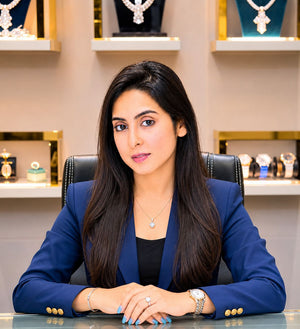
Aumsri Pradhan
Founder, Ivevar Luxury
Aumsri Pradhan is the founder of Ivevar Luxury, a Surat-based fine jewelry brand that designs and handcrafts lab grown diamond and moissanite jewelry in its own workshop. She leads the brand's design and customer experience, from engagement rings and bridal sets to custom pieces made to each client's story. Through the Ivevar blog, she shares practical guidance on lab grown diamonds, moissanite, diamond grading and ring design to help buyers choose with confidence.


