Engagement Rings
 Anniversary Rings
 Solitaire Rings
 Halo Rings
 Toi Moi Rings
 Three Stone Rings
 Nature Inspired Rings
 Rose Cut Rings
 Fancy Color Rings
 Antique Cut Rings
 Wedding Rings
 Wedding Band Rings
 Exclusive Lab Grown Diamond Rings
 All Lab Grown Diamond Ring
 Engagement Rings
 Three Stone Rings
 Fancy Color Rings
 Antique Cut Rings
 Daily Wear Rings
 Wedding Band Rings
 Exclusive Moissanite Rings
 Earrings
 Bracelet
 Pendant
 Necklace
 Men's Ring
 Bridal Sets
 Rings
Rings
 Earrings
 Tennis chain
 Cuban Chains
 Custom Pendant
 Custom Ring
 Custom Teeth Grillz
 Round
Round
 Oval
Oval
 Cushion
 Marquise
 Pear
Pear
 Emerald
 Heart
Heart
 Princess
 Rose Cut
 Radiant
 Antique Cut
 Brooch
 Cufflink
 Keychain
 Unique Products
 +91 9265051773
 Virtual Appointment
 log in



Classic Gold Wedding Bands: Widths, Profiles & Prices
by Ankit Koshiya on Sep 29, 2026

Short answer: A classic gold wedding band is defined by three choices: width (2mm delicate to 8mm bold), profile (dome, flat, or knife-edge cross-section), and karat (14k for durability, 18k for rich color). Expect to pay roughly $200–$600 for 14k bands and $400–$1,200+ for 18k, with price rising steeply with width. Comfort-fit interiors and the right width for your finger size matter more than any brand name.
- ✓ Width is the biggest visual decision. 2–3mm reads delicate, 4–5mm classic, 6mm+ makes a statement.
- ✓ Profile changes comfort and style. Dome is traditional, flat is modern, knife-edge is dramatic.
- ✓ 14k wears harder than 18k. Choose 14k for daily durability, 18k for deeper color.
- ✓ Comfort fit is worth it. A domed interior slides on easier and feels better all day.
- ✓ Match width to finger size. Wider bands suit larger hands; narrow bands flatter petite fingers.
Width: The First and Biggest Choice
Width determines everything about how a classic band looks and feels. 2–3mm bands are delicate and understated — the traditional women's width, perfect for stacking or pairing with a solitaire without competing. 4–5mm is the universal classic: substantial enough to read as a wedding band on its own, comfortable for daily wear, the most common choice for both partners. 6–8mm bands make a bold statement — the traditional men's width, with real presence on the hand.
Two practical notes. First, wider bands fit tighter: a 6mm band in your usual size will feel snugger than a 3mm band in the same size, because more metal contacts the finger — most jewelers recommend going up a quarter to half size on wide bands. Second, width and finger size should be proportional: a 2mm band can disappear on large hands, while an 8mm band overwhelms petite fingers. Try widths on your actual finger, not in photos.
Profiles: Dome, Flat, Knife-Edge, and More
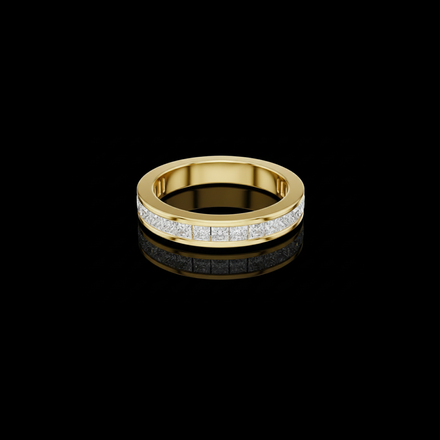
Dome (court) profile is the timeless classic — rounded on the outside, like a D in cross-section. It catches light softly, feels smooth against neighboring fingers, and suits every style from traditional to modern. Flat profile bands have squared edges and a level top surface: clean, architectural, contemporary. They read slightly wider than domed bands of the same measurement and pair beautifully with modern engagement rings.
Knife-edge profiles rise to a central ridge — dramatic, distinctive, and the most light-catching of the classics. Half-round with flat edges and concave profiles round out the options, the latter curving inward for a subtle, shadow-play look. On the inside, comfort fit means the interior is domed rather than flat: the ring slides over knuckles easier, sits more comfortably, and resists the "stuck ring" feeling on warm days. Always choose comfort fit for bands 5mm and wider.

Karat: 14k vs 18k for Daily Wear
Fourteen-karat gold is 58.5% pure gold; 18k is 75%. That extra alloy in 14k makes it harder, more scratch-resistant, and better suited to a ring worn every day for decades — which is why most American jewelers default to 14k for wedding bands. Eighteen-karat gold has a visibly richer, deeper yellow color that many buyers prefer, especially in yellow gold, and it carries more prestige in European and Asian markets.
The honest trade: 18k looks richer and costs 30–50% more; 14k wears harder and costs less. For a band that will take daily abuse — hands-on work, gym, gardening — 14k is the practical winner. For a band worn in an office, chosen partly for its color, 18k's warmth is genuinely lovely. Ten-karat gold exists and is cheapest, but its paler color and lower gold content make it a poor choice for a lifetime ring.
Prices: What Classic Gold Bands Cost
Price follows metal weight, so width is the main driver. As a rough 2026 guide: a 3mm 14k band runs $200–$400; a 5mm 14k band $350–$600; a 6–8mm 14k band $500–$900. In 18k, add roughly 40–60%: a 5mm 18k band typically lands $600–$1,000. White and rose gold price the same as yellow in the same karat; platinum versions cost 1.5–2.5× more.
What moves the price beyond width: heavier "comfort fit" bands use more metal than light flat bands; hand-forged bands cost more than cast; and designer names add margin without adding metal. A plain band's price should track its weight closely — if two 5mm 14k bands differ wildly in price, the cheaper one is probably lighter (thinner). Ask for the gram weight; it is the most honest spec a band has.

| Width | Typical 14k price | Typical 18k price | Best for |
|---|---|---|---|
| 2–3mm | $200–$400 | $350–$600 | Stacking, petite fingers, solitaire pairing |
| 4–5mm | $350–$600 | $600–$1,000 | The universal classic, either partner |
| 6–8mm | $500–$900 | $850–$1,400+ | Bold statement, larger hands |
Sizing, Maintenance, and Living With a Classic Band
Classic gold bands are the easiest rings to own. They resize easily (plain bands size up or down without drama), they polish back to new in minutes, and they never go out of style. Size them snug enough not to spin but loose enough to slide over the knuckle — and remember that fingers change size through the day, so get sized in the afternoon, not first thing in the morning.
Maintenance is minimal: a yearly professional clean and polish, an occasional check that the band hasn't gone out of round (wide flat bands can oval slightly with hard knocks — a jeweler rounds them in minutes). Engrave the inside with your wedding date while you're at it; a classic band with a hidden inscription is the quietest kind of romance.
Shop Our Best Sellers


Swipe to see more → | View all best sellers
Frequently Asked Questions
What width wedding band should I get?
Two to three millimeters reads delicate and suits stacking or petite fingers; 4–5mm is the universal classic for either partner; 6–8mm makes a bold statement on larger hands. Match width to finger size and try them on in person.
Is 14k or 18k gold better for a wedding band?
Fourteen-karat wears harder and suits daily wear; 18k has richer color and more prestige. For a ring worn every day for decades, 14k is the practical winner; choose 18k if color depth matters most to you.
What is a comfort fit wedding band?
A band with a domed interior that slides over knuckles easier and feels better through the day. It is worth choosing for any band 5mm or wider, and most wearers prefer it at any width.
How much does a classic gold wedding band cost?
Roughly $200–$600 in 14k and $400–$1,200+ in 18k, with price rising steeply by width. Heavier comfort-fit bands cost more than light flat ones; ask for the gram weight to compare honestly.
Do wide wedding bands need a different size?
Usually yes — go up a quarter to half size on bands 6mm and wider, since more metal contacts the finger. Get sized in the afternoon when fingers are at their largest.
Can a classic gold band be resized?
Plain gold bands are the easiest rings to resize, up or down, with no pattern to distort. Engraved bands need re-engraving after sizing; stone-set bands have more limits.
Which profile is most comfortable?
Dome (court) profiles are the traditional comfort champion — rounded outside, smooth against neighboring fingers. Flat profiles look modern but have edges you feel; knife-edge is the most dramatic and least forgiving.
Sources

Aumsri Pradhan is the founder of Ivevar Luxury, a Surat-based fine jewelry brand that designs and handcrafts lab grown diamond and moissanite jewelry in its own workshop. She leads the brand's design and customer experience, from engagement rings and bridal sets to custom pieces made to each client's story. Through the Ivevar blog, she shares practical guidance on lab grown diamonds, moissanite, diamond grading and ring design to help buyers choose with confidence.