

 Engagement Rings
 Anniversary Rings
 Solitaire Rings
 Halo Rings
 Toi Moi Rings
 Three Stone Rings
 Nature Inspired Rings
 Rose Cut Rings
 Fancy Color Rings
 Antique Cut Rings
 Wedding Rings
 Wedding Band Rings
 Exclusive Lab Grown Diamond Rings
 All Lab Grown Diamond Ring
 Engagement Rings
 Three Stone Rings
 Fancy Color Rings
 Antique Cut Rings
 Daily Wear Rings
 Wedding Band Rings
 Exclusive Moissanite Rings
 Earrings
 Bracelet
 Pendant
 Necklace
 Men's Ring
 Bridal Sets
 Rings
 Earrings
 Tennis chain
 Cuban Chains
 Custom Pendant
 Custom Ring
 Custom Teeth Grillz
 Round
 Oval
 Cushion
 Marquise
 Pear
 Emerald
 Heart
 Princess
 Rose Cut
 Radiant
 Antique Cut
 Brooch
 Cufflink
 Keychain
 Unique Products
 +91-9265051773
 Virtual Appointment
 log in




Short answer: Moissanite color is graded on a letter scale borrowed from diamonds. D to F is colorless and looks icy white; G to I is near-colorless, with a faint warmth you notice mainly in larger stones or side by side with a whiter stone; J and below shows visible warmth. Most buyers choose D to F for white gold, platinum or 925 silver settings, and G to I can look white in yellow or rose gold. Moissanite also comes in fancy colors such as pink, blue, yellow and green, which are described by intensity (Fancy Light, Fancy Intense, Fancy Vivid).
Color is one of the first choices you make when buying moissanite, and it has a bigger effect on how the finished piece looks than most shoppers expect. A stone that looks perfectly white on a jeweler's tray can read slightly warm in a white gold ring, and a near-colorless stone that seems a little creamy loose can look bright and white in yellow gold.
This guide explains what each color grade means, how moissanite color differs from diamond color, how the metal and stone size change what you see, and how to judge color yourself when you shop online.
Moissanite Color Grades Explained
Moissanite sellers use the same D-to-Z letter scale that diamond labs use. D is the top of the scale and means no detectable body color. Each step down the alphabet adds a little more yellow or warm tint. In practice, almost all moissanite sold for fine jewelry falls between D and K, so the scale you will actually meet is short.
| Grade | Appearance | Best for |
|---|---|---|
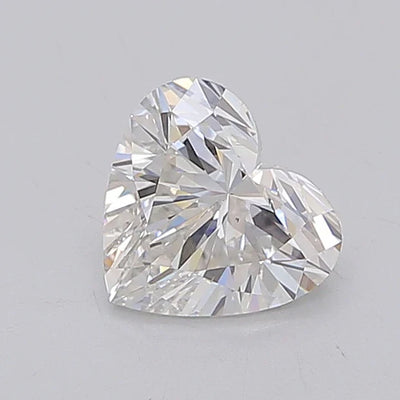
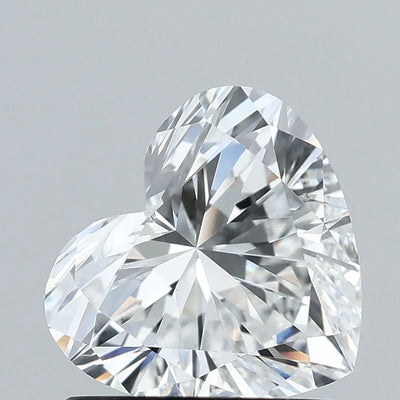
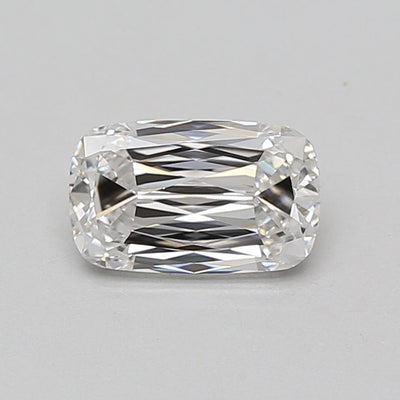
| D to F (colorless) | Bright white, no visible color face-up | White gold, platinum and 925 silver settings |
| G to I (near-colorless) | Very slight warmth, mostly in larger stones | Yellow and rose gold, value-focused buyers |
| J to K | Noticeable warm tint | Vintage looks in yellow gold |
| Fancy colors | Pink, blue, yellow, green, orange and more | Personal, colorful designs |
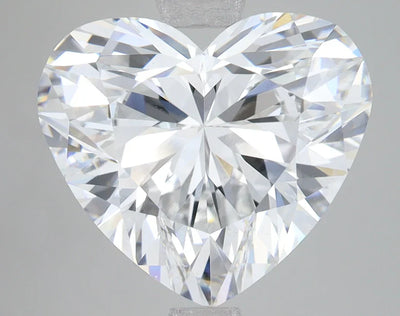
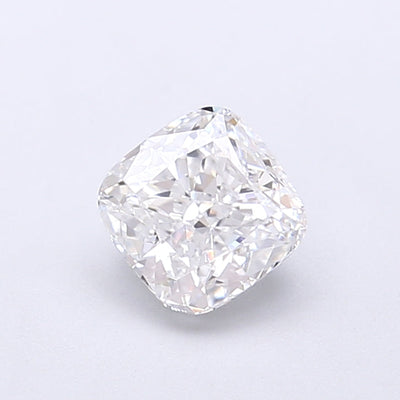
D, E and F: colorless
These three grades look white to the eye. The differences between D, E and F are extremely subtle and are judged by comparing stones side by side under controlled lighting. Once a stone is set and worn, very few people could tell a D from an F. If a seller lists a "D color" moissanite, the practical meaning is simply "colorless."
G, H and I: near-colorless
Near-colorless moissanite has a trace of warmth that you can usually see only from the side of the stone, next to a whiter stone, or in larger sizes. Face-up in a ring, a G or H stone generally looks white. I color can show a soft creamy tone, especially in step cuts or stones above about 2 carats diamond equivalent weight.
J and K: faint warmth
At J and K the warmth becomes visible to most people. That is not automatically a bad thing. Warm moissanite pairs well with yellow gold and suits antique-inspired designs, where a perfectly icy stone can look out of place.
How Moissanite Color Differs from Diamond Color
The letters are the same, but there are a few important differences to understand.
- Who grades it: lab grown diamonds are graded by independent labs such as IGI and GIA. Moissanite color is usually stated by the manufacturer or seller, and moissanite certificates are often issued by the producer's own system. Treat a moissanite grade as a reliable description rather than an independent lab verdict.
- Consistency: because moissanite is grown in controlled conditions, colorless moissanite is produced consistently. You rarely need to hunt for a well-graded stone the way diamond buyers sometimes do.
- Light behavior: moissanite has a higher refractive index (about 2.65, against about 2.42 for diamond) and much stronger fire. Strong rainbow flashes can make the stone look lively and slightly colorful under spotlights, which is fire, not body color. Do not confuse the two when you judge a grade.
- Size effect: moissanite of a given millimeter size is a little lighter than diamond, but color depth still builds with size and depth of the stone, just as it does in diamond.
Earlier generations of moissanite were often noticeably yellow or greenish. Today's colorless moissanite is far whiter, which is why D to F is now the standard choice for most jewelry. If you have seen older moissanite that looked tinted, that is the reason.
How Metal Affects Color
The metal around a stone reflects into it. White metals give no color, so any warmth in the stone stands out. Yellow and rose gold add their own warm reflections, which hide warmth in the stone.
- White gold and 925 silver: make any warmth more visible, so choose D to F.
- Platinum: behaves like white gold; colorless stones look best.
- Yellow gold: reflects warmth, so G to I can look white and costs nothing in beauty.
- Rose gold: flattering with near-colorless stones; the pink tone blends with a soft warm stone.
- Two-tone: a common trick is to set a colorless stone in white gold prongs on a yellow gold band, so the center looks crisp while the band stays warm.
| Metal | Recommended color | Why |
|---|---|---|
| White gold or platinum | D to F | White metal makes warmth stand out |
| 925 sterling silver | D to F | Bright white metal, same effect as white gold |
| Yellow gold (10K, 14K, 18K) | D to I | Warm reflections mask slight tint |
| Rose gold | D to I | Pink tone blends with soft warmth |
Karat also plays a part. 18K yellow gold is richer in color than 14K or 10K, so it hides warmth even more effectively. Ivevar makes jewelry in 10K, 14K and 18K gold as well as 925 sterling silver, so you can match the metal to the stone you prefer.
Tip: If you love the look of yellow gold but want an icy center, ask for white gold prongs or a white gold head on a yellow gold band. You keep a colorless look where it matters most.
How Size and Shape Change What You See
Color is easier to see the more material light travels through. That means bigger stones and certain shapes show color more than others.
Stone size
In small accent stones and pavé, color differences between D and H are practically invisible. In a 1 carat diamond equivalent center stone, near-colorless still usually looks white face-up. From about 2 carats upward, it becomes worth moving higher on the scale, because the larger, deeper stone holds more color.
Shape
- Round brilliant: the most forgiving shape. Its faceting returns so much light that slight warmth is masked.
- Oval, pear and marquise: can show a little more color at the pointed ends or tips, where the stone is deeper relative to its width.
- Cushion and radiant: brilliant-style faceting helps, but deeper cushions can concentrate color in the corners.
- Emerald, Asscher and baguette: step cuts have large open facets that act like windows, so color is easier to see. Choose D to F for these.
| Situation | Suggested grade |
|---|---|
| Accent stones and pavé | G to I is fine |
| Round center under 2 ct DEW | D to H |
| Round center 2 ct DEW and up | D to F |
| Step cuts (emerald, Asscher) | D to F |
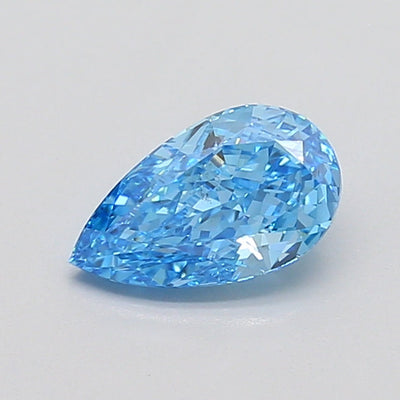
 Shown: 2.26 Ct Round Cut Fancy Intense Blue Moissanite
Fancy Colored Moissanite
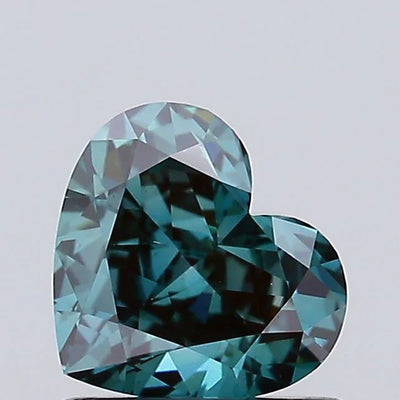
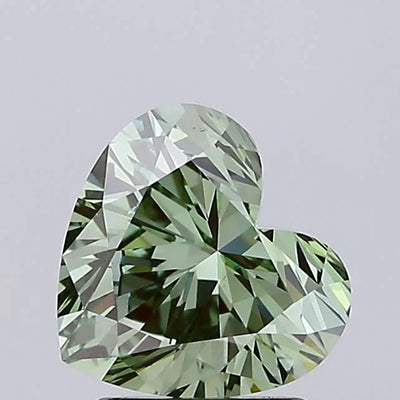
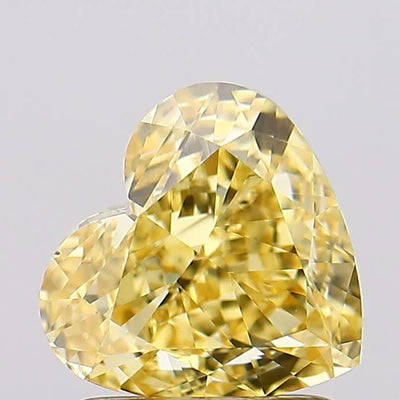
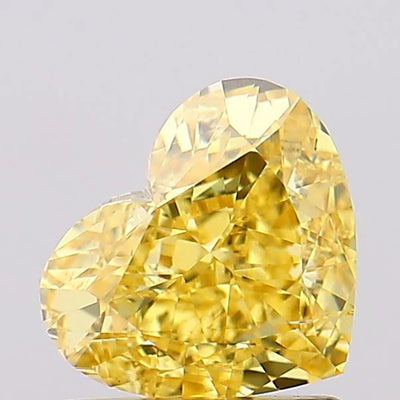
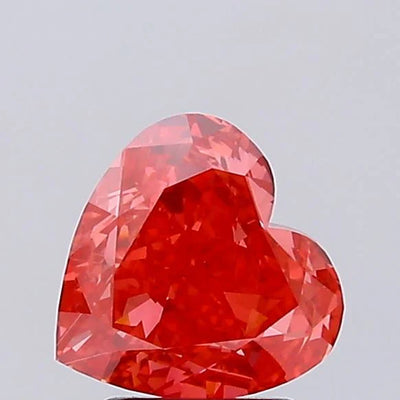
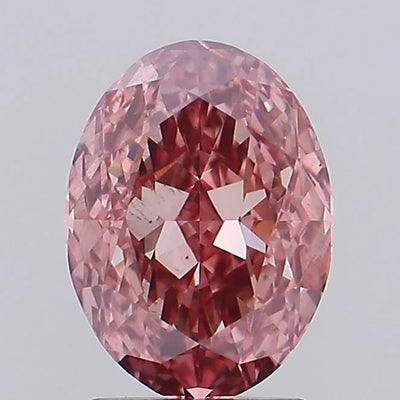
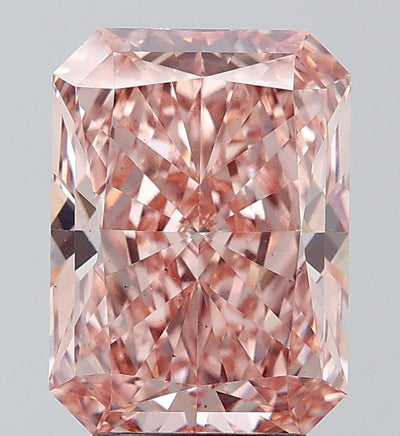
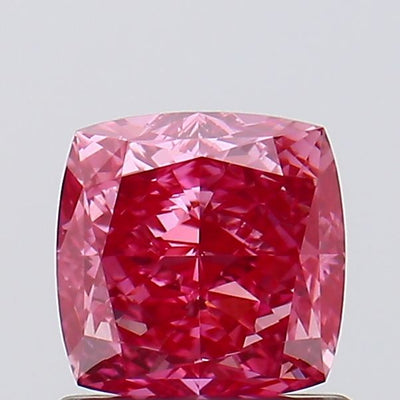
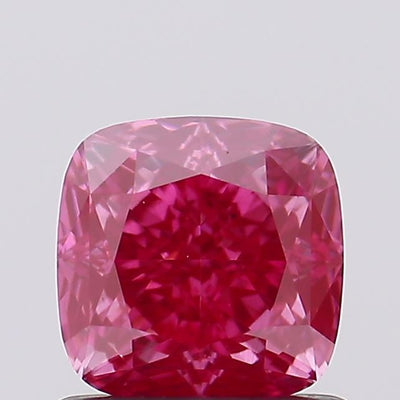
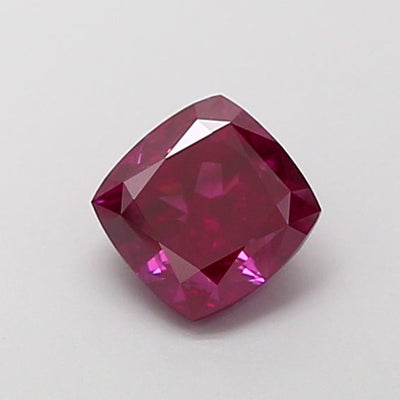
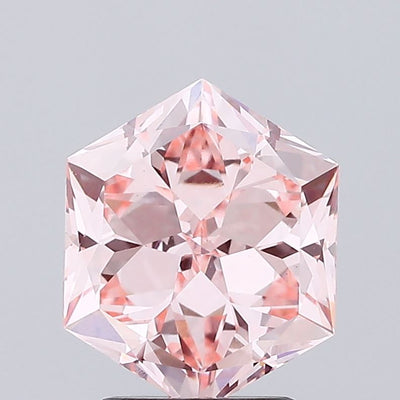
Fancy moissanite gives bold color with moissanite's hardness and fire, at a fraction of the price of fancy colored diamonds of the same size. Colors are produced during or after growth and are stable for normal wear. Intensity grades describe how strong the color is:
- Fancy Light: soft pastel shade, subtle and easy to wear daily.
- Fancy Intense: rich, noticeable color that reads clearly from a distance.
- Fancy Vivid: the most saturated and vibrant, made for statement pieces.
With fancy colors, the scale works the opposite way from white stones: you are paying for more color, not less. Think about how you will wear the piece. A Fancy Light pink suits everyday stacking rings, while a Fancy Vivid blue makes sense as the centerpiece of a cocktail ring. Browse our colored moissanite rings for examples.
See our guide to colored moissanite for engagement rings.
How to Judge Moissanite Color Yourself
Whether you shop in person or online, a few simple checks help you see past lighting tricks.
- Use a white background: view the stone next to a white card or sheet of paper, ideally from the side. Warmth shows most clearly against pure white.
- Check natural daylight: indirect daylight near a window is the most honest light. Bright jewelry-store spotlights add sparkle and can hide tint.
- Compare against a known stone: if you own a diamond or moissanite of known color, hold them together.
- Watch videos, not just photos: photos can be color-corrected. A video shot in daylight shows the stone as it moves.
- Separate fire from body color: rainbow flashes are fire. Body color is the steady tone the stone holds between flashes.
- Ask for the stated grade: any reputable seller should tell you the color grade in writing.
Tip: Ivevar offers virtual appointments, so you can ask to see a stone on camera in natural light and next to a white card before you decide.
Shop the styles in this guide


Does Moissanite Change Color Over Time?
Modern colorless moissanite is color-stable. It does not turn yellow with age, and normal wear, sunlight and household temperatures will not change it. What can change is how clean the stone is. Lotion, soap and skin oils form a film on the back of the stone, which dulls its sparkle and can make it look slightly gray or warm. A quick clean with warm water, mild dish soap and a soft brush brings it back.
Moissanite's hardness of 9.25 on the Mohs scale, second only to diamond's 10 among popular jewelry stones, means its facets stay crisp for decades, so it keeps its brightness with basic care.
Very high heat, such as a jeweler's torch during repair, can temporarily change moissanite's color; it returns once the stone cools. Your jeweler will know how to handle this.
Color by Jewelry Type
The right grade also depends on what you are buying. How close the stone sits to the eye, how large it is and whether it is surrounded by other stones all change how much color matters.
Engagement rings
The center stone is seen up close every day and often compared with other rings, so color matters most here. D to F is the usual choice for white metal settings. In a halo, the ring of small colorless stones around the center acts as a reference, so any warmth in the center becomes easier to notice. Keep the center and the halo in similar grades.
Wedding and eternity bands
Bands use many small stones set side by side. Small stones hide color well, but the stones must match each other. A band that mixes grades can look patchy in daylight. Ask whether all stones in a band are from the same color range.
Earrings
Stud earrings are seen from a distance and at an angle, so slight warmth is rarely noticeable. Matching is more important than the exact grade: the two stones should look the same when you stand in front of a mirror.
Pendants and tennis bracelets
A solitaire pendant sits against skin and clothing, which affects how white it looks. Against a white shirt, warmth is more visible; against darker fabric, near-colorless reads white. Tennis bracelets behave like bands: consistency across the line of stones matters more than the top grade.
Hip hop and statement pieces
Iced-out chains, pendants and rings are designed to throw light from across a room. Here, fire and cut quality do most of the work, and a consistent colorless look across hundreds of small stones is what makes the piece look crisp.
Which Color Grade Is Right for You?
Use these quick rules of thumb:
- Want the iciest look in white metal: choose D to F.
- Setting in yellow or rose gold: G to I looks white and lets you put the budget elsewhere.
- Buying a large or step-cut center: stay in the D to F range.
- Love vintage warmth: J to K in yellow gold gives a soft, antique glow.
- Want personality: pick a fancy color and choose intensity based on how bold you want the piece to be.
Moissanite is popular for moissanite engagement rings partly because colorless stones are easy to find, so you can usually choose the color you want without stretching your budget.
Moissanite at Ivevar
We offer colorless and fancy colored moissanite, hand-set in our Surat workshop. You can choose 10K, 14K or 18K gold or 925 sterling silver, and we create custom jewelry if you want a specific stone and setting combination. Every piece ships free worldwide, with 30-day easy returns. Browse loose moissanite and colored moissanite rings.
Shop Fancy Colored Moissanite
 2.26 Ct Intense BlueShop Now
 2.05 Ct Vivid PinkShop Now
 2.79 Ct Fancy YellowShop Now
 2.75 Ct Intense GreenShop Now
 2.47 Ct Vivid OrangeShop Now
 2.05 Ct Vivid BlueShop Now
Swipe to see more → | View round moissanite
Frequently Asked Questions
What is the best moissanite color grade?
D to F colorless is the most popular, especially for white gold, platinum and silver. It looks icy white in every setting.
Is G to I moissanite noticeably yellow?
Only slightly, and mostly in large stones, step cuts or next to colorless stones. Face-up in yellow or rose gold it usually looks white.
Does moissanite color change?
Modern colorless moissanite is color-stable and does not yellow with age. A dirty stone can look duller, but cleaning restores it.
Is colored moissanite natural color?
Fancy colors are created during or after growth in a controlled process and are stable for everyday wear.
Which metal best hides warmth?
Yellow gold, especially 18K. Rose gold also blends well with near-colorless stones.
Is D color moissanite worth paying more for than F?
The difference between D, E and F is barely visible once a stone is set. If the price gap is significant, F gives you the same colorless look.
Why does my moissanite show rainbow colors?
That is fire, the dispersion of light into spectral colors. Moissanite has more fire than diamond. It is not the same as body color and does not mean the stone is tinted.
Are moissanite color grades certified like diamond grades?
Moissanite grades are usually provided by the manufacturer or seller rather than an independent lab like IGI or GIA, which grade diamonds. Ask for the stated grade in writing.
The Bottom Line
Choose D to F for icy white in white metals and for large or step-cut stones, G to I for warm metals and value, J to K for vintage warmth, or fancy colors for personality. Judge color in daylight against white, and remember that fire is not tint.
Related Guides
Author Bio
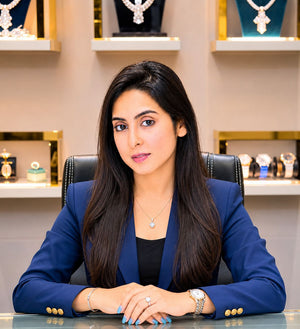
Aumsri Pradhan
Founder, Ivevar Luxury
Aumsri Pradhan is the founder of Ivevar Luxury, a Surat-based fine jewelry brand that designs and handcrafts lab grown diamond and moissanite jewelry in its own workshop. She leads the brand's design and customer experience, from engagement rings and bridal sets to custom pieces made to each client's story. Through the Ivevar blog, she shares practical guidance on lab grown diamonds, moissanite, diamond grading and ring design to help buyers choose with confidence.


