

 Engagement Rings
 Anniversary Rings
 Solitaire Rings
 Halo Rings
 Toi Moi Rings
 Three Stone Rings
 Nature Inspired Rings
 Rose Cut Rings
 Fancy Color Rings
 Antique Cut Rings
 Wedding Rings
 Wedding Band Rings
 Exclusive Lab Grown Diamond Rings
 All Lab Grown Diamond Ring
 Engagement Rings
 Three Stone Rings
 Fancy Color Rings
 Antique Cut Rings
 Daily Wear Rings
 Wedding Band Rings
 Exclusive Moissanite Rings
 Earrings
 Bracelet
 Pendant
 Necklace
 Men's Ring
 Bridal Sets
 Rings
 Earrings
 Tennis chain
 Cuban Chains
 Custom Pendant
 Custom Ring
 Custom Teeth Grillz
 Round
 Oval
 Cushion
 Marquise
 Pear
 Emerald
 Heart
 Princess
 Rose Cut
 Radiant
 Antique Cut
 Brooch
 Cufflink
 Keychain
 Unique Products
 +91-9265051773
 Virtual Appointment
 log in




Short answer: Moissanite is roughly 9 to 10 percent lighter than diamond, so a moissanite the same size as a 1 carat diamond (about 6.5 mm round) actually weighs roughly 0.9 carat. That is why many sellers describe moissanite by diamond equivalent weight (DEW), meaning the size it matches in diamond terms. When comparing stones, focus on millimeter size, not carats: a 6.5 mm round looks like a 1 carat, 7.5 mm like 1.5 carats, and about 8 mm like 2 carats.
Carat measures weight, not size. Because moissanite is lighter than diamond, its carat numbers can be confusing, and two listings that both say "1 carat moissanite" can describe stones of different sizes. The fix is simple: shop by millimeters, and check whether the listing shows DEW or actual weight.
Below you will find a round size chart, approximate sizes for other shapes, what each size looks like on the hand and in earrings, and practical tips for choosing.
Why Moissanite Carat Weight Is Different
Every gemstone has its own density, measured as specific gravity. Diamond's specific gravity is about 3.52. Moissanite's is about 3.2. That means a moissanite cut to the same dimensions as a diamond contains the same volume but weighs less.
- Same size, less weight: a 6.5 mm round moissanite weighs roughly 0.9 carat, while a 6.5 mm round diamond weighs about 1 carat.
- Same weight, bigger stone: a moissanite that actually weighs 1.00 carat is slightly larger than a 1 carat diamond.
- Cut matters too: a deeper stone hides weight in its pavilion, so two stones of the same weight can measure differently across the top.
This is why millimeter size is the most reliable way to compare any two stones, whether they are moissanite, lab grown diamond or mined diamond.
Why weight still appears on listings
Carat weight is still useful. Jewelers use it to describe stones consistently, to check that a stone matches its paperwork, and to calculate the total weight of stones in a piece. It just should not be your only measure of size. Treat carat as the stone's specification and millimeters as its appearance.
Round Moissanite Size Chart
This chart shows common round sizes, the diamond carat weight each size matches (DEW), and the approximate actual weight of a moissanite of that size.
| Diameter | Diamond equivalent (DEW) | Approx. moissanite actual weight |
|---|---|---|
| 5.0 mm | 0.50 ct | About 0.46 ct |
| 6.0 mm | 0.75 ct | About 0.68 ct |
| 6.5 mm | 1.00 ct | About 0.91 ct |
| 7.5 mm | 1.50 ct | About 1.37 ct |
| 8.0 mm | About 2.00 ct | About 1.82 ct |
| 9.0 mm | About 2.75 ct | About 2.50 ct |
| 10.0 mm | About 3.75 ct | About 3.40 ct |
Figures are approximate; cut proportions vary slightly. See our diamond size chart for other shapes.
Tip: Size grows slowly with carat weight. Going from 1 to 2 carats DEW only takes a round stone from about 6.5 mm to about 8 mm, because weight spreads across width and depth. Look at millimeters to see how much bigger a stone will really look.
What Is DEW?
Diamond equivalent weight describes the moissanite by the carat weight a diamond of the same size would have. It makes shopping easier because most people think of size in diamond carats. Always check whether a listing shows DEW or actual weight, and compare millimeters to be sure.
DEW vs actual weight on listings
- "2 ct DEW" or "2 ct diamond equivalent": the stone is the size of a 2 carat diamond, about 8 mm round.
- "2 ct" with no other note: could be either. Ask, or check the millimeter size.
- "2.00 ct actual weight": the stone weighs 2 carats and will be a little larger than a 2 carat diamond.
Neither way of listing is wrong. The point is to compare like with like. If one listing gives DEW and another gives actual weight, compare their millimeter sizes instead.
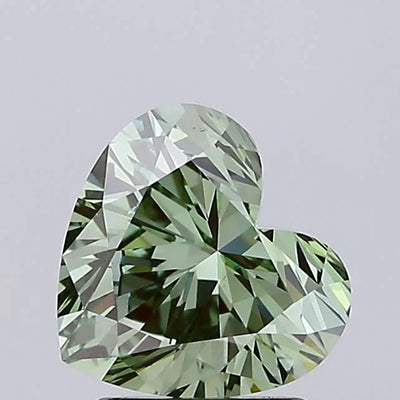
 Shown: 3.48 Ct Round Cut Fancy Vivid Green Moissanite
Size Chart for Other Shapes
Fancy shapes are measured by length and width. The figures below are approximate sizes for a 1 carat diamond equivalent in common shapes. Proportions vary between stones, especially for ovals, pears and emerald cuts, so always check the listed measurements.
| Shape | Approx. size for 1 ct DEW | Looks larger or smaller than round? |
|---|---|---|
| Round | 6.5 mm | Baseline |
| Oval | About 7.5 x 5.5 mm | Larger, because it is elongated |
| Pear | About 8 x 5.5 mm | Larger, long outline |
| Marquise | About 10 x 5 mm | Largest face-up for its weight |
| Emerald | About 7 x 5 mm | Similar, with a sleek rectangular look |
| Princess | About 5.5 mm square | Smaller across, corners add presence |
| Cushion | About 5.5 to 6 mm square | Slightly smaller across |
Elongated shapes such as oval, pear and marquise spread their weight over a longer outline, so they look bigger face-up than a round of the same weight. Square shapes such as princess and cushion carry more weight in their corners and depth, so they measure smaller across. Browse oval moissanite if you want the most visible size for your budget.
Notes on individual shapes
- Oval: length-to-width ratio changes the look. A slimmer oval looks longer and more elegant; a wider oval looks closer to round. Two 1 ct DEW ovals can measure quite differently.
- Pear: the point adds length, so pears look large for their weight. A V-prong at the tip protects the point.
- Marquise: the longest outline for its weight, which makes it the biggest-looking shape face-up and very flattering on the finger.
- Emerald: a step cut with a large table. It looks sleek and spacious, and its open facets show color and clarity more, so choose higher grades.
- Princess and cushion: square outlines with more depth. They look compact but substantial, and their corners give strong presence on the hand.
Whatever the shape, compare listed length and width, not just the carat figure.
Popular Moissanite Sizes
- 6.5 mm (1 ct DEW): the classic engagement size.
- 7.5 to 8 mm (1.5 to 2 ct DEW): the most popular moissanite sizes, since larger stones are affordable.
- 9 mm and up (2.75 ct+ DEW): statement size.
Because moissanite costs far less than diamond of the same size, many buyers choose a larger center than they would in diamond. That is a big part of moissanite's appeal for moissanite engagement rings. Just keep in mind that larger stones show color more, so D to F color is a good choice for sizes above about 2 carats DEW.
Size, budget and value
With diamond, price climbs steeply as carat weight rises, so many buyers trade size for budget. With moissanite, the price gap between sizes is much gentler, which frees you to choose the size that suits your hand and style rather than the one your budget allows. If you are deciding between two sizes, try both on paper against your finger first; the difference of half a millimeter is often smaller in real life than it sounds.
Choosing Size for Your Hand
- Finger width: slender fingers make stones look larger. The same 7.5 mm stone that covers most of a slim finger looks moderate on a wider one.
- Shape: elongated shapes (oval, pear, marquise) look bigger than rounds of the same weight, and they also make fingers look longer.
- Halo: a halo adds visual size, often making the center read one or two sizes larger from a distance.
- Band width: a thin band makes the center look larger; a wide band makes it look smaller.
- Lifestyle: large, high-set stones catch on gloves and fabric. If you work with your hands, consider a lower setting or a bezel.
Read how carat sizes look on the hand.
| Ring size range | Balanced center | Statement center |
|---|---|---|
| Smaller ring sizes | 6 to 7 mm round | 7.5 to 8 mm round |
| Average ring sizes | 6.5 to 7.5 mm round | 8 to 9 mm round |
| Larger ring sizes | 7.5 to 8 mm round | 9 mm and up |
These are style guidelines, not rules. Plenty of people with slim fingers love a big statement stone, and plenty with larger hands prefer a delicate solitaire.
If you are buying as a surprise, look at the rings your partner already wears. Someone who chooses fine, delicate jewelry day to day will usually be happiest with a balanced size, while someone who wears bold pieces may love a statement stone. When in doubt, a balanced size in a halo setting gives presence without feeling oversized.
Earring and Pendant Sizes
Stud earrings
Stud earrings are usually listed by total carat weight for the pair, which can mislead. A pair listed as "2 ct total" has two stones of about 1 ct each, roughly 6.5 mm round in DEW terms.
- Everyday studs: 4 to 5 mm per stone is subtle and suits daily and office wear.
- Classic studs: 6 to 6.5 mm per stone (about 0.75 to 1 ct DEW each) is the most popular look.
- Statement studs: 7.5 mm and up per stone reads clearly from across a room.
Check whether the earring weight is per stone or total, and whether it is DEW or actual weight. See our moissanite earrings for sizes in different styles.
Pendants and solitaire necklaces
A pendant is seen from conversation distance against skin or fabric, so it can carry a slightly larger stone than you might choose for a ring without looking heavy. A 6.5 to 7.5 mm round pendant is a versatile everyday size. Larger stones sit well on longer chains, where the extra length balances their presence.
The bail and setting add to the visible size. A bezel-set pendant looks a little larger than a prong-set stone of the same diameter because the metal frame adds a clean outline around it.
Men's rings and statement pieces
Men's rings are often wider, so a center stone that looks large on a slim band can look modest on a heavy one. For a solitaire men's ring, consider the stone in proportion to the band width rather than in isolation. In hip hop pendants and iced-out pieces, many small stones together create the size, so the overall design dimensions matter more than any single stone.
Shop the styles in this guide
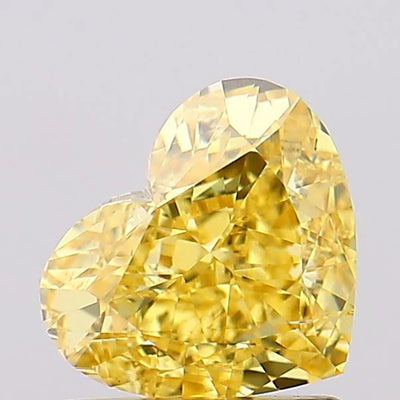
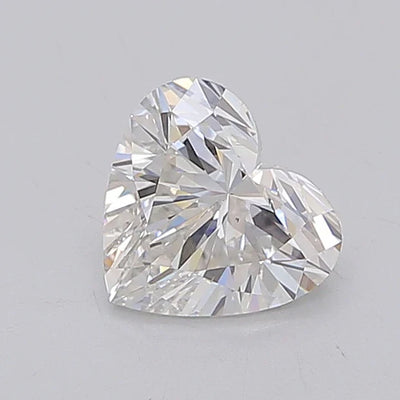
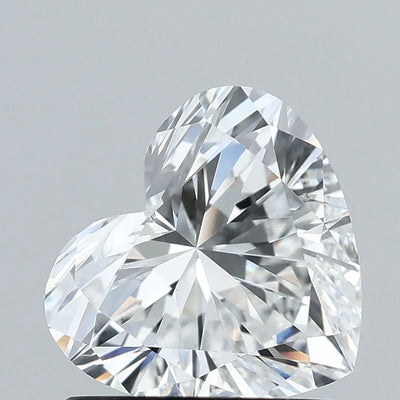
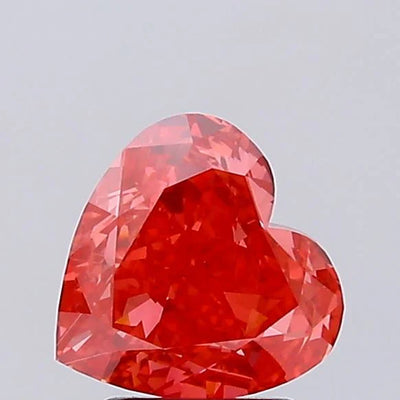
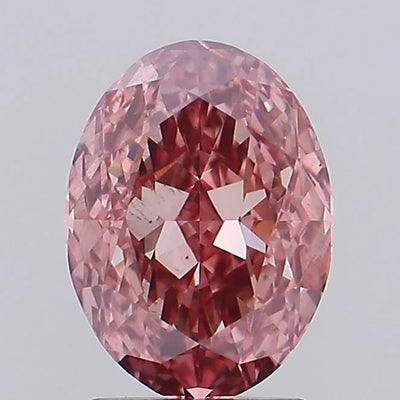
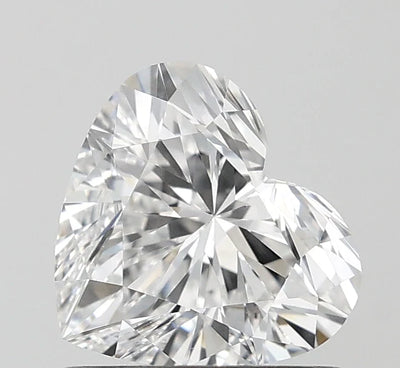
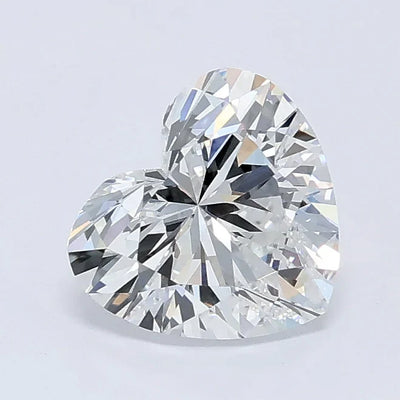
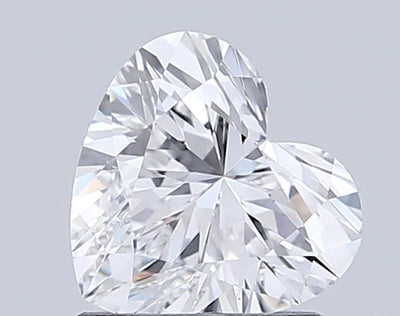


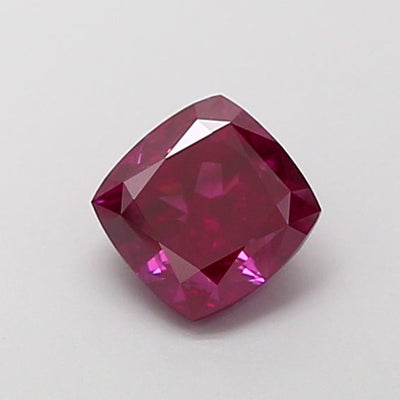
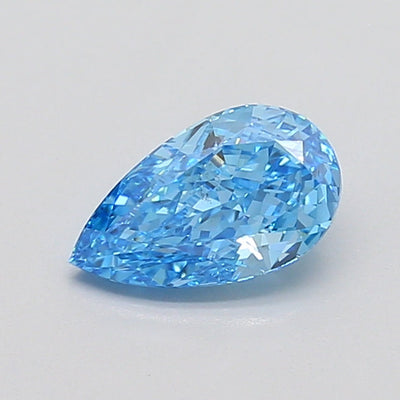
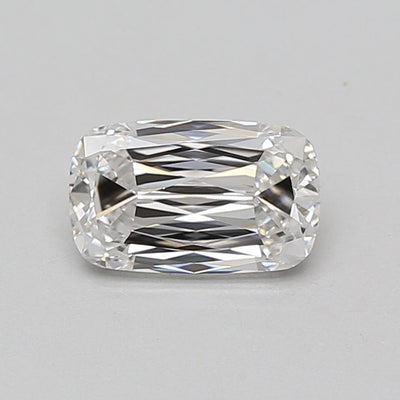
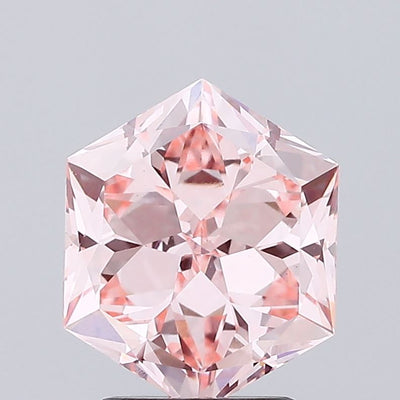
Accent Stones and Total Carat Weight
Rings, bands and bracelets with many small stones are usually described by total carat weight (TCW or TW), the combined weight of every stone in the piece. A halo ring might list the center stone and the total separately.
- Center vs total: "2 ct TW" on a halo ring does not mean a 2 carat center. Check the center stone size on its own.
- Bands: on eternity and wedding bands, total weight tells you how much sparkle the band carries, while stone size in millimeters tells you how chunky the stones look.
- Tennis bracelets: total weight depends on both stone size and bracelet length, so compare stone size in millimeters as well.
Our guide to what TW means in jewelry explains this in detail.
How Setting Style Changes Apparent Size
The setting can make the same stone look noticeably larger or smaller.
- Solitaire: the stone stands alone, so its true size is what you see. Thin prongs let more of the stone show.
- Halo: a ring of small stones around the center adds sparkle and width, making the center look larger from a distance.
- Hidden halo: sits under the center stone, visible from the side. It adds sparkle without changing the face-up size.
- Three-stone: side stones frame the center. Large side stones make the center look smaller by comparison; small ones make it look bigger.
- Bezel: a metal rim around the stone adds a frame that can make the stone read slightly larger, while protecting the edge.
- Prong count: four prongs show more of the stone; six prongs give a rounder outline and extra security.
How to Check Size Before You Buy
- Find the millimeter measurement: every good listing gives it. For fancy shapes, look for length and width.
- Check the weight type: confirm whether the carat figure is DEW or actual weight.
- Use a ruler: mark the diameter on paper and hold it against your finger, or cut out a paper circle of the right size and place it on your hand.
- Compare with a ring you own: measure a stone you already wear and use it as your reference.
- Ask for a video on the hand: photos on a model show scale better than isolated stone photos.
Tip: Ivevar offers virtual appointments, so you can see stones of different sizes on camera and compare them side by side before you choose.
Moissanite at Ivevar
We list moissanite with clear sizing and hand-set every stone in our Surat workshop, in 10K, 14K or 18K gold or 925 sterling silver. If you want a specific size in a specific setting, we also make custom jewelry. Every piece ships free worldwide, with 30-day easy returns. Browse round moissanite and all loose moissanite.
Shop Loose Moissanite
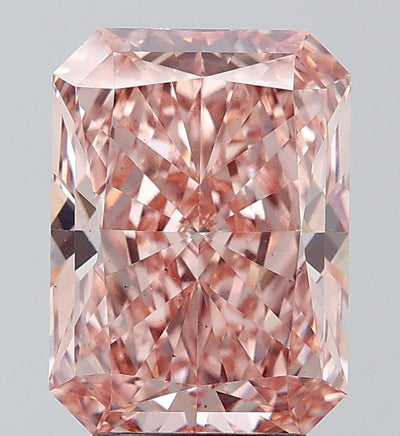
 3.48 Ct Vivid GreenShop Now
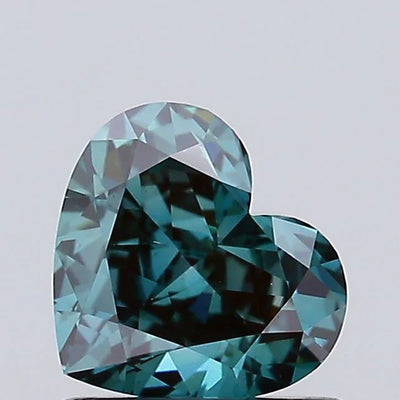
 3.16 Ct Vivid BlueShop Now
 2.98 Ct Intense PinkShop Now
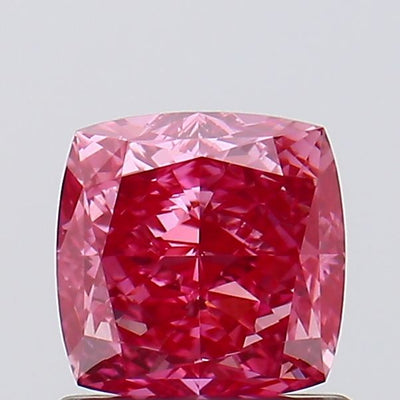
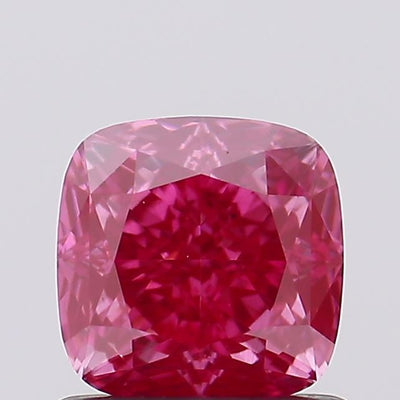
 2.81 Ct Vivid PinkShop Now
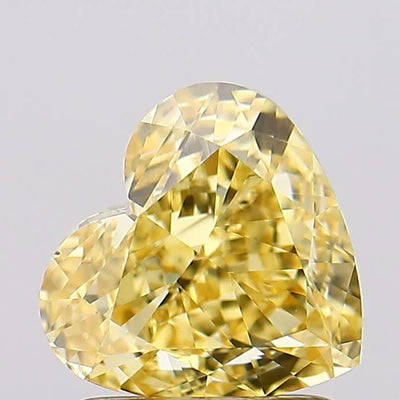
 2.63 Ct Fancy YellowShop Now
 2.41 Ct Intense YellowShop Now
Swipe to see more → | View all loose moissanite
Frequently Asked Questions
Is 1 carat moissanite the same size as 1 carat diamond?
No. Moissanite is lighter, so 1 carat of moissanite is slightly larger. Compare millimeters.
What does DEW mean?
Diamond equivalent weight: the diamond carat weight of a stone the same size.
What size moissanite looks like 2 carats?
About 8 to 8.2 mm round.
What is the most popular moissanite size?
Around 1.5 to 2 carats DEW, about 7.5 to 8 mm round.
Should I shop by mm or carat?
By millimeters; it shows true visible size.
Why does my oval look bigger than a round of the same weight?
Elongated shapes spread their weight over a longer outline, so they cover more of the finger face-up.
Does a bigger moissanite need a higher color grade?
Larger stones show color more, so D to F is a good choice above about 2 carats DEW, especially in white gold or silver.
How much lighter is moissanite than diamond?
Roughly 9 to 10 percent, based on their specific gravities of about 3.2 for moissanite and about 3.52 for diamond.
Does a halo make a moissanite look bigger?
Yes. A halo adds width and sparkle around the center, so the whole head of the ring looks larger, especially from a distance.
Can I order a custom moissanite size?
Often, yes. Ivevar makes custom jewelry, so you can ask for a specific size and shape in the setting you want.
The Bottom Line
Moissanite is lighter than diamond, so compare millimeter size or DEW rather than raw carat weight to know exactly how big your stone will look. Use the charts above as a starting point, then check the exact measurements of the stone you are considering.
Related Guides
Author Bio
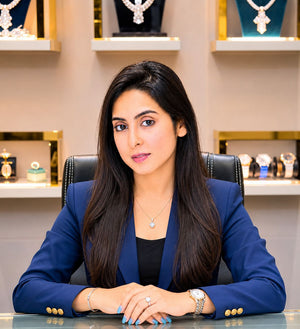
Aumsri Pradhan
Founder, Ivevar Luxury
Aumsri Pradhan is the founder of Ivevar Luxury, a Surat-based fine jewelry brand that designs and handcrafts lab grown diamond and moissanite jewelry in its own workshop. She leads the brand's design and customer experience, from engagement rings and bridal sets to custom pieces made to each client's story. Through the Ivevar blog, she shares practical guidance on lab grown diamonds, moissanite, diamond grading and ring design to help buyers choose with confidence.


