

 Engagement Rings
 Anniversary Rings
 Solitaire Rings
 Halo Rings
 Toi Moi Rings
 Three Stone Rings
 Nature Inspired Rings
 Rose Cut Rings
 Fancy Color Rings
 Antique Cut Rings
 Wedding Rings
 Wedding Band Rings
 Exclusive Lab Grown Diamond Rings
 All Lab Grown Diamond Ring
 Engagement Rings
 Three Stone Rings
 Fancy Color Rings
 Antique Cut Rings
 Daily Wear Rings
 Wedding Band Rings
 Exclusive Moissanite Rings
 Earrings
 Bracelet
 Pendant
 Necklace
 Men's Ring
 Bridal Sets
 Rings
Rings
 Earrings
 Tennis chain
 Cuban Chains
 Custom Pendant
 Custom Ring
 Custom Teeth Grillz
 Round
Round
 Oval
Oval
 Cushion
 Marquise
 Pear
Pear
 Emerald
 Heart
Heart
 Princess
 Rose Cut
 Radiant
 Antique Cut
 Brooch
 Cufflink
 Keychain
 Unique Products
 +91 9265051773
 Virtual Appointment
 log in



Moissanite Engagement Rings: Complete Buying Guide
by Aumsri Pradhan on Sep 29, 2026

Short answer: A moissanite engagement ring gives you a large, brilliant center stone for far less than a diamond of the same size. Moissanite (silicon carbide) rates 9.25 on the Mohs scale, so it is tough enough for everyday wear, and it shows more colorful fire than diamond. It is not a diamond; it is a separate gemstone. Choose a colorless grade, a shape you love and a secure setting, and put a good share of your budget into the metal, because with moissanite the ring itself often costs more than the stone.
Moissanite has moved from "alternative" to a confident first choice for many couples. It is bright, durable and affordable enough that you can choose the size and design you actually want instead of the one your budget allows. This guide covers everything you need to buy well: what moissanite is, how it compares with diamond, which grades and shapes to choose, which settings and metals hold up best, what drives the price, and how to size, care for and pair the ring.
What Is Moissanite?
Moissanite is silicon carbide. It was first identified by the French chemist Henri Moissan in tiny crystals from a meteor crater, and natural moissanite large enough to cut is extremely rare. Every moissanite used in jewelry today is grown in a lab, then cut and polished like any other gemstone.
It is a gem in its own right, not a diamond imitation made of glass or cubic zirconia. Its refractive index is about 2.65, higher than diamond's 2.42, and it splits light into colors more strongly than diamond does. That is why moissanite throws so many flashes of rainbow light. At 9.25 on the Mohs scale it is harder than sapphire and ruby, and among popular jewelry gems only diamond is harder.
Two other properties matter for a ring you will wear every day. Moissanite is tough, so it resists chipping well when set properly, and it tolerates heat, which makes routine jeweler work such as re-tipping prongs less stressful. Good colorless moissanite also keeps its color; it does not turn cloudy or yellow with age.
Moissanite vs Diamond
Moissanite and diamond look similar at a glance, but they are different materials with different strengths. Diamond is pure carbon; moissanite is silicon carbide. Lab grown diamonds are real diamonds, chemically, physically and optically the same as mined ones, which is why they sit in between moissanite and mined diamond on price.
| Feature | Moissanite | Diamond |
|---|---|---|
| Material | Silicon carbide | Carbon (lab grown or mined) |
| Hardness (Mohs) | 9.25 | 10 |
| Refractive index | About 2.65 | About 2.42 |
| Sparkle | More rainbow fire | More white brilliance |
| Grading paperwork | Seller-supplied reports (often GRA) | Independent labs such as IGI and GIA |
| Price | Much lower | Higher (lab grown lower than mined) |
In everyday indoor light, most people cannot tell the two apart. In direct sunlight, moissanite's extra rainbow flashes are easier to notice, especially in larger stones. If you love that lively, colorful sparkle, moissanite is a plus rather than a compromise. If you want the classic white sparkle and the knowledge that it is a diamond, compare our lab diamond engagement rings.
How to Choose
Moissanite is graded with the same letters and terms used for diamonds, but the choices are simpler because the price gap between grades is small. Focus on these points.
Color
Pick a colorless grade (D, E or F on the diamond-style scale) for an icy look, especially in white gold or silver. Near-colorless grades (G to I) can show a faint warm tint in larger stones or in daylight. In yellow or rose gold, that warmth is less noticeable, but most buyers still choose colorless because the cost difference is modest.
Clarity
Most jewelry moissanite is eye-clean, meaning you cannot see inclusions without magnification. Grades such as VVS and VS are common. Paying extra for a higher clarity grade rarely makes a visible difference on the hand.
Size
Because moissanite is affordable, you can choose a larger stone than you might with diamond. Keep proportions balanced for the hand: a very large stone on a slim finger can look top-heavy and is more likely to catch on clothing. Moissanite is usually sold by diamond-equivalent size, so check the millimeter measurements, not just the carat number.
Cut
A well-cut stone returns light evenly across the top. Ask for real photos or video of the actual ring so you can see how it sparkles, not just a rendered image.
Finally, remember that GRA reports that come with moissanite are seller-supplied descriptions, not independent lab grading. They are useful as a record, but judge the stone by how it looks.
Tip: Hold a ruler against your partner's finger, or a ring they already wear, and mark the stone width you are considering in millimeters. It is the fastest way to see whether a size will look elegant or oversized.
Popular Shapes
- Round: the classic choice with the most sparkle. Round brilliant facets show off moissanite's fire better than any other shape.
- Oval: elongated and flattering, and it looks large for its weight. Browse moissanite oval designs to see the range of proportions.
- Emerald: step-cut facets give a calm, mirror-like glow and soften the rainbow effect. A good choice if you prefer a quieter look.
- Pear and marquise: distinctive outlines that lengthen the finger. Their points need protective prongs or a V-tip.
- Heart and cushion: romantic and soft, often paired with a halo.
- Radiant and princess: square or rectangular outlines with brilliant faceting, for a crisp, modern look with lots of sparkle.
If you cannot decide, think about how the ring will be worn. Round and oval stones sit comfortably and suit almost any setting. Elongated shapes make the stone look bigger and the finger look slimmer. Step cuts like emerald show clarity and color more openly, so choose a colorless grade with them.
Choosing a Setting
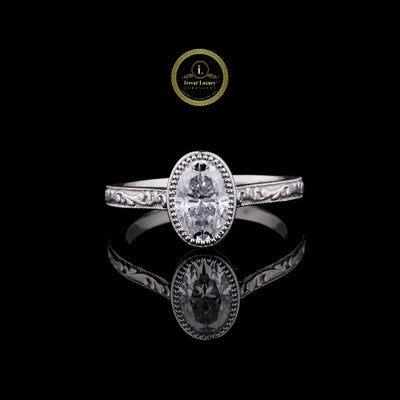
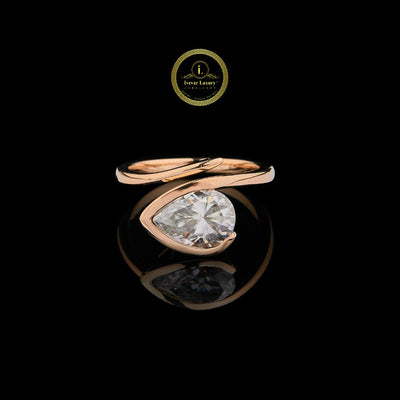
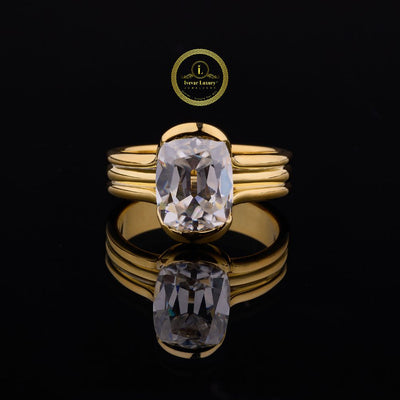
A solitaire keeps the focus on the center stone and is the easiest to pair with a wedding band. A pavé band adds a line of small stones for extra sparkle. A halo surrounds the center stone and makes it look even bigger. A cathedral setting lifts the stone on graceful arches, while a bezel wraps it in metal for a sleek, protective look. Browse our moissanite engagement rings to see these styles.
| Setting | Look | Best for |
|---|---|---|
| Solitaire | Clean and timeless | Showing off the center stone; easy band pairing |
| Pavé band | Sparkle all around | Extra brilliance without a halo |
| Halo | Larger, glamorous face-up | Maximum visual size |
| Three stone | Balanced and symbolic | Wider coverage across the finger |
| Bezel | Sleek and modern | Active hands; no prongs to snag |
Prong count matters too. Four prongs show more of the stone; six prongs hold it more securely and keep a round stone looking round. For pointed shapes, make sure the tips are protected. If you like the idea of a halo, see our moissanite halo rings; for a ring with a story behind it, a moissanite three stone ring is a popular choice.
Is Moissanite Right for You?
Moissanite suits you if you want a big, bright stone without stretching your budget, if you love colorful sparkle, or if you would rather spend on a heavier gold band, a halo or a matching wedding ring. It is also a practical choice for people who work with their hands, since it resists scratching far better than most gems.
It may not be the right fit if it matters to you that the stone is a diamond, or if you want an independent grading report from a lab such as IGI or GIA. In that case a lab grown diamond gives you a real diamond at a lower price than mined, and many of our lab grown diamonds come with IGI certificates.
A simple test: look at both stones in photos or video taken in daylight. If the rainbow flashes of moissanite make you smile, you have your answer. If you find yourself drawn to the whiter, crisper look of diamond, follow that instinct.
Picking the Metal
Ivevar rings come in 925 silver and in 10K, 14K and 18K gold. White gold gives a bright, icy frame for a colorless stone. Yellow gold adds warmth and a vintage feel. Rose gold suits softer, romantic designs. For daily wear, 14K is a popular balance of strength and color.
- 10K gold: the hardest-wearing and most affordable gold, with a slightly paler color.
- 14K gold: the everyday favorite, strong enough for daily wear with a rich color.
- 18K gold: more pure gold, a deeper color and a more luxurious feel, but softer, so it shows wear sooner.
- 925 sterling silver: the lowest-cost option and a good way to try a style, but softer than gold and it can tarnish, so it needs more care as an everyday engagement ring.
Moissanite's hardness means the stone will usually outlast the metal around it, so the metal choice decides how well the ring ages. Prongs wear slowly over the years in any metal; a quick check by a jeweler every year or so keeps the stone secure.
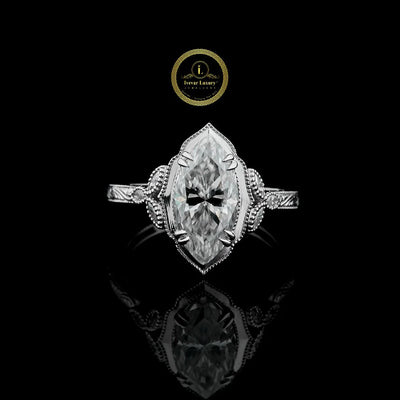
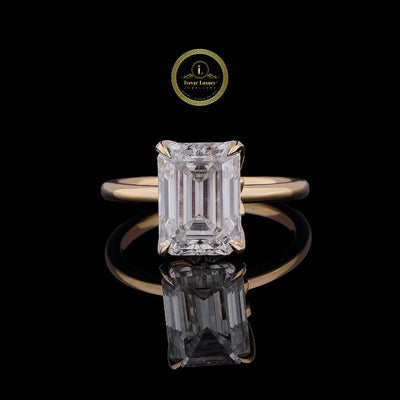
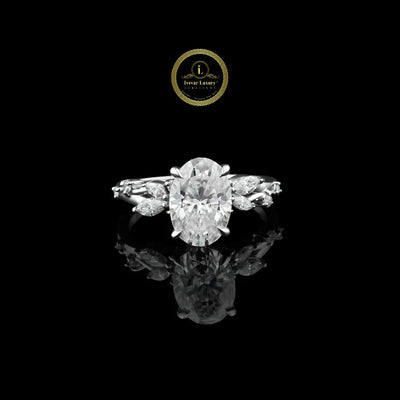
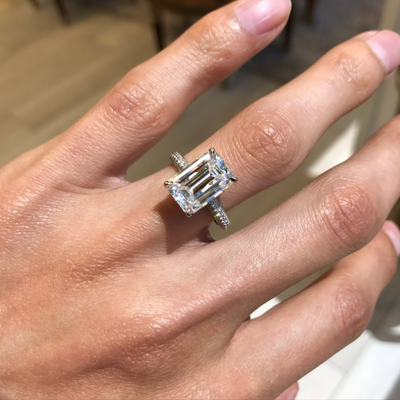
Shop the styles in this guide













What Affects the Cost
The size of the center stone matters, but because moissanite costs far less than diamond, the setting and metal make up a bigger share of the price than they would with a diamond ring. Going up in stone size adds relatively little. Moving from silver to gold, or from 14K to 18K, adds much more.
- Metal and karat: 925 silver is the entry point, and each step from 10K to 14K to 18K gold adds more pure gold.
- Band weight: a wide or chunky band uses more metal than a slim one.
- Side stones: pavé bands, halos and hidden halos add many small stones and hours of setting work.
- Design complexity: cathedral shoulders, filigree, split shanks and custom details take more time to make.
- Shape: fancy shapes such as marquise and pear can need special prongs.
The practical lesson: decide your metal first, then choose the stone size. With moissanite, a bigger center stone is usually the cheapest upgrade on the ring.
Sizing
Measure your finger at the end of the day when it is slightly larger, and avoid measuring when your hands are cold. Our ring size chart walks you through it. If the ring is a surprise, borrow a ring your partner wears on the same finger to compare.
A few extra points help you get it right the first time:
- Wide bands fit tighter: if you choose a band wider than about 4 mm, consider going up a quarter size.
- Knuckles matter: if the knuckle is larger than the base of the finger, choose a size that slides over the knuckle without forcing.
- Eternity and full pavé bands: these are hard to resize because stones run around the whole band, so measure especially carefully.
- Temperature changes size: fingers swell in heat and shrink in cold, so measure more than once.
Care Tips
Moissanite is very durable, but it still collects lotion and skin oil. Clean it with warm water, mild soap and a soft brush to restore its fire. Store it apart from other jewelry, and take it off for heavy work. See our jewelry care guide for more.
- Weekly: soak for a few minutes in warm, soapy water, brush gently under the stone, rinse and pat dry.
- Avoid: chlorine, bleach and harsh cleaners, which can damage gold alloys and silver.
- Take it off: for the gym, gardening, moving furniture and swimming.
- Check prongs: if the ring catches on fabric, a prong may be lifting; have it looked at before the stone loosens.
When moissanite looks dull, it is almost always a film of oil on the back of the stone. A proper clean brings the sparkle straight back.
Matching Wedding Bands
Plan the wedding band at the same time so the two rings sit well together. A straight pavé band suits most solitaires, while a curved band fits around a halo or low setting. See our moissanite wedding bands.
Check whether the engagement ring sits low enough for a straight band to rest flush against it. A raised cathedral setting usually allows this, while a low bezel or a large halo may leave a gap. Match the metal color and karat so both rings wear at the same rate. If you want a perfectly coordinated pair, a moissanite bridal ring set is designed to fit together from the start.
Buying Checklist
- Confirm the stone: the listing should clearly say moissanite, not "diamond" or "simulated diamond".
- Check the measurements: look at the millimeter size, not only the carat number.
- Pick colorless: D to F color for a bright, icy look, especially in white metal.
- Choose a secure setting: six prongs, protected tips or a bezel suit active lifestyles.
- Decide the metal first: it drives the price and how the ring wears.
- Measure carefully: use a sizing chart and measure more than once.
- Read the policies: check shipping, returns and what support is offered after purchase.
At Ivevar, rings are made to order, shipped worldwide with free shipping, and covered by 30-day easy returns. If you want something different, we also make custom jewelry, and you can book a virtual appointment to talk through stones, shapes and settings before you order.
Ready to start? Browse our moissanite engagement rings, narrow it down with moissanite solitaire rings, or pick out a partner ring from our moissanite wedding bands.
Shop at Ivevar


Frequently Asked Questions
Is moissanite a good engagement ring stone?
Yes. It is very hard, brilliant and affordable. At 9.25 on the Mohs scale it handles daily wear well, and only diamond is harder among popular jewelry gems.
Is moissanite a diamond?
No. It is silicon carbide, a different gem. It should always be sold as moissanite.
Will moissanite look fake?
No. It looks bright and clean; in strong light it shows more colorful flashes than diamond.
Does moissanite change color over time?
Good quality colorless moissanite keeps its color. If it looks dull, it usually just needs a clean.
Can moissanite scratch or chip?
It is highly scratch resistant, because only materials as hard or harder, such as diamond, can scratch it. Like any gem, a hard knock on an exposed edge can chip it, which is why protective settings help.
What color grade should I choose?
Colorless (D, E or F) is the most popular, especially in white gold or silver. The price difference between grades is small.
Does a moissanite engagement ring come with a certificate?
Moissanite often comes with a GRA report. It describes the stone, but it is seller-supplied rather than independent lab grading like IGI or GIA reports for diamonds.
Which metal is best for a moissanite engagement ring?
14K gold is the most popular balance of durability, color and cost. 18K is richer in color but softer, and 925 silver is the most affordable.
How long does a moissanite engagement ring last?
The stone itself is extremely durable and keeps its sparkle with simple cleaning. Over many years the metal, especially the prongs, wears first, so have the setting checked periodically.
Can I return a moissanite engagement ring from Ivevar?
Yes. Ivevar offers 30-day easy returns, along with free shipping and worldwide delivery.


