

 Engagement Rings
 Anniversary Rings
 Solitaire Rings
 Halo Rings
 Toi Moi Rings
 Three Stone Rings
 Nature Inspired Rings
 Rose Cut Rings
 Fancy Color Rings
 Antique Cut Rings
 Wedding Rings
 Wedding Band Rings
 Exclusive Lab Grown Diamond Rings
 All Lab Grown Diamond Ring
 Engagement Rings
 Three Stone Rings
 Fancy Color Rings
 Antique Cut Rings
 Daily Wear Rings
 Wedding Band Rings
 Exclusive Moissanite Rings
 Earrings
 Bracelet
 Pendant
 Necklace
 Men's Ring
 Bridal Sets
 Rings
Rings
 Earrings
 Tennis chain
 Cuban Chains
 Custom Pendant
 Custom Ring
 Custom Teeth Grillz
 Round
Round
 Oval
Oval
 Cushion
 Marquise
 Pear
Pear
 Emerald
 Heart
Heart
 Princess
 Rose Cut
 Radiant
 Antique Cut
 Brooch
 Cufflink
 Keychain
 Unique Products
 +91-9265051773
 Virtual Appointment
 log in



Moissanite Tennis Bracelets: Fire on Your Wrist
by Aumsri Pradhan on Sep 29, 2026

Short answer: A moissanite tennis bracelet gives you the classic unbroken line of stones with strong rainbow fire, for far less than the same look in lab grown diamond. Moissanite rates 9.25 on the Mohs scale, so it handles daily wrist wear well. Choose round stones in prongs for maximum sparkle, a channel or bezel setting for a smooth edge, and a secure box clasp with a safety latch. Moissanite is its own gemstone, not a diamond.
What Is a Moissanite Tennis Bracelet?
A tennis bracelet is a flexible line of individually set stones of the same size and shape, linked so the bracelet bends smoothly around the wrist. In a moissanite tennis bracelet, every one of those stones is moissanite: a lab created gemstone made of silicon carbide.
Moissanite is not a diamond and not a diamond simulant made of glass or cubic zirconia. It is a separate, very hard gem with its own optical character. It is brighter than diamond (refractive index about 2.65 versus 2.42) and shows more colorful fire. Those qualities suit a bracelet well, because a wrist is always moving and catching light from different angles.
The design itself is simple, and that is the appeal. One row of matching stones works with a T-shirt, office wear, a saree or an evening dress, and it stacks easily with a watch or a plain gold bangle.
Why Moissanite Suits a Tennis Bracelet
A tennis bracelet holds dozens of stones, so the stone choice multiplies through the whole price. Moissanite keeps a long line of larger stones within reach, which is why many people choose it when they want a bolder total carat weight. A bracelet that would be a major purchase in diamond becomes a realistic everyday piece in moissanite.
It is also tough. At 9.25 on the Mohs scale, just below diamond at 10, it resists the scratches a wrist collects from desks, doors, laptop edges and car keys. Moissanite does not cloud or turn yellow with age, so a well-made bracelet keeps its look for years with basic cleaning.
- Sparkle: very high brilliance and fire, even in small stones.
- Hardness: second only to diamond among popular jewelry stones.
- Value: a bigger, brighter line of stones for the same budget.
- Consistency: lab created stones are easy to match closely in size and color.
If you are still deciding between stones, our moissanite vs lab grown diamond vs diamond guide lays out the trade-offs.
Shapes and Settings
Shape and setting decide most of how a tennis bracelet looks on the wrist. Round stones in prong settings give the most sparkle and the classic look. Emerald and radiant shapes look sleek and modern. Cushion cuts are soft and romantic. Princess cuts give a crisp, geometric line.
Moissanite has higher dispersion than diamond, so it throws more colorful flashes, especially in sunlight. Brilliant shapes such as round, cushion and radiant show that fire the most. Step cuts such as emerald show calmer, mirror-like flashes, which suits people who prefer a quieter look.
Setting styles compared
| Setting | Look | Best for |
|---|---|---|
| Prong (4-prong or shared prong) | Most light, most sparkle, stones look larger | Evenings, occasion wear, maximum fire |
| Channel | Stones held between two metal rails; smooth edges | Daily wear, knitwear, active hands |
| Bezel | Metal rim around each stone; modern and sleek | Maximum protection, minimal snagging |
| Illusion or halo center | A larger focal stone with a line of smaller stones | Gifts, a bracelet that reads as a statement |
Prong settings let in the most light but leave the stone edges more exposed, so they can catch on fine fabrics. Channel and bezel settings use more metal and protect each stone better, which matters on a piece that brushes against tables all day.
Popular styles at Ivevar
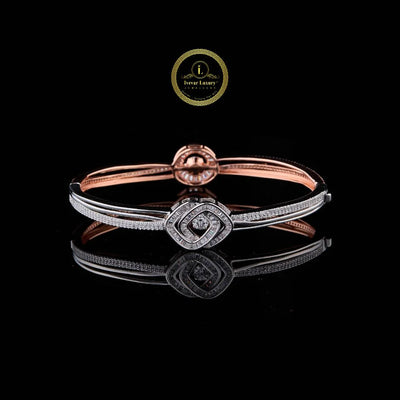
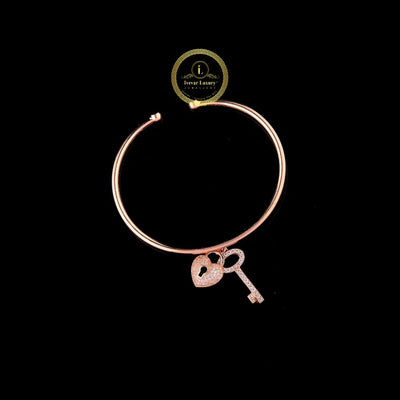
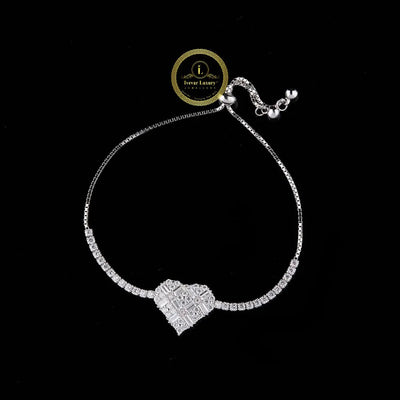
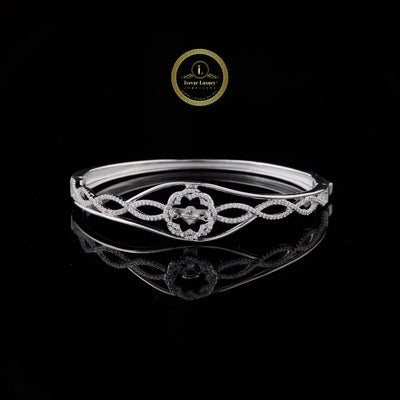
Ivevar's moissanite tennis bracelets cover the main looks, from slim everyday lines to bold, high-carat pieces. The table below shows a few of the styles featured in this guide and what each one is best at.
| Bracelet | Shape / setting | Why choose it |
|---|---|---|
| 5.94 TCW adjustable slider | Round brilliant | One bracelet fits many wrist sizes; easy gift |
| 4.56 TCW channel set | Princess cut | Smooth, snag-free edge for daily wear |
| 9.30 TCW bezel set | Emerald cut | Sleek, modern look with well protected stones |
| 13.20 TCW prong set | Round brilliant | Big, bold sparkle for events |
Current prices for each piece are shown on its product page, and they change with the metal and karat you choose. If none of these is quite right, Ivevar can make a custom version with a different stone shape, stone size or length.
Fit and Clasp
A tennis bracelet should drape, not squeeze. Measure your wrist just above the wrist bone with a soft tape or a strip of paper, then add about half an inch (around 1.3 cm) for a classic drape. Add a little less for a snug fit that stays put, or a little more if you like the bracelet to slide toward your hand.
- Adjustable slider clasp: the chain passes through a sliding bead, so one bracelet fits many wrists. Great for gifts when you do not know the size.
- Box clasp with safety latch: the classic choice. A tongue clicks into a box, and one or two hinged latches on the side act as a backup.
- Double safety: a box clasp with a figure-eight latch on each side gives the most security for a high-carat piece.
The clasp takes most of the strain on a tennis bracelet, so do not compromise here. A bracelet with a single unsecured clasp is the one most likely to slip off unnoticed.
Tip: If you are between two lengths, choose the shorter one for a thinner bracelet and the longer one for a wide or high-carat bracelet. Larger stones take up more room around the wrist, so they need a little extra length to drape comfortably.
Stone Size, Carat Weight and Color
Tennis bracelets are described by total carat weight (TCW): the combined weight of all the stones. A higher TCW usually means either larger stones or a longer bracelet. Two bracelets with the same TCW can look quite different if one uses many small stones and the other uses fewer large ones.
Moissanite is slightly lighter than diamond for the same size, so moissanite is often described by its diameter in millimetres or by its "diamond equivalent" weight. Look at the stone size in millimetres when you compare pieces; it tells you more about how the bracelet will look on your wrist than the carat number alone.
Quick sizing guide
- Delicate (about 2 to 2.5 mm stones): subtle, easy to stack with other bracelets and a watch.
- Classic (about 3 to 3.5 mm stones): visible sparkle without looking heavy; the everyday sweet spot for many people.
- Bold (4 mm and up): a statement piece that reads clearly from across a room.
Larger moissanite stones also show more of their colorful fire, because each flash of color is bigger. Small stones twinkle more like a fine line of light.
Matching color across the line
On a bracelet, the stones sit side by side, so even small color differences show. Colorless moissanite gives the brightest, iciest line and pairs best with white gold or silver. Near-colorless stones can show a faint warm tint, which blends in nicely with yellow or rose gold. Whatever grade you choose, the stones should look evenly matched from one end to the other.
Check matching in daylight, not just under strong shop lights. Lay the bracelet flat on a white sheet of paper and look along its length. Each stone should look the same shade, the same size and set at the same height.
How to Check Quality Before You Buy
Two bracelets with the same carat weight can feel very different in the hand. These are the details that separate a bracelet you will wear for years from one that disappoints:
- Flexibility: drape the bracelet over your fingers. It should fall in a smooth curve with no stiff sections or kinks between links.
- Stone height: look along the side. Every stone should sit at the same level, with no stone tilted or standing proud of the line.
- Prongs or rails: prongs should be even and rounded, not sharp, and rails on a channel setting should hold every stone firmly.
- Back finish: turn it over. Clean, open backs let light enter the stones and make cleaning easier.
- Clasp action: the clasp should click shut firmly and the safety latch should need a deliberate push to open.
- Clear description: the listing should name the stone as moissanite, give the metal and karat, and state the total carat weight.
Videos are more useful than still photos here. Watch how the bracelet moves and how the sparkle travels along the line as it turns.
Buying a Tennis Bracelet as a Gift
A tennis bracelet is one of the safest fine jewelry gifts, because it does not need a ring size and suits almost every style. A few pointers make it easier:
- Size: borrow a bracelet the person already wears and measure it flat, or choose an adjustable slider style.
- Metal: look at the jewelry they wear most. Match yellow to yellow and white to white.
- Stone size: if they wear delicate pieces, a classic or delicate line will get more wear than a bold one.
For more ideas, see our gift bracelets.
Shop the styles in this guide




Picking the Metal
Every Ivevar bracelet is made to order in 925 sterling silver or in 10K to 18K gold. Silver keeps the cost down and suits lighter or occasional wear. Solid gold is the better pick for a bracelet you plan to wear most of the time, and the harder 10K and 14K alloys keep links and settings firm. Yellow gold gives a warm vintage feel, while white gold makes the stones look like one continuous strip of light.
| Metal | Strengths | Keep in mind |
|---|---|---|
| 925 sterling silver | Most affordable; bright white look | Softer; can tarnish; best for lighter wear |
| 10K gold | Hardest of the gold options; resists dents | Paler gold color than higher karats |
| 14K gold | Good balance of strength and rich color | The popular all-round choice |
| 18K gold | Deepest color; most gold content | Softer; check clasp and prongs more often |
What Affects the Price
The main drivers are total carat weight, the number and size of stones, the shape, the setting style and the metal. Fancy shapes such as emerald or radiant, bezel settings that use more metal, and higher gold karats all add to the cost. A longer bracelet also needs more stones.
- Metal: the jump from silver to gold is the biggest single change, and 18K costs more than 14K or 10K.
- Total carat weight: more stone, more cost, though moissanite rises far more gently than diamond.
- Setting work: bezel and channel settings take more metal and more hand finishing than simple prongs.
- Length: each extra centimetre adds stones and metal.
To keep a budget in check, choose a classic stone size in 10K or 14K gold rather than very large stones in silver. Gold holds stones more securely over years of wear, which protects the bigger investment.
Moissanite or Lab Grown Diamond Tennis Bracelet?
Both make beautiful tennis bracelets. Lab grown diamonds are real diamonds, chemically, physically and optically the same as mined diamonds, grown by the CVD or HPHT method. They give a crisp white sparkle and the top hardness of 10. Moissanite costs less for the same size and adds more rainbow fire.
Choose moissanite if you want a bigger, bolder line of stones for your budget and love colorful sparkle. Choose lab grown diamond if you want the classic diamond look or the bracelet is matching other diamond jewelry. You can compare styles in our lab grown diamond bracelets.
Styling Your Tennis Bracelet
A tennis bracelet is one of the easiest pieces of fine jewelry to wear. A few ways to style it:
- Solo: a single classic line on a bare wrist looks clean and polished at work.
- With a watch: wear the bracelet on the same wrist, matched to the watch metal, for an easy stack.
- Stacked: pair a slim tennis bracelet with a plain gold bangle or a chain bracelet of a similar tone.
- Matched set: pair the bracelet with a moissanite tennis chain for weddings and festive events.
When stacking, put the tennis bracelet next to smooth pieces rather than other stone-set bracelets, so stones do not rub against each other.
Everyday Care
Check the clasp and safety latch now and then, since the clasp is the part that takes the most strain. Take the bracelet off for the gym, gardening and swimming. To clean it, soak it in warm soapy water, brush gently between the links, then rinse and dry. Our jewelry care guide has more detail, and you can browse every style in our moissanite bracelets collection.
- Monthly check: hold the bracelet near your ear and shake it gently; a rattle can mean a loose stone.
- Storage: lay it flat in a soft pouch or lined box, closed, so it does not kink or scratch other pieces.
- Chemicals: put perfume and lotion on before the bracelet, and remove it before using chlorine or cleaning products.
Tip: Lotion and skin oils build up under the stones and dull the sparkle more than anything else. A quick soak and soft brush every few weeks keeps a moissanite bracelet looking bright in every light.
Shop at Ivevar


Swipe to see more → | View all best sellers
Every Ivevar bracelet is made to order, with free worldwide shipping and 30-day easy returns. Browse the full range of moissanite bracelets, see more styles in our bracelets collection, or book a virtual appointment if you would like a custom length, stone size or metal.
FAQ
Is a moissanite tennis bracelet a diamond bracelet?
No. Moissanite is a separate gemstone made of silicon carbide. It is brilliant and durable, but it is not diamond.
Why does moissanite show rainbow flashes?
Moissanite has higher dispersion than diamond, so it splits light into more color, especially in direct sunlight.
Prong or channel setting?
Prong settings show more sparkle. Channel settings are smoother and less likely to snag on clothing, so they suit daily wear.
Should the stones be colorless or near-colorless?
Colorless looks brightest in white metal. Near-colorless can look lovely in yellow or rose gold, as long as all the stones match.
Can I wear a moissanite tennis bracelet every day?
Yes. The stones are very hard. Choose solid gold and a secure clasp for daily wear, and take it off for sport and heavy work.
How do I know what length to order?
Measure your wrist and add about half an inch (around 1.3 cm) for a classic drape. An adjustable slider style avoids sizing worries for gifts.
Will moissanite get cloudy over time?
No. Moissanite does not cloud or change color with age. If it looks dull, it needs cleaning to remove oils and dirt.
Can I return a tennis bracelet?
Yes. Ivevar offers 30-day easy returns on bracelets, so you can see the piece on your wrist before you decide.
Aumsri Pradhan, Founder of Ivevar. About the founder


