

 Engagement Rings
 Anniversary Rings
 Solitaire Rings
 Halo Rings
 Toi Moi Rings
 Three Stone Rings
 Nature Inspired Rings
 Rose Cut Rings
 Fancy Color Rings
 Antique Cut Rings
 Wedding Rings
 Wedding Band Rings
 Exclusive Lab Grown Diamond Rings
 All Lab Grown Diamond Ring
 Engagement Rings
 Three Stone Rings
 Fancy Color Rings
 Antique Cut Rings
 Daily Wear Rings
 Wedding Band Rings
 Exclusive Moissanite Rings
 Earrings
 Bracelet
 Pendant
 Necklace
 Men's Ring
 Bridal Sets
 Rings
 Earrings
 Tennis chain
 Cuban Chains
 Custom Pendant
 Custom Ring
 Custom Teeth Grillz
 Round
 Oval
 Cushion
 Marquise
 Pear
 Emerald
 Heart
 Princess
 Rose Cut
 Radiant
 Antique Cut
 Brooch
 Cufflink
 Keychain
 Unique Products
 +91-9265051773
 Virtual Appointment
 log in




Short answer: Moissanite sparkles with more rainbow color than diamond because of its high dispersion, about 0.104, more than double diamond's 0.044. Dispersion splits white light into spectral colors, which jewelers call "fire." Moissanite also has a higher refractive index than diamond (about 2.65 vs 2.42), so it returns plenty of light as brilliance. The result is a vivid, colorful sparkle that is most noticeable in sunlight and in larger stones.
Sparkle is moissanite's signature. People notice it across a room, and it's the first thing buyers ask about. Some love the colorful flashes, and others want a calmer, whiter look.
This guide explains the simple science behind that sparkle, how it compares with diamond, what makes it stronger or softer, and how to choose a cut, size and setting that gives you the look you want.
The Three Parts of Sparkle
"Sparkle" is really three separate effects working together. Gemologists describe them like this:
| Term | What it means | Moissanite vs diamond |
|---|---|---|
| Brilliance | White light returned to your eye | Moissanite is very high (RI about 2.65 vs 2.42) |
| Fire (dispersion) | Rainbow flashes of color | Moissanite about 0.104 vs diamond 0.044 |
| Scintillation | Flashes of light and dark as the stone moves | Depends mainly on cut |
Brilliance and fire depend on the material itself. Scintillation depends mostly on how the stone is cut and how it moves. A great stone needs all three in balance. Too little brilliance looks glassy. Too little scintillation looks static. How much fire is "right" is a matter of taste.
The Science: Refraction and Dispersion
How light travels through moissanite
Here is what happens when light hits a faceted moissanite, step by step.
- Light enters: light hits the flat top facet (the table) or the angled crown facets and passes into the stone.
- Light bends: moissanite slows light down a lot, so its path bends sharply as it enters. That bending is called refraction, and the refractive index measures it.
- Colors separate: each color of light bends by a slightly different amount. Violet bends the most and red the least, so white light starts to fan out into a spectrum.
- Light reflects off the pavilion: in a well-cut stone, the angled lower facets act like mirrors and bounce the light back up instead of letting it leak out the bottom.
- Light exits: the light leaves through the crown, bending again as it goes, which spreads the colors further. Your eye sees white flashes (brilliance) and colored flashes (fire).
Moissanite's high refractive index makes it very good at trapping light and sending it back up. Its high dispersion makes it very good at splitting that light into color. Those two properties together explain its look.
What dispersion numbers mean
Dispersion is measured as the difference in refractive index between red and violet light. The bigger the number, the more strongly a stone splits white light into color. Here is how common jewelry stones compare.
| Material | Approx. dispersion | What you see |
|---|---|---|
| Moissanite | 0.104 | Strong, obvious rainbow flashes |
| Diamond (lab grown or mined) | 0.044 | Balanced white sparkle with clear but softer fire |
| Sapphire | 0.018 | Mostly body color, little fire |
| Quartz | 0.013 | Very little visible fire |
Lab grown and mined diamonds share the same dispersion because they are the same material, chemically, physically and optically. The moissanite figure is more than double diamond's, and that difference is easy to see without any tools.
Why moissanite and diamond look different side by side
A diamond shows a mix of bright white flashes and smaller pops of color. A moissanite of the same size and cut shows more of its light as color, especially when the light source is strong and small, like the sun or a spotlight. Some people call this a "disco ball" effect. Others call it lively. Neither stone is "better," but they do look different, and it helps to know which look you prefer before you buy.
Why Some People Love Moissanite's Fire
- Lively look: it looks lively and colorful, especially outdoors.
- Evening glow: it stands out in candlelight and restaurant lighting, where small point sources of light bring out color.
- Presence in small stones: it gives an eye-catching look even in smaller stones and pave.
- Lasting sparkle: at 9.25 on the Mohs scale, moissanite resists scratches, so its facet edges stay crisp and the sparkle doesn't wear down.
When Fire Is Most Visible
The same stone can look very different from one room to the next. These factors decide how much rainbow you'll see.
- Size: larger stones (over about 2 carats) show more rainbow, because light travels a longer path through them and the colors spread further before they reach your eye.
- Lighting: direct sunlight and spotlights increase fire. Soft, diffuse light, like an overcast day or office lighting, shows mostly white brilliance.
- Cut: brilliant cuts (round, oval, cushion, radiant) show more fire than step cuts.
- Viewing distance: up close you see individual colored flashes. From a few feet away they blend into a bright, slightly colorful glow.
Tip: To judge a moissanite's real character, look at it in three places: near a window, under indoor ceiling lights and under a single lamp or phone flashlight. That shows you its full range before you decide.
 Shown: 2.69 Ct Round Cut Fancy Intense Pink Moissanite
How Cut and Setting Change the Sparkle
Facet pattern has the biggest effect on how moissanite looks, after the material itself. Brilliant cuts use many triangle- and kite-shaped facets to break light into lots of small flashes. Step cuts use long, parallel facets that create broad flashes and a mirror-like look.
| Cut | Facet style | Fire level |
|---|---|---|
| Round brilliant | Brilliant | Highest; the classic sparkle |
| Oval, pear, marquise | Brilliant | High, spread across an elongated shape |
| Cushion and radiant | Brilliant or mixed | High, with a chunky, crushed-ice look in some cuts |
| Emerald and Asscher | Step | Lower; calm "hall of mirrors" flashes |
If you want the strongest rainbow, a round moissanite is the natural choice. For movement with a softer look, an oval moissanite spreads the sparkle over a longer surface. Antique and rose cuts sit at the gentler end, with broader facets and a softer, glowing look.
Cut quality matters too
Two round stones can look very different if one is cut well and the other isn't. When the pavilion is too deep or too shallow, light leaks out the bottom or sides instead of coming back through the top. The stone then looks dark in the center or glassy at the edges. Good cutting keeps the facet angles accurate so the stone returns as much light as possible.
Settings and metal
The setting controls how much light reaches the stone and what color surrounds it.
- Prong settings: four or six thin prongs leave the stone open to light from all angles, which maximizes brilliance and fire.
- Bezel settings: a protective metal rim gives a sleek look and a little less side light.
- Halo settings: a ring of small stones around the center adds a frame of extra sparkle and makes the center look larger.
- White metals: white gold and 925 sterling silver reflect neutral light into the stone and keep the look bright and icy.
- Yellow and rose gold: warm metals add a gentle warm reflection that some people find softens moissanite's sparkle in a flattering way.
Sparkle in pave and accent stones
Fire isn't only about the center stone. Many rings, bands and bracelets use rows of tiny moissanites in pave, channel or halo settings.
- Small stones, big effect: each tiny stone shows only a little fire on its own. Together, dozens of them create a shimmering field of white and colored points that moves as your hand moves.
- Pave next to a center stone: a halo or pave band makes the center look brighter and larger, because your eye reads the whole area as one source of light.
- Channel settings: stones set side by side in a metal track show a clean line of sparkle with a little less side light than pave.
- Eternity bands: stones all the way around the band keep the sparkle visible from every angle, even when the ring turns on your finger.
This is one reason moissanite is popular for statement bands and tennis bracelets. Its brilliance keeps even very small stones bright.
Want Less Rainbow?
If you love moissanite's durability and value but want a quieter sparkle, you have options.
- Step cut: choose a step cut like emerald or Asscher for a sleek "hall of mirrors" look. Browse moissanite emerald cuts.
- Smaller stone: choose a slightly smaller stone, where the light path is shorter and fire is less pronounced.
- Bezel setting: a metal rim around the stone lets in less light from the sides than an open prong setting, which tones down the flashes.
- Lab grown diamond: consider a lab grown diamond for classic white sparkle. Lab grown diamonds are real diamonds, grown by CVD or HPHT, and many come with IGI certificates.
Read the versatility of moissanite emerald cuts.
Fire in Colored Moissanite
Fancy colored moissanite combines rich body color with the same high dispersion, creating a glowing, jewel-like effect. Pinks, yellows and greens look especially vibrant.
In a colorless stone, fire shows up as rainbow flashes on a white background. In a colored stone, the body color acts as a backdrop, so the flashes look like sparks of light moving across the color. Lighter colors still show plenty of fire, while deep, saturated colors put more weight on the color itself. See our fancy color moissanite rings for examples.
Shop the styles in this guide

Color, Clarity and Sparkle
Cut and lighting matter most for sparkle, but color and clarity play a part too.
Color
Colorless moissanite, usually graded D to F, shows the purest white brilliance, and its fire stands out clearly against the white. Near-colorless grades (G to I) can show a faint warm tint, especially in larger stones or under warm indoor light. That tint doesn't reduce fire, but it can make the white flashes look a little softer. If you want an icy look, choose D to F and a white metal.
Clarity
Most jewelry moissanite is very clean, often graded VVS or VS. At these grades, any inclusions are tiny and don't affect how light travels through the stone. Sparkle problems that buyers blame on clarity are nearly always about cut or a dirty stone.
For more detail, see the moissanite color grades guide in the related guides at the end of this article.
How to Judge Sparkle When Shopping
Photos and videos rarely capture fire accurately. Cameras tend to exaggerate rainbow flashes in some lighting and flatten them in others. Use these checks to judge a stone more reliably.
- Watch it move: sparkle comes from movement, so ask for a video of the stone rocking slowly under a single light, not just a still photo.
- Compare in daylight: soft window light shows the stone's brilliance and color without exaggerated fire.
- Check the center: a well-cut stone looks bright across the whole face. A dark center or a see-through "window" points to a poor cut.
- Think about where you'll wear it: if you're mostly in offices and indoor lighting, the stone will look whiter than it does in sunshine.
- See it on the hand: stone size, finger size and setting height all change how strong the fire feels in real life.
Keeping the Fire Bright
Moissanite's dispersion and refractive index are permanent properties of the material. They don't fade, wear off or change with age. What does change is how clean the stone is.
- Oil is the main enemy: a thin layer of skin oil or lotion on the stone scatters light and mutes both brilliance and fire.
- Clean regularly: soak in warm water with mild dish soap, brush gently with a soft toothbrush and dry with a lint-free cloth.
- Check under the stone: grime packed behind the stone blocks the light the pavilion is meant to reflect.
For lasting sparkle, clean every week or two if you wear the piece daily, and put lotion and perfume on before your jewelry, not after.
Moissanite at Ivevar
We cut and set moissanite in our Surat workshop to balance brilliance and fire beautifully. Every piece ships free worldwide, with 30-day easy returns. Browse moissanite jewelry.
Want to see how a particular cut sparkles before you choose? Book a virtual appointment, and we'll show you stones under different lighting. You can also explore our moissanite rings in 10K, 14K and 18K gold or 925 sterling silver, or ask us about a custom design.
Shop Colorful Moissanite
 2.69 Ct Intense PinkShop Now
 2.74 Ct Vivid PinkShop Now
 2.08 Ct Orangy YellowShop Now
 2.50 Ct Vivid GreenShop Now
 2.51 Ct Intense YellowShop Now
 2.19 Ct Light OrangeShop Now
Swipe to see more → | View all loose moissanite
Frequently Asked Questions
Why does moissanite sparkle like a rainbow?
Its high dispersion, about 0.104, splits white light into spectral colors more strongly than almost any other common gemstone.
Does moissanite sparkle more than diamond?
It shows more fire and has a higher refractive index, so its sparkle is more colorful. Diamond shows a whiter, more balanced sparkle. Which looks "better" is personal taste.
Is moissanite's fire noticeable?
Most in sunlight and in stones over about 2 carats. In soft indoor light, smaller stones look mostly white and bright.
Which cut reduces rainbow?
Step cuts like emerald and Asscher. Their long, parallel facets create broad flashes instead of many small colored ones.
Does fire fade over time?
No. It is a permanent optical property; just keep the stone clean.
Why does my moissanite look less sparkly some days?
Usually because of oil and lotion on the stone, or soft, diffuse lighting. A quick clean and a look under a single bright light will show its full sparkle again.
Do lab grown diamonds have the same fire as mined diamonds?
Yes. Lab grown diamonds are chemically, physically and optically the same as mined diamonds, so their dispersion and refractive index match.
Can you tell moissanite from diamond by its sparkle?
Often, in strong light, a trained eye notices moissanite's stronger rainbow flashes, especially in larger stones. Small stones can be hard to tell apart without testing.
Does a halo make moissanite sparkle more?
A halo adds a frame of small stones that catch light along with the center, so the whole ring looks brighter and the center stone looks larger. The center stone's own fire doesn't change.
Is moissanite's sparkle the same in yellow gold and white gold?
The stone's fire is the same, but the metal reflects into it. White gold and silver keep the look icy, while yellow and rose gold add a soft warm glow that many people like with moissanite.
The Bottom Line
Moissanite's high dispersion and refractive index create its famous rainbow sparkle. Choose brilliant cuts for maximum fire or step cuts for a calmer look, keep the stone clean, and view it in different lighting to find the style you love.
Related Guides
Author Bio
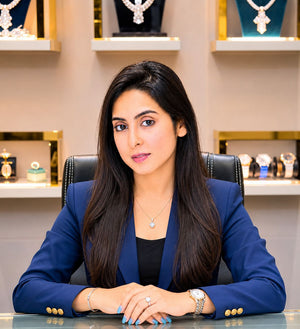
Aumsri Pradhan
Founder, Ivevar Luxury
Aumsri Pradhan is the founder of Ivevar Luxury, a Surat-based fine jewelry brand that designs and handcrafts lab grown diamond and moissanite jewelry in its own workshop. She leads the brand's design and customer experience, from engagement rings and bridal sets to custom pieces made to each client's story. Through the Ivevar blog, she shares practical guidance on lab grown diamonds, moissanite, diamond grading and ring design to help buyers choose with confidence.


