

 Engagement Rings
 Anniversary Rings
 Solitaire Rings
 Halo Rings
 Toi Moi Rings
 Three Stone Rings
 Nature Inspired Rings
 Rose Cut Rings
 Fancy Color Rings
 Antique Cut Rings
 Wedding Rings
 Wedding Band Rings
 Exclusive Lab Grown Diamond Rings
 All Lab Grown Diamond Ring
 Engagement Rings
 Three Stone Rings
 Fancy Color Rings
 Antique Cut Rings
 Daily Wear Rings
 Wedding Band Rings
 Exclusive Moissanite Rings
 Earrings
 Bracelet
 Pendant
 Necklace
 Men's Ring
 Bridal Sets
 Rings
 Earrings
 Tennis chain
 Cuban Chains
 Custom Pendant
 Custom Ring
 Custom Teeth Grillz
 Round
 Oval
 Cushion
 Marquise
 Pear
 Emerald
 Heart
 Princess
 Rose Cut
 Radiant
 Antique Cut
 Brooch
 Cufflink
 Keychain
 Unique Products
 +91-9265051773
 Virtual Appointment
 log in




Diamond Cuts Explained: Every Shape Ranked by Sparkle, Size & Price
by Aumsri Pradhan on Sep 29, 2026

Short answer: For sparkle, round brilliant leads, followed by radiant, cushion, oval and princess. For looking big, marquise, oval and pear lead. For value, fancy shapes usually cost less per carat than round. Emerald and Asscher step cuts trade sparkle for elegant, mirror-like flashes.
Choosing a diamond shape is one of the most personal decisions in buying a ring, but it also has practical effects. Shape changes how much a stone sparkles, how large it looks on the hand, how well it hides inclusions and tint, and how much you pay per carat.
This guide ranks every popular shape on those points, explains the difference between shape and cut, and covers the details that separate a beautiful stone from a disappointing one, such as bow-ties, length-to-width ratio and protecting fragile corners.
Every Shape at a Glance
| Shape | Sparkle | Looks big | Price per carat |
|---|---|---|---|
| Round | Highest | Average | Highest |
| Oval | High | Yes | Lower |
| Radiant | High | Fairly | Lower |
| Cushion | High | Less | Lower |
| Princess | High | Less | Lower |
| Pear / Marquise | High | Most | Lower |
| Emerald / Asscher | Calm flashes | Emerald fairly; Asscher less | Lower |
How to Choose
- Maximum sparkle: round or radiant.
- Biggest look: marquise, oval or pear.
- Elegant and understated: emerald or Asscher (choose higher clarity).
- Vintage feel: cushion.
- Modern and geometric: princess or radiant.
- Best value per carat: almost any fancy shape over round.
- Active lifestyle: round, oval or cushion, which have no sharp corners.
Start with the look you love, then use the sections below to fine-tune. A shape you are excited to wear every day is worth more than a small gain in sparkle or size. If you are torn between two shapes, compare them at the same carat weight in the same setting, since the setting can change how a shape reads on the hand.
Shape vs Cut: Not the Same Thing
People often use the two words as if they meant the same thing, but they describe different things. Shape is the outline you see from above: round, oval, pear and so on. Cut describes how well the stone's angles, proportions and polish handle light. Two ovals of the same weight can look very different if one is cut well and the other is too deep or too shallow. A well-cut stone returns light to your eye as brightness and sparkle; a poorly cut one leaks light out of the bottom and looks glassy or dark in the middle.
For round brilliants, major labs give a formal cut grade from Excellent down to Poor. Fancy shapes usually do not get one, so judge them by eye, by their proportions and by photos or video of the actual stone.
Brilliant, Step and Mixed Cuts
Beyond the outline, every shape is faceted in one of a few styles. The facet style controls the kind of sparkle you see.
- Brilliant cuts: Many triangular and kite-shaped facets radiating from the center. They break light into lots of bright, lively flashes. Round, oval, pear, marquise and heart shapes are usually brilliant cut.
- Step cuts: Long, rectangular facets arranged in rows like stairs. They create broad, mirror-like flashes and a calm, glassy look called the hall-of-mirrors effect. Emerald and Asscher are step cuts.
- Mixed cuts: A step-cut outline with brilliant-style faceting underneath. Radiant and many cushion and princess cuts combine the clean lines of a step cut with the sparkle of a brilliant.
| Facet style | Look | Hides inclusions |
|---|---|---|
| Brilliant | Lots of small, bright flashes | Well |
| Mixed | Crisp outline with strong sparkle | Well |
| Step | Broad, mirror-like flashes | Less; inclusions and tint show more easily |
Neither style is better. Brilliant and mixed cuts suit people who want maximum sparkle and some forgiveness on clarity, while step cuts suit people who love clean lines and are happy to choose a cleaner stone.
Every Shape, Ranked and Explained
Round brilliant
The benchmark for sparkle. Its symmetrical facets are designed to return as much light as possible, and it has the most established cut standards, so it is easy to compare stones. Because more rough is lost cutting a round, it costs the most per carat. It suits every setting style, from solitaires to halos. Best for: buyers who want classic sparkle and a shape that will never date.
Oval
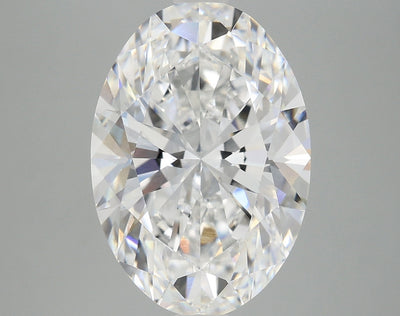
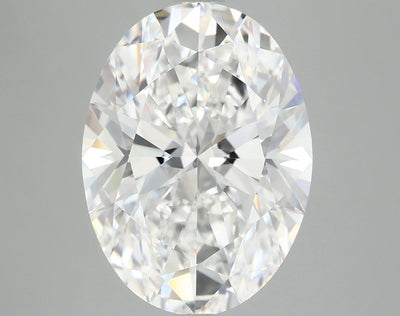
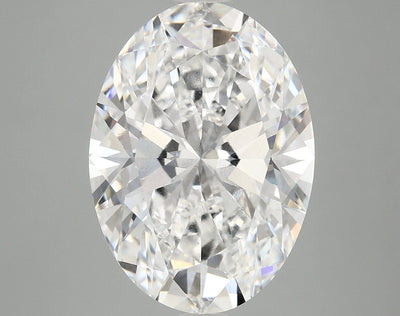
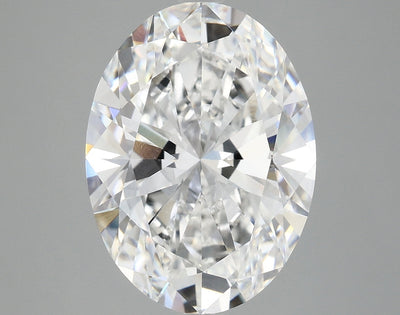
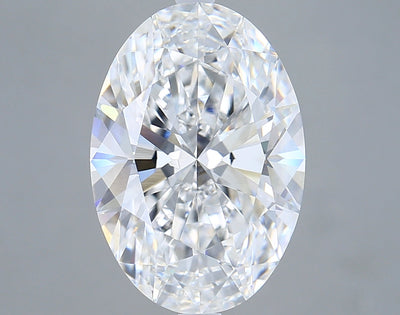
Brilliant sparkle in an elongated outline that looks larger than a round of the same weight and makes fingers look slimmer. Check for a bow-tie and choose a length-to-width ratio you like. It is a strong all-rounder for engagement rings and everyday wear. Browse examples in our lab diamond oval collection.
Radiant
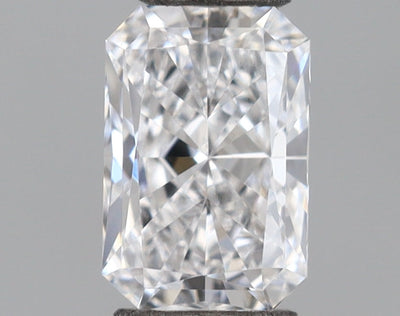
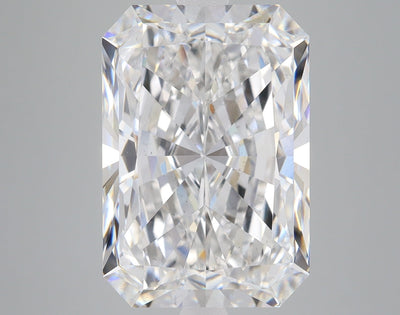
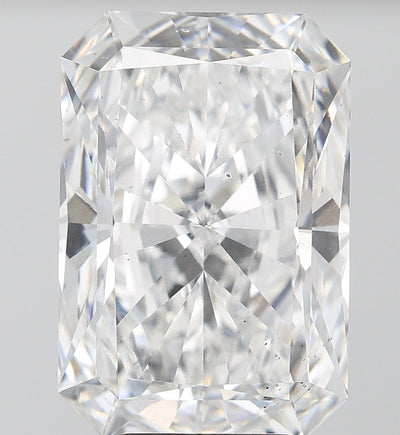
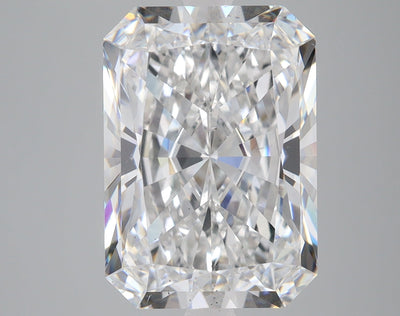
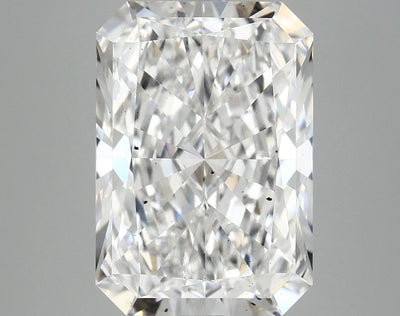
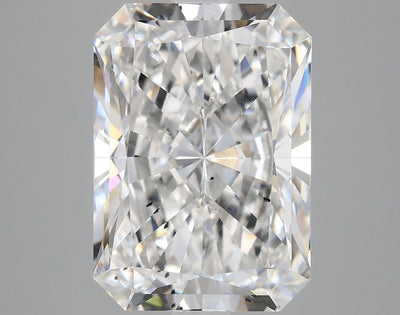
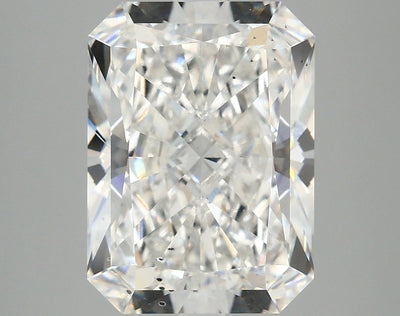
A rectangle or square with trimmed corners and brilliant-style faceting. It combines strong sparkle with a modern, structured look, and the trimmed corners are less fragile than a princess. It is a good pick for colored diamonds, since the faceting intensifies color. See our lab diamond radiant collection.
Cushion
A square or rectangle with rounded corners and soft, pillow-like sides. It has a romantic, vintage feel and good sparkle. Cushions tend to carry more weight in their depth, so they can look a little smaller face-up than other shapes of the same carat weight. Best for: vintage-inspired and halo designs, and anyone who wants sparkle without sharp corners.
Princess
A square with sharp, pointed corners and brilliant faceting. It sparkles well and uses rough efficiently, which helps its price. Its corners are its weak point, so protect them with prongs that cover each tip. Best for: modern solitaires and buyers who want a crisp square at a good price.
Pear
Rounded at one end and pointed at the other, the pear combines the sparkle of an oval with the drama of a marquise. It looks large for its weight. Check for a bow-tie and for even, symmetrical shoulders. Best for: a graceful, elongating look; it also works beautifully in pendants and drop earrings.
Marquise
A long, boat-shaped outline with points at both ends. It has the largest face-up area of any common shape for its carat weight. Both points need protection, and like other elongated shapes it can show a bow-tie. Best for: maximum size for the budget and a bold, vintage-meets-modern statement.
Emerald
A rectangular step cut with cut corners. Instead of busy sparkle, it shows long flashes of light and a clean, architectural look. Because its open facets show more inside the stone, choose a higher clarity grade. It suits buyers who prefer quiet elegance over flash. Explore shapes in our lab diamond emerald collection.
Asscher
A square step cut with deeply cut corners that give it an octagonal look and a striking concentric pattern from above. It looks smaller face-up than most shapes and, like the emerald, shows clarity and color more easily. Best for: Art Deco style and anyone drawn to geometric, symmetrical designs.
Heart
A brilliant-cut heart is a statement shape. It needs good symmetry to read clearly as a heart, and it looks best at larger sizes, where the outline is easy to see. Best for: pendants, anniversary pieces and romantic gifts.
Shape, Color and Clarity: What Shows and What Hides
Shape changes how visible color and inclusions are, which affects which grades you actually need to buy.
- Brilliant shapes hide more: Round, oval, cushion, radiant and pear break light into many small flashes, which makes small inclusions harder to see. An eye-clean VS2 or even SI1 often looks perfectly clean in these shapes.
- Step cuts show more: Emerald and Asscher cuts have large, open facets that act like windows into the stone. Inclusions and color are easier to spot, so VS1 or better and a near-colorless grade are safer choices.
- Elongated shapes show color at the tips: Ovals, pears and marquises can look slightly warmer at their ends, where the stone is deeper. Choosing one color grade higher helps if you want an icy white look.
- Metal changes the picture: Yellow and rose gold hide a hint of warmth in a diamond, while white gold makes any tint easier to notice.
Check for the Bow-Tie
Oval, pear and marquise shapes can show a dark band across the middle known as a bow-tie. A faint one is normal and adds contrast, but a strong, wide bow-tie makes the stone look dull. It is one of the most important things to check when choosing an elongated shape, and it only shows up when you look at the stone, not on a report.
Tip: Ask for a video of the stone rocking gently from side to side. A bow-tie that fades in and out as the stone moves is usually fine; a dark band that stays fixed in every position is the one to avoid.
Shop the styles in this guide








Length-to-Width Ratio
Elongated shapes are also described by their length-to-width ratio. A higher ratio gives a longer, slimmer stone that makes the finger look slender; a lower ratio looks fuller and closer to round. There is no right answer, only personal taste, so compare a few outlines before you decide.
To find the ratio, divide the stone's length by its width, both listed on most grading reports. A ratio of 1.00 is perfectly square or round. Square shapes such as princess and Asscher look best close to 1.00, while ovals, pears and marquises are chosen across a wider range depending on how long and slim you want the stone to look. If you are matching a band or a set of earrings, keep the ratios close so the stones look like a pair.
Lab Grown Diamonds Come in Every Shape
Lab grown diamonds are real diamonds, grown by CVD or HPHT and then cut and polished exactly like mined stones. Every shape in the table above is available in lab grown diamond, and the same rules on sparkle, size and value apply. Because a lab diamond costs less per carat, many buyers use the savings to step up in size or choose a shape they love rather than the one that fits a budget.
Lab grown diamonds are chemically, physically and optically the same as mined diamonds. Larger stones are commonly graded by IGI or GIA, and many of our lab diamonds come with IGI certificates that list shape, measurements and the 4Cs. When you compare lab diamonds of different shapes, use the report to check measurements and length-to-width ratio, then use photos or video to judge the bow-tie and overall brightness, which no report can show.
What about moissanite shapes?
Moissanite is a different gemstone, not a diamond, but it is cut in all the same shapes. With a refractive index of about 2.65 compared with diamond's 2.42, it shows more colorful, rainbow-like flashes, which is especially noticeable in brilliant shapes. At 9.25 on the Mohs scale it is very durable. Step cuts in moissanite look bright and lively rather than calm. Compare designs in our moissanite engagement rings.
Protecting Corners and Points
Diamond is the hardest gem, rated 10 on the Mohs scale, but hardness is not the same as toughness. A sharp blow on a thin point or corner can still chip it. Princess, pear and marquise shapes are safest with prongs or V-tips that cover their points, and a bezel setting protects the whole edge. Rounded shapes such as oval and cushion have no sharp corners, which makes them a little more forgiving for active hands.
- V-prongs: A V-shaped prong wraps each point of a pear or marquise and the corners of a princess, where chips are most likely.
- Bezel or half-bezel: A rim of metal around all or part of the stone protects the girdle and suits people who work with their hands.
- Six prongs: On round and oval stones, six prongs add security and keep the stone in place if one prong is damaged.
- Regular checks: Have prongs inspected from time to time and tightened if needed, especially on rings worn every day.
Matching Shape to Setting and Hand
- Shorter fingers: Elongated shapes such as oval, pear and marquise add the look of length.
- Longer or slender fingers: Fuller shapes such as round, cushion and Asscher balance the hand nicely.
- Halo settings: A halo makes any shape look larger and adds sparkle. It also helps step cuts feel more brilliant.
- Solitaires: A single stone lets the shape speak for itself. This suits clean outlines such as emerald and radiant.
- Three-stone rings: Mixing shapes, such as an oval center with pear side stones, adds interest. Keep the colors matched.
Before you decide, try photos of different shapes at the same scale on your own hand, or book a virtual appointment to see several stones side by side on camera.
What Drives the Final Price
Shape is only one factor. Carat weight, color, clarity and cut quality all affect the stone's price, and the setting and metal shape the cost of the finished ring. Ivevar pieces are made to order in 925 sterling silver or 10K to 18K gold. To compare shapes in real settings, browse our lab diamond solitaire rings and lab diamond halo rings, or check your finger size first with our ring size chart.
- Round costs more: More rough is lost when cutting a round, so you pay more per carat for the same weight.
- Step cuts need cleaner stones: Emerald and Asscher shapes often need higher clarity, which can offset their lower per-carat price.
- Elongated shapes stretch your budget: Ovals, pears and marquises look bigger for their weight, so a smaller carat can give the look you want.
Shop at Ivevar
Every Ivevar piece is handcrafted to order in our Surat workshop and ships worldwide with free shipping and 30-day easy returns. Start with the shape you love in our lab diamond engagement rings, or ask us about a custom design.


FAQ
Which diamond shape sparkles most?
Round brilliant. Radiant, cushion, oval and princess follow closely when they are well cut.
Which shape is best value?
Fancy shapes such as oval and cushion usually cost less per carat than round.
Which shape hides inclusions best?
Brilliant shapes like round, oval and radiant.
Is cut the same as shape?
No. Shape is the outline of the stone. Cut is how well its angles and proportions return light, and it has the biggest effect on sparkle.
Which diamond shape looks biggest?
Marquise, followed by oval and pear. Their elongated outlines spread the weight across a larger face-up area.
What is a bow-tie in a diamond?
A dark band across the center of an oval, pear or marquise, caused by light leaking out. A faint one is normal; a strong one makes the stone look dull.
Are fancy shapes graded for cut?
Usually not. Grading reports give round brilliants a cut grade, while fancy shapes are judged on polish, symmetry and how they look.
Which shapes are most likely to chip?
Shapes with sharp points or corners, such as princess, pear and marquise. Prongs or V-tips that cover the points help protect them.
Do lab grown diamonds come in all shapes?
Yes. Lab grown diamonds are cut exactly like mined diamonds, so every shape is available.


