

 Engagement Rings
 Anniversary Rings
 Solitaire Rings
 Halo Rings
 Toi Moi Rings
 Three Stone Rings
 Nature Inspired Rings
 Rose Cut Rings
 Fancy Color Rings
 Antique Cut Rings
 Wedding Rings
 Wedding Band Rings
 Exclusive Lab Grown Diamond Rings
 All Lab Grown Diamond Ring
 Engagement Rings
 Three Stone Rings
 Fancy Color Rings
 Antique Cut Rings
 Daily Wear Rings
 Wedding Band Rings
 Exclusive Moissanite Rings
 Earrings
 Bracelet
 Pendant
 Necklace
 Men's Ring
 Bridal Sets
 Rings
 Earrings
 Tennis chain
 Cuban Chains
 Custom Pendant
 Custom Ring
 Custom Teeth Grillz
 Round
 Oval
 Cushion
 Marquise
 Pear
 Emerald
 Heart
 Princess
 Rose Cut
 Radiant
 Antique Cut
 Brooch
 Cufflink
 Keychain
 Unique Products
 +91-9265051773
 Virtual Appointment
 log in




How to Spot Quality in Online Jewelry Listings: Red Flags Guide
by Aumsri Pradhan on Sep 29, 2026

Short answer: A quality online jewelry listing clearly states the metal and karat, the stone type (mined diamond, lab grown diamond or moissanite), the carat weight, the grades and who graded them, and shows real photos or video. Red flags are vague wording, missing specs, prices far below the market, no return policy and stock photos only.
Buying jewelry online can be a great experience. You get a wider choice, the chance to compare pieces calmly at home and, with the right seller, full documentation for every stone. The catch is that you cannot hold the ring in your hand before you pay, so the listing has to do the work a shop counter would normally do. This guide shows you how to read a listing like a jeweler: what should be there, what should worry you, and the questions to ask before you buy.
What a Good Listing Includes
A trustworthy listing answers the obvious questions before you have to ask them. If you find yourself guessing about any of the points below, treat that as a reason to message the seller before you add the piece to your cart.
- Metal and karat: such as 14K yellow gold or 925 sterling silver, not just "gold" or "silver tone".
- Stone type: stated clearly as natural diamond, lab grown diamond, moissanite or a named gemstone.
- Carat weight: the center stone weight and the total carat weight (TCW) listed separately.
- Grades and grading lab: color and clarity grades, and the name of the lab that graded the stone, such as IGI or GIA.
- Real media: photos or a 360° video of the actual item or the exact design, not only a computer render.
- Policies: clear return, shipping and warranty information on the page or one click away.
- Measurements: band width, stone dimensions in millimetres and the available ring sizes.
The table below shows how the same detail can be written well or badly. The vague version is not always dishonest, but it leaves you unable to compare the piece with anything else.
| Detail | Clear listing | Vague listing |
|---|---|---|
| Stone | 1.50 ct lab grown diamond, oval | "Brilliant stone", "diamond look" |
| Weight | Center 1.50 ct, TCW 1.80 ct | "Up to 2 ct" or TCW only |
| Grades | F color, VS1 clarity, IGI report | "Top quality", "certified" |
| Metal | 14K white gold, stamped 14K | "Gold finish", "white metal" |
| Returns | Stated window and conditions | "All sales final" or nothing at all |
Red Flags
One red flag does not always mean a scam. A small seller might simply have a thin product page. Several red flags together, though, mean you should either get clear answers in writing or walk away.
- Unclear stone type: "diamond-like" or "simulated" with no clear statement of what the stone actually is.
- TCW only: a total carat weight with no center stone weight, which can make a ring of many tiny stones sound like one large diamond.
- Unnamed certificate: "certified" without naming the lab or giving a report number you can check.
- Impossible price: a price far below similar items with the same specifications.
- No returns: no return policy, or one so restrictive it is effectively "all sales final".
- Stock images only: the same photos used across many unrelated listings, or renders with no real photo anywhere.
- Pressure tactics: countdown timers that reset, "only 1 left" on every item, or a seller who pushes you to pay outside the website.
- Silence: no way to contact the seller, or questions that go unanswered before you buy.
Tip: Send the seller one specific question before you order, such as "What is the center stone weight and the report number?" How quickly and clearly they answer tells you a lot about how they will handle a problem after the sale.
Reading the Stone Description
The words a seller uses tell you a lot. "Lab grown diamond" or "lab created diamond" means a real diamond, grown by CVD or HPHT, with the same hardness of 10 on the Mohs scale and the same chemistry as a mined one. "Moissanite" is a different gemstone, silicon carbide, rated 9.25 on the Mohs scale. Both are honest descriptions. Be wary of terms like "simulated diamond," "diamond alternative" or "CZ diamond," which usually describe cubic zirconia or glass, and of any listing that puts the word diamond next to moissanite in a way that blurs the two. Our moissanite vs lab grown diamond vs diamond guide explains the differences in detail.
| Term in the listing | What it usually means |
|---|---|
| Lab grown / lab created diamond | A real diamond made by CVD or HPHT; same chemistry and hardness as mined |
| Natural / mined diamond | A diamond formed in the earth |
| Moissanite | Silicon carbide, a separate gemstone with more fire than diamond |
| Simulated / simulant / "diamond look" | An imitation, often cubic zirconia or glass |
| "Moissanite diamond" | Confusing wording; moissanite is not a diamond, so ask which stone it is |
Moissanite and diamond also look slightly different in person. Moissanite has a refractive index of about 2.65 compared with about 2.42 for diamond, which gives it stronger rainbow flashes, especially in sunlight. Neither is better in absolute terms; it comes down to the look you prefer and your budget. What matters is that the listing tells you which one you are buying.
Checking the Metal
A good listing names both the metal and its purity. For gold, look for a karat number: 10K, 14K and 18K are solid gold alloys with different gold content, while "gold tone," "gold plated" or "gold filled" mean a thin layer of gold over another metal. For silver, 925 or sterling silver is the standard for fine jewelry. Solid pieces are usually stamped inside the band or on the clasp, so ask for a close photo of the stamp if it is not shown. Every Ivevar piece is made to order in 925 sterling silver or 10K to 18K gold.
- 10K gold: the hardest-wearing of the three and a good fit for everyday rings, with a slightly paler color.
- 14K gold: a popular balance of rich color and durability for engagement rings and bands.
- 18K gold: a higher gold content with a deeper yellow tone; a little softer, so it shows wear sooner.
- White gold: gold alloyed with white metals and usually rhodium plated for a bright finish that may need re-plating over the years.
If a listing says only "gold ring" with no karat and no stamp, assume it is plated until the seller confirms otherwise.
Understanding Certificates and Grading Reports
For a diamond of meaningful size, a grading report from an independent lab is the single most useful document you can get. It records the shape, measurements, carat weight, color grade, clarity grade and, for round brilliants, the cut grade. IGI and GIA both grade lab grown diamonds, and a lab grown report will state clearly that the stone is laboratory grown, often with an inscription on the girdle.
- Find the report number: it should be shown in the listing or available from the seller on request.
- Check it on the lab's own website: the details online must match the listing exactly, including the measurements.
- Compare the weight: make sure the report weight matches the center stone weight in the listing, not the total weight.
- Look at the date and type: confirm the report says lab grown or natural as the listing claims.
Moissanite is not graded on the diamond scale by the major labs, so a moissanite listing should describe the color range and quality rather than claim a diamond certificate. Many Ivevar lab grown diamonds come with IGI certificates, and you can browse our lab grown diamonds to see how report details are shown.
Photos and Video That Tell the Truth
- Several angles: top, side and back views show the setting, the prongs and how high the stone sits.
- Natural light: photos taken only under strong studio lights can hide a yellow tint or a dull stone.
- On the hand: a photo on a real hand shows true size better than a close-up ever can.
- Video in motion: a short clip of the piece turning shows its sparkle, and any dull or dark areas, far better than a still photo.
Be aware that macro photos magnify everything. A tiny inclusion that is invisible on the hand can look large in a close-up, and a slightly tinted stone can look bright white against a blue studio background. Judge a stone by a mix of close-ups and normal-distance shots, and ask for a daylight video if the listing only has polished studio images.
Price Signals: When a Deal Is Too Good
Price is one of the clearest signals in any listing, but only when you compare like with like. A lab grown diamond costs much less than a mined diamond of the same size and grade, and moissanite usually costs less again, so a low price is not suspicious in itself. What is suspicious is a price far below other listings with the same stone type, weight, grades and metal.
- Same specs, half the price: ask what is different. Often the answer is plated metal, a lower grade, or a much smaller center stone.
- "Was" prices that never existed: a permanent sale from an inflated reference price tells you nothing about value.
- Extra fees at checkout: shipping, duties or "certificate fees" that appear only at the last step change the real cost.
A fair way to sense-check a price is to find three or four listings with matching specifications from different sellers and see where the piece sits. If it is a little cheaper, that may simply reflect lower overheads or a different setting style. If it is dramatically cheaper than every comparable listing, the seller should be able to explain why in plain words. If they cannot, assume the description is wrong somewhere and keep looking.
Shopping from overseas? Check whether the seller ships to your country, who pays any import duties, and which currency you will be charged in. Ivevar is based in India, shows prices in INR and ships worldwide with free shipping.
Shop the styles in this guide
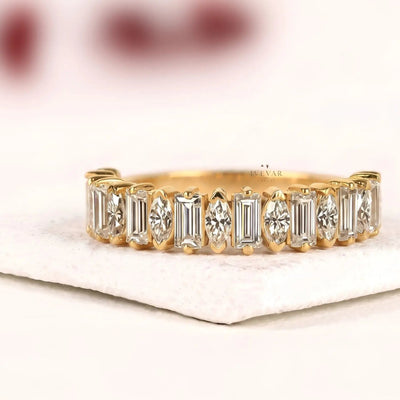
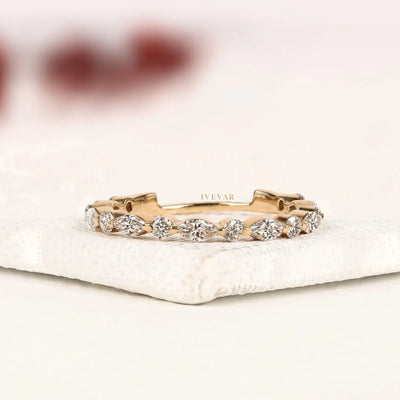
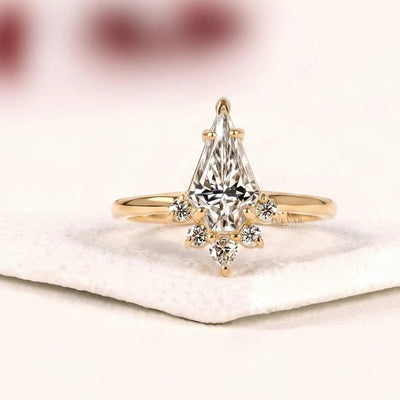
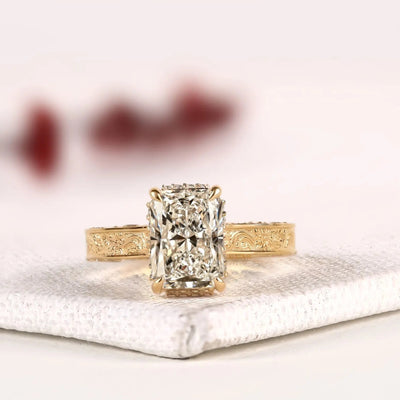
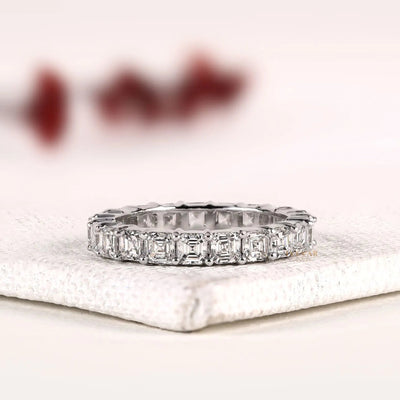
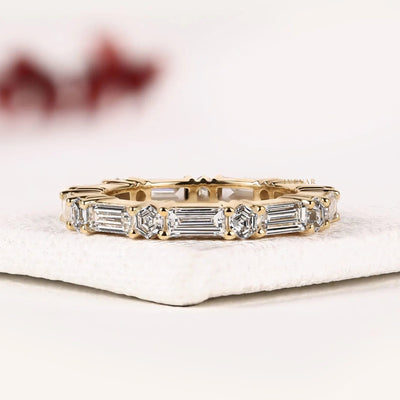
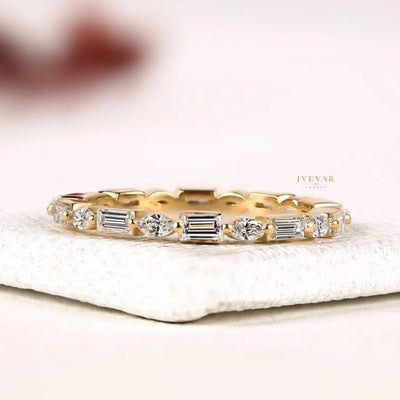
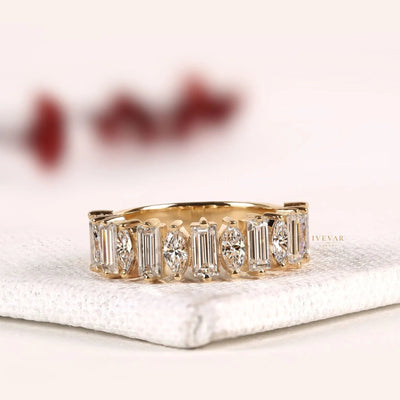
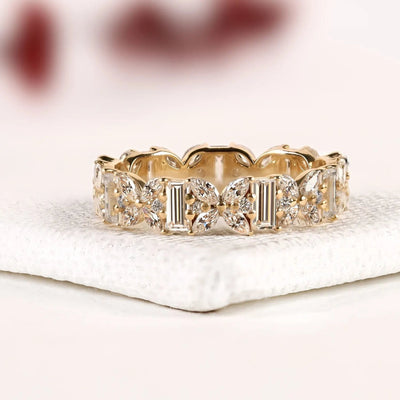

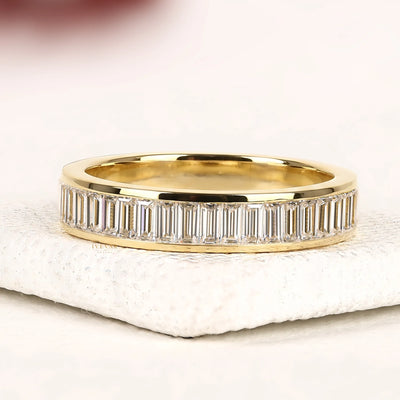
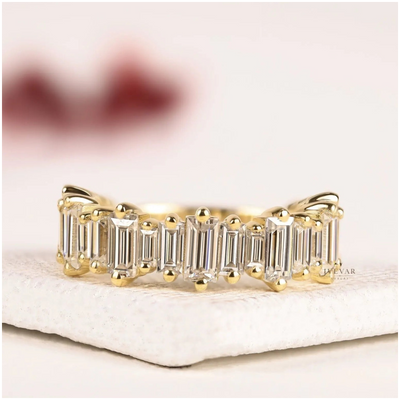
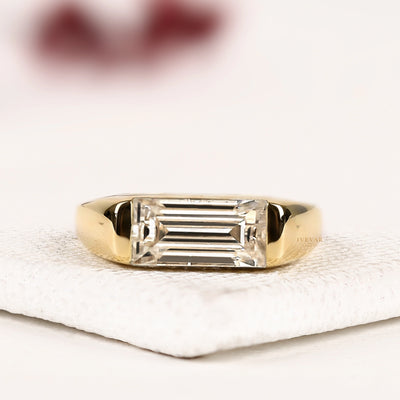


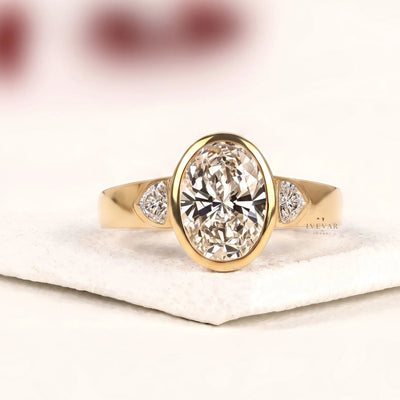
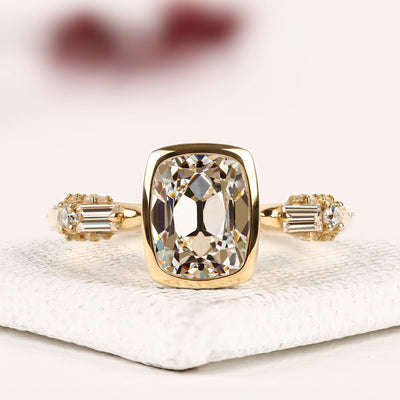
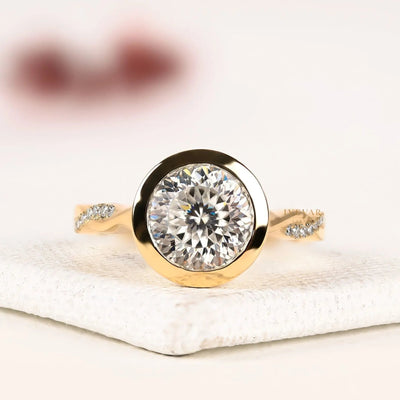
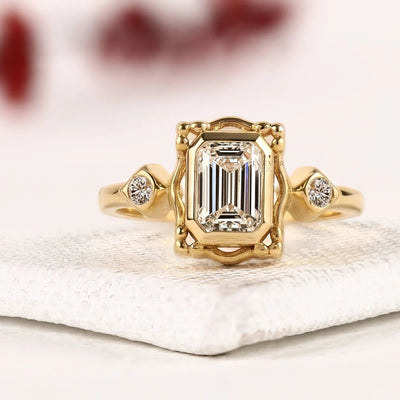
Comparing Listings Fairly
When two pieces look alike but are described differently, line up the details side by side: stone type, center stone weight, color and clarity grades, metal and karat, and the style of setting. Differences in any of these explain most gaps in cost. A larger total weight made of many small stones usually costs less than the same weight in a single center stone, and 18K gold costs more than 10K for the same design. Browse our lab diamond engagement rings and moissanite engagement rings to see how listings with full specifications look.
A simple notes file or spreadsheet helps here. Write one row per ring with the same columns each time, and gaps in the information jump out straight away. If one listing cannot fill a column, that is a question to ask the seller.
Seller Policies: Returns, Shipping and Support
The policies around a listing matter as much as the specs. Good sellers make them easy to find and easy to understand.
- Return window: look for a clear number of days and the condition the item must be in. Ivevar offers 30-day easy returns; pierced earrings are returnable only if faulty, for hygiene reasons.
- Made-to-order terms: custom or engraved pieces sometimes have different terms, so check before you personalize.
- Shipping and insurance: fine jewelry should ship tracked and insured, with a signature on delivery where possible.
- Warranty: find out what is covered, such as manufacturing faults, and what is not, such as accidental damage.
- Real contact options: email, chat or a video call. Ivevar offers virtual appointments so you can see pieces live before deciding.
Check the Size Before You Order
Size questions are a common reason an online ring disappoints. Look for a clear size guide on the listing, and measure before you order with our ring size chart.
Measure at the end of the day when fingers are slightly larger, and avoid measuring when your hands are very cold. A wide band usually needs a slightly larger size than a thin one. If you are buying as a surprise, borrow a ring your partner already wears on the right finger and measure its inside diameter rather than guessing.
Before You Buy
Run through this short checklist before you pay for any piece of fine jewelry online.
- Verify the report: ask the seller for a report number and verify it on the lab's website.
- See it move: ask for a video in daylight, ideally on a hand.
- Read the policy: read the return policy, including any exceptions for custom work.
- Confirm the metal: check the karat and ask for a photo of the stamp if it is not shown.
- Check the total cost: make sure shipping, duties and any extras are clear before checkout.
- Keep records: save screenshots of the listing and your messages so you can refer to them later.
Tip: When the piece arrives, check it against your screenshots straight away: the stamp, the stone shape, the size and the report number. If anything differs, contact the seller within the return window.
Shop with Confidence at Ivevar
At Ivevar we write our listings the way we would want to read them: stone type, weights, grades, metal and karat all stated, with IGI certificates on many lab grown diamonds, free worldwide shipping and 30-day easy returns. Start with our lab grown engagement rings, compare them with moissanite rings, or book a virtual appointment to see a piece live and ask about custom jewelry.
Shop IGI Certified Lab Diamonds at Ivevar


FAQ
How do I verify a diamond certificate?
Enter the report number on the lab's official website and check that every detail, including the measurements and weight, matches the listing.
What does TCW mean?
Total carat weight of all stones in the piece. Always look for the center stone weight as well, because a high TCW can be made up of many small stones.
Are stock photos a problem?
For one-of-a-kind stones, ask for real photos or video. For made-to-order designs, photos of the same design are normal, but the stone details should still be stated clearly.
Is "lab grown diamond" the same as "simulated diamond"?
No. A lab grown diamond is a real diamond. A simulated diamond only imitates the look of one, usually with cubic zirconia or glass.
Is moissanite a type of diamond?
No. Moissanite is silicon carbide, a separate gemstone with a hardness of 9.25 and more colorful sparkle. A listing that calls it a "moissanite" is using confusing wording.
How can I tell if gold is solid or plated from a listing?
Look for a karat number such as 10K, 14K or 18K and a stamp inside the band. Words like "gold tone", "gold plated" or "gold filled" mean a thin gold layer over another metal.
What should I do if the piece does not match the listing?
Compare it with your saved screenshots, then contact the seller within the return window with photos of the differences. A good seller will offer a fix or a return.
Is it safe to pay outside the website?
It is safer to pay through the store's own checkout. Requests to pay by direct transfer to avoid fees remove the protections a normal checkout gives you.


