

 Engagement Rings
 Anniversary Rings
 Solitaire Rings
 Halo Rings
 Toi Moi Rings
 Three Stone Rings
 Nature Inspired Rings
 Rose Cut Rings
 Fancy Color Rings
 Antique Cut Rings
 Wedding Rings
 Wedding Band Rings
 Exclusive Lab Grown Diamond Rings
 All Lab Grown Diamond Ring
 Engagement Rings
 Three Stone Rings
 Fancy Color Rings
 Antique Cut Rings
 Daily Wear Rings
 Wedding Band Rings
 Exclusive Moissanite Rings
 Earrings
 Bracelet
 Pendant
 Necklace
 Men's Ring
 Bridal Sets
 Rings
 Earrings
 Tennis chain
 Cuban Chains
 Custom Pendant
 Custom Ring
 Custom Teeth Grillz
 Round
 Oval
 Cushion
 Marquise
 Pear
 Emerald
 Heart
 Princess
 Rose Cut
 Radiant
 Antique Cut
 Brooch
 Cufflink
 Keychain
 Unique Products
 +91-9265051773
 Virtual Appointment
 log in




What Does "D VVS" Mean? Decoding Diamond Specs on Product Pages
by Aumsri Pradhan on Sep 29, 2026

Short answer: "D VVS" describes a diamond with D color, the highest color grade (completely colorless), and VVS clarity (very, very slightly included), meaning any marks are extremely hard to see even at 10x magnification. It is a top-tier combination, though G–H color and VS clarity look the same to most eyes for less money.
Diamond product pages are full of short codes: D VVS1, 1.5 CTW, IGI, CVD, EX/EX/EX. To someone shopping for the first time, a listing can look more like a part number than a description of something beautiful. Yet each of those letters tells you something specific about how the diamond looks and what it is worth.
This guide decodes the specs you are most likely to see, starting with "D VVS", and then explains the full color and clarity scales, the role of cut, how to read carat weights properly, and which combinations give you the best value. It applies to lab grown and mined diamonds alike, because both are graded on the same scales.
Decoding Common Product Specs
Here are the terms that appear most often on diamond listings and grading reports:
| Term | Meaning |
|---|---|
| D, E, F | Colorless |
| G, H, I, J | Near colorless |
| VVS1 / VVS2 | Very, very slightly included |
| VS1 / VS2 | Very slightly included, usually eye-clean |
| SI1 / SI2 | Slightly included |
| Ct / TCW / CTW | Carat / total carat weight of all stones |
| EX / VG | Excellent / Very Good (cut, polish or symmetry) |
| IGI / GIA | The lab that graded the diamond |
| CVD / HPHT | Growth method of a lab grown diamond |
Most listings combine several of these into one line. "1.00 ct, D VVS2, EX cut, IGI, CVD" means a one-carat diamond with D color, VVS2 clarity and an Excellent cut grade, graded by IGI and grown by the CVD method.
What "D VVS" Means, Letter by Letter
The "D": top color
D is the very first grade on the diamond color scale. It means the diamond shows no detectable body color when graded face down against a white background by a trained grader under controlled lighting. In everyday terms, it is as icy white as a diamond gets.
The "VVS": very, very slightly included
Almost every diamond, lab grown or mined, has tiny internal features or surface marks. VVS means these are so small that even a skilled grader finds them very hard to see at 10x magnification. VVS1 is slightly better than VVS2, with features that are even harder to locate. To the naked eye, both look perfectly clean.
Why it is a premium combination
D color and VVS clarity are both near the top of their scales, so a D VVS diamond is rare among mined stones and sits at the top of the range for lab grown stones too. It suits buyers who want the highest specifications on paper. It does not, on its own, guarantee the most sparkle; that depends on the cut.
The Full Color Scale
Diamond color is graded on a letter scale that runs from D to Z. D is completely colorless. As the letters move down the alphabet, a faint yellow or brown tint becomes easier to see.
| Grades | Category | What you see |
|---|---|---|
| D, E, F | Colorless | Icy white; differences visible only to trained graders side by side |
| G, H | Near colorless | Faces up white in most settings |
| I, J | Near colorless | Slight warmth may show in larger stones or white metal |
| K to M | Faint | Visible warm tint |
| N to Z | Very light to light | Clearly yellow or brown tint |
Grades past J start to show warmth in most settings. Many buyers find the sweet spot in the G to H range, where the stone faces up white but costs less than the top grades. Yellow gold settings can also hide a slight tint, so a near-colorless stone often looks whiter in yellow gold than you might expect. In white gold, a G or higher keeps the look crisp.
Shape plays a part as well. Elongated and pointed shapes, such as oval, pear, marquise and radiant, can show a little more color at their ends than a round stone of the same grade. If you love one of those shapes and want an icy look in white gold, choosing one grade higher than you would for a round is a sensible step.
Note that this scale is for white diamonds. Fancy colored diamonds, such as pink, blue or vivid yellow stones, are graded on a separate system that describes the strength of their color.
The Full Clarity Scale
Clarity describes tiny internal features, called inclusions, and surface marks, called blemishes. From best to lowest, the grades are:
- FL and IF: flawless and internally flawless, with nothing visible at 10x magnification (IF may show only minor surface blemishes).
- VVS1 and VVS2: inclusions that are very hard to find even under magnification.
- VS1 and VS2: minor inclusions seen under magnification, usually invisible to the eye.
- SI1 and SI2: inclusions that are easy to see under magnification and sometimes visible to the eye.
- I1 to I3: inclusions that are visible and may affect sparkle or durability.
The key phrase for shoppers is "eye-clean": a diamond with no inclusions you can see without magnification at a normal viewing distance. Most VS stones are eye-clean, and many SI1 stones are too, especially in brilliant shapes like round and oval that hide small features well. Step cuts such as emerald and Asscher have large, open facets, so they show inclusions more easily; a VS grade or higher is a safer choice for those shapes.
Tip: If you are comparing two diamonds with the same grade, look at where the inclusion sits on the plot in the grading report. A small feature near the edge, where a prong may cover it, is less noticeable than one under the center of the table.
Don't Forget Cut
Color and clarity get the attention, but cut has the biggest effect on how a diamond sparkles. A well-cut stone returns light to your eye as brightness and fire. A poorly cut stone can look dull even with top color and clarity.
For round diamonds, look for a cut grade of Excellent or Ideal on the grading report. For fancy shapes, such as oval, pear or radiant, labs often do not give an overall cut grade, so check the proportions and look at photos or video. A good fancy shape should show even sparkle across the stone, without a large dark area in the middle.
A practical rule: if you need to trade down on something to stay in budget, trade color or clarity, not cut. An Excellent cut G VS diamond will usually look more lively than a poorly cut D VVS stone.
Watch the Word "TCW"
"2 TCW" on a ring means all its diamonds together weigh 2 carats, not the center stone alone. Check the center stone weight separately.
This matters because a single 2-carat center stone and a ring with a 1-carat center plus a halo and pavé band adding up to 2 carats are very different things, in both look and price. Good listings show both numbers, for example "1.00 ct center, 1.50 TCW". If only TCW is given, ask for the center stone weight.
Also remember that carat is a measure of weight, not size. Two diamonds of the same carat weight can look different in size depending on their shape and how deeply they are cut. That is why the measurements in millimeters are worth checking.
Other Specs You May See
- Polish and symmetry: how smooth the facets are and how evenly they line up. Excellent or Very Good is ideal.
- Fluorescence: a glow some diamonds show under UV light. None or faint is common, and it rarely affects how a stone looks in daylight.
- Measurements: the length, width and depth in millimeters, which show how big the stone looks from the top.
- Table and depth percentages: proportions that affect how the diamond handles light.
- Girdle and culet: the thin outer edge and the bottom point of the stone. A very thin girdle can be more prone to chipping.
- Treatment: some lab grown diamonds are treated after growth to improve color. Reports note this.
- Laser inscription: a tiny report number engraved on the girdle, so the stone can be matched to its certificate.
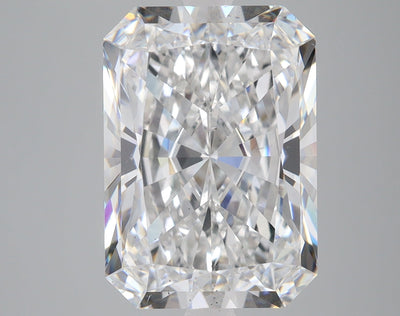
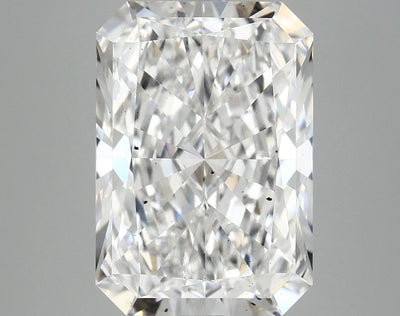
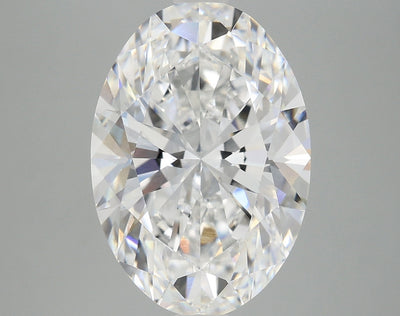
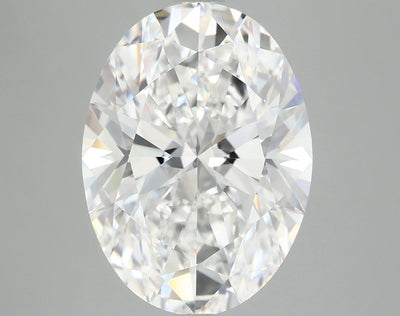
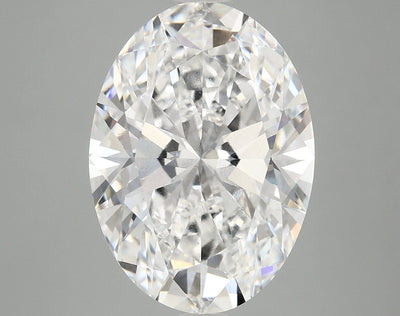
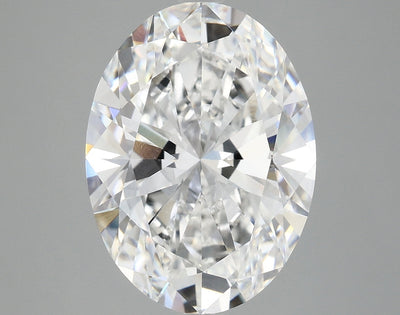
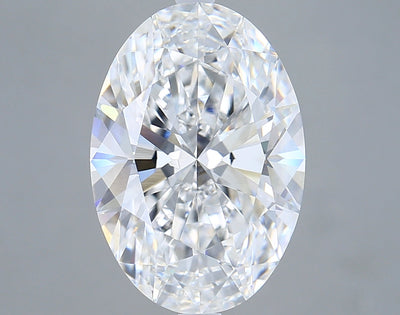
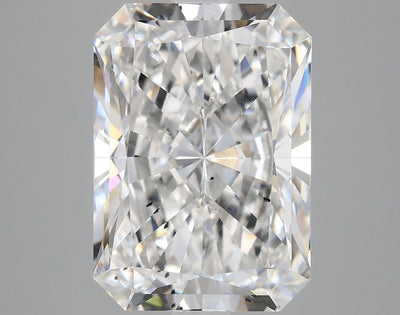
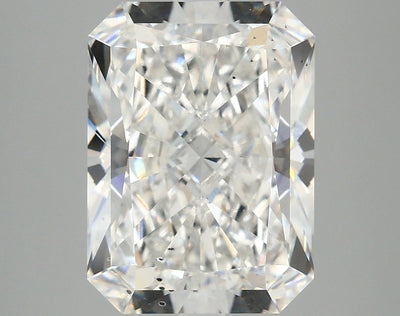
Shop the styles in this guide








Lab Grown Specs: CVD, HPHT and Grading Reports
Lab grown diamonds are real diamonds. They have the same chemical makeup, crystal structure, hardness of 10 on the Mohs scale and optical properties as mined diamonds, and they are graded with the same color, clarity, cut and carat system. A lab grown D VVS diamond is D VVS by exactly the same standard.
- CVD (chemical vapor deposition): diamond is built up layer by layer from a carbon-rich gas.
- HPHT (high pressure, high temperature): carbon is turned into diamond under conditions that recreate those deep in the earth.
Both methods produce real diamonds. The growth method does not make one better than the other; the grades on the report tell you about quality. IGI and GIA both grade lab grown diamonds, and the report will state clearly that the stone is laboratory grown. At Ivevar, many of our lab grown diamonds come with IGI certificates.
How to Read a Listing in Five Steps
When you open a diamond product page, work through the specs in this order. It keeps the most important details in front of you and stops the impressive-sounding letters from distracting you.
- Confirm what the stone is: lab grown diamond, mined diamond or moissanite. This should be stated clearly in the title or description.
- Check the center stone weight: look for the carat weight of the main stone, separate from any total carat weight for the whole piece.
- Look at the cut: for a round, look for Excellent or Ideal; for other shapes, look at photos, video and proportions.
- Read color and clarity together: decide whether the combination will look white and eye-clean in your chosen metal.
- Check the report: note the lab (such as IGI or GIA) and the report number, and make sure the details on the report match the listing.
Measurements, polish, symmetry and fluorescence come after these, as fine-tuning between stones that already pass the first five checks.
Common Spec Mistakes to Avoid
- Paying for grades you cannot see: moving from F to D, or from VS1 to VVS1, costs more but rarely changes how a ring looks on the hand.
- Ignoring cut: a stone with top color and clarity but weak proportions can look glassy and dull.
- Reading TCW as the center stone: always check the weight of the main stone on its own.
- Comparing carat without measurements: a deep stone can weigh more but look smaller from the top than a well-proportioned one.
- Trusting grades without a report: "D VVS" in a title is a claim; a grading report from a recognized lab is the evidence.
- Treating moissanite grades like diamond reports: they describe the look of the stone, but they are not the same grading system.
Tip: Match the metal to the color grade. In white gold, G or above keeps the stone crisp. In yellow or rose gold, an H, I or even J can look just as white once set, which frees up budget for a larger or better-cut stone.
How Specs Affect Price
Each step up in color or clarity raises the price, and the jump is biggest at the top grades. Carat weight also matters, especially at popular sizes like one carat. Choosing a slightly lower color or clarity that still looks the same to the eye is the easiest way to put more of your budget into size or cut.
| Combination | Who it suits | Trade-off |
|---|---|---|
| D–F, VVS | Buyers who want top specs on paper | Highest cost per carat |
| G–H, VS | Most buyers; white and eye-clean | Looks the same as top grades to most eyes |
| G–H, SI1 (eye-clean) | Budget-focused buyers who want size | Check photos to confirm it is eye-clean |
| I–J, VS in yellow gold | Warm metal lovers | Slight warmth is hidden by the setting |
See how these grades look in our lab diamond solitaire rings and lab diamond engagement rings.
Do These Grades Apply to Moissanite?
Moissanite is often described with diamond-style color and clarity terms, but it is a different gem, not a type of diamond. It rates 9.25 on the Mohs scale compared with 10 for diamond, and it has a higher refractive index, about 2.65 compared with about 2.42 for diamond, which gives it more colorful fire.
When a moissanite listing says "D color VVS", treat it as the seller's description of a colorless, very clean stone rather than a diamond grading report. Ask what document comes with it. Read our moissanite vs lab grown diamond vs diamond guide to compare, or browse moissanite to see the look for yourself.
IGI Certified Lab Diamonds at Ivevar


Want to see these specs in real stones? At Ivevar, you can choose lab grown diamonds with IGI certificates on many stones, or moissanite, set in 10K, 14K or 18K gold, with free shipping worldwide and 30-day easy returns. Book a virtual appointment if you would like help comparing grades side by side.
Frequently Asked Questions
Is D VVS the best diamond?
It is near the top of the color and clarity scales. Only FL and IF rank higher for clarity. Cut quality still matters most for sparkle.
Is D VVS worth the price?
Only if you want the very top grades. G–H VS looks the same to most people and leaves more budget for size or cut.
What does IGI mean on a listing?
The diamond was graded by the International Gemological Institute, which issues reports for lab grown and mined diamonds.
Is a lab grown D VVS diamond a real diamond?
Yes. Lab grown diamonds have the same chemical makeup and crystal structure as mined diamonds, and they are graded on the same color and clarity scales.
What is the difference between VVS1 and VVS2?
VVS1 inclusions are even harder to find under magnification than VVS2 inclusions. Without magnification, the two look the same.
Can you see the difference between D and G color?
Side by side under controlled light, a trained eye may notice it. Once set in a ring and worn, most people cannot tell them apart.
Does CVD or HPHT affect quality?
No. Both produce real diamonds. Judge a stone by its grades and report, not its growth method.
What does "eye-clean" mean?
That no inclusions are visible without magnification at a normal viewing distance. Most VS diamonds are eye-clean.
Does a higher clarity grade make a diamond stronger?
Not in everyday wear. Clarity mainly describes appearance. Very large inclusions in the lowest grades can affect durability, but VS and VVS stones are equally suited to daily wear.
Should I choose D VVS for a small stone?
In small stones, color and clarity differences are even harder to see, so a near-colorless, eye-clean grade usually gives the same look for less.


