Engagement Rings
 Anniversary Rings
 Solitaire Rings
 Halo Rings
 Toi Moi Rings
 Three Stone Rings
 Nature Inspired Rings
 Rose Cut Rings
 Fancy Color Rings
 Antique Cut Rings
 Wedding Rings
 Wedding Band Rings
 Exclusive Lab Grown Diamond Rings
 All Lab Grown Diamond Ring
 Engagement Rings
 Three Stone Rings
 Fancy Color Rings
 Antique Cut Rings
 Daily Wear Rings
 Wedding Band Rings
 Exclusive Moissanite Rings
 Earrings
 Bracelet
 Pendant
 Necklace
 Men's Ring
 Bridal Sets
 Rings
Rings
 Earrings
 Tennis chain
 Cuban Chains
 Custom Pendant
 Custom Ring
 Custom Teeth Grillz
 Round
Round
 Oval
Oval
 Cushion
 Marquise
 Pear
Pear
 Emerald
 Heart
Heart
 Princess
 Rose Cut
 Radiant
 Antique Cut
 Brooch
 Cufflink
 Keychain
 Unique Products
 +91 9265051773
 Virtual Appointment
 log in



$5,000 Engagement Ring: What You Can Actually Get in 2026
by Ankit Koshiya on Sep 29, 2026

Short answer: $5,000 buys a spectacular engagement ring in 2026. With a lab grown diamond, expect a 1.5 to 2-carat stone with excellent cut in the setting of your choice — solitaire, halo, pavé or bezel — in 14k or 18k gold. With a natural diamond, $5,000 buys roughly a 0.7 to 1-carat stone. Either way, this budget sits right at the national average and delivers a ring with serious presence.
- ✓ $5,000 ≈ the US average — you are shopping in the market's sweet spot.
- ✓ Lab grown: 1.5–2 carats — excellent cut, G–I color, eye-clean clarity.
- ✓ Natural: 0.7–1 carat — prioritize cut; accept near-colorless grades.
- ✓ Any setting works — halo, pavé, bezel, three-stone all fit this budget.
- ✓ 14k vs 18k gold — both fit; 18k buys richer color, 14k buys durability.
Why $5,000 Is the Sweet Spot
Five thousand dollars lands just above the 2026 national average engagement ring spend of roughly $4,600, which puts you in the most competitive, best-value segment of the market. Jewelers fight hardest for buyers in this range, so selection is enormous and pricing is sharp. You are past the compromises of entry-level budgets — no settling for a stone you have to squint at — but you have not entered the diminishing returns of luxury tiers, where each extra thousand buys less and less visible difference.
The single biggest decision at $5,000 is lab grown versus natural, because it roughly doubles or halves your center stone. There is no wrong answer — it is a values choice about origin, not a quality choice — but you must make it first, because every other decision (size, setting budget, metal) flows from it.
The Lab Grown Route: 1.5 to 2 Carats of Presence
With lab grown, $5,000 is a generous budget. The stone itself — a 1.5-carat lab grown diamond with Excellent cut, G–H color, VS2 clarity and an IGI report — typically costs well under $1,500 in 2026, leaving $3,500+ for a truly beautiful setting. Push to 2 carats and you are still comfortably inside budget with a fine mounting. At these sizes, cut quality is everything: a superbly cut 1.5-carat stone will out-sparkle a mediocre 2-carat one, so never trade cut for weight.
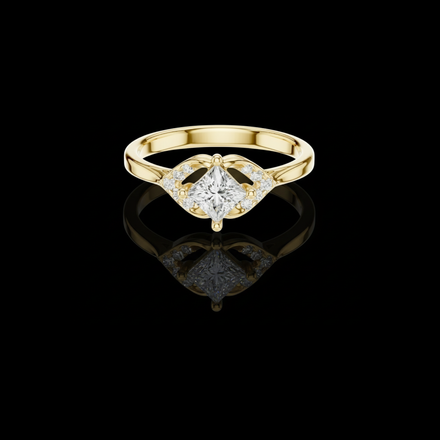
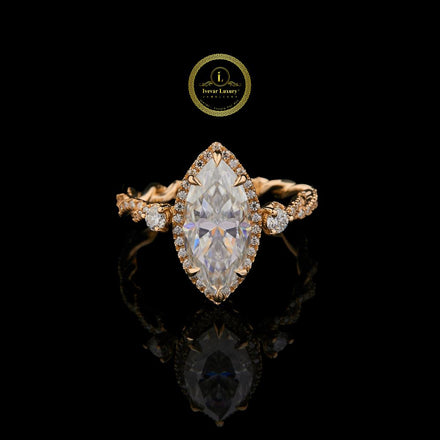
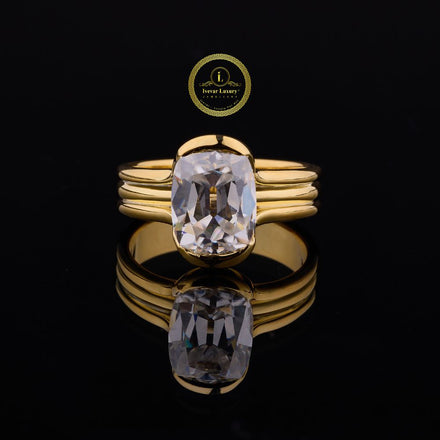
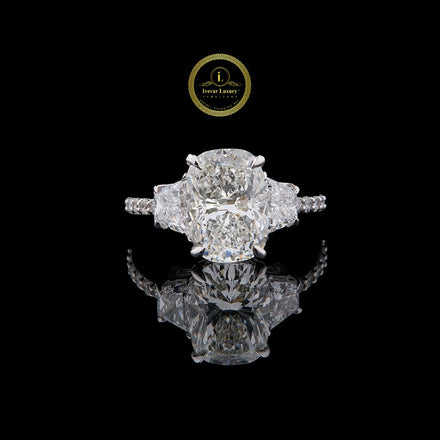
This budget also unlocks setting artistry. Consider a hidden halo — the 2026 insider favorite that adds side-profile sparkle while keeping a clean solitaire face — or a hand-engraved vintage-style band, a bezel in 18k yellow gold, or a three-stone design with tapered baguette sides. These are the details that make a ring look custom rather than catalog, and $5,000 is exactly where they become affordable.

The Natural Diamond Route: 0.7 to 1 Carat Done Right
With a natural diamond, $5,000 buys roughly a 0.7 to 1-carat stone once you reserve $1,000–$1,500 for the setting. The playbook here is strict: Excellent cut first, then the largest carat you can get in G–J color and SI1–SI2 clarity that is verified eye-clean. A 0.9-carat, Excellent-cut, H-color, SI1 natural diamond in a classic solitaire will look sensational — most viewers cannot distinguish it from stones costing twice as much.
Where natural-diamond buyers at $5,000 go wrong is chasing the 1-carat mark with weak specs — a 1.00-carat stone with Fair cut and visible inclusions impresses no one. Buy just under the magic weights (0.9 instead of 1.0) and put the savings into cut. And insist on a GIA report; at this price, independent grading is non-negotiable.

Settings, Metals and Shapes at $5,000
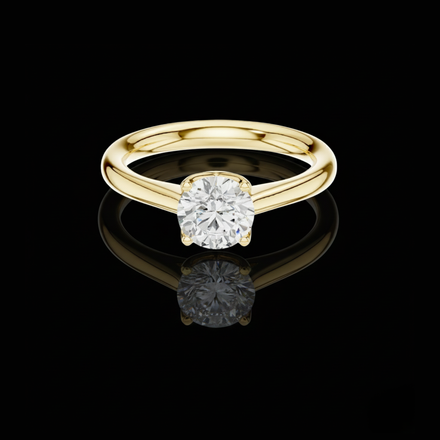
At this budget, every mainstream setting is on the table. Solitaire keeps maximum budget in the stone. Halo adds roughly a half-carat of visual size — a smart way to amplify a 1.2-carat center into 1.7-carat presence. Pavé bands add continuous sparkle for a few hundred dollars. Bezel settings, big in 2026, suit active lifestyles. Three-stone designs add meaningful carat weight and symbolism. There is no bad choice; match the setting to her style and daily life.
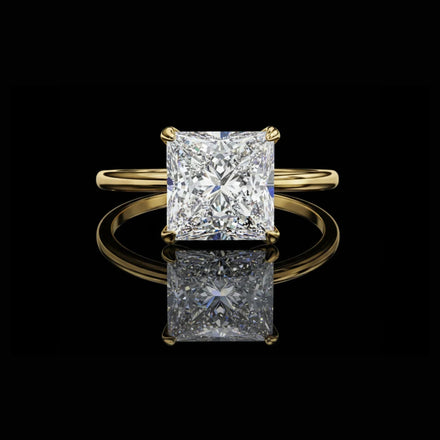
For shape, elongated cuts stretch the budget visually: oval, emerald and marquise look larger per carat than round and cost less per carat too, since round is the priciest cut. An oval 1.7-carat lab grown stone at $5,000 total is one of the highest-impact combinations in the entire market. For metal, 14k gold keeps more budget in the diamond; 18k gives richer color and a more luxurious feel — both are excellent daily-wear choices.
| Choice | Lab grown at $5,000 | Natural at $5,000 |
|---|---|---|
| Center stone | 1.5–2.0 ct, Excellent cut | 0.7–1.0 ct, Excellent cut |
| Color / clarity | G–H, VS2 — easy | G–J, SI1 eye-clean |
| Setting budget | $2,500–$3,500 (elaborate OK) | $1,000–$1,500 (keep simple) |
| Best setting move | Hidden halo, engraving, three-stone | Classic solitaire or simple pavé |
| Certification | IGI report standard | GIA report essential |
Getting Maximum Value at $5,000
Three tactics squeeze the most from this budget. First, buy the setting and stone as a designed pair rather than bolting a stone into a generic mounting — jewelers who make both (like Ivevar's own workshop) eliminate the middleman markup. Second, consider 14k gold over 18k unless she specifically wants the richer color of 18k; the savings buy visible diamond. Third, time your purchase around major sales events if you can — but never let a "sale" rush you past certification checks and return-policy review.
And protect the purchase: get the ring appraised and insured from day one (typically 1–2% of value per year), keep the grading report with the receipt, and confirm the warranty covers resizing and prong maintenance. A $5,000 ring is a significant asset — treat it like one.
Shop Our Best Sellers


Swipe to see more → | View all best sellers
Frequently Asked Questions
Is $5,000 enough for a good engagement ring?
Absolutely — $5,000 sits just above the 2026 US average and buys a beautiful ring. With lab grown you get 1.5–2 carats in a fine setting; with natural you get a well-cut 0.7 to 1-carat stone. Both are genuinely impressive rings.
What size lab grown diamond can I get for $5,000?
Typically 1.5 to 2 carats with Excellent cut, G–H color and VS2 clarity, plus $2,500+ left for the setting. Lab grown prices in 2026 make this one of the best value points in the entire market.
What size natural diamond can I get for $5,000?
Roughly 0.7 to 1 carat after reserving $1,000–$1,500 for the setting. Prioritize Excellent cut and buy just under magic weights (0.9 vs 1.0) to maximize size per dollar.
Should I get 14k or 18k gold at this budget?
Both fit comfortably. 14k is harder and more scratch-resistant for daily wear and leaves more budget for the diamond; 18k has richer color and a more luxurious feel. Either is an excellent choice.
Can I get a halo or three-stone setting for $5,000?
Yes — with lab grown, easily, including hidden halos and elaborate three-stone designs. With natural, choose a simpler halo or pavé to keep the total in budget, and keep the center stone's cut grade high.
Is $5,000 too much or too little to spend?
Neither — it is almost exactly the national average. What matters is whether the number fits your finances without debt. A $5,000 ring you own outright beats a $8,000 ring on a credit card every time.
Do I need to insure a $5,000 ring?
Yes. At this value, insurance (typically 1–2% of appraised value per year) is inexpensive protection against loss, theft and damage. Get a jewelry rider or standalone policy from day one.
Sources
- The Knot — Engagement Ring Data 2026
- Gemological Institute of America (GIA)
- Brides — Engagement Ring Buying Guides
- International Gemological Institute (IGI)
- WeddingWire — Ring Cost Guides

Aumsri Pradhan is the founder of Ivevar Luxury, a Surat-based fine jewelry brand that designs and handcrafts lab grown diamond and moissanite jewelry in its own workshop. She leads the brand's design and customer experience, from engagement rings and bridal sets to custom pieces made to each client's story. Through the Ivevar blog, she shares practical guidance on lab grown diamonds, moissanite, diamond grading and ring design to help buyers choose with confidence.