Engagement Rings
 Anniversary Rings
 Solitaire Rings
 Halo Rings
 Toi Moi Rings
 Three Stone Rings
 Nature Inspired Rings
 Rose Cut Rings
 Fancy Color Rings
 Antique Cut Rings
 Wedding Rings
 Wedding Band Rings
 Exclusive Lab Grown Diamond Rings
 All Lab Grown Diamond Ring
 Engagement Rings
 Three Stone Rings
 Fancy Color Rings
 Antique Cut Rings
 Daily Wear Rings
 Wedding Band Rings
 Exclusive Moissanite Rings
 Earrings
 Bracelet
 Pendant
 Necklace
 Men's Ring
 Bridal Sets
 Rings
Rings
 Earrings
 Tennis chain
 Cuban Chains
 Custom Pendant
 Custom Ring
 Custom Teeth Grillz
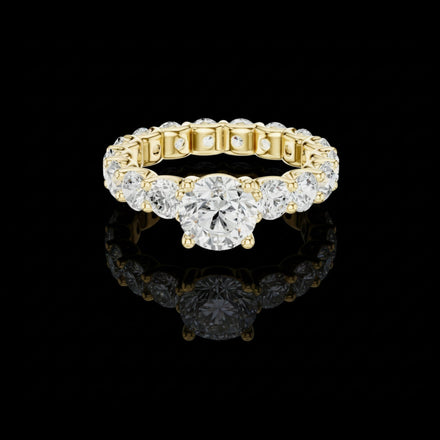
 Round
Round
 Oval
Oval
 Cushion
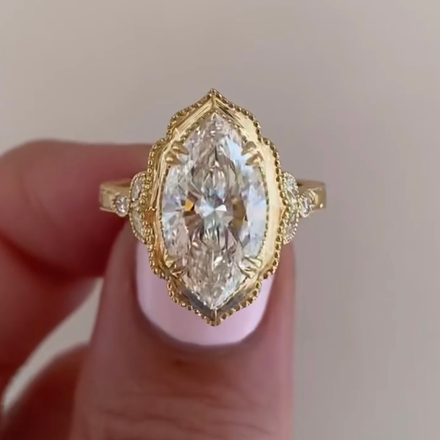
 Marquise
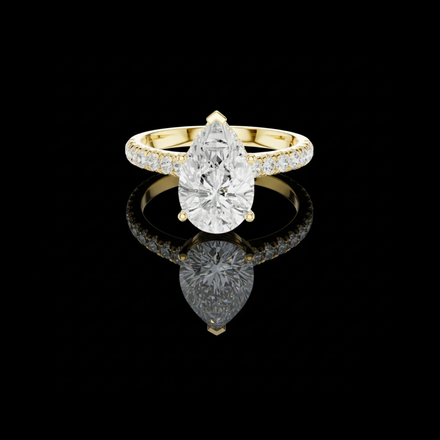
 Pear
Pear
 Emerald
 Heart
Heart
 Princess
 Rose Cut
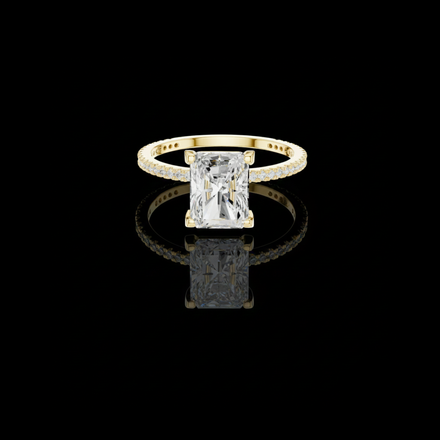
 Radiant
 Antique Cut
 Brooch
 Cufflink
 Keychain
 Unique Products
 +91 9265051773
 Virtual Appointment
 log in



How to Buy an Engagement Ring: The 2026 Step-by-Step Guide
by Ankit Koshiya on Sep 29, 2026

Short answer: Buying an engagement ring in 2026 comes down to six steps in order: set a firm budget, learn the 4Cs, choose a diamond shape, pick a setting and metal, buy a certified stone from a trusted jeweler, and confirm the ring size and return policy before you propose. Follow the order and you avoid the two classic mistakes — overspending on grades nobody can see, and choosing a setting before you know the stone.
- ✓ Budget first, always — decide your number before you look at a single diamond.
- ✓ Cut matters most — of the 4Cs, cut has the biggest visible impact on sparkle.
- ✓ Shape is personal — round, oval, cushion and emerald each suit different styles.
- ✓ Certified only — never buy a diamond without an independent grading report.
- ✓ Check the fine print — resizing, warranty and returns matter as much as the stone.
Step 1: Set a Firm Budget Before Anything Else
The old "two months' salary" rule is dead — it was a marketing invention, not financial advice. The Knot's widely cited Jewelry & Engagement Study puts the average US engagement ring at about $5,200, and its 2026 data puts the average lab grown ring at about $4,300. But averages hide enormous range: beautiful, well-made rings exist at $1,500 and at $15,000. Your budget should be a number you can spend without debt stress, full stop. Write it down, include the setting and any taxes or shipping, and treat it as firm before you browse. Jewelers and websites will happily show you stones 30% over budget; a firm number is your only defense.
One more budgeting truth for 2026: lab grown diamonds have rewritten what each budget buys. A 1-carat lab grown diamond of excellent quality costs a fraction of its mined equivalent, so a $3,000 budget today buys the presence that $10,000 bought a decade ago. Decide early whether you want lab grown or natural — it changes every downstream decision.
Step 2: Learn the 4Cs — In the Right Order of Importance
The 4Cs — cut, color, clarity and carat — are the universal language of diamonds, graded by independent laboratories like GIA and IGI. But they are not equally important to the eye. Cut is king: it determines how brilliantly the diamond returns light, and a well-cut 1-carat stone out-sparkles a poorly cut 1.5-carat stone every time. Always prioritize Excellent or Ideal cut grades. Carat is simply weight, and it is what people notice — size is the most visible of the four.
Color and clarity are where smart buyers save. In the near-colorless G–J range, a diamond looks white to the naked eye once set. And VS2 or even eye-clean SI1 clarity means no inclusion visible without magnification. The sweet spot for value: Excellent cut, G–I color, VS2–SI1 clarity, and the largest carat your budget allows.
Step 3: Choose a Diamond Shape That Suits Her Style
Shape is the most personal choice and the hardest to change later, so study her existing jewelry. Does she wear delicate, classic pieces or bold, modern ones? Round brilliant remains the timeless default and the sparkliest cut. Oval has surged to nearly tie round as America's favorite — elongated, flattering on the finger, and looking larger per carat. Cushion brings vintage romance, emerald brings sleek architectural elegance, and pear and marquise bring drama and maximum finger coverage.
If you are unsure, oval is the safest fashionable choice of 2026 and round is the safest timeless one. Avoid choosing a shape you love over one she would wear daily. When in doubt, ask her best friend or sister; they almost always know.

Step 4: Pick the Setting and Metal
The setting frames the diamond and defines the ring's character. A solitaire keeps all attention on the center stone and costs the least. A halo surrounds it with small diamonds for extra presence. Pavé lines the band with sparkle, bezel wraps the stone in metal for maximum protection and a modern look, and three-stone adds symbolic side stones. Match the setting to her lifestyle: active hands do better with bezel or low-profile solitaires than with high-set halos.
For metal, yellow gold is the defining trend of 2026 and flatters most skin tones; white gold and platinum offer a cool, classic look; rose gold stays romantic and distinctive. In karats, 14k is harder and more scratch-resistant for daily wear, while 18k has a richer color.

Step 5: Buy Certified, From a Jeweler You Trust
Never buy a diamond without an independent grading report from GIA or IGI. For natural diamonds, either lab's report documents the full 4Cs and measurements. For lab grown diamonds, the two now differ: IGI grades the highest volume and still lists full 4Cs grades, growth method and any treatments, while GIA, since October 1, 2025, labels lab grown stones Premium or Standard instead of giving color and clarity grades. If you want to compare lab grown stones grade by grade, ask for IGI. Match the report number to the laser inscription on the stone's girdle, and be wary of in-house "appraisals" presented as grading; only independent labs count.
Vet the seller as hard as the stone. Look for clear return windows (30 days minimum is a good sign), warranties covering resizing and prong tightening, and responsive customer service before you buy. Read recent reviews, and confirm the ring can be serviced locally if you buy online.
Step 6: Confirm Size, Timing and the Proposal Plan
A surprise proposal lives or dies on ring size. Borrow one of her rings (from the correct finger) and have a jeweler measure it, trace its inner circle on paper, or ask her friends — never guess blindly. Most solitaires can be resized once, but eternity bands and some tension settings cannot, so confirm before ordering those styles. Order 3–4 weeks before you plan to propose: custom and made-to-order rings take time, and you want a buffer for resizing.
Finally, insure the ring from day one — a jewelry rider or standalone policy typically costs 1–2% of the ring's value per year — and keep the grading report, receipt and appraisal in one safe place. Then stop second-guessing. If you followed the steps, the ring is beautiful, well-made and honestly priced. The rest is the moment.
| Decision | Get this right | Common mistake |
|---|---|---|
| Budget | Firm number set before browsing | Falling in love with a stone, then stretching |
| Cut | Excellent/Ideal grade prioritized | Chasing carat with a dull, poorly cut stone |
| Color/Clarity | G–I, VS2–SI1 eye-clean value zone | Overpaying for D–F, VVS grades nobody sees |
| Shape | Matched to her existing style | Choosing what you like instead of what she wears |
| Certification | Independent GIA/IGI report matched to stone | Trusting an in-house appraisal as grading |
| Size & policy | Measured size, 30-day returns, warranty | Guessing size; ignoring the return window |
Shop Our Best Sellers


Swipe to see more → | View all best sellers
Frequently Asked Questions
What is the first step when buying an engagement ring?
Set a firm budget. Everything — stone size, setting complexity, metal choice — flows from that number. Decide it before you look at a single diamond, and include the setting, taxes and shipping in it.
Which of the 4Cs matters most?
Cut. It controls how much light the diamond returns, which is what the eye reads as sparkle. Prioritize Excellent or Ideal cut, then spend remaining budget on carat size, keeping color in the G–I range and clarity eye-clean (VS2–SI1).
Should I choose lab grown or natural diamond?
Lab grown diamonds are chemically identical to natural diamonds and cost a fraction of the price, so the same budget buys a much larger or higher-quality stone. Choose natural if origin and long-term value retention matter most to you; choose lab grown to maximize size and quality per dollar.
How do I know her ring size for a surprise proposal?
Borrow a ring she wears on the correct finger and have a jeweler measure it, or ask her close friend or sister. Most solitaire settings can be resized once after the proposal, so a close estimate is fine.
What certification should an engagement ring diamond have?
An independent grading report from GIA or IGI. For lab grown diamonds, IGI gives full color and clarity grades, while GIA's reports since October 2025 give a Premium or Standard tier. Verify the report number matches the laser inscription on the diamond's girdle. In-house appraisals are not a substitute for independent laboratory grading.
How far in advance should I order the ring?
Order 3–4 weeks before you plan to propose. Made-to-order and custom rings take time to craft, and you want a buffer in case resizing or adjustments are needed.
Do I need insurance for an engagement ring?
Yes — insure it from day one through a jewelry rider on your homeowner's or renter's policy, or a standalone jewelry policy. Typical cost is 1–2% of the ring's appraised value per year, covering loss, theft and damage.
Sources
- The Knot — Engagement Ring Statistics
- GIA Changes Lab-Grown Grading — JCK
- Gemological Institute of America (GIA)
- International Gemological Institute (IGI)
- American Gem Society

Aumsri Pradhan is the founder of Ivevar Luxury, a Surat-based fine jewelry brand that designs and handcrafts lab grown diamond and moissanite jewelry in its own workshop. She leads the brand's design and customer experience, from engagement rings and bridal sets to custom pieces made to each client's story. Through the Ivevar blog, she shares practical guidance on lab grown diamonds, moissanite, diamond grading and ring design to help buyers choose with confidence.