

 Engagement Rings
 Anniversary Rings
 Solitaire Rings
 Halo Rings
 Toi Moi Rings
 Three Stone Rings
 Nature Inspired Rings
 Rose Cut Rings
 Fancy Color Rings
 Antique Cut Rings
 Wedding Rings
 Wedding Band Rings
 Exclusive Lab Grown Diamond Rings
 All Lab Grown Diamond Ring
 Engagement Rings
 Three Stone Rings
 Fancy Color Rings
 Antique Cut Rings
 Daily Wear Rings
 Wedding Band Rings
 Exclusive Moissanite Rings
 Earrings
 Bracelet
 Pendant
 Necklace
 Men's Ring
 Bridal Sets
 Rings
 Earrings
 Tennis chain
 Cuban Chains
 Custom Pendant
 Custom Ring
 Custom Teeth Grillz
 Round
 Oval
 Cushion
 Marquise
 Pear
 Emerald
 Heart
 Princess
 Rose Cut
 Radiant
 Antique Cut
 Brooch
 Cufflink
 Keychain
 Unique Products
 +91-9265051773
 Virtual Appointment
 log in




Chunky Gold Bands as Engagement Rings: The Bold 2026 Trend
by Ankit Koshiya on Sep 29, 2026

Short answer: Yes, a chunky gold band can be a beautiful engagement ring, and wide bands are one of the boldest looks in bridal jewelry right now. Bands from about 4mm to 8mm and wider work on their own or as the base for a center stone, giving a confident, modern look with excellent everyday durability. Choose 14K gold for strength, a comfort-fit interior for all-day wear, and a width that suits your finger: wider bands look best on longer fingers, while 4–5mm flatters petite hands.
- ✓ Chunky means 4mm and up. Classic engagement shanks are 1.8–2.5mm; chunky bands start around 4mm and go to 8mm+.
- ✓ 14k gold is the practical pick. Harder and more scratch-resistant than 18k, and better for wide bands worn daily.
- ✓ Comfort fit is non-negotiable. A domed interior makes a wide band feel like a narrow one on the finger.
- ✓ Stones are optional, not required. Plain polished domes, pavé surfaces, and flush-set diamonds are all valid engagement looks.
- ✓ Size up a quarter to half size. Wide bands fit tighter than narrow ones — most jewelers recommend sizing up.
For years, the standard engagement ring meant a slim band and a single sparkling stone. Today many couples want something different: a ring with real weight and presence that looks as good on its own as it does in a stack. A chunky gold band delivers exactly that. This guide covers why wide bands are having a moment, how wide "chunky" really is, the three main ways to wear one, choosing karat, color and finish, sizing and comfort, styling and care.
Why Chunky Gold Bands Are Having a Moment
For a long time, engagement rings kept getting more delicate: whisper-thin pavé shanks, barely-there solitaires, minimal everything. Fashion moves in cycles, and the pendulum has swung back toward presence: wide gold bands with real weight, high-polish domes and proportions that read confident rather than cautious. Part of the appeal is the broader return of bold gold jewelry, from chunky chains to cuffs and statement earrings. Part of it is practical, because a substantial band simply stands up to daily life better than a very thin one.
There is also a shift in what couples want a ring to say. Many are less tied to the large-stone-on-a-thin-band template and more interested in rings that reflect personal taste. A chunky gold band is sculptural, works for any gender and puts design first. It photographs beautifully, stacks easily with other bands and does not depend on a particular stone shape being in fashion, because its appeal is the metal itself.
How Wide Is "Chunky"? A Width Guide
Width is the defining measurement. A traditional engagement ring shank is often around 1.8 to 2.5mm. Once you pass 4mm, the ring reads as bold; at 6mm it is clearly chunky; at 8mm and beyond you are in statement territory that overlaps with many men's wedding band widths. The right width depends on your finger: longer fingers carry 6–8mm bands beautifully, while shorter or petite fingers usually look best at 4–5mm, still chunky but in proportion.
Profile matters as much as width. A domed (rounded) profile catches light and feels classic; a flat profile reads modern and architectural; a knife-edge or beveled profile adds definition. And always ask for a comfort fit, a slightly rounded interior that helps a wide band slide over the knuckle. Without it, a 6mm band can feel tight by the end of the day; with it, most wearers stop noticing the width.
| Width | Look | Best Finger | Sizing Note |
|---|---|---|---|
| 4–5mm | Bold but balanced; the entry point to chunky | Petite to average | Often a quarter size up |
| 6mm | Confident statement; a popular sweet spot | Average to long | Often a quarter to half size up |
| 7–8mm | Maximum presence, sculptural | Long fingers | Often a half size up |
| 8mm and wider | Cigar-band style, unisex statement | Long fingers, bold style | Half to a full size up; try on first |
Tip: Before ordering, cut a strip of paper to the width you are considering and wrap it around the finger. It is a quick, free way to see how 4mm, 6mm and 8mm actually look on your hand.
Stone or No Stone? Three Ways to Wear It
There is no single "right" chunky engagement ring. Most designs fall into three families, and each one is unmistakably an engagement ring.
1. Pure gold, no stones
The purist version is stone-free: a plain high-polish gold dome, sometimes with engraving or a hammered texture. It is one of the most durable engagement rings possible, with nothing to loosen and nothing to catch. It leans into the mid-century and modernist traditions where gold was the whole point. For couples who love metal more than sparkle, this is the answer.
2. Stones set into the band
The middle path adds diamonds or moissanite to the band itself: pavé-set surfaces, flush-set (gypsy-set) stones scattered across a wide dome, or channel-set stones running across the top. This keeps the chunky silhouette while adding light. Flush settings are especially practical, because the stones sit level with the metal and are well protected.
3. A center stone on a wide shank
The third route puts a center stone on a wide band: a solitaire on a 4–5mm shank, a bezel-set stone sunk into a broad dome, or a design with stones running across the face of the ring. This is the best of both worlds for someone who wants sparkle and presence. A lab grown diamond (10 on the Mohs scale) or moissanite (9.25) both handle daily wear easily.

Lab Grown Diamond or Moissanite Accents?
If your chunky band includes stones, the choice between lab grown diamond and moissanite changes the look more than you might expect.
- Lab grown diamonds: Chemically, physically and optically the same as mined diamonds. They give a crisp, bright white sparkle and can be graded on the 4Cs; larger center stones often come with an IGI certificate.
- Moissanite: A different gemstone, not a diamond. Its refractive index of about 2.65 (compared with diamond's 2.42) gives it more colorful fire, which shows up beautifully against polished yellow gold.
- Both are durable: Either is hard enough for flush, pavé or bezel settings worn every day.
Browse lab grown wedding bands and moissanite wedding bands for wide band styles you can wear as an engagement ring or alongside one.
Choosing the Gold: Karat, Color, and Finish
For a wide band worn every day, 14K gold is the workhorse choice. Its higher alloy content makes it harder and more scratch-resistant than 18K, which matters when there is more surface to mark. 18K's richer color is gorgeous, but on a 6mm band the softer metal shows wear sooner. 10K is the hardest and most affordable of the three, with a paler yellow tone.
| Karat | Gold Content | Look | Best For |
|---|---|---|---|
| 10K | 41.7% gold | Paler yellow | Maximum hardness and lower cost |
| 14K | 58.3% gold | Warm, balanced yellow | Daily wear on a wide band |
| 18K | 75% gold | Richest, deepest yellow | Color lovers who accept a softer metal |
Color is personal: yellow gold is the classic chunky-band metal and the heart of the look; white gold gives the same bold silhouette a cooler, more contemporary edge; rose gold sits between them, with warmth that flatters many skin tones. Finish changes the personality entirely. High polish is glamorous and reflective; brushed or satin is understated and hides scratches; hammered texture adds handmade character and disguises everyday wear better than any other finish.
Comfort and Sizing for Wide Bands
A wide band covers more of the finger, so it fits differently from a slim ring. These points will help you get it right first time.
- Size up for width: Wide bands usually feel tighter than narrow ones in the same size. Many jewelers suggest going up a quarter to half size for 6mm and wider, but confirm with the maker.
- Measure at the right time: Fingers swell in heat and shrink in cold. Measure at the end of the day at a comfortable temperature.
- Check the knuckle: If your knuckle is larger than the base of your finger, a comfort-fit interior makes a big difference.
- Think about weight: A solid wide band has noticeable weight. Most people like the feel, but try a similar width if you can.
- Plan ahead for sizing: Wide bands, and bands with stones all around, are harder to resize later. Getting the size right at the start matters more than with a slim solitaire.
Styling and Stacking a Chunky Band
A chunky band is a strong solo act, but it also anchors a stack beautifully. The key is contrast: pair a wide polished dome with thin pavé or plain bands on either side, mixing widths rather than matching them. Mixing metals works too; a yellow gold chunky band beside white gold thin bands looks intentional and modern. Avoid stacking two wide bands together unless you want a cuff effect, because the eye needs a slim element to read the proportions.
For the wedding day, some couples skip a separate wedding band entirely, because a chunky engagement ring already has the presence of two rings. If you do add one, a slim straight band or a contoured band that follows the shape of the engagement ring sits neatly. And because wide bands suit everyone, they are a natural choice for couples who want matching or complementary rings. See our lab grown men's rings for wider styles that pair well.

Shop the styles in this guide
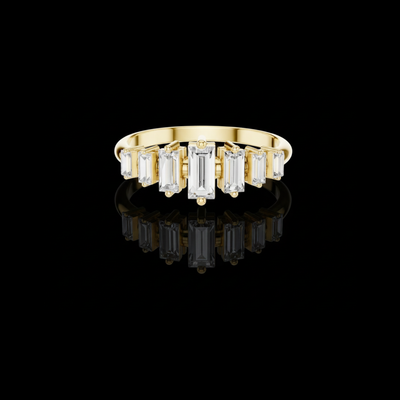
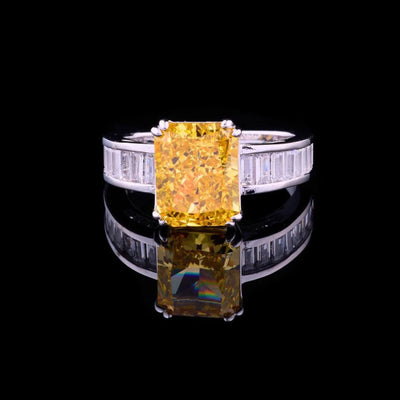
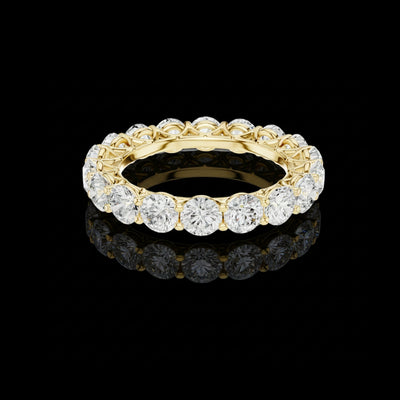
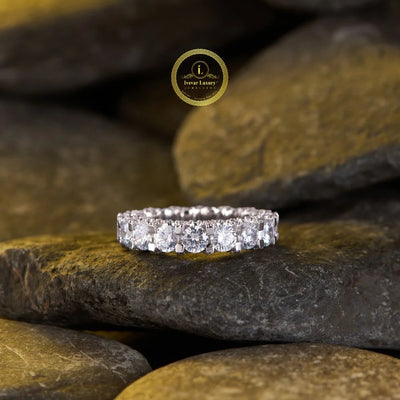

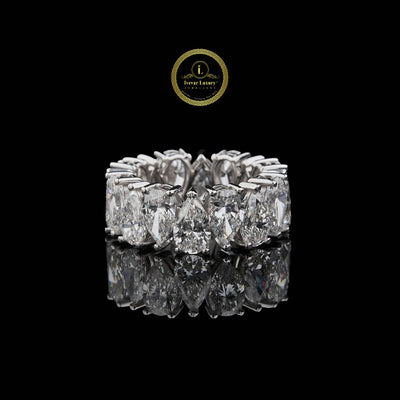

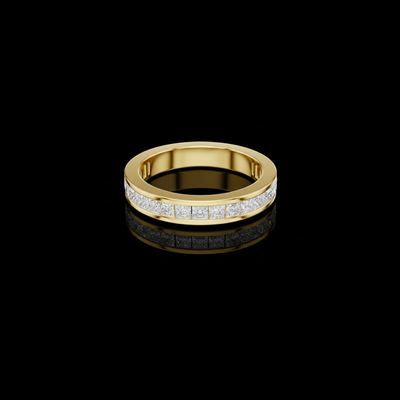
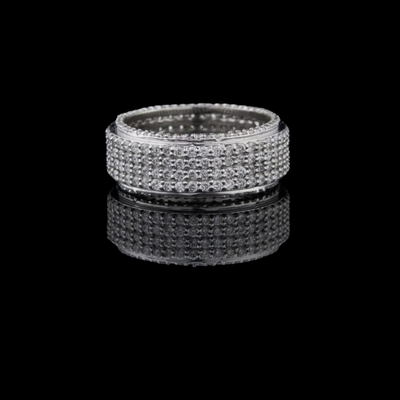
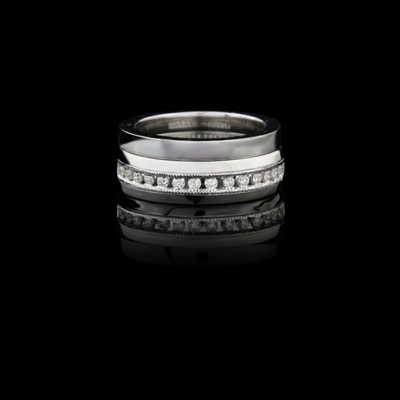
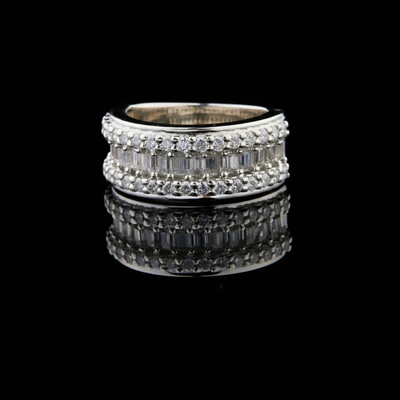
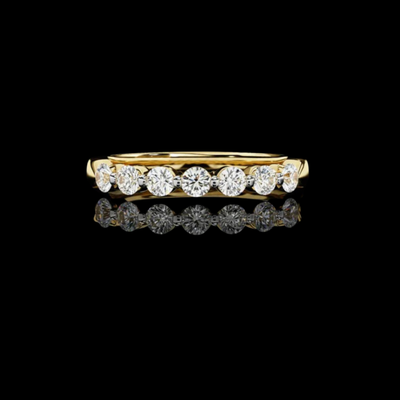
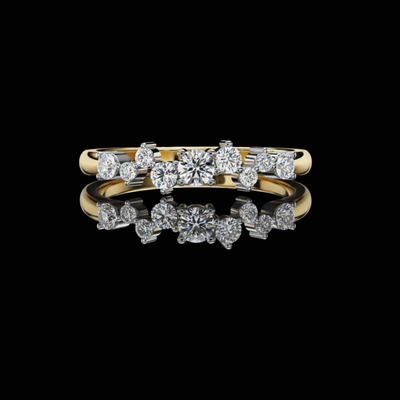
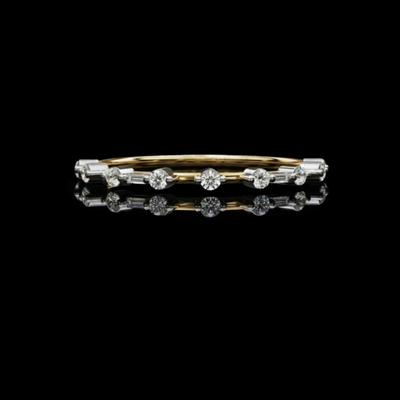
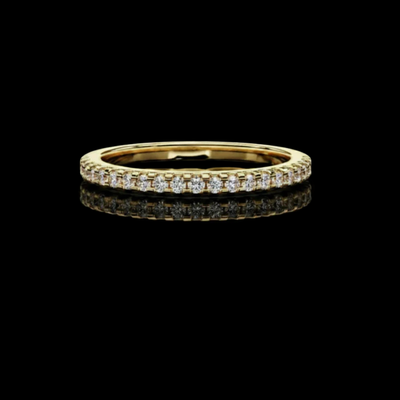
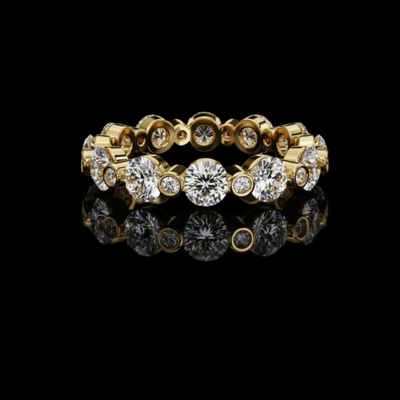
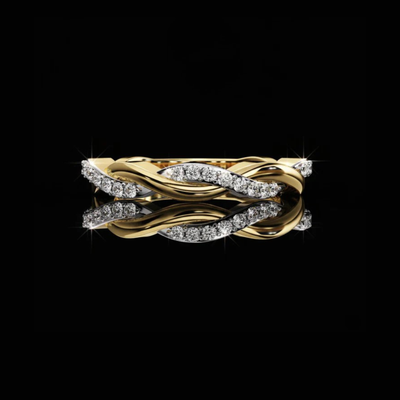
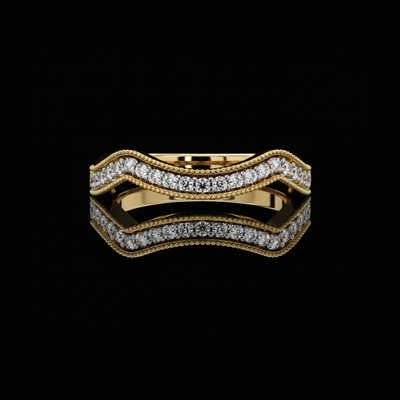
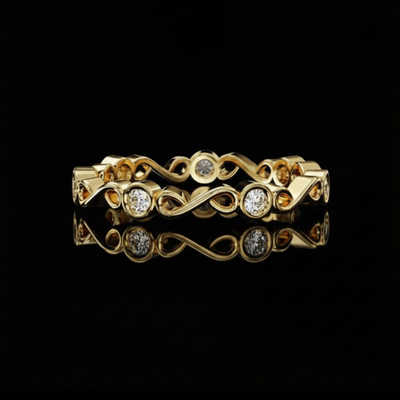
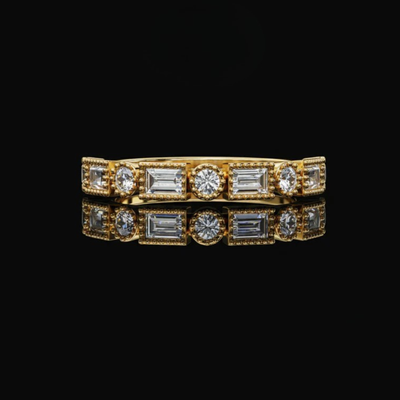
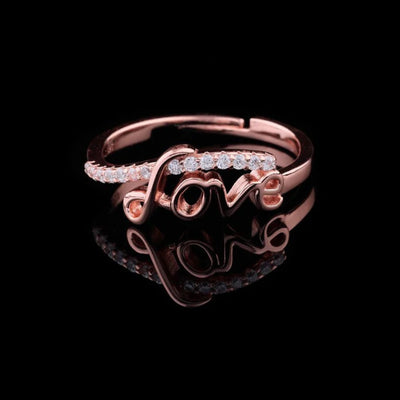
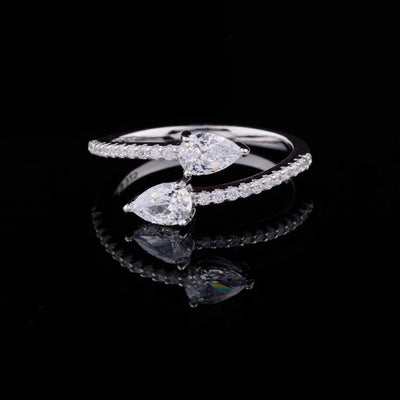

Chunky Band vs Classic Solitaire
If you are deciding between a wide gold band and a traditional solitaire, it helps to compare how each one lives on the hand. Neither is better; they simply suit different priorities.
| Factor | Chunky Gold Band | Classic Solitaire |
|---|---|---|
| Main feature | The metal: width, shape and finish | The center stone |
| Profile | Low; sits close to the finger | Higher; stone raised on prongs |
| Snagging | Rare, especially with flush-set stones | Possible on sweaters and gloves |
| Stacking | Anchors a stack on its own | Usually paired with one matching band |
| Where budget goes | Gold weight and craftsmanship | Mostly into the stone |
Many couples find a middle path: a solitaire set on a wider shank, or a chunky band worn beside a slim solitaire. If you love both looks, a custom design can combine a bold band with a modest center stone.
Who Suits a Chunky Gold Band?
Almost anyone can wear one, but it is an especially good fit if any of these sound like you:
- You work with your hands: A plain or flush-set wide band has no high prongs to catch or bend.
- You love gold jewelry: If your everyday pieces are bold gold chains and hoops, a chunky band will feel like you.
- You prefer design over size: The ring makes its statement through shape and metal rather than carat weight.
- You want a unisex look: Wide bands suit every hand and work well as matching rings.
- You like to stack: A chunky band anchors a stack better than any slim solitaire.
Caring for a Chunky Gold Band
Gold is a durable, low-maintenance metal, and a wide band is easy to look after.
- Clean gently: Warm water, mild dish soap and a soft brush remove everyday grime. Rinse and dry with a lint-free cloth.
- Expect a patina: High polish shows fine scratches over time. Many people love the soft, lived-in look; a jeweler can polish the band back to a mirror finish.
- Protect the stones: If your band has pavé or flush-set stones, have them checked once a year.
- Avoid harsh chemicals: Chlorine and strong cleaners can dull gold alloys; take the ring off before swimming pools and heavy cleaning.
- Store separately: Keep the ring in its own pouch so harder stones in other jewelry do not scratch it.
Find Your Chunky Band at Ivevar
Ivevar handcrafts bands and engagement rings in 10K, 14K and 18K gold, with lab grown diamonds or moissanite, and we can create a custom wide band in the width, profile and finish you want. Start with our lab grown wedding bands, or book a virtual appointment to talk through widths and designs. We ship worldwide with free shipping and offer 30-day easy returns.
Shop Our Best Sellers


Swipe to see more → | View all best sellers
Frequently Asked Questions
Can a plain gold band be an engagement ring?
Yes. A chunky gold band is a deliberate style choice, not a compromise. It has roots in mid-century and modernist design, and many couples choose it for its durability, comfort and sculptural beauty.
What width counts as a chunky band?
Generally 4mm and up. Classic engagement shanks are often around 1.8–2.5mm, so 4mm reads bold, 6mm is a popular sweet spot and 8mm and wider is full statement territory.
Do I need a different ring size for a wide band?
Often, yes. Wide bands fit tighter because more metal touches the finger. Many jewelers suggest going up a quarter size for 4–5mm bands and a half size for 6mm and wider; always confirm with the maker.
Is 14K or 18K gold better for a chunky band?
14K is the practical choice for daily wear: harder, more scratch-resistant and more affordable. Choose 18K if you want the richest gold color and do not mind a softer metal developing a lived-in patina.
Will a chunky band overwhelm small hands?
Not if you choose the right width. Petite fingers look great in 4–5mm bands with domed, comfort-fit profiles. A medium-width dome on a small finger looks intentional, while an 8mm flat band can overwhelm it.
How do I clean a wide gold band?
Warm water, mild dish soap and a soft brush handle everyday grime. Textured or hammered finishes hide wear well; high-polish domes show fine scratches that a jeweler can polish out.
Can I stack other rings with a chunky engagement band?
Absolutely. Pair it with slim plain or pavé bands for contrast, and feel free to mix metals. Let the chunky band anchor the stack and the thinner rings act as accents.
Can a chunky band have a center stone?
Yes. A bezel-set or flush-set stone sunk into a wide dome is secure and modern, and a solitaire on a 4–5mm shank gives a bold take on the classic look.
Is a chunky band good for an active lifestyle?
Very. A plain or flush-set wide band has no raised prongs, so it rarely snags and stands up well to daily use.
Can I order a chunky band in a custom width?
Yes. Ivevar makes custom jewelry, so you can choose the width, profile, karat and finish, and add flush-set or pavé stones if you like. A virtual appointment is the easiest way to plan the details.
Sources
- The Knot — Engagement Ring Trend Reports
- Brides — Wedding and Engagement Jewelry
- Vogue — Jewelry Trends
- JCK — Jewelry Industry News
- GIA — Gemological Institute of America

Aumsri Pradhan is the founder of Ivevar Luxury, a Surat-based fine jewelry brand that designs and handcrafts lab grown diamond and moissanite jewelry in its own workshop. She leads the brand's design and customer experience, from engagement rings and bridal sets to custom pieces made to each client's story. Through the Ivevar blog, she shares practical guidance on lab grown diamonds, moissanite, diamond grading and ring design to help buyers choose with confidence.


