Engagement Rings
 Anniversary Rings
 Solitaire Rings
 Halo Rings
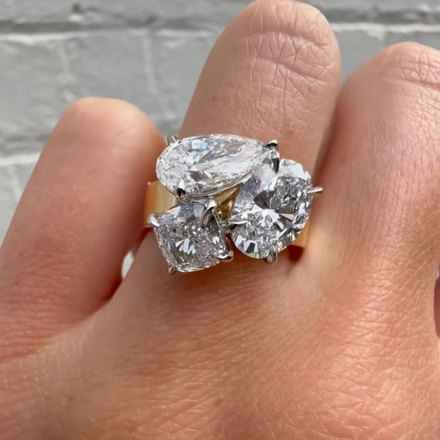
 Toi Moi Rings
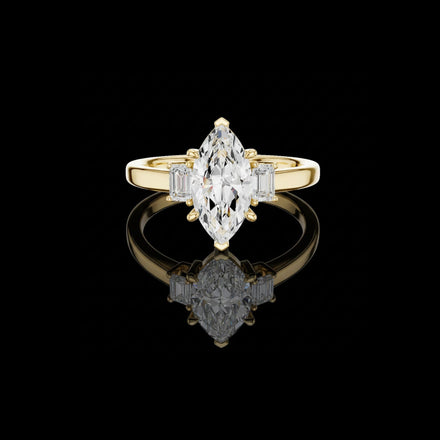
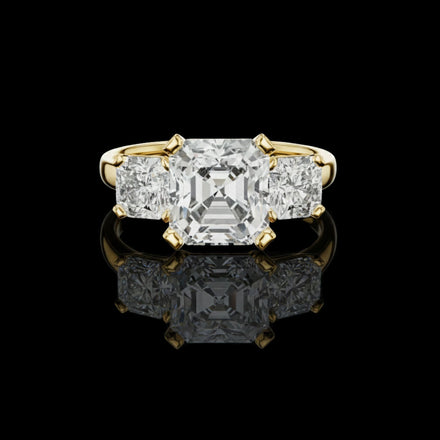
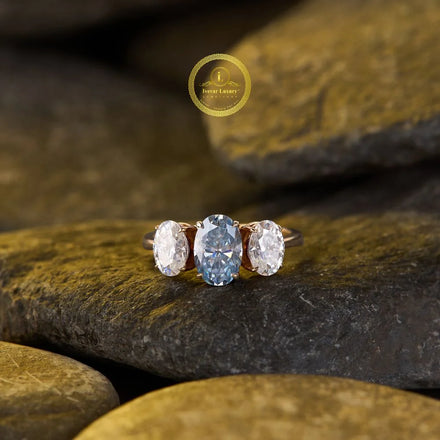
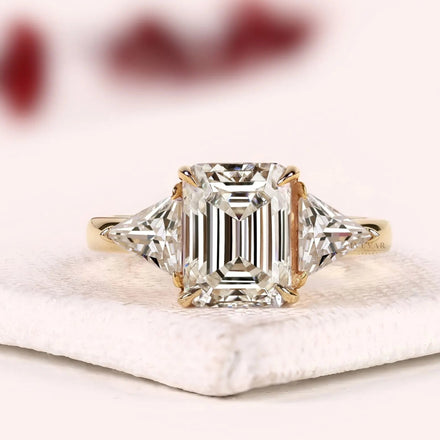
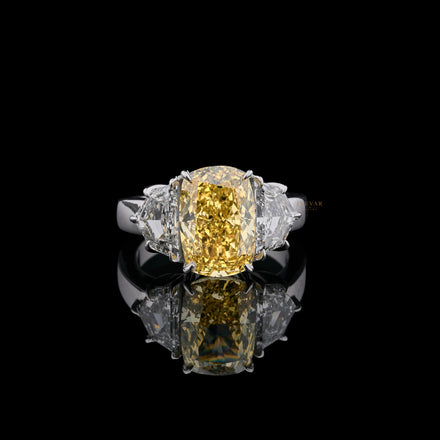
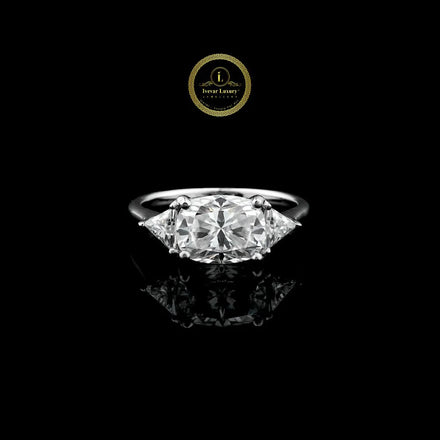
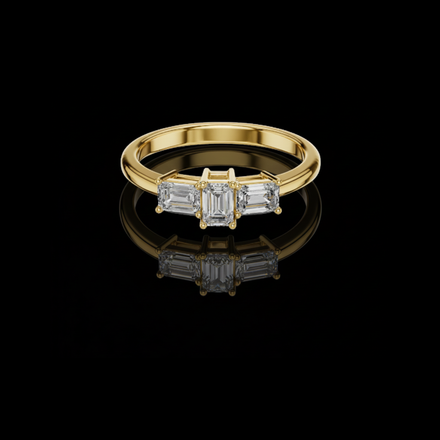
 Three Stone Rings
 Nature Inspired Rings
 Rose Cut Rings
 Fancy Color Rings
 Antique Cut Rings
 Wedding Rings
 Wedding Band Rings
 Exclusive Lab Grown Diamond Rings
 All Lab Grown Diamond Ring
 Engagement Rings
 Three Stone Rings
 Fancy Color Rings
 Antique Cut Rings
 Daily Wear Rings
 Wedding Band Rings
 Exclusive Moissanite Rings
 Earrings
 Bracelet
 Pendant
 Necklace
 Men's Ring
 Bridal Sets
 Rings
Rings
 Earrings
 Tennis chain
 Cuban Chains
 Custom Pendant
 Custom Ring
 Custom Teeth Grillz
 Round
Round
 Oval
Oval
 Cushion
 Marquise
 Pear
Pear
 Emerald
 Heart
Heart
 Princess
 Rose Cut
 Radiant
 Antique Cut
 Brooch
 Cufflink
 Keychain
 Unique Products
 +91 9265051773
 Virtual Appointment
 log in



Three-Stone vs Solitaire Engagement Ring: Which Is Better?
by Ankit Koshiya on Sep 29, 2026

Short answer: Neither is better — they serve different buyers. Solitaire is timeless, minimal and puts maximum budget into the center diamond. Three-stone adds past-present-future symbolism, real extra carat weight, and undeniable grandeur. Choose solitaire for understated elegance and value; choose three-stone for meaning, presence and a bolder look.
- ✓ Solitaire = timeless minimalism — one stone, clean lines, never dates.
- ✓ Three-stone = symbolism + size — side stones add real carat weight.
- ✓ Budget impact — solitaire leaves more for the center diamond.
- ✓ Lifestyle matters — solitaires sit lower; three-stones are grander.
- ✓ Her style decides — delicate tastes suit solitaire; bold tastes suit three-stone.
The Case for Solitaire
The solitaire is the purest expression of an engagement ring: one diamond, beautifully cut, held simply. Its power is restraint — nothing distracts from the stone, light enters from every angle, and the design works with every diamond shape ever cut. It is also the most versatile ring in existence: it pairs with any wedding band, suits any wardrobe, and has never looked dated in over a century of continuous popularity.
Financially, the solitaire is the efficiency champion. With no side stones to buy and minimal metalwork, the maximum share of your budget goes into the center diamond — the thing eyes actually register. A 1.5-carat solitaire will always out-impress a 1-carat three-stone at the same total price when it comes to the main event. If she loves minimalism, or if your priority is the biggest, finest center stone possible, the solitaire wins without contest.

The Case for Three-Stone
The three-stone ring tells a story: past, present and future, the couple's journey rendered in diamonds. That symbolism resonates deeply — it is the setting of milestone anniversaries and some of the most famous proposals in modern history. But sentiment aside, the three-stone is also a size strategy: side stones of 0.3–0.5 carats each add 0.6–1.0 carats of total weight, giving the ring a grandeur no solitaire at the same price can match.
Design versatility is the three-stone's secret weapon. Tapered baguette sides create sleek Art Deco geometry; pear sides add romantic fullness; matching round sides keep it classic. The setting frames the center stone beautifully and the overall composition reads luxurious from across the room. If she loves presence, meaning and a ring with narrative built in, three-stone is the answer.

Head-to-Head Comparison
On budget, the solitaire stretches further: every dollar goes to one stone. A three-stone splits the budget three ways plus more elaborate metalwork, so the center diamond will be smaller at the same total spend — though total carat weight will be higher. On daily wear, solitaires (especially low-set ones) snag less and slide under gloves easily; three-stone rings are wider, grander, and demand a bit more awareness.
On style longevity, both are classics — neither is a fad. The solitaire is the safer choice if her taste is unknown or minimalist; the three-stone is the richer choice if she loves jewelry with presence. One more consideration: three-stone side diamonds must be color-matched to the center, so buy from a jeweler with a good eye — mismatched sides are the most common flaw in mediocre three-stone rings.
| Factor | Solitaire | Three-stone |
|---|---|---|
| Aesthetic | Minimal, timeless, pure | Grand, symbolic, narrative |
| Center stone size | Maximum for the budget | Smaller center, higher total weight |
| Symbolism | Singular devotion | Past, present, future |
| Daily wear | Low profile, snag-free | Wider, needs more care |
| Best for | Minimalists; max diamond value | Romantics; presence lovers |
How to Decide: Five Questions
1. What does she wear now? Delicate, simple jewelry points to solitaire; statement pieces point to three-stone. 2. Does symbolism matter to her? If the past-present-future story would move her, three-stone has an emotional edge no solitaire can match. 3. What is her lifestyle? Hands-on work favors the solitaire's lower profile. 4. What is the budget priority? Biggest single stone = solitaire; biggest total presence = three-stone. 5. When in doubt? The solitaire is the safer surprise — its universality is why it has endured for generations.
And remember the hybrid option: a solitaire with pavé band or hidden halo gives some of the three-stone's richness while keeping the solitaire's clean face. Many buyers who cannot decide find their answer in the middle ground.
Finally, think about the wedding band pairing. Solitaires accept nearly any band style — plain, pavé, eternity — with no fuss. Three-stone rings pair best with simpler bands so the composition does not become visually crowded. If she dreams of a stacked bridal set with multiple bands, the solitaire is the easier foundation; if the engagement ring alone will be the statement, the three-stone stands gloriously on its own.
Shop Our Best Sellers


Swipe to see more → | View all best sellers
Frequently Asked Questions
Is a three-stone ring better than a solitaire?
Neither is better — they suit different tastes. Solitaire offers timeless minimalism and maximum center-stone value; three-stone offers symbolism, higher total carat weight and grander presence. Her style should decide.
Which looks bigger: solitaire or three-stone?
Three-stone, in total presence — the side stones add real carat weight and width. But the solitaire's center diamond will be larger at the same budget, since all the money goes into one stone.
What do the three stones symbolize?
Past, present and future — the couple's shared journey. It is one of the most romantic symbolisms in jewelry, which is why three-stone rings are popular for proposals and milestone anniversaries alike.
Is a three-stone engagement ring more expensive?
At the same center-stone size, yes — you are buying two extra diamonds plus more elaborate metalwork. But per unit of total visual presence, three-stone designs are excellent value.
Can a three-stone ring be resized?
Usually yes, within limits — the plain portion of the shank can be adjusted like a solitaire. Very wide or eternity-style three-stone bands are harder to resize, so confirm before ordering those.
Which is better for daily wear?
Solitaire, slightly — its narrower profile snags less and slides under gloves. Three-stone rings are perfectly wearable daily but demand a bit more awareness due to their width.
What side stone shapes go with each center?
Tapered baguettes suit emerald and Asscher centers (Art Deco look); pear sides suit oval, round and cushion centers (romantic fullness); round sides are the versatile classic. Matching side color to the center is essential.
Sources
- Brides — Three-Stone Ring Guides
- The Knot — Ring Style Data
- Gemological Institute of America (GIA)
- American Gem Society
- Jewelers of America

Aumsri Pradhan is the founder of Ivevar Luxury, a Surat-based fine jewelry brand that designs and handcrafts lab grown diamond and moissanite jewelry in its own workshop. She leads the brand's design and customer experience, from engagement rings and bridal sets to custom pieces made to each client's story. Through the Ivevar blog, she shares practical guidance on lab grown diamonds, moissanite, diamond grading and ring design to help buyers choose with confidence.