

 Engagement Rings
 Anniversary Rings
 Solitaire Rings
 Halo Rings
 Toi Moi Rings
 Three Stone Rings
 Nature Inspired Rings
 Rose Cut Rings
 Fancy Color Rings
 Antique Cut Rings
 Wedding Rings
 Wedding Band Rings
 Exclusive Lab Grown Diamond Rings
 All Lab Grown Diamond Ring
 Engagement Rings
 Three Stone Rings
 Fancy Color Rings
 Antique Cut Rings
 Daily Wear Rings
 Wedding Band Rings
 Exclusive Moissanite Rings
 Earrings
 Bracelet
 Pendant
 Necklace
 Men's Ring
 Bridal Sets
 Rings
 Earrings
 Tennis chain
 Cuban Chains
 Custom Pendant
 Custom Ring
 Custom Teeth Grillz
 Round
 Oval
 Cushion
 Marquise
 Pear
 Emerald
 Heart
 Princess
 Rose Cut
 Radiant
 Antique Cut
 Brooch
 Cufflink
 Keychain
 Unique Products
 +91-9265051773
 Virtual Appointment
 log in




Short answer: Princess cut engagement rings offer a crisp, modern square shape with brilliant sparkle, and they are often one of the best-value shapes per carat. The main drawback is their four sharp corners, which can chip if knocked. Choose a setting with V-prongs or protected corners, and a princess cut can be a durable, eye-catching everyday ring.
The princess cut is the most popular square diamond shape. It combines the clean geometry of a square with the bright, scintillating sparkle of a brilliant cut, which is why it appeals to people who want something modern but still classic. Here are the pros, cons and buying tips for princess cut engagement rings, from choosing the stone to protecting the corners and pairing a wedding band.
What Is a Princess Cut?
A princess cut is a square or slightly rectangular stone with sharp, pointed corners and a brilliant facet pattern. Seen from the side, it looks like an inverted pyramid. Its facets are arranged to create a crisp, cross-shaped pattern of sparkle when viewed from the top, which gives the stone its lively, bright look.
It's different from step-cut squares like the Asscher, which have long, parallel facets and a calm, hall-of-mirrors look. A princess is all about sparkle; an Asscher is about clarity and depth. Both are square, but they look very different on the hand.
Princess Cut Pros and Cons
| Pros | Cons |
|---|---|
| Modern, geometric look | Sharp corners can chip without protection |
| Bright, brilliant sparkle | Can look slightly smaller than a round of the same weight face-up |
| Often lower price per carat | Corners can catch on fabric in tall settings |
| Sits neatly beside straight wedding bands | Shows color a little at the corners |
| Hides small inclusions well | Needs careful setting work at each corner |
The pros in more detail
- Value: princess cuts are often less expensive per carat than rounds, because cutting a square keeps more of the rough crystal.
- Sparkle: the brilliant facet pattern gives strong brightness and lively flashes, close to a round in overall effect.
- Clean lines: the square outline looks sharp and contemporary, especially in a minimal setting.
- Easy pairing: straight edges sit neatly next to a straight wedding band, making bridal sets simple.
The cons in more detail
- Corner vulnerability: the pointed corners are the thinnest parts of the stone and the most exposed to knocks.
- Face-up size: a princess carries more weight in its depth than a round, so it can look a little smaller from the top for the same carat weight.
- Color at the corners: warmth can gather in the corners, so the color grade matters in white metal.
Who Should Choose a Princess Cut?
A princess cut is a good match if several of these describe her style:
- She loves clean, modern design: straight lines, geometric jewelry and minimal settings.
- She wants plenty of sparkle: but in a shape that feels a little different from a round.
- She likes a neat bridal set: the square shape lines up easily with a straight wedding band.
- You want value per carat: princess cuts often let you choose a larger or higher-graded stone for the same budget.
A princess may be less suitable if she is very hard on her hands and prefers a high setting, or if she loves soft, romantic curves. In that case a cushion, oval or round may suit her better, or a princess in a low bezel setting.
How to Choose a Princess Cut Diamond
Shape and ratio
Most people prefer a near-perfect square, with a length-to-width ratio of about 1.00 to 1.05. Higher ratios look more rectangular, which some buyers like for a slimmer, elongated look.
Color and clarity
G to H color and VS2 clarity usually look white and clean. Corners can show a hint of color, so G or better suits white gold. In yellow or rose gold, a slightly lower color often looks fine. Because princess cuts are brilliant cuts, their sparkle hides small inclusions well, so SI1 can sometimes be eye-clean too. Avoid inclusions near the corners, where they could weaken an already delicate area.
Polish and symmetry
Princess cuts do not always receive an overall cut grade, so choose Excellent or Very Good polish and symmetry, and check photos for even sparkle. Look for a crisp cross pattern and avoid stones with large dark areas in the center.
Depth and table
The depth affects face-up size. A very deep princess hides weight underneath and looks smaller from the top; a very shallow one can look glassy and lose sparkle. Use the grading report to compare, and judge the final choice by images.
Reading the grading report
For a lab grown princess with an IGI or GIA report, note the measurements (to check the ratio and face-up size), the color and clarity grades, the polish and symmetry grades, and the depth and table percentages. Check the clarity plot too: it shows where any inclusions sit, so you can make sure none are close to a corner. Use the report to shortlist stones, then compare their photos and video.
Tip: Ask for the stone's face-up measurements in millimetres. Two princess cuts of the same carat weight can differ noticeably in how big they look, depending on depth.
 Shown: Princess Cut Moissanite Solitaire Engagement Ring with Cathedral Setting
Best Settings to Protect the Corners
- V-prongs or claw prongs: cover each corner with a shaped prong, the most popular choice.
- Bezel or half bezel: surrounds the stone with metal for maximum protection.
- Halo: a ring of small stones shields the corners and adds size.
- Channel setting: often used for princess stones in bands, with metal walls along two sides.
- Low profile: sits closer to the finger and catches less.
Why plain round prongs aren't enough
A standard round prong holds a stone well along a curved edge, but on a princess it can sit beside the corner rather than over it, leaving the tip exposed. V-prongs fold over the corner itself, so any knock hits metal first. When you compare settings, look closely at the corners in the photos.
Halo or solitaire for a princess?
A princess solitaire shows off the clean square outline and lets the stone's sparkle stand alone. A halo adds a frame of small stones that protects the corners, makes the stone look larger and adds even more brightness. If you prefer minimal style, choose a solitaire with V-prongs; if you want more size and protection, a halo is a strong choice. Browse lab grown solitaire rings or lab grown halo rings to compare.
Princess cuts in three stone and side stone designs
Princess cuts are not only for center stones. Small princess stones are often channel-set along bands, where their straight edges sit side by side with no gaps, giving a smooth line of sparkle. A princess center also works well in a three stone ring with princess or trillion side stones, or with tapered baguettes for a sleek, architectural look. Because the corners of side stones are protected by the channel or the neighboring stones, these designs are practical for everyday wear.
Metal choices and two-tone designs
White gold suits the crisp lines of a princess and keeps the stone looking white. Yellow gold gives a striking contrast with the square outline and a warmer, vintage feel. A popular option is a yellow or rose gold band with white gold V-prongs, which keeps the corners looking bright while giving the ring warmth. At Ivevar you can choose 10K, 14K or 18K gold for any of these.
Princess vs Cushion vs Radiant
| Feature | Princess | Cushion | Radiant |
|---|---|---|---|
| Corners | Sharp | Rounded | Cut (beveled) |
| Look | Crisp, modern | Soft, romantic | Bright, bold |
| Durability | Needs corner protection | Very durable | Very durable |
| Sparkle | Brilliant, cross pattern | Large, chunky flashes | Lively, crushed-ice look |
| Band fit | Sits flush with straight bands | Usually straight band | Usually straight band |
If you like the square shape but worry about the corners, a cushion or radiant gives a similar outline with more durable corners. If you love sharp, clean geometry, the princess is the one.
Princess Cut vs Round
Rounds are the most classic engagement shape and have the most predictable sparkle. Princess cuts give a similar brightness in a square outline, usually at a lower price per carat. Rounds look a little larger face-up for their weight and have no corners to protect; princess cuts feel more modern and pair more neatly with straight bands. Choose based on the shape you love, then compare a few stones of each in photos.
On the hand, a round looks soft and timeless, while a princess looks sharper and more architectural. If you are torn, try photos of both shapes in the same setting style; the one she keeps coming back to is usually the answer.
Shop the styles in this guide


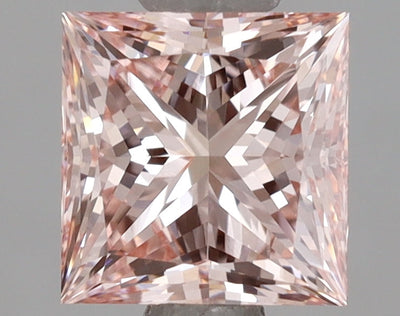
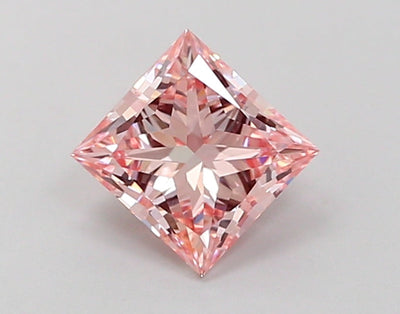


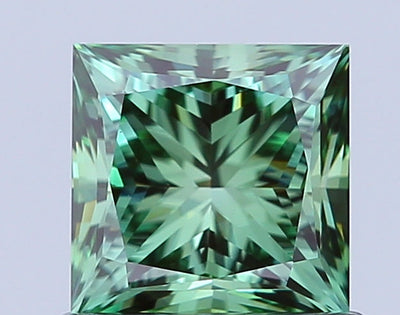


Lab Grown Diamond or Moissanite?
Both suit a princess cut. Lab grown diamonds are real diamonds, chemically, physically and optically the same as mined diamonds, grown by CVD or HPHT methods. They score 10 on the Mohs hardness scale, and many are graded by IGI so you can confirm the color, clarity, polish and symmetry.
Moissanite is a different gemstone, not a type of diamond. It scores 9.25 on the Mohs scale and has a higher refractive index (about 2.65 vs about 2.42 for diamond), which gives it more colorful, rainbow fire. A moissanite princess gives a larger stone for the same budget. Browse princess cut lab grown diamonds and princess cut moissanite.
Wedding Bands, Care and Daily Wear
Choosing a wedding band
A princess ring's straight sides usually let a straight band sit flush. Channel-set princess bands echo the square shape, pavé bands add sparkle, and plain bands keep the look clean. If the setting has a halo or a wide head, check the side profile to make sure the band sits close.
Stacking ideas
Princess rings are made for stacking. A channel-set princess band echoes the center stone, a thin plain band on each side frames it, and an eternity band adds full sparkle. Because the shape sits flat against straight bands, a princess set looks tidy even with several rings.
Caring for a princess cut
- Check the corners: look at the V-prongs regularly and get the ring inspected about once a year.
- Take it off for hard tasks: gym sessions, gardening and moving furniture are where corners get knocked.
- Clean gently: soak in warm water with mild dish soap and brush with a soft toothbrush, especially under the stone.
- Store separately: keep it apart from other jewelry so corners don't knock against harder pieces.
Tip: If she works with her hands, choose a low setting with a bezel or half bezel. It gives the princess cut's modern look with the best possible corner protection.
Buying Checklist and Common Mistakes
- Choose the ratio: decide whether you want a true square (about 1.00 to 1.05) or a slightly rectangular look.
- Check polish and symmetry: aim for Excellent or Very Good, since there may be no overall cut grade.
- Review the corners: look for inclusions or chips near the corners before you buy.
- Confirm the setting: make sure each corner is covered by a V-prong, bezel or halo.
- Compare face-up size: use millimetre measurements, not just carat weight.
- Plan the band: confirm that the wedding band you like will sit flush.
Mistakes to avoid
- Using round prongs on the corners: they can leave the tips exposed to knocks.
- Buying a very deep stone: it looks smaller from the top than its carat weight suggests.
- Going too low on color in white gold: corners can show warmth, so stay at G or better if you want a bright white look.
- Choosing a tall setting for an active lifestyle: a lower setting protects the corners and catches less.
Princess Cut Rings at Ivevar
We set every princess cut with corner protection in mind and send a CAD design for approval. Every ring is handcrafted in our Surat workshop and ships worldwide with free shipping and 30-day easy returns. Choose a lab grown diamond, often with an IGI certificate, or moissanite, in 10K, 14K or 18K gold, or ask for a custom design. You can book a virtual appointment to see stones and settings before you decide. Browse lab grown diamond engagement rings and princess cut lab grown diamonds.
Shop Princess Cut Engagement Rings
 Princess Cathedral SolitaireShop Now
 Halo Princess Triple Row RingShop Now
 Princess Cathedral RingShop Now
 Princess Four Prong RingShop Now
 Yellow Princess Baguette BandShop Now
 Brown Princess Halo RingShop Now
Swipe to see more → | View all engagement rings
Frequently Asked Questions
Are princess cut engagement rings out of style?
No. They remain a popular modern choice, especially for people who love geometric designs.
Do princess cuts chip easily?
Their corners are the weak point. With V-prongs, a bezel or a halo, they are durable for daily wear.
Is princess cheaper than round?
Often yes, per carat, because more of the rough crystal is kept during cutting.
What band pairs with a princess ring?
A straight channel or pavé band usually sits flush and suits the square shape.
Does a princess cut look smaller than a round?
Slightly, for the same carat weight, because more of its weight sits in its depth. A halo or a slightly larger stone makes up the difference.
What is the best ratio for a princess cut?
About 1.00 to 1.05 for a true square. Higher ratios look rectangular, which some people prefer.
Which metal suits a princess cut?
White gold makes the stone look its whitest and suits the crisp shape; yellow and rose gold give a warmer, softer look. Choose 14K for a good balance of durability and color.
Is a princess cut good for small hands?
Yes. A princess sits neatly on smaller fingers and its straight lines look tidy. A slightly rectangular ratio can add a little elongation.
Can a princess cut be set at an angle?
Yes. Set with its corners pointing north, south, east and west, it becomes a "kite" or diamond-orientation setting. It looks larger and more dramatic, but make sure each point is protected with a V-prong.
How do I clean a princess cut ring at home?
Soak it in warm water with a drop of mild dish soap, brush gently under the stone with a soft toothbrush, rinse and dry with a lint-free cloth.
The Bottom Line
A princess cut gives bold, modern sparkle and strong value. Protect the corners, choose a near-square ratio and good polish and symmetry, and it will look sharp for a lifetime. Whether you choose a lab grown diamond or moissanite, a well-set princess is a confident, contemporary ring that pairs easily with the rest of her jewelry.
Related Guides
Author Bio
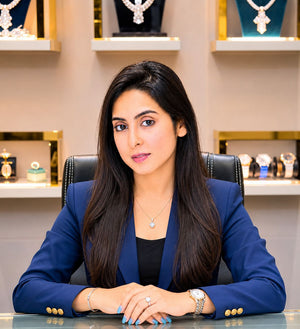
Aumsri Pradhan
Founder, Ivevar Luxury
Aumsri Pradhan is the founder of Ivevar Luxury, a Surat-based fine jewelry brand that designs and handcrafts lab grown diamond and moissanite jewelry in its own workshop. She leads the brand's design and customer experience, from engagement rings and bridal sets to custom pieces made to each client's story. Through the Ivevar blog, she shares practical guidance on lab grown diamonds, moissanite, diamond grading and ring design to help buyers choose with confidence.


