

 Engagement Rings
 Anniversary Rings
 Solitaire Rings
 Halo Rings
 Toi Moi Rings
 Three Stone Rings
 Nature Inspired Rings
 Rose Cut Rings
 Fancy Color Rings
 Antique Cut Rings
 Wedding Rings
 Wedding Band Rings
 Exclusive Lab Grown Diamond Rings
 All Lab Grown Diamond Ring
 Engagement Rings
 Three Stone Rings
 Fancy Color Rings
 Antique Cut Rings
 Daily Wear Rings
 Wedding Band Rings
 Exclusive Moissanite Rings
 Earrings
 Bracelet
 Pendant
 Necklace
 Men's Ring
 Bridal Sets
 Rings
 Earrings
 Tennis chain
 Cuban Chains
 Custom Pendant
 Custom Ring
 Custom Teeth Grillz
 Round
 Oval
 Cushion
 Marquise
 Pear
 Emerald
 Heart
 Princess
 Rose Cut
 Radiant
 Antique Cut
 Brooch
 Cufflink
 Keychain
 Unique Products
 +91-9265051773
 Virtual Appointment
 log in




Taylor Swift's Engagement Ring: Old Mine Cut Explained (+ Affordable Lab Grown Alternatives)
by Ankit Koshiya on Sep 29, 2026

Short answer: Taylor Swift and Travis Kelce announced their engagement on Instagram on August 26, 2025. Swift's publicist confirmed the center stone is an old mine brilliant cut diamond, and the ring was designed by Kelce with New York goldsmith Kindred Lubeck of Artifex Fine Jewelry. The elongated, cushion-shaped stone sits in a hand-engraved yellow gold mount. The carat weight has never been released; most jewelers estimate 8 to 10 carats. The easiest way to get the look today is a lab grown diamond cut in an old mine or antique cushion style.
Few engagement rings have sparked as many searches as this one, and most of the questions are about the cut. "Old mine" is a term many shoppers had never heard before. This guide explains what is actually known about the ring, what an old mine cut is, how it differs from modern cuts, why the antique look is so popular right now, and how to get a similar ring with a lab grown diamond or moissanite without paying antique prices.
The Ring at a Glance
| Detail | What is known | Status |
|---|---|---|
| Announced | August 26, 2025, joint Instagram post | Confirmed |
| Cut | Old mine brilliant cut, elongated cushion outline | Confirmed by Swift's publicist |
| Designer | Kindred Lubeck, Artifex Fine Jewelry (New York), with Travis Kelce | Confirmed |
| Setting | Yellow gold, hand engraved, bezel-style mount | Reported from photos |
| Carat weight | About 8–10 ct | Estimate only |
| Value | About $550,000 to $1 million | Estimate only |
We only state what has been confirmed or widely reported, and label estimates as estimates.
What Is an Old Mine Cut?
The old mine cut was the standard diamond cut from roughly the 1700s to the late 1800s. It is named after the historic mines of India and Brazil that supplied the rough. Cutters shaped each stone by hand and by eye, so no two are identical.
Its signature features are a soft, squarish cushion outline, a small table, a high crown, a deep pavilion and large, chunky facets, usually 58 of them. Many also have an open culet, which shows as a tiny dot in the center when you look down through the table. The cut was designed to sparkle by candlelight, so it throws broad, warm flashes of fire instead of sharp, pinpoint white sparkle.
Large old mine diamonds are rare today. Many were re-cut into modern round brilliants during the 20th century to chase a brighter look, which is one reason genuine antique stones of size command a premium.
The parts of a diamond, in plain English
- Table: the large flat facet on top. Old mine cuts have a small one, which concentrates the view into the stone.
- Crown: the upper part above the widest edge. A high crown helps create big flashes of coloured fire.
- Girdle: the widest edge where the crown meets the pavilion; this is where the setting grips the stone.
- Pavilion: the lower, pointed part. Old mine pavilions are deep, which gives the stone its "look-into" quality.
- Culet: the bottom tip. Old cuts often have a small flat facet here, visible as a tiny circle.
Old Mine Cut vs. Modern Round Brilliant
The modern round brilliant was developed to maximise brightness with precise, mathematically planned angles. The old mine cut follows the shape of the rough crystal and the cutter's eye. Neither is "better"; they simply sparkle differently.
| Feature | Old Mine Cut | Modern Round Brilliant |
|---|---|---|
| Era | 1700s to late 1800s | 1919 to today |
| Outline | Soft cushion, slightly irregular | Perfectly round |
| Facets | Large, hand-cut | Small, precise |
| Sparkle | Broad, warm flashes of fire | Bright, crisp white brilliance |
| Table | Small | Larger, about 53–60% |
| Culet | Often open (visible dot) | Pointed or none |
| Best metal | Yellow or rose gold | Any |

Old Mine, Old European and Antique Cushion: What's the Difference?
These three names are often mixed up in listings, so it helps to know how they relate.
- Old mine cut: a squarish cushion outline, small table, high crown and chunky facets. This is the cut in Swift's ring.
- Old European cut: the round descendant of the old mine, popular from the late 1800s into the early 1900s. It has a circular outline but keeps the small table, high crown and open culet.
- Antique cushion (modern): a newly cut cushion with larger facets and softer corners, designed to look vintage. It is cut to modern standards, so it is more consistent, but it is a modern cut inspired by the old style.
- Modern cushion brilliant: the most common cushion today, with many smaller facets that create a "crushed ice" look. This is not an old mine look.
If you love the Swift ring, look for stones described as old mine or antique cushion with visible, chunky facets, a smaller table and a soft, slightly rectangular outline. Our lab diamond antique cut range is a good place to compare these styles.
Why the Antique Look Is Trending
The old mine revival started before this engagement, but the ring made it mainstream. Buyers have been moving away from identical-looking stones toward pieces with character: chunky gold, hand engraving, milgrain and antique cuts. Swift has said she showed Kelce a video of Lubeck's hand-engraving work long before the proposal, which is part of why the ring feels personal rather than generic.
There are practical reasons too. Antique-style cuts tend to look softer and warmer on the hand, they pair beautifully with yellow gold, and they stand out in a world of very bright modern brilliants. For many people they simply feel more romantic and more individual.
Getting the Look with a Lab Grown Diamond
Genuine antique old mine diamonds are rare, often uncertified, and priced at a steep premium. A lab grown diamond cut in an old mine or antique cushion style gives the same silhouette and warm sparkle for far less.
Lab grown diamonds are chemically, physically and optically the same as mined diamonds. They are grown by the CVD or HPHT method and then cut and polished exactly like mined stones, so a skilled cutter can give them old mine proportions. Grading is where buyers should pay attention:
- IGI grades lab grown diamonds on the full 4Cs (cut, color, clarity, carat).
- GIA stopped full 4Cs grading for lab grown diamonds at the end of 2025. It now issues a quality assessment that labels a stone Premium or Standard, along with shape, carat weight and basic proportions.
If you want exact color and clarity grades on a lab grown stone, ask for an IGI report. When comparing "old mine style" stones, look for the real features: a small table, a high crown, chunky facets and, ideally, an open culet. A modern cushion cut labelled "antique" is not the same thing.

What About Moissanite?
Moissanite is a separate gemstone, not a diamond, and it is a popular choice for the antique look at a lower budget. It is very hard (9.25 on the Mohs scale, compared with 10 for diamond), so it handles everyday wear well. Its refractive index is about 2.65, higher than diamond's 2.42, which gives it more colourful, rainbow-like fire.
That fire actually suits old mine styling, because the cut was designed for broad, colourful flashes rather than crisp white sparkle. The trade-off is that moissanite looks slightly different from diamond in strong light, and some people prefer the more classic look of diamond. Compare both side by side before you decide.
| Option | What you get | Things to know |
|---|---|---|
| Antique old mine diamond | A genuine historic stone with a unique character | Rare, often uncertified, priced at a premium |
| Lab grown old mine style | A real diamond with the antique silhouette | Can be IGI graded; check the cut is truly old mine style |
| Moissanite old mine style | The look with strong, colourful fire | Not a diamond; not graded on the diamond scale |
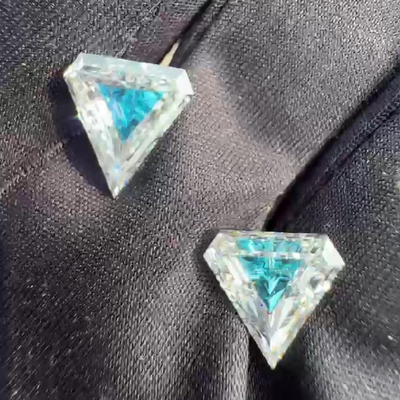
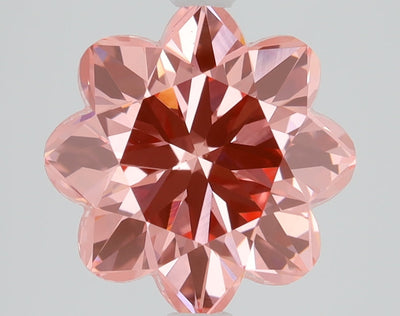
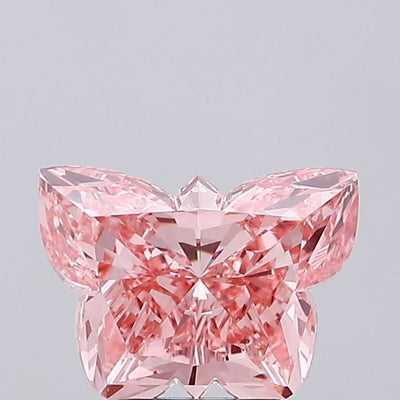
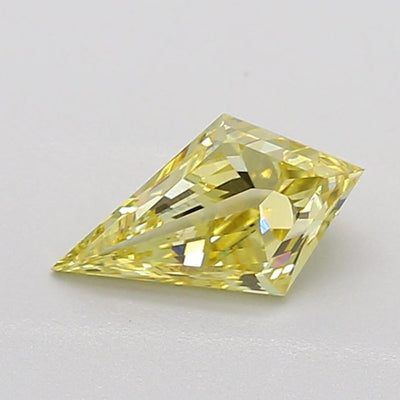
Shop the styles in this guide






Choosing the 4Cs for an Old Mine Style Stone
The 4Cs (cut, colour, clarity and carat) still apply, but an antique-style stone rewards slightly different priorities than a modern round.
- Cut: this matters most. Modern cut grades are designed around round brilliants, so judge an old mine style stone by eye: look for even, chunky facets, a small table and lively flashes rather than dark patches.
- Colour: you do not need the highest colour grade. Near-colorless stones (around G to J) look warm and period-correct, especially in yellow gold, which also hides a hint of warmth.
- Clarity: large facets and a small table can make inclusions easier to see than in a modern brilliant. Choose a clarity grade where the stone looks clean to the naked eye, often VS or a clean SI.
- Carat: old mine stones have deep pavilions, so a lot of their weight sits below the girdle. They can look slightly smaller face-up than a modern stone of the same carat weight. Compare measurements in millimetres, not just carats.
Lab grown diamonds make it easier to balance these choices. Because they typically cost much less than mined diamonds of the same quality, you can put more into size or cut without giving up colour and clarity. If you would like a larger look on a tighter budget, an elongated old mine style or antique cushion covers more of the finger than a square one.
Tip: Ask for the stone's length and width in millimetres. Two stones of the same carat weight can look very different on the hand, and the measurements tell you far more about visible size.
How to Shop an Old Mine Style Ring
- Decide between antique and new: a true antique stone and a newly cut one are priced very differently, and only a new stone comes with a modern grading report.
- Match the setting to the era: warm yellow gold, hand engraving and milgrain suit the cut; a bezel like Swift's also protects the stone's edges.
- Don't chase the whitest color: old mine cuts were often cut from warmer rough, so a near-colorless stone looks period-correct.
- Check the report: IGI gives full 4Cs grades on lab grown stones; GIA gives Premium or Standard.
- Insure the ring from day one.
Tip: Ask for a video of the actual stone, filmed in daylight and under a lamp. An old mine style stone should show big, slow flashes of colour as it moves, not the fast, glittery "crushed ice" look of a modern cushion.
Choosing the Setting, Metal and Proportions
The setting does as much as the stone to create the vintage feel. A few choices make the biggest difference.
- Metal: yellow gold is the classic partner for old cuts and is what Swift chose. 18K gold has the richest colour; 14K is a little harder and very popular for everyday rings; 10K is the toughest and most affordable.
- Bezel or prongs: a bezel wraps the stone in metal for a smooth, protective, slightly Victorian look. Six or eight prongs show more of the stone and let in more light.
- Engraving and milgrain: hand engraving on the band and milgrain (tiny beads along the edges) add instant antique character.
- Shape ratio: Swift's stone is elongated. If you want that look, ask for an old mine or antique cushion that is slightly rectangular rather than perfectly square.
- Band width: a slightly wider, solid gold band suits a large antique-style stone better than a very thin one.
At Ivevar, custom jewelry lets you combine an antique-style stone with the engraving, bezel and gold colour you want, and a virtual appointment lets you see options before you commit.
Caring for an Antique-Style Ring
The cut does not change durability. A lab grown diamond is as hard as any diamond, and moissanite is close behind. Day-to-day care is simple.
- Clean gently: soak in warm water with mild soap, brush lightly with a soft toothbrush, rinse and dry.
- Protect the engraving: avoid harsh chemicals and abrasive cleaners, which can wear down fine engraved detail over time.
- Check the setting: have a jeweler look at bezels or prongs about once a year.
- Store separately: keep the ring in its own soft pouch so it does not scratch, or get scratched by, other jewelry.
Shop Our Best Sellers


Swipe to see more → | View all best sellers
Love the old mine look? Explore our lab diamond antique cut stones and rings, our lab diamond cushion designs, or the moissanite antique cut range for the same vintage silhouette at a lower budget. Ivevar ships worldwide with free shipping and 30-day easy returns, many lab grown diamonds come with IGI certificates, and we can create a custom yellow gold setting with engraving to complete the look.
FAQ
Is Taylor Swift's engagement ring an old mine cut?
Yes. Her publicist confirmed it is an old mine brilliant cut diamond.
Who designed Taylor Swift's engagement ring?
Travis Kelce designed it with Kindred Lubeck of Artifex Fine Jewelry in New York.
How many carats is Taylor Swift's engagement ring?
The weight has not been released. Most jewelers estimate 8 to 10 carats.
Is an old mine cut the same as a cushion cut?
No. The modern cushion cut is a more precise descendant. The old mine is the hand-cut ancestor, with a smaller table, higher crown and larger facets.
Can I get an old mine cut in a lab grown diamond?
Yes. Lab grown diamonds can be cut in old mine and antique cushion styles and graded by IGI on the 4Cs.
What setting suits an old mine cut best?
Yellow gold bezels, like Swift's, plus six- or eight-prong solitaires and hand-engraved bands.
How do I care for a vintage-style ring?
Mild soap and water, a yearly check of the setting, and insurance. The cut does not change durability.
What is the difference between old mine and old European cuts?
Both are antique hand-cut styles with small tables and high crowns. The old mine has a squarish cushion outline; the old European, which came later, is round.
Does an old mine cut sparkle less than a modern round?
It sparkles differently. A modern round gives more crisp white brightness; an old mine gives larger, warmer flashes of colour. Many people find the old mine look softer and more romantic.
Is moissanite a good choice for an old mine style ring?
Yes, if you love colourful fire and want to keep the budget lower. Moissanite is a different gemstone, not a diamond, but it is very hard (9.25 on the Mohs scale) and suits daily wear.
Sources
- Taylor Swift's jeweler on designing the ring — NBC News / TODAY
- Taylor Swift's ring and old mine diamonds — Sotheby's
- Artifex and Sotheby's — Only Natural Diamonds
- GIA changes lab grown grading — JCK
- Lab grown diamond grading — IGI

Aumsri Pradhan is the founder of Ivevar Luxury, a Surat-based fine jewelry brand that designs and handcrafts lab grown diamond and moissanite jewelry in its own workshop. She leads the brand's design and customer experience, from engagement rings and bridal sets to custom pieces made to each client's story. Through the Ivevar blog, she shares practical guidance on lab grown diamonds, moissanite, diamond grading and ring design to help buyers choose with confidence.


