

 Engagement Rings
 Anniversary Rings
 Solitaire Rings
 Halo Rings
 Toi Moi Rings
 Three Stone Rings
 Nature Inspired Rings
 Rose Cut Rings
 Fancy Color Rings
 Antique Cut Rings
 Wedding Rings
 Wedding Band Rings
 Exclusive Lab Grown Diamond Rings
 All Lab Grown Diamond Ring
 Engagement Rings
 Three Stone Rings
 Fancy Color Rings
 Antique Cut Rings
 Daily Wear Rings
 Wedding Band Rings
 Exclusive Moissanite Rings
 Earrings
 Bracelet
 Pendant
 Necklace
 Men's Ring
 Bridal Sets
 Rings
 Earrings
 Tennis chain
 Cuban Chains
 Custom Pendant
 Custom Ring
 Custom Teeth Grillz
 Round
 Oval
 Cushion
 Marquise
 Pear
 Emerald
 Heart
 Princess
 Rose Cut
 Radiant
 Antique Cut
 Brooch
 Cufflink
 Keychain
 Unique Products
 +91-9265051773
 Virtual Appointment
 log in




Short answer: Colored gemstone fine jewelry pairs diamonds with sapphires, rubies and other gems to add personality and meaning. Blue sapphire is the classic choice, rainbow sapphire designs offer joyful multi-color sparkle, and red stones add romance. For everyday pieces, choose durable gems like sapphire (9 on the Mohs scale) and set them with lab grown diamond accents for extra brilliance. Match colors to your wardrobe, skin tone or birthstones.
Color brings jewelry to life. A blue sapphire bracelet, a ruby pendant or a rainbow of sapphires on a bangle says something that a white diamond alone cannot: it can mark a birth month, echo a favorite color or simply make an outfit more joyful.
Colored gems also vary far more than diamonds in hardness, treatment and care. This guide explains which gems suit everyday wear, how to judge color quality, what treatments mean, how to style color, and how to keep your pieces looking their best.
Popular Gemstones in Fine Jewelry
These are the gems you will see most often in fine jewelry, with their hardness on the Mohs scale. Higher numbers resist scratches better.
| Gem | Hardness | Color and meaning | Birthstone |
|---|---|---|---|
| Sapphire | 9 | Blue for loyalty; also pink, yellow and more | September |
| Ruby | 9 | Red for passion | July |
| Emerald | 7.5 to 8 | Green for renewal | May |
| Rainbow sapphire | 9 | Multi-color joy | September |
Sapphire
Sapphire is the gem variety of the mineral corundum. Most people picture deep blue, but sapphire comes in almost every color, including pink, yellow, orange, purple, green and white. Only red corundum is called ruby; every other color is sapphire. Its hardness of 9, second only to diamond and moissanite among popular jewelry stones, makes it one of the best colored gems for rings and bracelets worn every day.
Ruby
Ruby is red corundum, so it shares sapphire's hardness of 9 and its excellent durability. The most prized rubies have a strong, pure red with only a slight hint of purple or pink. Rubies are a traditional symbol of love and passion, which makes them a favorite for anniversary jewelry.
Emerald
Emerald is the green variety of beryl. At 7.5 to 8 on the Mohs scale, it is reasonably hard, but most emeralds contain natural inclusions that make them more likely to chip if knocked. They suit earrings and pendants perfectly and can be worn in rings with a protective setting and a little care.
Rainbow sapphire
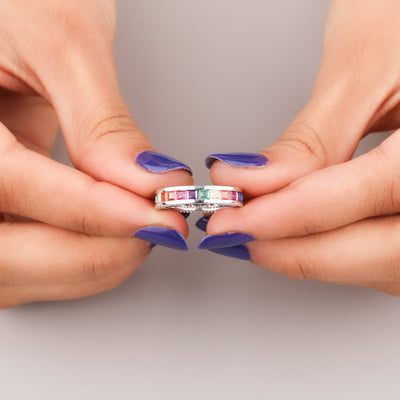
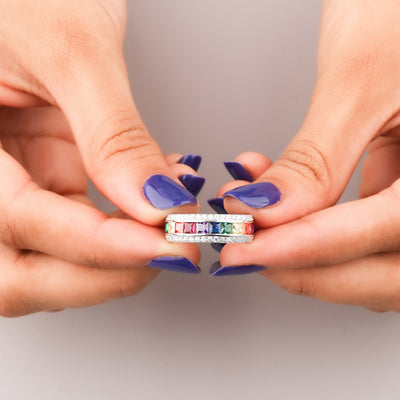
Rainbow sapphire jewelry uses sapphires in a sequence of colors, often running through red, orange, yellow, green, blue and purple. Because every stone is a sapphire, rainbow pieces keep the same 9 hardness across the whole design. They are cheerful, very wearable, and a natural fit for celebrations.
Other Colored Gems You May See
Beyond the big three, many other gems appear in fine jewelry. Hardness is the quickest way to judge where each one fits.
| Gem | Hardness | Best use |
|---|---|---|
| Topaz | 8 | Rings, earrings and pendants |
| Aquamarine | 7.5 to 8 | Earrings, pendants and occasional rings |
| Amethyst | 7 | Earrings and pendants; rings with care |
| Garnet | 6.5 to 7.5 | Earrings and pendants |
| Tanzanite | 6 to 6.5 | Earrings and pendants; rings for occasional wear |
As a rule of thumb, gems of 8 and above are good choices for rings worn daily. Gems between 7 and 8 are fine for most jewelry with sensible care. Softer gems are best in earrings and pendants, which take far fewer knocks than rings and bracelets.
Colored diamonds and moissanite
Diamonds and moissanite also come in color. Lab grown diamonds can be produced in fancy colors such as pink, yellow and blue, and they keep diamond's hardness of 10. Colored moissanite, at 9.25, offers bold color with extra fire. Both are excellent for rings where you want color and maximum durability. Browse lab grown fancy color rings to see colored diamonds in ring designs.
How to Choose Colored Gemstone Jewelry
- Durability: sapphires and rubies suit daily wear; emeralds need a little more care.
- Color: look for rich, even color that is neither too dark nor too pale.
- Treatment: heat treatment is common and stable; ask for disclosure.
- Diamond accents: surrounding diamonds make color pop and add sparkle.
- Metal: white gold makes blue look crisp; yellow gold warms reds and greens.
 Shown: Blue Sapphire Lab Diamond Pave Bar Bangle Bracelet
Judging color quality
Color is the most important quality factor for colored gems, and it has three parts:
- Hue: the basic color, such as blue, red or green, and any secondary tint, such as a violet or green hint in a blue sapphire.
- Tone: how light or dark the color is. Medium to medium-dark tones usually look richest; very dark stones can look black in dim light, and very light stones can look washed out.
- Saturation: how strong or vivid the color is. Strong, vivid saturation is the most desirable; greyish or brownish color lowers the appeal.
Look at a gem in different lights if you can: daylight, warm indoor light and cool office light. A good stone keeps attractive color in all of them. Some gems change noticeably between lights; for example, a blue sapphire can look deeper and more violet under warm light. Seeing this before you buy avoids surprises later.
Clarity and cut
Colored gems are judged more gently on clarity than diamonds. Small inclusions are normal and often invisible once the stone is set, especially in sapphire and ruby. Emeralds almost always show inclusions, sometimes called their "garden." A good cut shows even color across the stone, without a dull or see-through window in the middle.
Understanding Treatments and Lab-Created Gems
Many colored gems are treated to improve their color or clarity. This is normal and widely accepted, as long as it is disclosed.
| Treatment | Common in | Stability |
|---|---|---|
| Heat treatment | Sapphire and ruby | Permanent; needs no special care |
| Oiling or resin filling | Emerald | Stable with gentle care; avoid ultrasonic cleaners and heat |
| Lab-created gems | Sapphire, ruby, emerald | Same chemistry as natural gems; durability matches the natural stone |
Lab-created sapphires and rubies are real corundum, with the same chemical composition and hardness as natural stones, in the same way that lab grown diamonds are real diamonds. They are a lovely option if you want vivid color and fewer inclusions. Whatever you choose, ask the seller to state clearly whether a gem is natural or lab-created and whether it has been treated.
Tip: When you buy colored gemstone jewelry, keep the description that lists the gem type, any treatment and whether it is natural or lab-created. It helps with future cleaning, repairs and insurance.
Pairing Colored Gems With Diamonds and Metals
Diamonds and colored gems work beautifully together. White diamond accents frame color and add sparkle, making the colored stone look brighter and more saturated by contrast.
Popular combinations
- Halo: a colored center stone surrounded by small diamonds. The classic sapphire halo is timeless.
- Alternating line: colored stones alternating with diamonds on a bracelet or band.
- Three stone: a colored center with a diamond on each side, or the reverse.
- Accent: a diamond piece with small touches of color, such as a single ruby on a pendant.
Choosing the right metal
White gold makes blue sapphires look crisp and cool and keeps a rainbow design looking bright. Yellow gold warms rubies, emeralds and yellow sapphires and gives a rich, traditional feel. Rose gold flatters pink sapphires and softer colors. 14K gold is a good everyday balance of color and durability, 18K has a richer color, and 10K is the hardest-wearing and most affordable.
Settings that protect colored gems
Because most colored gems are softer than diamond, the setting does more work. Bezel settings wrap the stone in a rim of metal and protect its edges, which is ideal for emeralds and softer gems in rings. A diamond halo adds sparkle and a little protection around the girdle. Prong settings show the most of the stone and let in the most light, and they suit hard gems such as sapphire and ruby best. For bracelets that knock against desks and tables, channel and bezel settings hold up better than tall prongs.
How to Style Colored Gemstones
- Let one piece lead: let one colored piece lead and keep the rest classic.
- Repeat a color: such as blue earrings with a blue bracelet.
- Go neutral: wear rainbow pieces with neutral outfits so the colors shine.
- Make it personal: mix birthstones for a personal family piece.
Matching colors to skin tone
There are no strict rules, but some pairings are very flattering. Cool blues, purples and pinks often suit cooler skin tones, especially in white gold. Warm reds, greens and yellows glow against warmer skin tones in yellow gold. Rainbow pieces suit almost everyone because they include both warm and cool colors.
Matching colors to your wardrobe
Blue sapphire is the most versatile colored gem to wear with clothes: it works with navy, grey, white and black, and with denim. Red stones are striking with black and white and in festive colors. Green looks beautiful with neutrals and earthy tones. If most of your wardrobe is neutral, almost any gem color will work.
Colored gems for everyday and occasions
For daily wear, choose small sapphire or ruby studs, a slim colored tennis bracelet or a pendant on a fine chain. For weddings and celebrations, larger rubies, emeralds and rainbow statement pieces come into their own. Colored gems are also very popular in festive and wedding jewelry, where color is part of the occasion.
Which Jewelry Types Suit Which Gems
Matching the gem to the type of jewelry is the simplest way to make sure a colored piece lasts.
- Rings: take the most knocks of any jewelry. Sapphire and ruby are ideal; colored lab grown diamonds and colored moissanite are even tougher. Emerald and softer gems need protective settings and occasional wear.
- Bracelets: also exposed to knocks against desks and doors. Sapphire, ruby and rainbow sapphire bracelets are excellent for daily wear.
- Earrings: rarely knocked, so almost any gem works, including emerald, tanzanite and amethyst.
- Pendants: well protected and easy to wear, which makes them a great way to enjoy softer gems or a larger colored stone.
If you love a softer gem but want to wear it every day, choose it in earrings or a pendant and keep your daily ring to sapphire, ruby or diamond.
Building a colorful collection
Start with one versatile colored piece, such as blue sapphire studs or a slim sapphire bracelet, which works with almost everything. Next, add a piece in a second color that suits your wardrobe, perhaps a ruby pendant or green accents. A rainbow piece makes a cheerful third addition, because it ties all your colors together. Keeping the metal consistent helps every piece work with the others.
Shop the styles in this guide




Birthstones and Meaningful Gifts
Birthstone jewelry turns color into a personal message. Sapphire for September, ruby for July and emerald for May are among the most popular fine jewelry birthstones because they combine meaning with good durability.
- Mother's jewelry: a bracelet or pendant with the birthstone of each child.
- Anniversaries: rubies and sapphires are traditional choices for celebrating years together.
- Milestone birthdays: a birthstone pendant or ring for a significant birthday.
- Something blue: a sapphire piece is a classic choice for a bride.
For gift ideas, browse lab grown birthday gifts alongside our colored pieces.
Buying Colored Gemstone Jewelry Online
Color is harder to judge on a screen than sparkle, so a few checks help you buy with confidence.
- Look at several photos and videos: different lighting shows how the color shifts. Be wary of a single, heavily edited image.
- Read the gem description: it should state the gem type, whether it is natural or lab-created, and any treatment.
- Check measurements: colored gems vary in density, so the same carat weight can look a different size depending on the gem. Millimeter sizes tell you more.
- Ask questions: a good jeweler will happily share extra photos, explain the setting and tell you how to care for the piece.
- Know the return terms: check the returns policy before you buy, especially for earrings.
Care Tips
Clean sapphires and rubies with warm soapy water and a soft brush. Emeralds are often oiled, so avoid ultrasonic cleaners and harsh heat.
- Sapphire and ruby: warm water, mild dish soap and a soft toothbrush. Rinse and dry with a lint-free cloth.
- Emerald: wipe with a soft, damp cloth. Avoid soaking, steam, ultrasonic cleaners and sudden temperature changes.
- Softer gems: treat like emerald, with a gentle wipe, and keep them away from knocks.
- Storage: store colored pieces separately from diamonds, which are harder and can scratch them.
- Chemicals: put jewelry on after perfume, hairspray and lotion, and remove it for cleaning and swimming.
- Sunlight: some gems can fade with long exposure to strong light, so store pieces away from windows.
Gemstone Jewelry at Ivevar
We handcraft colored gemstone jewelry with lab grown diamond accents in our Surat workshop. Every piece ships free worldwide and comes with 30-day easy returns (pierced earrings can only be returned if faulty). We work in 10K, 14K and 18K gold, and our team can help you design a custom birthstone or colored gem piece through a virtual appointment. Browse our rainbow collection, rainbow sapphire bracelets and rainbow sapphire earrings.
Shop Colored Gemstone Jewelry
 Blue Sapphire Bar BangleShop Now
 Blue Oval Infinity BraceletShop Now
 Rainbow East West BraceletShop Now
 Red Gemstone Pear DropsShop Now
Swipe to see more → | View the rainbow collection
Frequently Asked Questions
Which colored gem is best for everyday?
Sapphire and ruby, both 9 on the Mohs scale.
What is a rainbow sapphire piece?
Jewelry set with sapphires in a gradient of colors.
Is heat treatment bad?
No. It is common and stable when disclosed.
Can I mix colored gems with diamonds?
Yes. Diamond accents make colors brighter.
Are colored gemstones good gifts?
Yes, especially as birthstones.
Are lab-created sapphires real sapphires?
Yes. They are corundum with the same chemistry and hardness as natural sapphires. A good seller will clearly state which you are buying.
Can I wear an emerald ring every day?
You can with care. Choose a protective setting, such as a bezel or halo, and take it off for sports, cleaning and heavy work.
What metal suits blue sapphire best?
White gold makes blue look crisp and bright; yellow gold gives a warmer, more traditional look.
Is ruby a type of sapphire?
Both are corundum. Red corundum is called ruby, and all other colors are called sapphire.
The Bottom Line
Choose durable gems, rich color and diamond accents, and let one colorful piece be the star of your look.
Related Guides

Author Bio
Aumsri Pradhan
Founder, Ivevar Luxury
Aumsri Pradhan is the founder of Ivevar Luxury, a Surat-based fine jewelry brand that designs and handcrafts lab grown diamond and moissanite jewelry in its own workshop. She leads the brand's design and customer experience, from engagement rings and bridal sets to custom pieces made to each client's story. Through the Ivevar blog, she shares practical guidance on lab grown diamonds, moissanite, diamond grading and ring design to help buyers choose with confidence.


