Engagement Rings
 Anniversary Rings
 Solitaire Rings
 Halo Rings
 Toi Moi Rings
 Three Stone Rings
 Nature Inspired Rings
 Rose Cut Rings
 Fancy Color Rings
 Antique Cut Rings
 Wedding Rings
 Wedding Band Rings
 Exclusive Lab Grown Diamond Rings
 All Lab Grown Diamond Ring
 Engagement Rings
 Three Stone Rings
 Fancy Color Rings
 Antique Cut Rings
 Daily Wear Rings
 Wedding Band Rings
 Exclusive Moissanite Rings
 Earrings
 Bracelet
 Pendant
 Necklace
 Men's Ring
 Bridal Sets
 Rings
Rings
 Earrings
 Tennis chain
 Cuban Chains
 Custom Pendant
 Custom Ring
 Custom Teeth Grillz
 Round
Round
 Oval
Oval
 Cushion
 Marquise
 Pear
Pear
 Emerald
 Heart
Heart
 Princess
 Rose Cut
 Radiant
 Antique Cut
 Brooch
 Cufflink
 Keychain
 Unique Products
 +91 9265051773
 Virtual Appointment
 log in



Lab Grown Diamond Earrings: Styles, Prices & Buying Tips
by Ankit Koshiya on Sep 29, 2026

Short answer: Lab grown diamond earrings give you genuine diamonds at a fraction of mined prices — a pair of 1-carat-total-weight studs that once cost thousands now starts in the low hundreds. Studs are the classic everyday choice, drops and clusters dress things up, and hoops with diamond accents split the difference. Buy certified stones in secure settings, match the metal to your skin tone and lifestyle, and size up with confidence: lab grown pricing makes larger carat weights genuinely affordable.
- ✓ Studs are the everyday essential. A solitaire stud in each ear goes with everything and never looks out of place.
- ✓ Lab grown means bigger for less. Prices run 60–80% below mined equivalents, so 1–2 carat total weight pairs are comfortably affordable.
- ✓ Settings matter more than you think. Four-prong baskets show the most diamond; bezels protect best for active wear.
- ✓ Buy certified pairs. IGI or GIA reports confirm you are getting genuine lab grown diamonds, matched for color and size.
- ✓ Backs are a safety decision. Screw backs or secure push backs with notched posts keep valuable studs where they belong.
The Main Styles, Explained
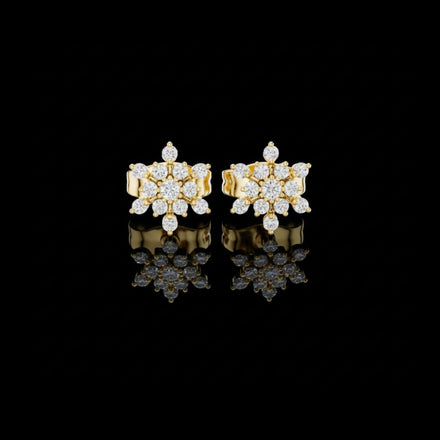
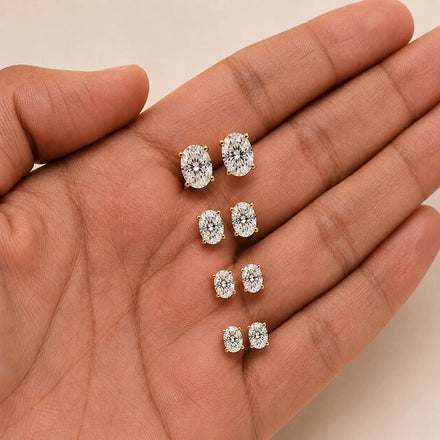
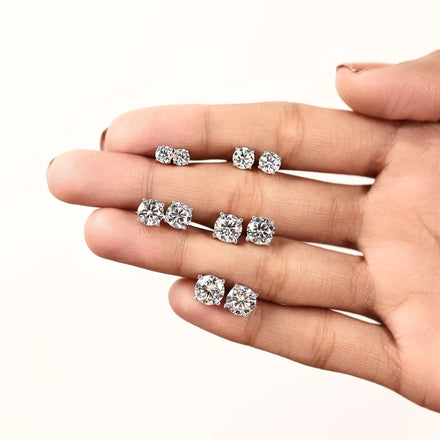
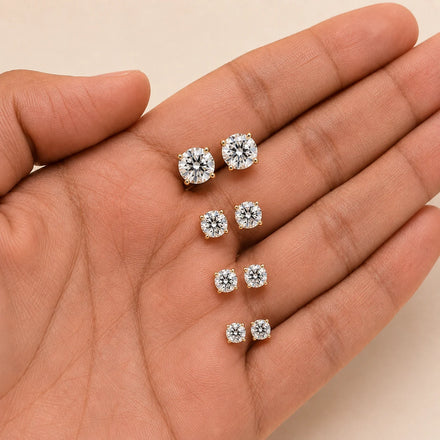
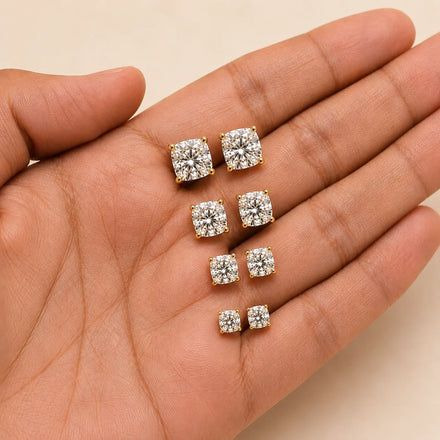
Most lab grown diamond earrings fall into four families. Solitaire studs — one diamond per ear in a simple basket or bezel — are the undisputed classic. They suit every face, every outfit, and every occasion, and they are the style most buyers choose first. Cluster studs group smaller diamonds into a floral or geometric pattern that reads larger than its carat weight; they are a smart way to get big look for less money.
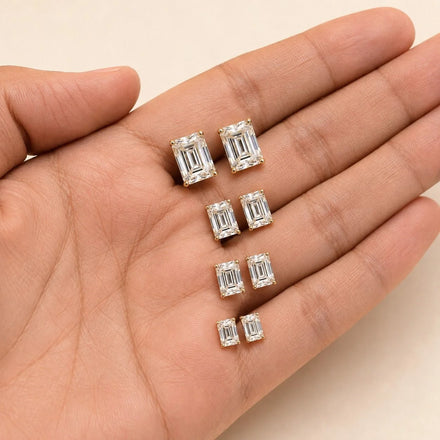
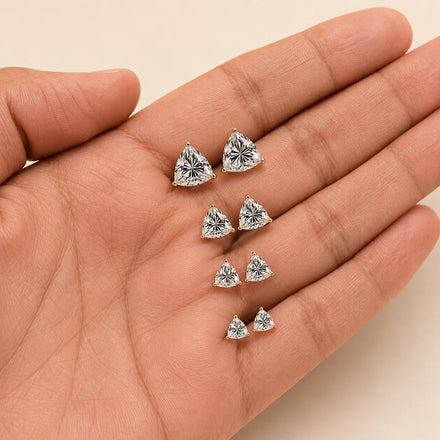
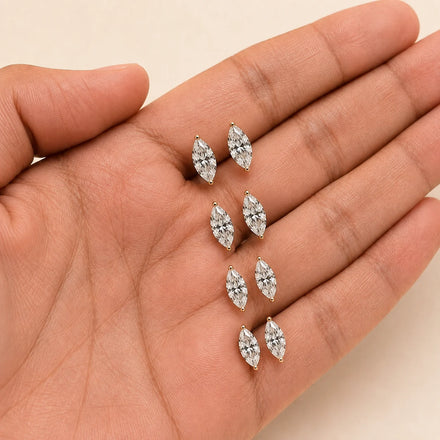
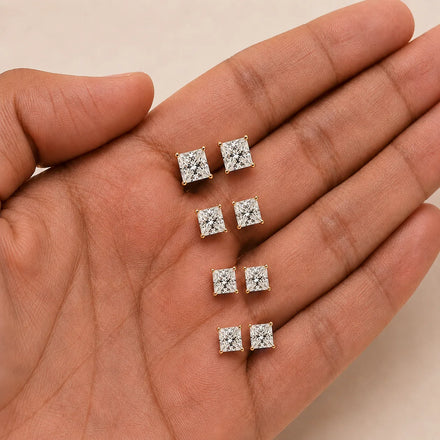
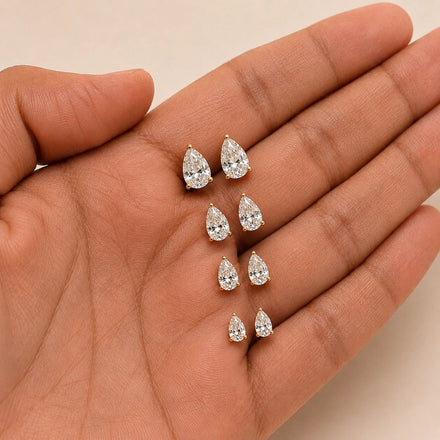
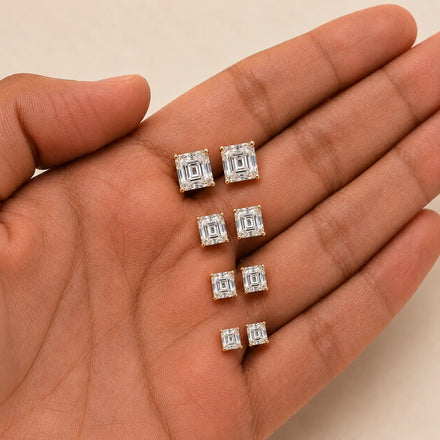
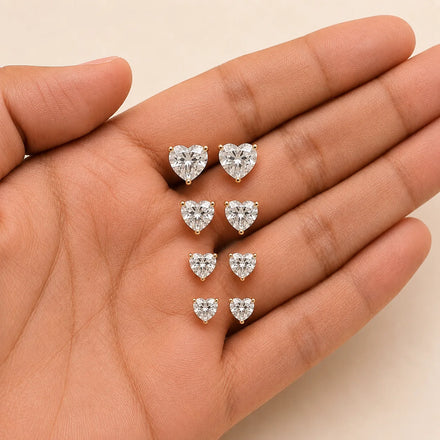
Drop and dangle earrings suspend diamonds below the earlobe, adding movement and drama for evenings and events. Hoops and huggies with diamond pavé line the ear with continuous sparkle — the 2026 jewelry wardrobe staple. Within each family you will find round brilliants (maximum sparkle), ovals and pears (elongated elegance), and fancy shapes for personality.
What Lab Grown Diamond Earrings Cost in 2026
This is where lab grown diamonds change the math completely. A pair of classic 1-carat-total-weight (0.50 ct each) lab grown diamond studs in 14k gold typically lands between $300 and $700 depending on quality and brand — the mined equivalent costs several times more. Step up to 2 carats total weight and you are generally looking at $700 to $1,500, where mined stones would run into the thousands.
Drops, clusters, and pavé hoops price by total diamond weight plus craftsmanship, but the same 60–80% savings versus mined apply across the board. Because the stones themselves are so affordable, more of your budget can go toward better metal — 14k or 18k gold — and finer settings, which is exactly where long-term value lives in earrings you will wear daily.

Choosing Settings and Backs
The setting decides how your diamonds sit, how much light they catch, and how safe they are. The four-prong basket is the stud standard: minimal metal, maximum light, timeless look. Bezel settings wrap each stone in a rim of metal — slightly less sparkle, far more protection, and a sleek modern profile that suits active lifestyles. Martini settings sit low and close to the ear for a refined, no-catch profile.
Then there are the backs, and this is genuinely important. Standard friction push backs are fine for small, inexpensive studs. For anything you would be upset to lose, choose screw backs (the post threads into the back — the most secure option) or notched-post push backs with a locking groove. Earrings fall out; backs are cheap insurance. Ask what backs are included before you buy, not after one goes missing.
| Style | Best for | Typical lab grown price range |
|---|---|---|
| Solitaire studs | Everyday wear, all occasions | $200–$1,500 by carat weight |
| Cluster studs | Big look, smaller budget | $250–$900 |
| Drops & dangles | Evenings, weddings, statement looks | $300–$1,200 |
| Diamond hoops/huggies | Daily sparkle with edge | $250–$1,000 |
Buying Tips That Actually Matter
First, match the pair. Reputable sellers match studs for size, color, and clarity so both ears look identical — ask whether the pair is matched and certified. Second, prioritize cut and "eye-clean" clarity over paper grades; in earrings, which sit slightly away from the eye, VS–SI clarity looks flawless and saves real money.
Third, think about metal honestly. White gold and platinum flatter colorless diamonds; yellow gold warms up slightly tinted stones beautifully and hides wear. Fourth, consider your lifestyle: if you rarely take earrings out, bezels and screw backs earn their keep. And finally, buy from a jeweler with a real warranty — stone tightening, prong checks, and resizing or repair policies matter more for earrings than for any other jewel, because they take daily knocks.

Caring for Your Diamond Earrings
Diamond earrings are low-maintenance but not no-maintenance. Soak them periodically in warm water with a drop of mild dish soap, brush gently with a soft toothbrush, and rinse well — this alone restores most lost sparkle, which is usually just lotion and dust. Check prongs and backs every few months; a jeweler will do it free in seconds.
Store studs with their backs on, separated from other jewelry so the diamonds — the hardest natural material — do not scratch your other pieces. And take them off for heavy workouts, swimming, and harsh chemicals. Chlorine and bleach will not hurt the diamonds, but they can weaken gold settings over time. A little care keeps lab grown diamond earrings brilliant for decades.
Shop Our Best Sellers


Swipe to see more → | View all best sellers
Frequently Asked Questions
Are lab grown diamond earrings real diamonds?
Yes. Lab grown diamonds are chemically, physically, and optically identical to mined diamonds. In earrings, no one — not even a jeweler with a loupe — can tell the difference without laboratory equipment.
How much do lab grown diamond stud earrings cost?
A 1-carat-total-weight pair in 14k gold typically costs $300–$700, and 2 carats total weight runs $700–$1,500. That is roughly 60–80% less than mined diamond studs of the same size and quality.
What is the most popular lab grown diamond earring style?
Solitaire studs remain the bestseller by far — timeless, versatile, and suited to daily wear. Cluster studs and diamond huggie hoops are the fastest-growing trends for 2026.
Should I get screw backs or push backs?
Screw backs are the most secure and worth it for valuable studs. High-quality push backs with notched, locking posts are a good middle ground. Avoid plain friction backs on expensive pairs.
Do lab grown diamond earrings need certification?
For studs of meaningful size, yes — insist on IGI or GIA reports confirming lab grown origin and matched grades. Certification protects your purchase and any future insurance claim.
Can I wear lab grown diamond earrings every day?
Absolutely. Diamonds score 10 on the Mohs scale, so they handle daily wear beautifully. Choose bezel settings and secure backs if you rarely take them off.
How do I clean lab grown diamond earrings?
Soak in warm water with mild dish soap, brush gently with a soft toothbrush, rinse, and pat dry. Avoid harsh chemicals on the metal settings, and have prongs checked yearly.
Sources
- Gemological Institute of America (GIA)
- International Gemological Institute (IGI)
- JCK — Jewelry Industry News
- Beyond 4Cs — Lab Diamond Education

Aumsri Pradhan is the founder of Ivevar Luxury, a Surat-based fine jewelry brand that designs and handcrafts lab grown diamond and moissanite jewelry in its own workshop. She leads the brand's design and customer experience, from engagement rings and bridal sets to custom pieces made to each client's story. Through the Ivevar blog, she shares practical guidance on lab grown diamonds, moissanite, diamond grading and ring design to help buyers choose with confidence.