

 Engagement Rings
 Anniversary Rings
 Solitaire Rings
 Halo Rings
 Toi Moi Rings
 Three Stone Rings
 Nature Inspired Rings
 Rose Cut Rings
 Fancy Color Rings
 Antique Cut Rings
 Wedding Rings
 Wedding Band Rings
 Exclusive Lab Grown Diamond Rings
 All Lab Grown Diamond Ring
 Engagement Rings
 Three Stone Rings
 Fancy Color Rings
 Antique Cut Rings
 Daily Wear Rings
 Wedding Band Rings
 Exclusive Moissanite Rings
 Earrings
 Bracelet
 Pendant
 Necklace
 Men's Ring
 Bridal Sets
 Rings
 Earrings
 Tennis chain
 Cuban Chains
 Custom Pendant
 Custom Ring
 Custom Teeth Grillz
 Round
 Oval
 Cushion
 Marquise
 Pear
 Emerald
 Heart
 Princess
 Rose Cut
 Radiant
 Antique Cut
 Brooch
 Cufflink
 Keychain
 Unique Products
 +91-9265051773
 Virtual Appointment
 log in




Lab Grown Diamond Trade-In & Upgrade Programs Explained
by Ankit Koshiya on Sep 29, 2026
Short answer: Trade-in and upgrade programs let you exchange your diamond toward a larger stone — almost always as store credit, rarely cash. Here's the honest part: lab grown diamonds have low resale value, so expect modest credit and strict conditions. The winning strategy is choosing a jeweler with clear written terms, buying a setting you love for life, and upgrading the stone when the time comes.
- ✓ Credit, not cash. Nearly all programs return store credit toward a new purchase — not money back.
- ✓ Lab grown resale is low. Be realistic: secondary-market values are modest, and program terms reflect that.
- ✓ Get terms in writing. Credit percentage, condition rules, time limits, and upgrade minimums — all confirmed before you buy.
- ✓ “Lifetime upgrade” has fine print. It usually means spending more (often 2x) on the next stone, at the same jeweler.
- ✓ Love the setting forever. A timeless setting you keep plus an upgraded stone later is the best-value path.
Shop the styles in this guide


How Trade-In and Upgrade Programs Work
The mechanics are simple. You bring back a diamond (usually one you bought from that jeweler), they assess it, and you receive credit toward a new, typically more expensive diamond or piece. “Trade-in” programs accept your stone at an appraised value; “upgrade” programs are more structured — for example, full credit of your original purchase price toward a new stone costing at least twice as much. Either way, the credit lives at that jeweler; it doesn't travel.
Why do jewelers offer this? It removes the fear of commitment. Buyers hesitate to spend thousands wondering “what if I want bigger later?” — an upgrade path answers that. For the jeweler, it's loyalty: your next purchase is already spoken for. Understanding that it's a retention tool (not a favor) helps you read the terms with clear eyes.
The Honest Truth About Lab Grown Diamond Resale Value
Here's what you need to hear before you buy: lab grown diamonds have low and falling resale value. Lab grown prices have dropped steeply as production scaled — great for buyers, rough for anyone hoping a stone holds value like an investment. On the secondary market, a lab grown diamond typically fetches a small fraction of its retail price, and many independent buyers won't make offers at all. This isn't a flaw in the stone — it's supply and demand doing its thing.
What this means for trade-in programs: jewelers know the wholesale reality, so lab grown trade-in credit is modest and conditions are strict. Some jewelers exclude lab grown stones from upgrade programs entirely; others offer credit as a loyalty gesture rather than true market value. Neither is dishonest — but you should know which kind of program you're buying into. The takeaway: buy a lab grown diamond to wear and love, not as a store of value. If the upgrade path matters to you, confirm the jeweler's lab grown policy in writing before purchase — not after.
Reading the Fine Print: 5 Questions to Ask
Not all programs are created equal, and the differences hide in the details. Before you buy, ask: (1) What credit do I get — full original price, or a percentage of current value? (2) Must the new stone cost more — and how much more? (3) Does the original diamond need its certificate, and must it be undamaged? (4) Is there a time limit? (5) Can I apply credit to any piece, or only loose diamonds? The answers separate genuinely useful programs from marketing gloss.
Red flags: vague verbal promises (“we'll take care of you”), credit that shrinks if you didn't buy the setting there too, “upgrade” minimums set impossibly high, and restocking-style fees deducted from your credit. Green flags: terms printed on your receipt or in the warranty, no time limit, credit applicable to any jewelry in the store. A jeweler confident in their program puts it in writing without being asked.
Upgrade Strategies That Actually Make Sense
The smartest lab grown upgrade strategy: invest in the setting once, upgrade the stone later. A beautifully made solitaire setting in 14k or 18k gold lasts generations; the center stone can grow with your budget and milestones. Start with a well-cut 1-carat lab grown diamond in your forever setting, and the path to 2 carats later is just a stone swap — no new design, no new setting cost.

Classic solitaire settings are the easiest to upgrade — bezel and prong heads can often be adapted to a larger stone, while intricate halos and pavé designs may need rebuilding. Keep your grading report and original paperwork; upgrade programs almost always require them. And time your upgrade to milestones — a 10th anniversary or a promotion — so the new stone carries a story, not just carats.
Alternatives to Trading In
Trading in isn't the only path. Resetting — placing your existing diamond in a new design — gives you a “new ring” feeling for the cost of labor and metal. A well-worn solitaire can become a pendant; side stones can become studs. Passing the original piece down (to a child or a sibling) while you upgrade preserves sentiment beautifully. And private sale, while slow for lab grown stones, is an option if you're patient and price realistically.

Or simply keep it — not every diamond needs upgrading. A well-chosen lab grown diamond in a timeless setting is already a forever piece — the upgrade itch is often marketing, not need. If you love what you have, spend the money on the anniversary trip instead. Jewelry should mark a life, not chase one.
What to Ask on Purchase Day
Future-you will thank present-you for ten minutes of questions at the counter. Confirm: the exact upgrade/trade-in terms in writing; whether lab grown stones are included (get it stated); what paperwork to keep (grading report, receipt); the jeweler's service policy (free prong checks? resizing?); and whether the setting can accommodate a larger stone later. Take a photo of the terms.
Then buy with confidence and wear it hard. A lab grown diamond's real value was never resale — it's the decades of daily wear, the milestones it marks, and the fact that you could afford the stone you actually wanted. Programs and policies are backup plans. The main plan is loving the ring.
| Program type | How it works | Best for | Watch out for |
|---|---|---|---|
| Lifetime upgrade | Full original credit toward a pricier stone | Buyers sure they'll want bigger later | Usually requires spending ~2x; same jeweler only |
| Trade-in credit | Appraised value as store credit | Changing styles or designs | Credit reflects low lab grown resale |
| Buyback | Jeweler repurchases for cash/credit | Exiting a piece entirely | Rare for lab grown; expect modest offers |
| Consignment | Jeweler sells it for you, takes commission | Patient sellers | Slow; fees and no guaranteed sale |
| Reset / redesign | Your stone, new setting | Keeping the diamond, refreshing the look | Labor + metal costs; intricate settings cost more |
Key Terms You Will See in Program Fine Print
Program pages and receipts use a handful of phrases that sound similar but mean very different things. Knowing them makes any set of terms easier to compare.
- Original purchase price credit: You get back what you paid for the stone, as credit. This is the most generous basis and usually comes with a minimum spend on the new piece.
- Current value or appraised value: The jeweler decides what the stone is worth today. For lab grown diamonds this is usually far below the original price.
- Upgrade minimum: The rule that the new purchase must cost a set multiple of the old one, or exceed it by a set amount.
- Eligible items: What the credit can be spent on. Some programs allow any jewelry; others allow only loose center stones.
- Same-store or same-brand requirement: Credit is valid only with the jeweler who issued it, and sometimes only for stones bought from them originally.
- Deductions: Fees for inspection, re-polishing, unsetting or restocking that come off your credit.
How Credit Is Usually Calculated
The basis for your credit matters more than the headline promise. A program that credits the original price can be worth much more than one that credits current value, even if both are called a lifetime upgrade.
| Credit basis | What you get | Who it favors |
|---|---|---|
| Original purchase price | The full amount you paid for the stone, as credit | The buyer, as long as the upgrade minimum is reasonable |
| Current retail price | What the same stone sells for today | Neutral when prices are stable, the jeweler when prices fall |
| Appraised or wholesale value | What the jeweler could resell the stone for | The jeweler, especially for lab grown stones |
| Fixed percentage of original price | A set share of what you paid | Depends on the share; easy to compare between jewelers |
Because lab grown prices have moved down over time, anything tied to current value tends to shrink. If you want a predictable upgrade path, look for credit tied to the original purchase price and get that wording on paper. For the bigger picture on long-term value, see do lab grown diamonds hold value.
Lab Grown vs Mined Diamond vs Moissanite in Trade-In Programs
The material your stone is made of shapes how a program treats it. A lab grown diamond is chemically, physically and optically a diamond: carbon, 10 on the Mohs scale, with a refractive index around 2.42. Moissanite is a different gem, silicon carbide, about 9.25 on the Mohs scale with a refractive index around 2.65 and more colorful fire.
- Mined diamonds have the longest history in trade-in programs and the most established secondary market, so they are the stones programs were originally built around.
- Lab grown diamonds are graded by both IGI and GIA, which makes them easy to verify, but their lower resale value means programs treat them more cautiously, as covered above.
- Moissanite is affordable to begin with and has very little resale market, so trade-in credit for it is uncommon. Most people who outgrow a moissanite simply reset it or keep it as a second ring.
If you are still deciding on a stone, the moissanite vs lab grown diamond vs diamond comparison explains how the three differ in look, durability and cost.
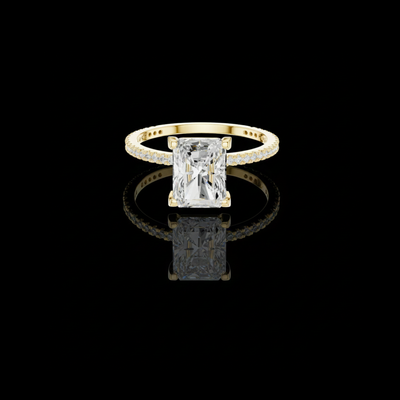
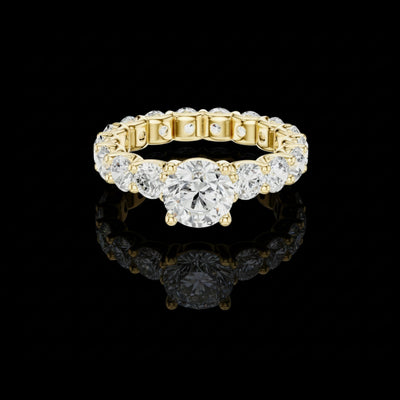
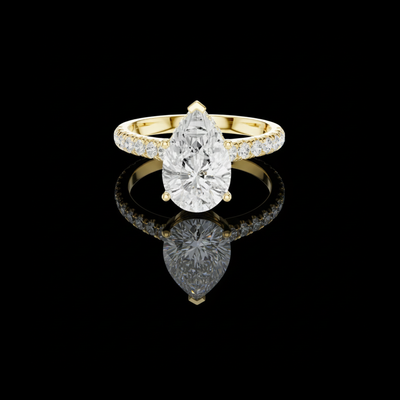
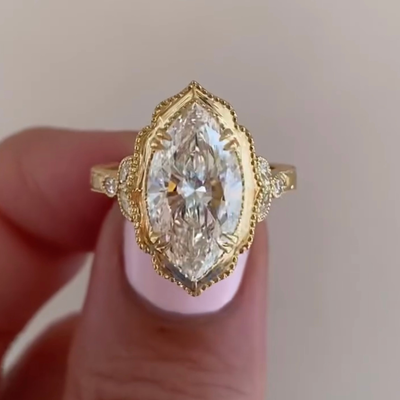
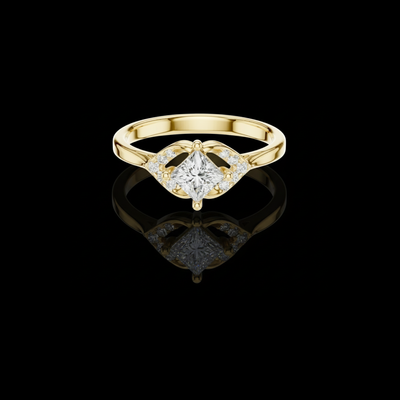
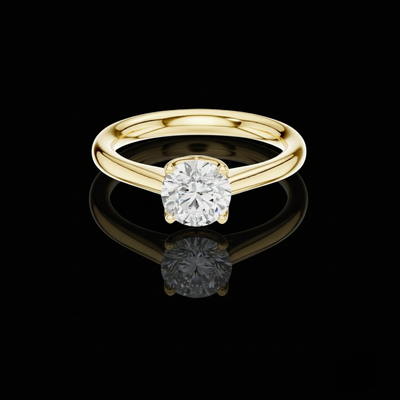
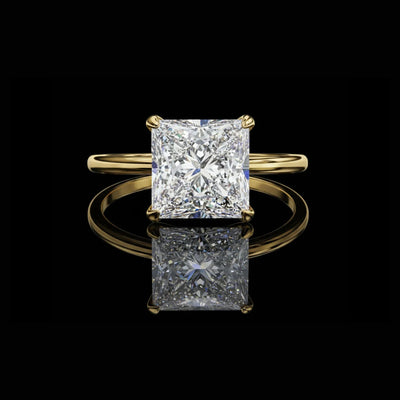
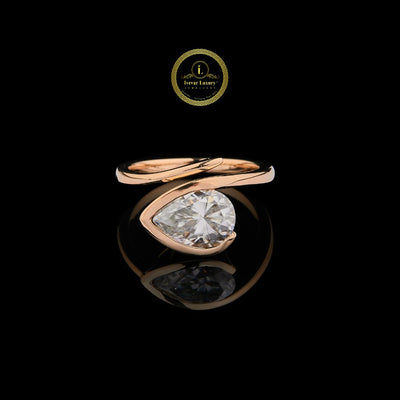
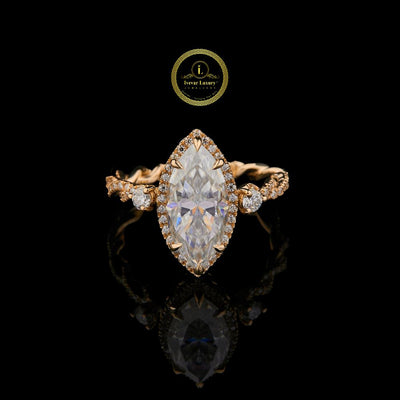
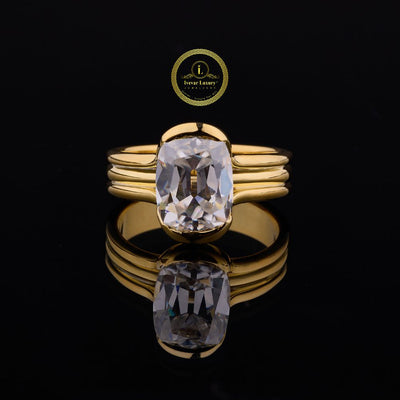
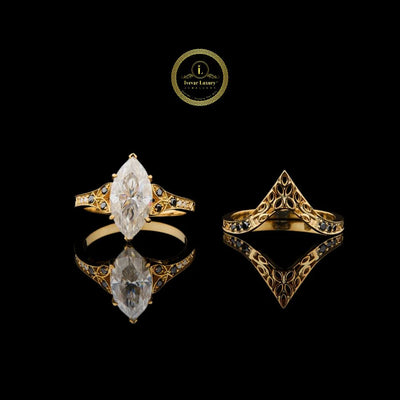
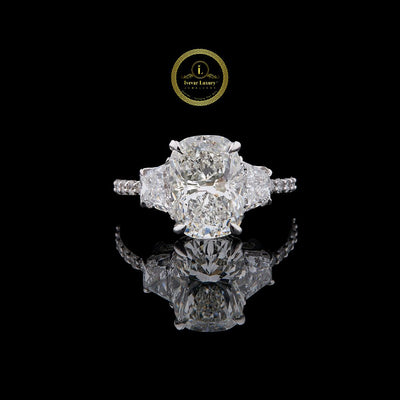
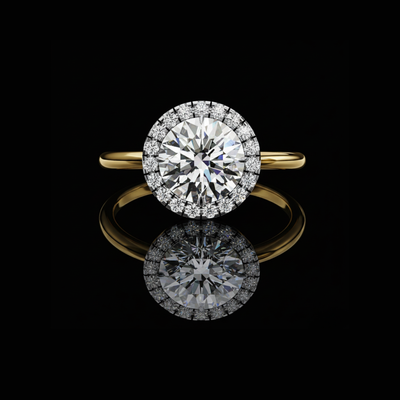
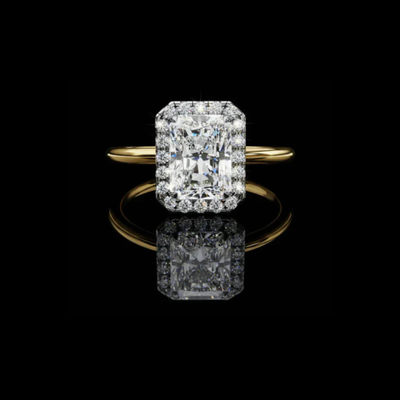
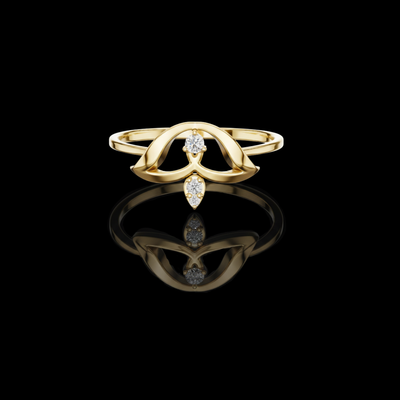
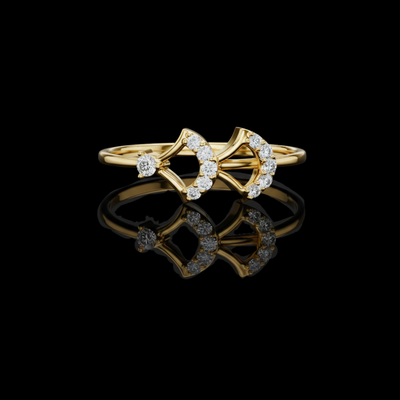
Shop the styles in this guide
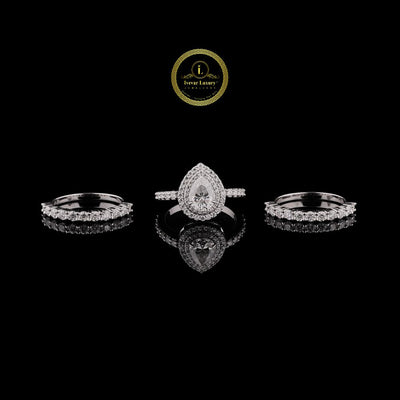
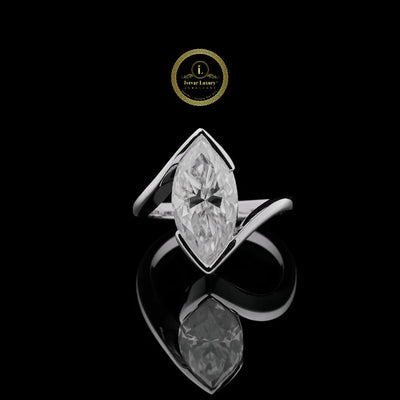
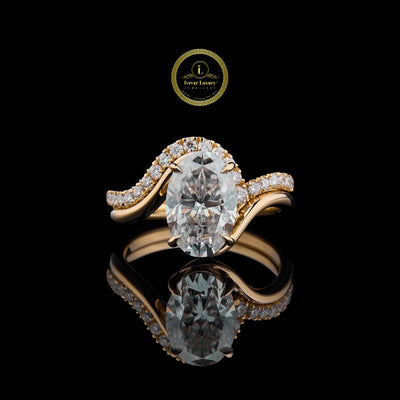
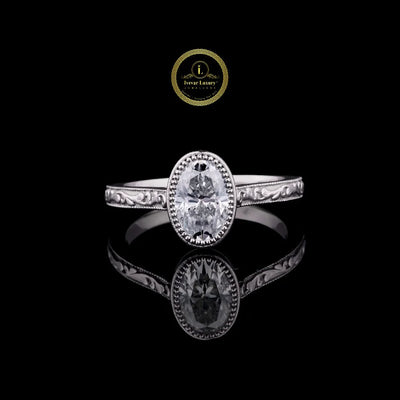
Choosing a Setting That Makes a Future Upgrade Easy
If you think you may move to a bigger stone one day, the setting you buy now decides how simple that swap will be. Some designs accept a new stone with minor work; others have to be rebuilt.
Settings that adapt well
- Prong solitaires: The head can usually be replaced with a larger one while the band stays the same. Browse lab diamond solitaire rings for classic four and six prong styles.
- Three-stone rings: The center can sometimes be upgraded on its own, though side stones may look small next to a much larger center. See lab diamond three-stone rings for proportions.
- Plain or lightly detailed bands: Less to rebuild means less labor when the head changes.
Settings that need more work
- Halos: The halo is made to fit one stone size and shape, so a larger center usually means a new halo.
- Bezels: A bezel wraps the exact outline of the stone, so it has to be replaced or reshaped for a new size.
- Tension and very low-profile designs: These are built around specific dimensions and rarely accept a different stone.
Metal and band choices
A band that is too thin can look out of proportion once a bigger stone sits on top. A medium-width shank in 14K or 18K gold handles a head swap and future wear well. Sterling silver is softer, so a silver ring is better treated as a lovely piece in its own right than as a base you plan to rebuild.
Paperwork to Keep From Day One
Almost every program asks for proof. Store these together in one folder, with a digital copy:
- The original receipt showing the stone, its price and the date.
- The grading report, with its report number. Both IGI and GIA grade lab grown diamonds; see IGI vs GIA for how their reports compare.
- The laser inscription number, if the girdle is inscribed, so the stone can be matched to its report.
- The written program terms, or a photo of them, dated and signed if possible.
- Clear photos of the ring from several angles, taken when new.
- Any service records, such as prong re-tipping or resizing.
Upgrading Without a Formal Program
Many jewelers do not offer trade-ins at all, and you do not need one to move up in size. A few practical routes work without any program:
- Buy a new center stone and reset. Keep your setting, buy a larger stone and have the head adjusted. Lab grown pricing makes this more reachable than it once was.
- Move the old stone into new jewelry. An outgrown center makes a solitaire pendant, or one half of a pair of stud earrings if you match it with a second stone.
- Give the original ring a second life. Wear it on the right hand, stack it, or pass it to someone in the family.
- Sell privately with realistic expectations. As noted above, this is slow for lab grown stones, so treat any proceeds as a bonus.
Mistakes to Avoid
- Paying more upfront just for an upgrade promise. If a ring costs noticeably more because of a program you may never use, the program is not free.
- Assuming lab grown stones are included. Many programs were written for mined diamonds. Ask directly.
- Losing the grading report. Without it, a program may refuse the stone or lower the credit.
- Choosing a hard-to-upgrade setting. If an upgrade matters to you, a halo or bezel adds cost later.
- Letting damage go. Diamonds are very hard but can chip from a sharp knock on an edge or point. A chipped stone may not qualify, so fix loose prongs early.
- Waiting out a time limit. Some programs expire. Put the end date in your calendar.
Step-by-Step Checklist
Before you buy
- Ask whether the jeweler has a trade-in or upgrade program and whether it covers lab grown diamonds.
- Find out the credit basis, the upgrade minimum, any time limit and any deductions.
- Get the terms in writing, on the receipt or a signed sheet.
- Choose a setting that can accept a larger stone if upgrading is likely.
When you are ready to upgrade
- Gather the receipt, grading report, inscription number and program terms.
- Clean the ring and have the prongs checked so the stone shows at its best.
- Ask for the credit amount in writing before choosing the new stone.
- Compare that offer with simply buying a new stone and resetting.
- Confirm the new stone's report number and inscription match before you leave.
Who an Upgrade Program Suits (and Who Can Skip It)
- Good fit: Buyers who already know they want a larger stone within a few years and are happy to stay with one jeweler.
- Good fit: Couples starting with a modest budget who plan to mark a milestone anniversary with a bigger center.
- Can skip: Anyone who expects to keep the same ring for life. You will pay for flexibility you never use.
- Can skip: Moissanite buyers and anyone choosing a design-led ring, such as a halo or bezel, where the setting would be rebuilt anyway.
Caring for Your Ring So It Stays Eligible
Condition rules are the most common reason credit drops. Simple habits keep your stone and setting in shape. Clean the ring every week or two with warm water, mild soap and a soft brush; lab diamonds do not get cloudy or lose sparkle, so any dullness is dirt and oil that comes right off. Take the ring off for the gym, gardening and heavy lifting, and have prongs checked once a year.
The jewelry care guide covers safe cleaning for gold and silver settings. If you are timing an upgrade around prices, why lab grown diamond prices keep falling explains what drives them.
Shop Our Best Sellers


Swipe to see more → | View all best sellers
Frequently Asked Questions
Can you trade in a lab grown diamond?
Sometimes. Some jewelers include lab grown stones in trade-in or upgrade programs; others exclude them. Always confirm the lab grown policy in writing before you buy — never assume.
Do lab grown diamonds hold their value?
Honestly, no. Falling production costs keep resale values low — buy lab grown for beauty and wear, not as an investment.
What is a lifetime upgrade program?
A jeweler's promise to credit your original diamond's purchase price toward a future, more expensive stone — typically requiring you to spend significantly more, at the same store. Terms vary widely, so read them.
Will I get cash or store credit for my trade-in?
Almost always store credit — cash buybacks are rare for lab grown diamonds. Plan on funding your next piece at the same jeweler.
Can I upgrade my diamond at a different jeweler?
Generally no — upgrade credit lives with the original jeweler. A different jeweler may buy your stone independently, but at their own (usually modest) valuation.
Is it better to upgrade my stone or buy a new ring?
Upgrading the stone in a setting you love is usually better value — you skip paying for a new setting. Buy new when you want a completely different style.
What condition must my ring be in for trade-in?
Typically: undamaged stone, original grading report, and sometimes the original setting. Chips, missing paperwork, or heavy wear can reduce or void credit — another reason for yearly checkups.
Will the jeweler test my stone before giving credit?
Usually, yes. Standard thermal testers read lab grown diamonds as diamond, so jewelers rely on the grading report, the laser inscription and lab equipment to confirm the stone's origin and identity.
Can I trade a lab grown diamond toward a mined diamond?
Some programs allow it, others restrict credit to the same type of stone. Ask before you buy, since this is often spelled out in the eligible items section.
Can moissanite be traded in?
Rarely. Moissanite has little resale market, so most programs exclude it. Resetting or keeping it as a second ring is the usual path.
Do upgrade programs cover wedding bands and earrings?
It depends on the jeweler. Many programs cover only center stones above a certain size, so check whether bands, studs and pendants qualify.
Is it worth paying extra for a ring that includes an upgrade program?
Only if you are confident you will use it. Compare the total cost with simply buying a larger stone later and resetting it yourself.
Sources

Aumsri Pradhan is the founder of Ivevar Luxury, a Surat-based fine jewelry brand that designs and handcrafts lab grown diamond and moissanite jewelry in its own workshop. She leads the brand's design and customer experience, from engagement rings and bridal sets to custom pieces made to each client's story. Through the Ivevar blog, she shares practical guidance on lab grown diamonds, moissanite, diamond grading and ring design to help buyers choose with confidence.


