

 Engagement Rings
 Anniversary Rings
 Solitaire Rings
 Halo Rings
 Toi Moi Rings
 Three Stone Rings
 Nature Inspired Rings
 Rose Cut Rings
 Fancy Color Rings
 Antique Cut Rings
 Wedding Rings
 Wedding Band Rings
 Exclusive Lab Grown Diamond Rings
 All Lab Grown Diamond Ring
 Engagement Rings
 Three Stone Rings
 Fancy Color Rings
 Antique Cut Rings
 Daily Wear Rings
 Wedding Band Rings
 Exclusive Moissanite Rings
 Earrings
 Bracelet
 Pendant
 Necklace
 Men's Ring
 Bridal Sets
 Rings
 Earrings
 Tennis chain
 Cuban Chains
 Custom Pendant
 Custom Ring
 Custom Teeth Grillz
 Round
 Oval
 Cushion
 Marquise
 Pear
 Emerald
 Heart
 Princess
 Rose Cut
 Radiant
 Antique Cut
 Brooch
 Cufflink
 Keychain
 Unique Products
 +91-9265051773
 Virtual Appointment
 log in




Short answer: The best wedding bands for an oval engagement ring are a slim pave or eternity band for a classic look, a curved or contour band to hug a low or halo oval, a chevron or V band to frame the shape, or a criss cross band for a modern twist. Match the band width to the engagement ring's shank, check that the oval sits flush or with a small, even gap, and consider a curved band if your oval has a hidden halo or sits low.
Ovals are one of the most popular engagement ring shapes in the US, and they pair beautifully with many bands. Their soft, elongated outline makes fingers look longer, and their brilliant faceting gives sparkle close to a round stone. But the same shape that makes ovals so flattering can make band matching a little tricky, because the stone is often wider than the band beneath it.
This guide explains how to find a band that sits well next to your oval, which styles suit each type of oval setting, how to choose metals and stones, and when a curved band or a matched bridal set is the better choice.
Why Band Matching Matters with Ovals
An oval stone set north-south (the usual orientation, pointing along the finger) is longer than it is wide, but even its width is often greater than the shank of the ring. Depending on how the stone is set, its edges or the head of the setting can overhang the band. That overhang is what decides whether a straight wedding band will sit flush against the engagement ring or leave a gap.
Three things affect the fit most:
- Setting height: a higher-set oval often leaves room for a straight band to slide underneath.
- Halo or basket: a halo, hidden halo or wide basket adds metal and stones below the oval, which can block a straight band.
- Stone size: larger ovals spread wider, so the overhang becomes more noticeable.
Ovals also vary in proportion. Most have a length-to-width ratio somewhere around 1.3 to 1.5. A slimmer, more elongated oval leaves more room at the sides for a band, while a wider oval needs more careful matching.
Best Band Styles for Oval Rings
| Band style | Look | Works best with |
|---|---|---|
| Straight pave or eternity band | Classic, timeless | Cathedral or high-set solitaires |
| Curved or contour band | Hugs the oval, no gap | Low settings, halos, hidden halos |
| Chevron or V band | Frames and points to the stone | Ovals with slim shanks |
| Criss cross or bypass band | Modern and playful | Minimal solitaires |
| Oval eternity band | Echoes the center shape | Matching, cohesive stacks |
Straight pave and eternity bands
A straight band of small round stones is the most classic pairing. It adds a line of sparkle without competing with the oval, and it suits almost every metal and style. For a full sweep of stones, see our lab grown diamond eternity rings.
Curved and contour bands
A curved band has a gentle dip in the center that follows the outline of the oval or its halo. The two rings nest together with no gap, so the stack looks like a single ring. This is often the best solution when a straight band will not sit flush.
Chevron and V bands
A chevron band rises to a point in the center, framing the oval and drawing the eye toward it. It suits slim shanks and adds a vintage or Art Deco feel.
Criss cross and bypass bands
These bands twist or cross over at the center, adding movement to a simple solitaire. They are a good choice if you want your stack to look modern and less traditional.
Oval eternity bands
A band of small oval stones echoes the shape of your center stone. It creates a cohesive, intentional look and works especially well when you plan to add more bands over time.
How to Check the Fit
- Side view: does the band slide under the oval, or leave a gap?
- Width: a band close to the shank width usually looks balanced.
- Height: very tall bands can compete with the center stone.
- Metal: match the metal color for a seamless stack.
- Movement: wear both rings for a while; bands that rub or twist against each other can wear the metal over time.
The side view is the most revealing. Hold your hand flat and look at the stack at eye level. If the band sits tight against the engagement ring, a straight band works. If there is a gap, decide whether you like the look or want a curved band to close it.
Tip: When shopping online, look for side-view photos or videos of the engagement ring. The side profile shows the setting height and basket shape, which tells you more about band fit than the top view.
 Shown: Dual Oval Lab Diamond Crisscross Pave Bypass Ring
Straight vs Curved Bands for Ovals
The biggest decision for most oval owners is whether to choose a straight band or a curved one. Neither is better; they create different looks.
| Consideration | Straight band | Curved band |
|---|---|---|
| Fit with high settings | Usually flush | Works, but may not be needed |
| Fit with halos and low settings | Often leaves a gap | Nests closely with no gap |
| Wearing the band alone | Looks complete on its own | Can look unusual without the engagement ring |
| Adding more bands later | Easy to stack | Best paired with a straight band on the other side |
| Overall look | Classic, clean lines | Seamless, unified stack |
Think about how you will wear your rings. If you plan to take off your engagement ring for travel, sport or work and wear only the wedding band, a straight band is more versatile. If you will almost always wear them together, a curved band gives the neatest fit.
A small, even gap between a straight band and an oval is also a perfectly good option. Many people like the look of a little space, which lets each ring stand on its own.
Pairing Ideas by Oval Style
Oval solitaire
Almost any band works. A delicate pave band is classic; a chevron adds shape. A plain polished band keeps the focus entirely on the stone.
Oval halo
A curved band closes the gap around the halo, or choose a straight band set slightly apart for contrast. A pave band with stones of a similar size to the halo stones makes the stack look unified.
Oval with hidden halo
A contour band or thin straight band that slides beneath the setting works best. Check the side view carefully, since the hidden halo sits just where the band would meet the ring.
East-west oval
A straight, slim band keeps the focus on the sideways stone; a criss cross band adds movement. Because an east-west oval sits across the finger, it often leaves less overhang, so straight bands tend to fit easily.
Oval three stone
Choose a curved band or a slim band that sits beside rather than touching the side stones. A plain band can be a smart choice here, since the engagement ring already has plenty of detail.
Oval toi et moi
Two-stone rings with an oval are asymmetric, so a simple straight band or a gently curved band usually works better than a bold chevron.
Matching Metals and Stones
Metal color
Matching your band's metal to your engagement ring creates a seamless stack. Mixing metals, such as a yellow gold engagement ring with a white gold band, is a deliberate style choice that works best when the contrast looks intentional. Keep the karat the same if you can, since rings of different hardness rubbing together can wear unevenly.
Lab grown diamond or moissanite
Ideally, match the stone in your band to your oval. A lab grown diamond oval looks most consistent with a lab diamond band, and a moissanite oval with a moissanite band. Lab grown diamonds are chemically, physically and optically the same as mined diamonds, while moissanite is a different gemstone with more rainbow fire. Mixing is fine, especially with small pave stones, as long as the colors are similar.
Stone size
Band stones that are a bit smaller than any halo or side stones on your engagement ring help the oval stay the star. Larger band stones create a bolder, more equal stack.
Setting style
The way the band's stones are set changes the feel of the stack. Shared prong pave gives the most sparkle and suits a glamorous oval halo. Channel set stones sit between smooth walls of metal, which is practical for daily wear and looks clean next to a solitaire. A plain metal band with a polished or brushed finish is the most understated choice and lets the oval shine on its own.
Choosing Band Width and Proportion
Width has a big effect on how your oval looks. A band that is much wider than the engagement ring's shank can make the stone look smaller, while a very thin band next to a chunky shank can look lost.
- Thin shanks: a delicate engagement ring with a slim shank pairs best with an equally slim band, so the oval stays the focus.
- Medium shanks: a band of the same width, or very slightly narrower, gives the most balanced look.
- Wide shanks: a wider band suits a bold ring and keeps the stack in proportion.
- Large ovals: a bigger center stone can carry a slightly wider band without looking crowded.
Finger shape matters too. Ovals already lengthen the finger, and a slim band adds to that effect. On shorter fingers, a narrow band keeps the hand looking long and elegant. On longer fingers, a wider band or a stack of two can look in proportion.
Also look at band height, the thickness of the band from the finger outwards. A band that is taller than the engagement ring's shank can push the oval up or tilt it, so similar heights usually sit best together.
Bridal Sets vs Buying Separately
A matched bridal set is designed so that the engagement ring and wedding band fit together perfectly. It removes the guesswork, which is especially helpful with low, halo or hidden halo ovals.
- Bridal set: guaranteed fit, matching metal and stones, and a cohesive design. Browse our lab grown diamond bridal sets.
- Separate band: more freedom to choose a different style, and you can decide on the band after the engagement.
- Custom band: a band designed or curved to fit your exact engagement ring, ideal if nothing off the shelf sits right.
Tips for a Perfect Oval Stack
- Bring your ring: take your engagement ring when trying bands.
- Go custom: ask for a custom-curved band if nothing sits right.
- Bridal sets: consider buying a matched bridal set for guaranteed fit.
- Same size: order the band in the same ring size as your engagement ring so they sit level.
- Think ahead: if you might add an anniversary band, choose a style that allows a band on both sides.
- Wear order: traditionally the wedding band goes on first, closest to the heart, with the engagement ring above it.
Many people add a second band on the other side of the engagement ring later, creating a sandwich stack. With an oval, a curved band on one side and a straight band on the other is a popular way to build this look.
Caring for Your Oval Stack
Rings worn together rub against each other every day. A little care keeps both looking their best and prevents avoidable wear.
- Clean weekly: soak both rings in warm water with a drop of mild dish soap and brush gently under the oval and along the band.
- Check prongs: the pointed ends of an oval are protected by prongs that can catch on clothing or be knocked by the band. Have them checked once a year.
- Watch for rubbing: if the band rubs against the halo or setting, a jeweler can advise whether a curved band or a small adjustment would help.
- Store separately: keep each ring in its own soft pouch so diamonds do not scratch the other ring's metal.
- Take them off: remove both rings for the gym, swimming and heavy work.
Bands for Oval Rings at Ivevar
We design bands in our Surat workshop that complement oval engagement rings, and we can custom-curve a band to fit yours. Choose lab grown diamonds, many with IGI certificates, or moissanite, in 10K, 14K or 18K gold. Every piece ships free worldwide, with 30-day easy returns. Browse lab grown diamond wedding rings and oval lab grown diamonds, or book a virtual appointment and we will help you find a band that fits your oval perfectly.
Shop Bands and Rings for Oval Lovers
 Dual Oval Crisscross RingShop Now
 Brilliant Oval Double RingShop Now
 Oval Floral Halo RingShop Now
 Curved Wave Minimalist RingShop Now
 Criss Cross Ring and Pave BandShop Now
 Chevron Crown RingShop Now
Swipe to see more → | View all wedding rings
Frequently Asked Questions
What wedding band goes best with an oval engagement ring?
A slim pave or eternity band is the classic choice; curved bands suit low or halo ovals.
Will a straight band sit flush with my oval?
With higher settings, usually yes. Low or wide ovals may need a curved band.
Should the band match the engagement ring width?
A similar width usually looks most balanced.
Can I wear a chevron band with an oval?
Yes. A chevron frames the oval beautifully.
Is a gap between rings bad?
Not at all; a small, even gap can look intentional and modern.
Can I wear a curved band on its own?
You can, though it looks most complete with the engagement ring. If you often wear your band alone, a straight band may suit you better.
Should my band have oval stones too?
It is a lovely option that echoes the center stone, but round stones are just as popular and blend easily with any oval.
Can I add a second band later?
Yes. Many people add a band on the other side of the engagement ring for an anniversary, creating a balanced three-ring stack.
Do I need a custom band for a halo oval?
Not always. Many halo ovals sit well with a ready-made curved band. A custom band is worth considering if your setting is unusually low or wide and nothing else sits flush.
The Bottom Line
Ovals pair with almost any band. Check the side view, match widths and metal, and choose a curved band for low or halo designs. If nothing fits quite right, a bridal set or a custom-curved band will give you a stack that looks made to belong together.
Related Guides
- Oval engagement rings buying guide
- How to match a wedding band to your engagement ring
- How to stack wedding bands
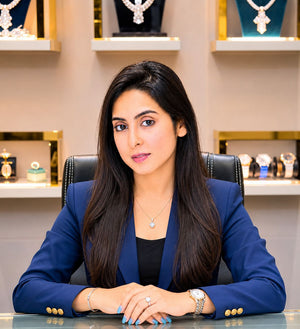
Author Bio
Aumsri Pradhan
Founder, Ivevar Luxury
Aumsri Pradhan is the founder of Ivevar Luxury, a Surat-based fine jewelry brand that designs and handcrafts lab grown diamond and moissanite jewelry in its own workshop. She leads the brand's design and customer experience, from engagement rings and bridal sets to custom pieces made to each client's story. Through the Ivevar blog, she shares practical guidance on lab grown diamonds, moissanite, diamond grading and ring design to help buyers choose with confidence.


