Engagement Rings
 Anniversary Rings
 Solitaire Rings
 Halo Rings
 Toi Moi Rings
 Three Stone Rings
 Nature Inspired Rings
 Rose Cut Rings
 Fancy Color Rings
 Antique Cut Rings
 Wedding Rings
 Wedding Band Rings
 Exclusive Lab Grown Diamond Rings
 All Lab Grown Diamond Ring
 Engagement Rings
 Three Stone Rings
 Fancy Color Rings
 Antique Cut Rings
 Daily Wear Rings
 Wedding Band Rings
 Exclusive Moissanite Rings
 Earrings
 Bracelet
 Pendant
 Necklace
 Men's Ring
 Bridal Sets
 Rings
Rings
 Earrings
 Tennis chain
 Cuban Chains
 Custom Pendant
 Custom Ring
 Custom Teeth Grillz
 Round
Round
 Oval
Oval
 Cushion
 Marquise
 Pear
Pear
 Emerald
 Heart
Heart
 Princess
 Rose Cut
 Radiant
 Antique Cut
 Brooch
 Cufflink
 Keychain
 Unique Products
 +91 9265051773
 Virtual Appointment
 log in



Women's Diamond Wedding Bands: Styles, Prices & Buying Guide
by Ankit Koshiya on Sep 29, 2026

Short answer: Women's diamond wedding bands range from a few hundred dollars for a delicate half-eternity band to several thousand for a full eternity band in platinum. The style you choose — pavé, channel-set, bezel, or eternity — affects price, comfort, and maintenance more than the diamonds themselves. With lab grown diamonds, a band that once cost $5,000 now costs a fraction of that, so decide your look first and let the stone choice follow.
- ✓ Pick the setting style first. Pavé, channel, bezel, and eternity each wear and price very differently.
- ✓ Lab grown diamonds slash the cost. Same look as mined for 70–90% less — the style budget stretches much further.
- ✓ Half-eternity is the practical sweet spot. Full sparkle on top, plain metal underneath, resizable, and cheaper.
- ✓ Match total carat to your engagement ring. The band's stones should whisper; the center stone should speak.
- ✓ Budget for maintenance. Diamond bands need annual prong checks; build that into the true cost.
The Five Setting Styles, Explained
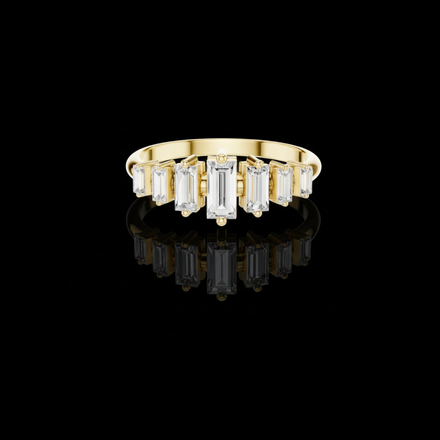
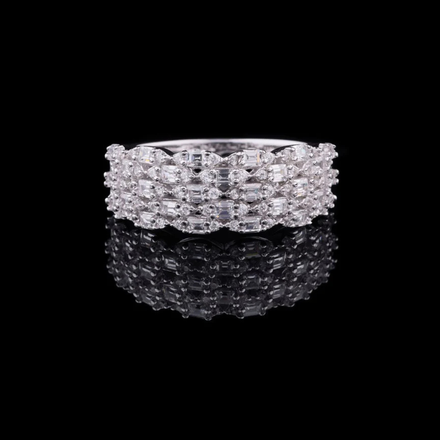
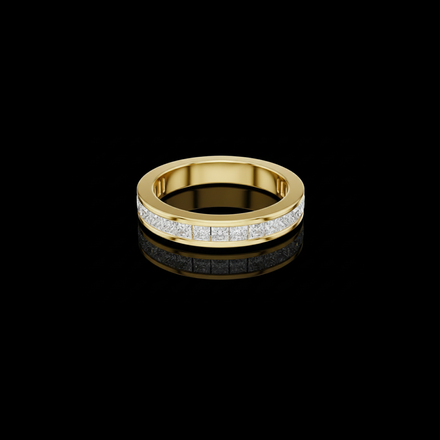
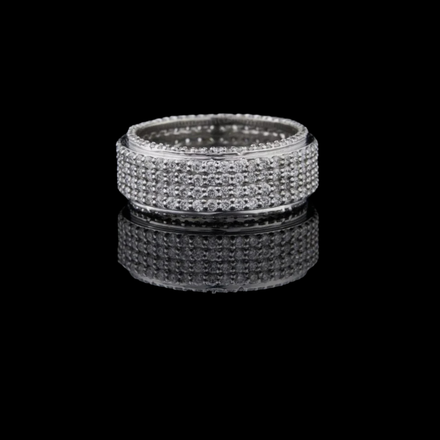
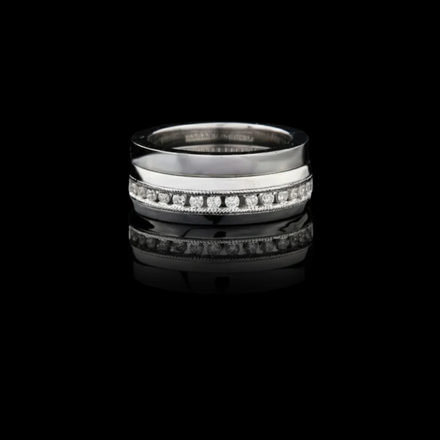
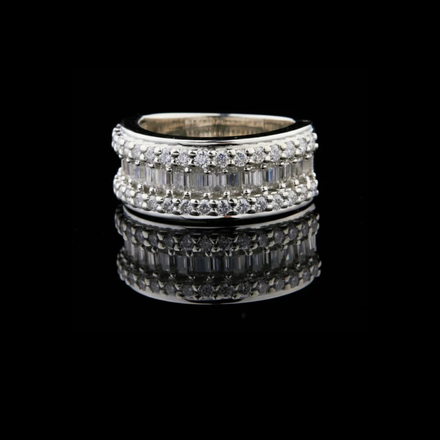
Nearly every women's diamond wedding band is a variation on five settings. Pavé sets small diamonds close together with tiny beads of metal, creating a continuous glittering surface — maximum sparkle per dollar, but the small prongs need regular checking. Channel setting seats diamonds between two metal walls with no prongs at all; it is sleek, secure, and the best choice for active hands, though it shows slightly less sparkle than pavé. Bezel setting wraps each stone in a rim of metal — the most protective style, with a modern look that suits contemporary brides. Bar setting holds stones between vertical metal bars, a crisp architectural look common in baguette bands. And eternity — diamonds all the way around — is less a setting than a commitment: unbroken sparkle from every angle, but no resizing ever.
Each style also has a comfort personality. Pavé bands can feel slightly textured against neighboring fingers; channel and bezel bands feel smooth. If you will stack multiple rings, try them together — a pavé eternity next to a pavé engagement shank can feel like sandpaper, while a channel band glides.
What Women's Diamond Bands Cost in 2026
Prices depend on four things: total diamond weight, stone origin (lab grown vs mined), metal, and setting complexity. A delicate 14k gold half-eternity band with lab grown diamonds totaling around 0.5 carats typically lands in the low hundreds of dollars. Step up to a full eternity band with 1.5–2 carats of lab grown diamonds in 14k gold and you are generally in the high hundreds to low thousands. The same designs in mined diamonds cost multiples more — which is why lab grown stones now dominate this category.
Metal moves the needle too. Platinum adds a meaningful premium over 14k gold on every style, and 18k gold sits between them. Intricate settings cost more in labor: a hand-engraved vintage-style band or a two-row eternity takes far more bench time than a simple channel band. When comparing prices, always compare total carat weight and metal — a "cheap" band is often just a lighter one.

Matching the Band to Your Engagement Ring
The band should never outshine the engagement ring — unless that is the look you want. A useful rule: the band's total diamond presence should be visibly smaller than the center stone's. With a 1-carat solitaire, a band totaling 0.5–1 carat looks balanced; with a 2-carat center, you can carry a bolder band. Diamond shape matters as well: round diamonds in the band are the universal donor, pairing with any center shape, while baguette or emerald-cut stones in the band echo step-cut center stones beautifully.
Width deserves the same attention. A 2mm band beside a 1.8mm solitaire shank looks made-to-match; a 3.5mm band beside it looks like a separate decision. When in doubt, ask the jeweler to photograph the pair on a finger — flat product shots lie about proportion, but a hand shot tells the truth instantly.
Half-Eternity vs Full Eternity: The Practical Divide
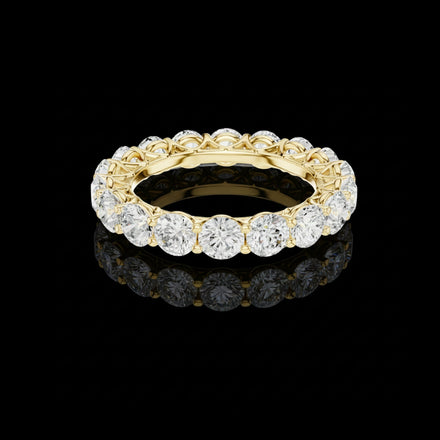
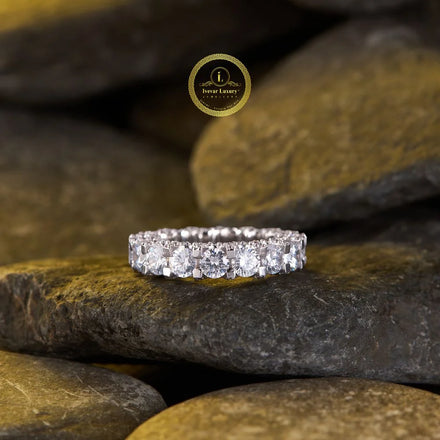
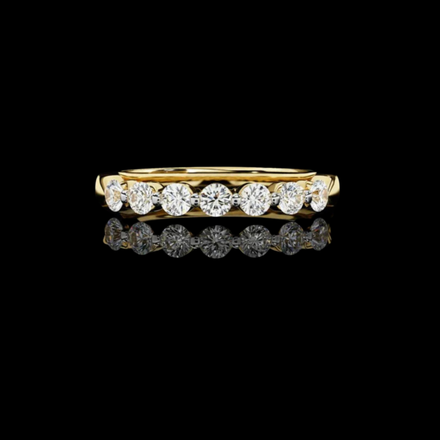
This single choice affects price, comfort, and your future more than any other. A full eternity band has diamonds all the way around: it never shows a plain patch when it spins, and it photographs like liquid light. But it costs roughly 40–60% more than the equivalent half-eternity, it cannot be resized (cutting the band means cutting through stones), and the diamonds underneath wear faster against hard surfaces.
A half-eternity band carries diamonds across the top half only. It looks identical from above — which is how everyone sees it — costs far less, resizes easily, and sits more comfortably since plain metal rests against the palm. For most brides, half-eternity is the rational winner; full eternity is the emotional one. Both are valid — just know which bride you are before you pay.

| Style | Typical lab grown price range | Resizable? | Best for |
|---|---|---|---|
| Pavé half-eternity | Low hundreds | Yes | Maximum sparkle on a budget |
| Channel half-eternity | Low to mid hundreds | Yes | Active lifestyles, sleek look |
| Full eternity pavé | High hundreds to low thousands | No | Unbroken sparkle; stable finger size |
| Bezel eternity | Mid hundreds and up | No (full) / limited (half) | Modern style, maximum stone protection |
| Two-row / statement | Low thousands | Rarely | Bold brides who want the band to star |
Caring for a Diamond Band: The True Cost of Sparkle
A diamond wedding band is not a buy-it-and-forget-it piece. Pavé and prong-set bands should be inspected by a jeweler once a year — a loose stone caught early is a five-minute tightening; caught late, it is a lost diamond. Ultrasonic cleaners are safe for most diamond bands, but skip them if your band has fragile settings or glued-in stones, and never put a band with soft gemstones in one.
Daily habits matter more than deep cleans. Take the band off for the gym, gardening, and any work with harsh chemicals — chlorine pits gold alloys over time. Store it separately from other jewelry so harder stones do not scratch the metal. And insure it: a rider on your homeowner's or renter's policy typically costs a small fraction of the band's value per year and covers the loss scenario no maintenance plan can prevent.
Shop Our Best Sellers


Swipe to see more → | View all best sellers
Frequently Asked Questions
How much should a women's diamond wedding band cost?
A lab grown diamond half-eternity band in 14k gold typically costs in the low hundreds, while a full eternity band with 1.5–2 carats runs from the high hundreds to low thousands. Mined diamond versions cost several times more for an identical look.
Is a full eternity or half-eternity band better?
Half-eternity wins on practicality: it costs 40–60% less, resizes easily, and looks identical from above. Full eternity wins on unbroken sparkle and never showing a plain patch when it spins. Choose based on your budget and finger-size stability.
What diamond shape is best for a wedding band?
Round brilliant is the most versatile — maximum sparkle and pairs with any engagement ring. Baguette and emerald cuts give a sleek Art Deco look, while princess cuts offer a modern edge. Match or complement your center stone's shape.
Can diamond wedding bands be resized?
Half-eternity and partial-stone bands usually can, since the jeweler works on the plain section. Full eternity bands cannot be resized — cutting through the stone-set circle would destroy the design. Size full eternity bands very carefully.
Do lab grown diamonds look the same as mined in a band?
Yes. Lab grown diamonds are chemically and optically identical to mined diamonds. In the small melee stones used in wedding bands, even gemologists cannot tell the difference without laboratory equipment.
How do I clean a diamond wedding band?
Soak it in warm water with mild dish soap, gently brush with a soft toothbrush, and rinse. Ultrasonic cleaners are safe for most diamond bands, but avoid them for fragile settings. Have the prongs checked annually.
Should my wedding band match my engagement ring's metal?
Matching metal and karat is the safest choice — the pair ages uniformly. Mixed metals can look striking when the contrast is clearly intentional, but nearly-matching metals just look mismatched.
Sources
- Brides — Wedding Ring Guides
- The Knot — Wedding Ideas & Jewelry Advice
- GIA — Gemological Institute of America

Aumsri Pradhan is the founder of Ivevar Luxury, a Surat-based fine jewelry brand that designs and handcrafts lab grown diamond and moissanite jewelry in its own workshop. She leads the brand's design and customer experience, from engagement rings and bridal sets to custom pieces made to each client's story. Through the Ivevar blog, she shares practical guidance on lab grown diamonds, moissanite, diamond grading and ring design to help buyers choose with confidence.