

 Engagement Rings
 Anniversary Rings
 Solitaire Rings
 Halo Rings
 Toi Moi Rings
 Three Stone Rings
 Nature Inspired Rings
 Rose Cut Rings
 Fancy Color Rings
 Antique Cut Rings
 Wedding Rings
 Wedding Band Rings
 Exclusive Lab Grown Diamond Rings
 All Lab Grown Diamond Ring
 Engagement Rings
 Three Stone Rings
 Fancy Color Rings
 Antique Cut Rings
 Daily Wear Rings
 Wedding Band Rings
 Exclusive Moissanite Rings
 Earrings
 Bracelet
 Pendant
 Necklace
 Men's Ring
 Bridal Sets
 Rings
 Earrings
 Tennis chain
 Cuban Chains
 Custom Pendant
 Custom Ring
 Custom Teeth Grillz
 Round
 Oval
 Cushion
 Marquise
 Pear
 Emerald
 Heart
 Princess
 Rose Cut
 Radiant
 Antique Cut
 Brooch
 Cufflink
 Keychain
 Unique Products
 +91-9265051773
 Virtual Appointment
 log in




Short answer: In a north-south setting, an elongated stone (oval, marquise, pear, emerald, radiant) points along the finger. It is the traditional look and makes the hand appear longer and slimmer. In an east-west setting, the same stone is turned sideways so it runs across the finger. It looks modern and unexpected, often sits lower, snags less and stacks beautifully with thin bands. Choose north-south for classic elegance and a lengthening effect; choose east-west for a fresh, minimalist statement.
Orientation is one of the few design choices that completely changes how a ring looks without changing the stone at all. The same 1 carat oval can read as a graceful, traditional engagement ring or as a sleek, architectural piece, depending only on which way it faces. This guide explains how each orientation works, which hands and lifestyles suit each one, which shapes and settings work best, and what to check before you buy.
East-West vs North-South at a Glance
| Feature | North-South | East-West |
|---|---|---|
| Stone direction | Along the finger, tip toward the nail | Across the finger, side to side |
| Overall look | Classic, traditional, bridal | Modern, artistic, understated |
| Finger effect | Lengthens and slims | Adds width; balances long, slender fingers |
| Profile | Standard height | Often lower, so it snags less |
| Stacking | Works with curved or contour bands | Excellent with thin straight bands |
| Best shapes | Oval, pear, marquise, emerald, radiant | Oval, marquise, emerald, baguette, pear |
| Visible size | Full length shows along the finger | Full length shows across the finger |
What "Orientation" Actually Means
Only elongated shapes have a direction. A round or square stone looks the same whichever way you turn it, so orientation only matters for stones that are longer than they are wide. That includes ovals, marquises, pears, emerald cuts, elongated cushions, radiants and baguettes.
Imagine a line running from your knuckle toward your fingertip. If the long axis of the stone follows that line, the ring is set north-south. If the long axis runs at a right angle to it, from one side of the finger to the other, the ring is set east-west. A few designers also set stones on a diagonal, but north-south and east-west are the two main choices.
The stone, its carat weight and its grade stay the same either way. What changes is the head (the part of the setting that holds the stone), how the stone sits against the band, and the visual effect on your hand.
North-South: The Classic Choice
North-south is how most elongated engagement rings are made, and for good reason. Running the stone along the finger draws the eye up and down the hand, which makes fingers look longer and more slender. It also shows off the full length of the stone in the direction people naturally look at a hand.
Strengths of north-south
- Lengthening effect: Flattering on shorter or wider fingers, and on smaller hands generally.
- Timeless look: It is the traditional bridal style, so it rarely feels dated.
- Easy band pairing: Most wedding bands, including curved and contour bands, are designed around north-south heads.
- More setting options: Halos, hidden halos, cathedral shoulders and three-stone layouts are all common in this orientation.
Things to know
A tall north-south setting can catch on sweaters and gloves, especially with a marquise or pear, which have pointed tips. Ask for V-prongs on points to protect them. A pear set north-south traditionally points toward the fingertip, though some people prefer it reversed; both are acceptable.
East-West: The Modern Statement
An east-west ring turns the stone sideways so it spans the finger. The result feels quieter and more design-led, which is why it appeals to minimalists and people who want an engagement ring that does not look like everyone else's.
The idea is not new. Sideways-set stones appear in Georgian and Victorian jewelry, and the look has come back into fashion because it suits clean, modern design so well.
Strengths of east-west
- Lower profile: The stone can sit closer to the finger, so it snags less and feels comfortable for hands-on work.
- Stacking: A sideways stone leaves room above and below it, so straight bands sit flush with no gap.
- Distinctive style: It stands out without needing a bigger stone.
- Balance on long fingers: Adding horizontal width can make long, slender fingers look more proportioned.
Things to know
An east-west stone should not extend far past the sides of your finger. If it does, it can rub neighbouring fingers and the edges are more exposed to knocks. As a rough guide, the length of the stone should stay within the width of the finger. Smaller hands often look best with modest sizes in east-west.
 Shown: 0.43 Ct Marquise Shape D Color VS1 Lab Grown Diamond
Who Should Choose Each?
- North-south: Anyone who wants a timeless bridal look, people with shorter or wider fingers who want a slimming effect, and anyone planning a classic matching wedding band.
- East-west: Minimalists, stack lovers, people with long and slender fingers, and those who work with their hands and want a lower ring.
- Undecided: Try both orientations on your hand. Lay a loose stone or a paper cut-out of the stone's outline across your finger both ways and look in a mirror from a normal distance.
Best Diamond Shapes for Each Orientation
Every elongated shape can be set either way, but some shapes have a natural preference.
| Shape | North-South | East-West |
|---|---|---|
| Oval | Classic and flattering | Soft, modern, very wearable |
| Marquise | Dramatic, lengthening | Striking, vintage feel; protect the points |
| Pear | Traditional, tip toward the nail | Unusual and asymmetric; works in stacks |
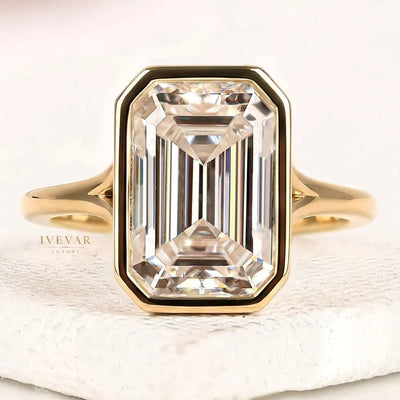
| Emerald | Elegant, Art Deco look | Very clean, architectural; low profile |
| Baguette | Usually as side stones | Popular as a slim east-west solitaire |
| Elongated cushion / radiant | Classic sparkle | Softer, wider look across the finger |
Length-to-width ratio matters too. A more elongated stone (for example a slim oval or a long marquise) shows the difference between orientations clearly. A stone that is almost square will look much the same either way, so east-west loses some of its impact. Browse marquise lab diamonds, oval lab diamonds and emerald cut lab diamonds to compare shapes.
Best Settings for Each Orientation
North-south settings
- Four or six prong solitaire: Lets the most light into the stone and keeps attention on the shape.
- Hidden halo: A row of small stones under the head adds sparkle from the side without changing the top view.
- Halo: Makes the centre stone look larger and adds brightness.
- Three-stone: Side stones set along the band reinforce the lengthening effect.
East-west settings
- Bezel or partial bezel: A metal rim around the stone protects the ends that face outward and suits the clean look.
- Low four prong: Keeps the profile low while still letting light in.
- Thin pavé or plain band: A slim band keeps attention on the sideways stone.
- Toi et moi: Two stones can be arranged with one east-west for a playful, asymmetric design.
Tip: For a marquise or pear set east-west, the points face the sides of your finger, where they meet door frames and bag handles. V-prongs or a bezel on the points are worth it.
Does Orientation Change How Big the Stone Looks?
The stone's actual face-up size does not change. A 9 by 7 mm oval is 9 by 7 mm either way. What changes is how that size reads on the hand.
North-south puts the longest measurement along the finger, where there is plenty of room, so the stone looks long and graceful. East-west puts the longest measurement across the finger, where space is limited, so the stone can look wider and bolder relative to the finger. On a slim finger, an east-west stone can look surprisingly large; on a wide finger, it can look more subtle.
If you are comparing carat weights, look at millimetre measurements, not just carats. Two stones of the same weight can have different face-up sizes depending on cut proportions.
Stacking and Wedding Bands
Think about the wedding band before you finalise the engagement ring. Orientation affects how well the two sit together.
- North-south with a straight band: Can leave a small gap if the head sits wide or low. A contour or curved band closes the gap.
- North-south with a raised setting: A cathedral or tall head usually lets a straight band slide underneath.
- East-west with a straight band: Usually sits flush on both sides, which is why it is so popular for stacks.
- East-west with several bands: Thin lab grown diamond wedding bands above and below create a clean, layered look.
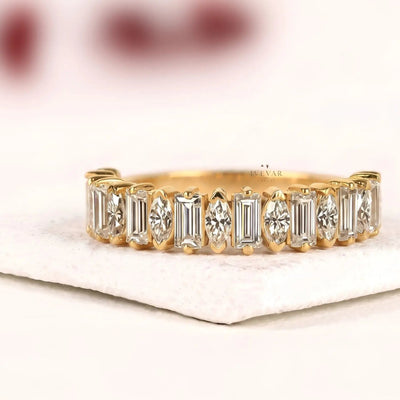
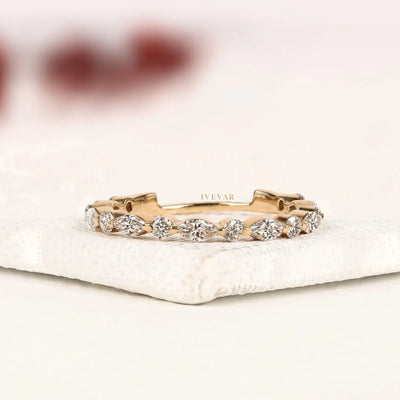
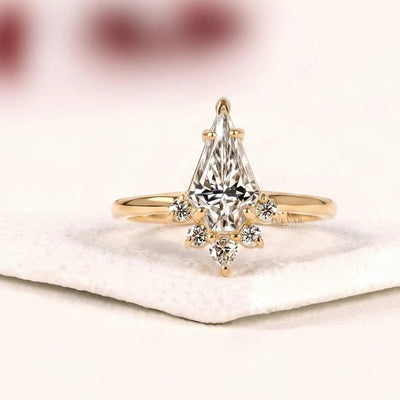
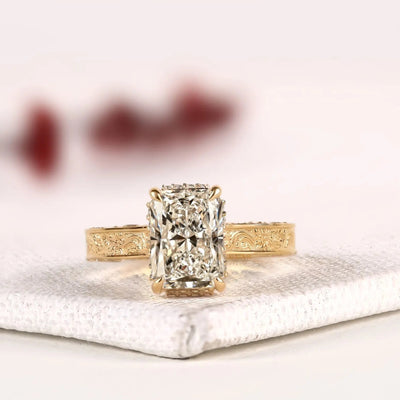
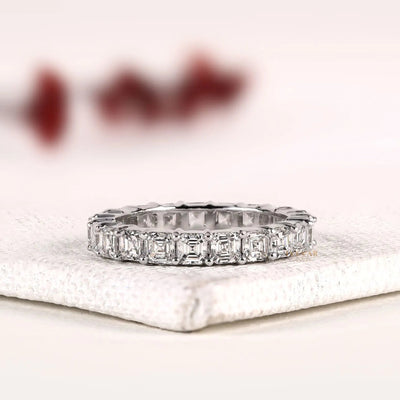
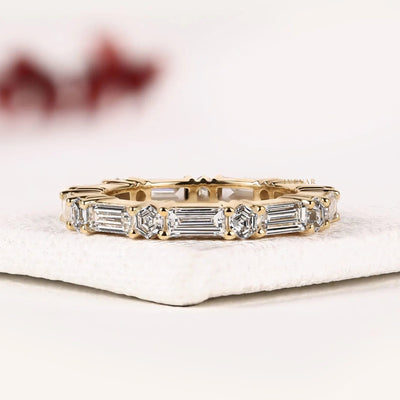
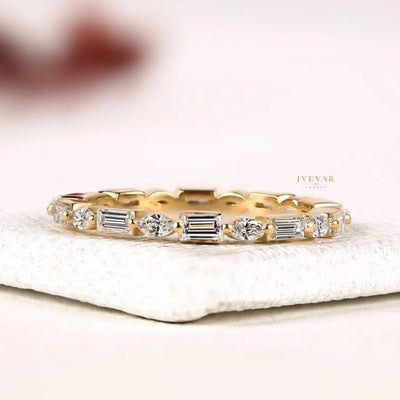
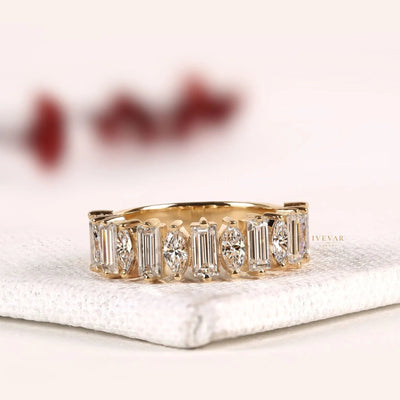
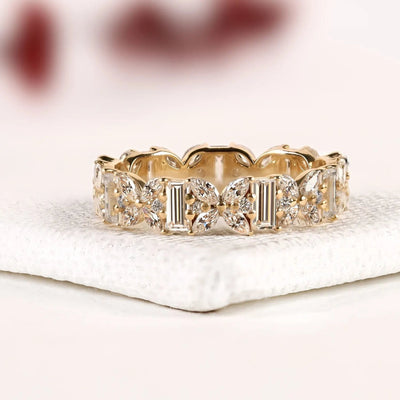
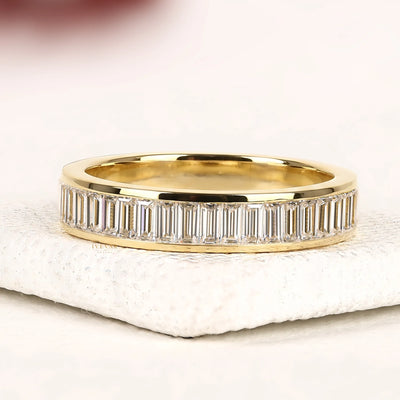
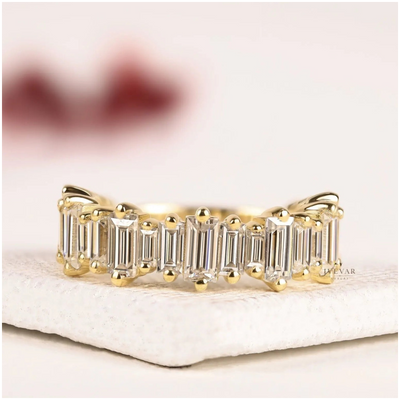
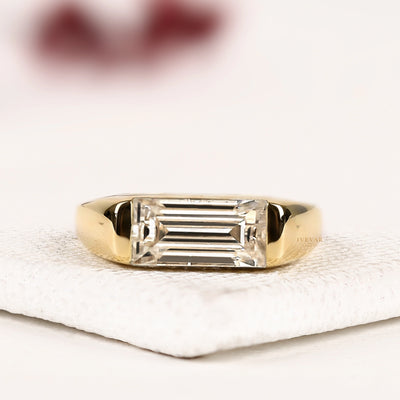
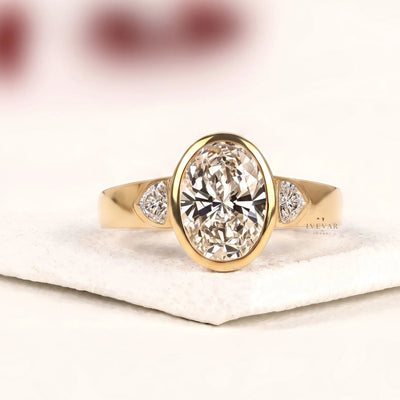
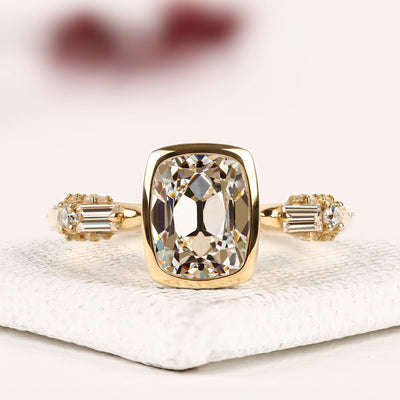
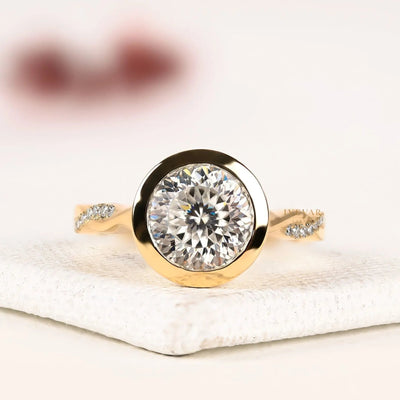
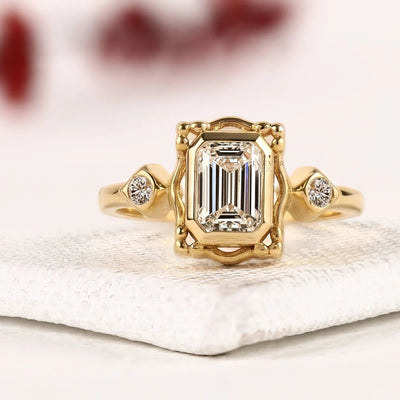
Shop the styles in this guide



Matching Orientation to Your Lifestyle
How you use your hands matters as much as how a ring looks in a photo. A ring is worn through cooking, commuting, typing, workouts and travel, so it helps to match the setting to your routine.
| Your routine | Better fit | Why |
|---|---|---|
| Desk work, typing | Either | Low knock risk; choose purely on style |
| Healthcare, cooking, gloves | East-west, low bezel | Lower profile slips under gloves and is easier to clean |
| Gym, climbing, gardening | East-west, or remove the ring | Fewer edges standing up above the finger |
| Formal events, bridal focus | North-south | Classic silhouette, maximum length on the hand |
| Ring stacks and layering | East-west | Straight bands sit flush above and below |
None of these are strict rules. A well-made north-south ring with a modest head height is perfectly practical for most people. The point is to think about where the stone's edges will be and how high it sits before you commit.
Choosing a Metal for Each Orientation
Metal colour changes the mood of both styles. Yellow gold gives an east-west ring a warm, vintage feel that echoes its antique roots. White gold makes an east-west emerald or baguette look crisp and architectural. Rose gold softens a north-south oval or pear and suits a romantic, feminine look.
Karat matters for strength. We make rings in 10K, 14K and 18K gold. Lower karats contain more alloy metal, which makes them harder and better at holding prongs firmly, while 18K has a richer colour and is a little softer. For a bezel-set east-west ring that you wear every day, 14K is a practical middle ground. Whatever you choose, have the prongs or bezel checked by a jeweler from time to time.
Beyond Engagement Rings
Orientation is not only a ring decision. The same idea applies across fine jewelry:
- Pendants: A north-south pear or marquise pendant elongates the neckline. An east-west bar or baguette pendant sits flatter and looks modern under a collar.
- Earrings: North-south drops and studs lengthen the face, while east-west studs look minimal and unexpected.
- Bracelets: Tennis bracelets with elongated stones set sideways sit closer to the wrist and feel smoother.
- Wedding bands: Bands of east-west ovals or marquises create a scalloped, continuous look that stacks well with a solitaire.
If you like the east-west look on your hand, carrying it into a pendant or earrings is an easy way to build a matching set.
Practical Buying Tips
- Check the stone's length against your finger width: Especially for east-west, keep the stone within the sides of your finger.
- Ask for a video on the hand: Orientation is easier to judge on a hand than in a flat photo.
- Protect points: V-prongs or bezels on marquise and pear tips, in either orientation.
- Plan the band: Decide whether you want flush stacking before you choose the setting height.
- Think about daily life: If you type, cook, garden or work with tools, a lower east-west profile can be more comfortable.
- Know you can change later: A jeweler can reset a stone in a new head if you change your mind, though it is simpler to get it right first.
Read what is an east-west engagement ring for more on care and maintenance.
Custom Settings at Ivevar
We can set any elongated lab grown diamond or moissanite north-south or east-west in our Surat workshop, in 10K, 14K or 18K gold. If you are not sure which orientation suits you, book a virtual appointment and we will show you both on the hand. Every ring ships free worldwide, with 30-day easy returns. Browse marquise and oval lab diamonds, or explore our lab diamond engagement rings and moissanite engagement rings.
Lab Grown Diamond or Moissanite?
Both orientations work with lab grown diamonds and with moissanite. Lab grown diamonds are chemically, physically and optically the same as mined diamonds and score 10 on the Mohs hardness scale. Many of our lab diamonds come with IGI certificates, so you can check the cut, colour and clarity. Moissanite scores 9.25 on the Mohs scale and has a higher refractive index (about 2.65 against about 2.42 for diamond), so it shows more rainbow-coloured fire.
For east-west designs, where the ends of the stone face outward, both materials are hard enough for daily wear. A protective setting is still a good idea for pointed shapes.
Shop Marquise and Oval Lab Diamonds
 0.43 Ct D VS1 MarquiseShop Now
 0.42 Ct D VS1 MarquiseShop Now
 0.38 Ct D VS1 MarquiseShop Now
 0.40 Ct D VS1 OvalShop Now
 0.41 Ct D VS1 OvalShop Now
 0.42 Ct D VS1 OvalShop Now
Swipe to see more → | View oval lab diamonds
Frequently Asked Questions
What is an east-west ring?
A ring with an elongated stone set horizontally across the finger instead of pointing along it.
Is east-west a trend?
It is popular now, but it has roots in Georgian and Victorian jewelry, so it is a revival of an old idea rather than a passing fad.
Which makes fingers look longer?
North-south. Running the stone along the finger draws the eye lengthwise and creates a slimming effect.
Does east-west snag less?
Often yes, because east-west settings tend to sit lower. Pointed shapes still need protection on their tips.
Can I change orientation later?
Yes. A jeweler can remove the stone and reset it in a new head facing the other way.
Does an east-west stone look bigger?
It is the same size, but on a slim finger it can look bolder because it fills more of the finger's width.
Which shapes work best east-west?
Ovals, emerald cuts, marquises and baguettes are the most popular. Choose a clearly elongated stone so the orientation is obvious.
Is an east-west ring harder to clean?
No. A lower setting can actually be easier to clean because there is less space under the stone for lotion and soap to collect. Soak it in warm soapy water and brush gently with a soft toothbrush.
Is east-west good for small hands?
Yes, with a modest stone size. Keep the stone's length within the width of your finger so it stays comfortable and balanced.
The Bottom Line
North-south is the classic, lengthening choice and pairs easily with traditional bands. East-west is the modern, low-profile choice that stacks beautifully and stands out quietly. Both showcase elongated diamonds well; the right one is the one that suits your hand and the way you live.
Related Guides

Author Bio
Aumsri Pradhan
Founder, Ivevar Luxury
Aumsri Pradhan is the founder of Ivevar Luxury, a Surat-based fine jewelry brand that designs and handcrafts lab grown diamond and moissanite jewelry in its own workshop. She leads the brand's design and customer experience, from engagement rings and bridal sets to custom pieces made to each client's story. Through the Ivevar blog, she shares practical guidance on lab grown diamonds, moissanite, diamond grading and ring design to help buyers choose with confidence.

SI1 vs VS1 Diamond Clarity

Custom vs Ready-Made Rings

