

 Engagement Rings
 Anniversary Rings
 Solitaire Rings
 Halo Rings
 Toi Moi Rings
 Three Stone Rings
 Nature Inspired Rings
 Rose Cut Rings
 Fancy Color Rings
 Antique Cut Rings
 Wedding Rings
 Wedding Band Rings
 Exclusive Lab Grown Diamond Rings
 All Lab Grown Diamond Ring
 Engagement Rings
 Three Stone Rings
 Fancy Color Rings
 Antique Cut Rings
 Daily Wear Rings
 Wedding Band Rings
 Exclusive Moissanite Rings
 Earrings
 Bracelet
 Pendant
 Necklace
 Men's Ring
 Bridal Sets
 Rings
 Earrings
 Tennis chain
 Cuban Chains
 Custom Pendant
 Custom Ring
 Custom Teeth Grillz
 Round
 Oval
 Cushion
 Marquise
 Pear
 Emerald
 Heart
 Princess
 Rose Cut
 Radiant
 Antique Cut
 Brooch
 Cufflink
 Keychain
 Unique Products
 +91-9265051773
 Virtual Appointment
 log in




Short answer: Carat weight measures how heavy a diamond is (1 carat = 0.2 grams). Face-up size is how big it looks from above, measured in millimeters. Two diamonds of the same carat can look very different in size depending on shape and cut. Elongated shapes like marquise, oval and pear look largest per carat, while deep cuts and compact shapes like Asscher can look smaller. When comparing stones, check millimeters, not just carats.
Most people shop for diamonds by carat because that is the number on the price tag. But nobody sees carats. What people see on your hand is the outline of the stone from above, its face-up size. This guide explains the difference between the two, why same-carat diamonds can look so different, which shapes give the most visible size, how cut proportions hide or reveal weight, and how to read measurements so you get the biggest-looking stone for your budget.
Carat Weight vs Face-Up Size
| Carat weight | Face-up size | |
|---|---|---|
| What it measures | Weight (1 ct = 0.2 g) | Visible dimensions in mm |
| Shown on certificate | Yes, to two decimals | Yes, as measurements |
| Affected by shape | No | Yes, strongly |
| Affected by cut depth | No | Yes; deep stones look smaller |
| Drives price | Strongly | Indirectly |
What Carat Really Means
A carat is a unit of weight, not size. One carat equals 0.2 grams, and each carat is divided into 100 points, so a 0.50 carat diamond is a "50 pointer." Grading reports from IGI and GIA record weight to two decimal places, which is why you will see stones listed as 0.72 ct or 1.03 ct.
Weight is a useful, objective number, and it is the main driver of price. But because a diamond is a three-dimensional object, weight is spread across its width and its depth. The part you see from above is only the top outline. Some of the weight sits in the pavilion (the cone-shaped underside) and the girdle (the thin edge), which you never see once the stone is set.
Size does not grow in a straight line
Doubling the carat weight does not double how big a stone looks. Because weight fills three dimensions, a well-cut round that weighs twice as much is only about a quarter wider in diameter. The visible area grows more than the diameter, but still well short of double. That is why a 2 carat stone looks bigger than a 1 carat, but not twice as big.
How carat affects price
Price climbs faster than weight. Larger rough is rarer, so each extra point of weight costs more as the stone gets bigger. Prices also tend to step up at popular round numbers such as 0.50, 0.75, 1.00, 1.50 and 2.00 carats, because demand clusters there. A stone that weighs just under one of those marks can look almost exactly the same as one just over it while costing less.
Typical Round Diamond Sizes
For a well-cut round brilliant, these are the approximate diameters most buyers can expect. Exact figures vary with cut proportions.
| Carat weight | Approx. round diameter |
|---|---|
| 0.25 ct | about 4.1 mm |
| 0.50 ct | about 5.1 mm |
| 0.75 ct | about 5.8 mm |
| 1.00 ct | about 6.4 to 6.5 mm |
| 1.50 ct | about 7.4 mm |
| 2.00 ct | about 8.1 mm |
Use these as a reference point. If a 1 carat round measures well under 6.4 mm, it is probably cut deep and hides weight underneath. If it measures much more, it may be cut shallow, which can cost brightness.
Which Shapes Look Largest?
Shape changes how weight is spread out. Long, shallow shapes stretch the same weight over a bigger outline. Compact, deep shapes keep more weight below the surface.
- Marquise: the largest face-up per carat. Its long, pointed outline spreads weight across a big area.
- Oval and pear: elongated outlines that look larger than a round of the same weight and lengthen the finger.
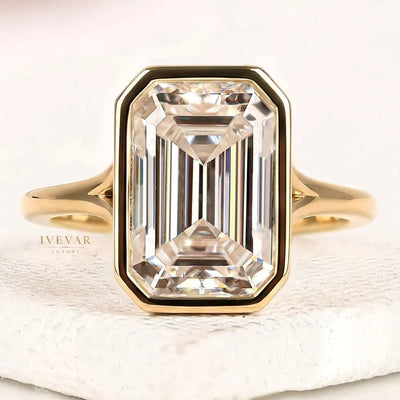
- Emerald and radiant: rectangular outlines that can look generous, especially in longer ratios.
- Round: the benchmark. Brilliant and balanced, but not the largest per carat.
- Cushion, princess and Asscher: more weight in depth, so they tend to look smaller per carat.
Elongated shapes also flatter the hand. A long oval or pear draws the eye along the finger and makes the stone feel bigger than its weight suggests. Browse our oval lab diamonds if you want a classic shape with extra visible size.
Tip: For elongated shapes, look at the length-to-width ratio as well as millimeters. A longer ratio looks bigger and slimmer; a shorter ratio looks fuller and softer. Pick the outline you love first, then compare stones with similar ratios.
 Shown: 0.40 Ct Marquise Shape D Color VS1 Lab Grown Diamond
Shape-by-Shape Size Guide
Here is what to expect from each popular shape when you compare stones of the same carat weight, and what to check on the report.
Marquise
The long, boat-shaped outline gives the most face-up area of any common shape. It looks dramatic and slims the finger. Check that the two points are protected by prongs or V-tips, and look for a ratio that suits your taste, from slim to fuller.
Oval
An oval looks noticeably larger than a round of the same weight while keeping a soft, classic outline. Some ovals show a darker "bow-tie" across the center; a good video helps you choose one where it is mild.
Pear
A pear combines a rounded end with a point, so it looks long and generous. Like the marquise, its point needs protection. Wear it point toward the fingertip for the most elongating effect.
Emerald and radiant
Rectangular shapes with longer ratios look larger than square ones. Emerald cuts show broad, mirror-like facets, so their size reads clearly; radiants add brilliant sparkle to the same outline. Watch depth, as some radiants are cut deep.
Round
The round brilliant is cut to maximize light return, so it is often a little deeper than fancy shapes. It looks bright and balanced rather than largest, which is why it serves as the reference point for size charts.
Cushion, princess and Asscher
These compact shapes often carry more weight in their pavilions and corners. A cushion can look smaller than a round of the same weight, and an Asscher, with its deep step cuts, often looks smallest of all. Choose them for their character, and compare millimeters carefully.
How Cut Proportions Hide or Show Weight
Within the same shape, cut proportions decide how much of the weight you actually see. Grading reports list the key numbers, so you can check before you buy.
- Depth percentage: total depth divided by width. A stone that is too deep carries extra weight in its pavilion and looks smaller from above. For rounds, a depth of roughly 60 to 62.5 percent is a common target.
- Table percentage: the width of the top facet relative to the stone. A balanced table helps brightness; an oversized table can make a stone look flat.
- Girdle thickness: a very thick girdle adds weight around the edge that adds nothing to the face-up look. Thin to medium or slightly thick is ideal.
- Crown height: a tall crown adds weight on top without adding spread.
There is a balance to strike. A stone cut too shallow can look large but lose brightness, sometimes showing a dull "window" in the center or a grey ring from light leaking out. The best choice is a well-proportioned stone that faces up generously and still sparkles.
Reading Diamond Measurements
A grading report lists measurements in a set format. For a round, it shows minimum diameter, maximum diameter and depth, for example "6.45 - 6.48 x 3.98 mm." For fancy shapes, it shows length x width x depth.
- For rounds: compare the diameter. Two 1 carat rounds that differ by a few tenths of a millimeter will look different side by side.
- For fancy shapes: multiply length by width for a rough idea of face-up area, then compare across stones of similar weight.
- For depth: divide depth by width to check depth percentage if the report does not show it clearly.
- For matching pairs: in earrings, check that both stones have very similar measurements, not just similar weights.
A simple comparison
Imagine two round diamonds, both graded 1.00 carat. One measures 6.5 mm across with a balanced depth. The other measures 6.2 mm because it is cut deep, with extra weight in its pavilion. On the scale they are identical, and they may be priced similarly. On the hand, the first looks clearly larger and usually brighter too. Checking measurements is how you spot the difference before you buy.
Total carat weight in earrings and bands
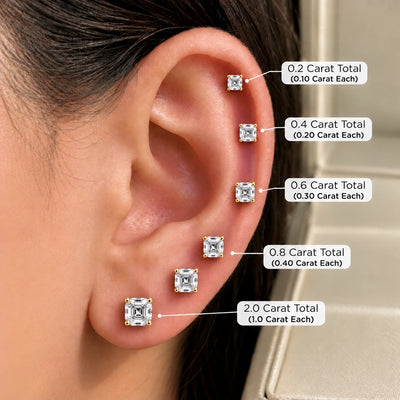
Earrings, eternity bands and multi-stone rings are often listed in total carat weight, written "ctw" or "tcw." A pair of 1 ctw studs holds two stones of about 0.50 carat each, so each earring shows the size of a half-carat stone, roughly 5.1 mm for a round. Always check the per-stone weight or measurements so the size meets your expectations. Browse our lab diamond earrings with this in mind.
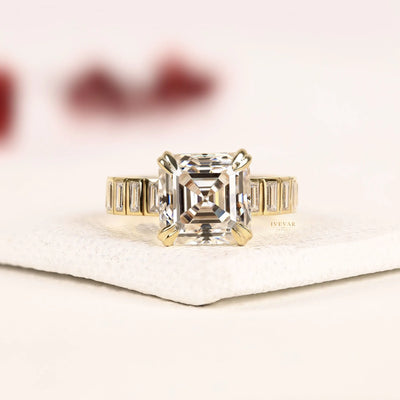
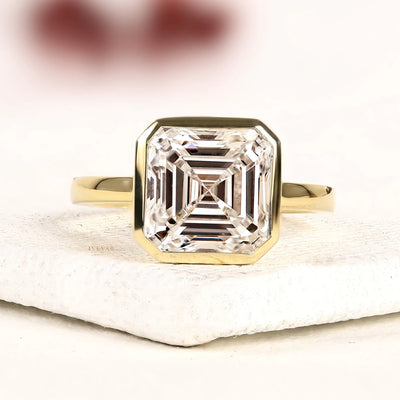
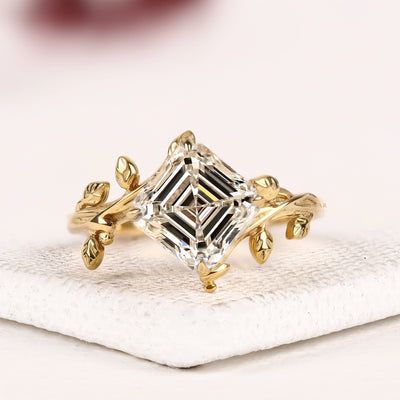
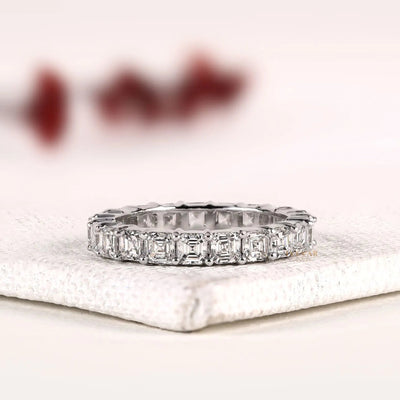
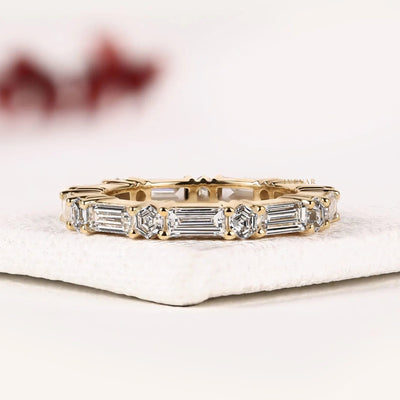
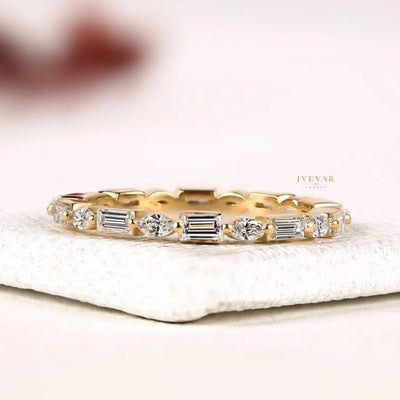
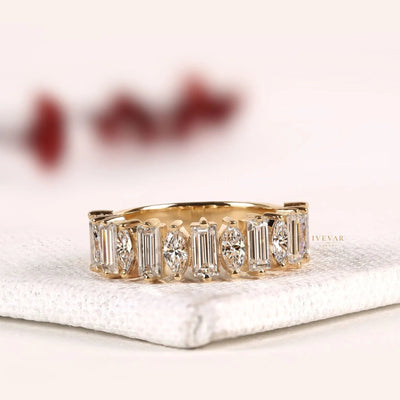
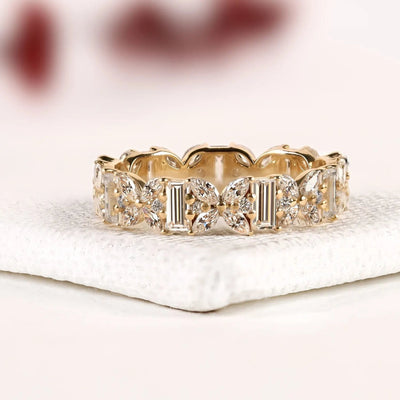
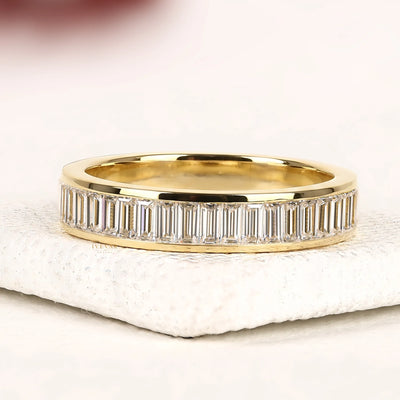
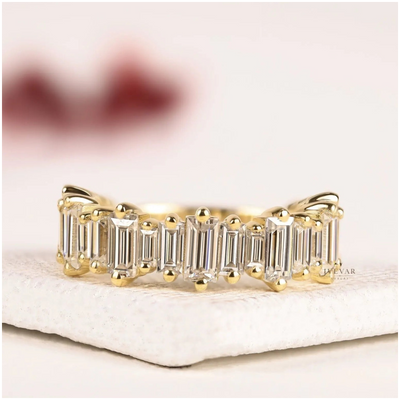
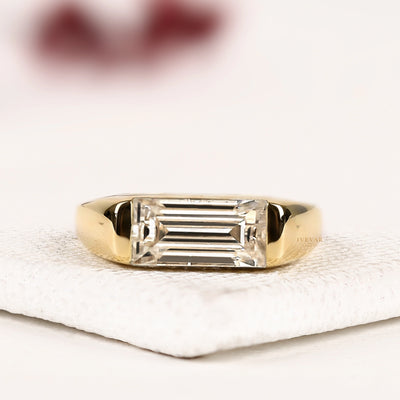
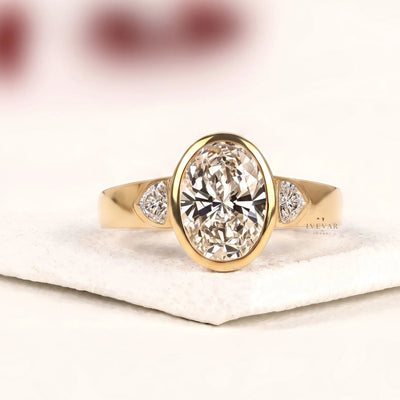
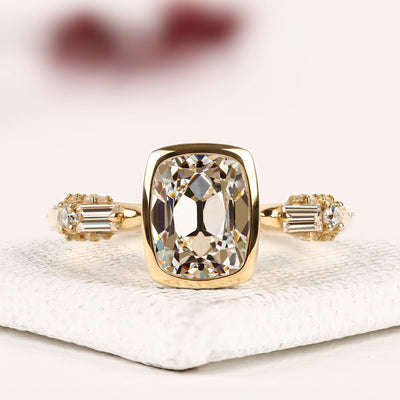
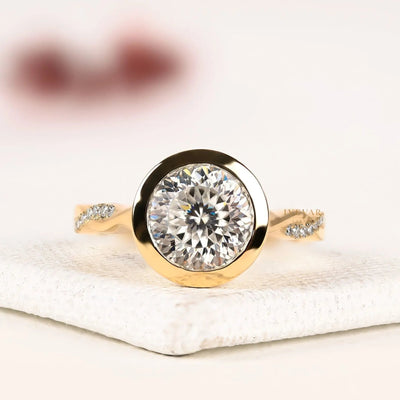
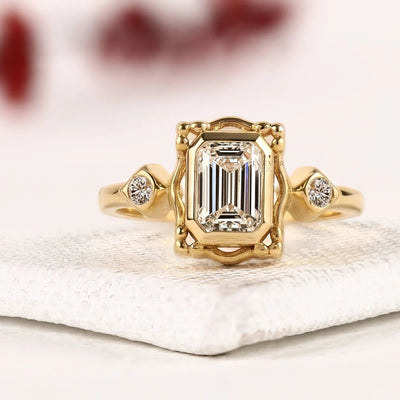
Shop the styles in this guide
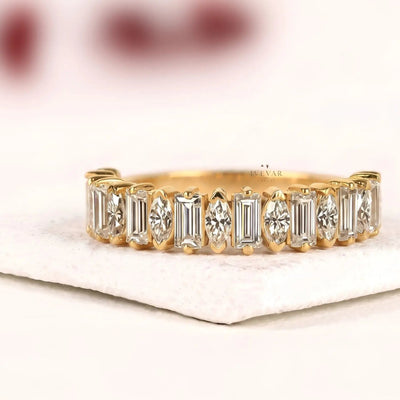
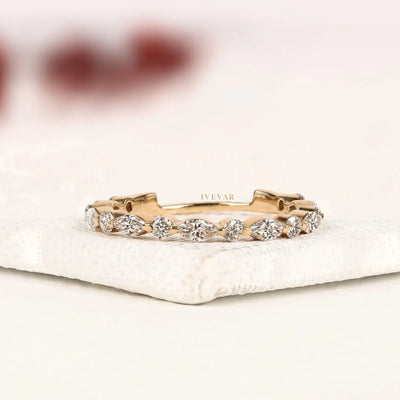
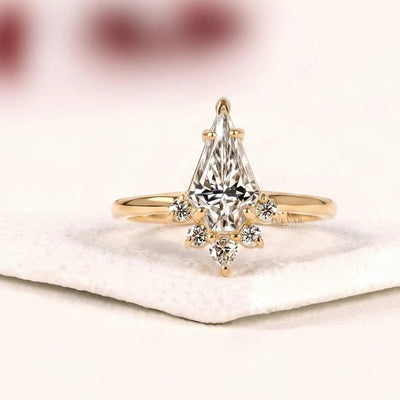
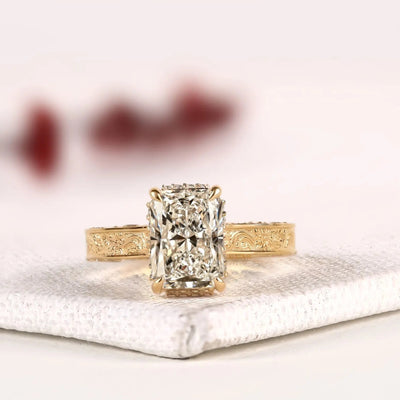



Tips to Get the Most Size
- Shape: choose an elongated shape.
- Depth: check that depth % is in the ideal range; avoid overly deep stones.
- Just under round numbers: buy just under round numbers (e.g., 0.95 ct instead of 1.00 ct) to save. The size difference is impossible to see.
- Halo: add a halo or thin band to make the center look larger.
- Thin band: a slim band makes the center stone look bigger by contrast; a chunky band can shrink it visually.
- Metal color: white gold prongs blend with the stone and extend its outline; contrasting metals frame it more tightly.
- Lab grown or moissanite: consider lab grown or moissanite for more size for your budget.
See our diamond size chart and table and depth guide.
Your hand changes the look
The same diamond looks larger on a slim finger and smaller on a wide one. If you have long, slender fingers, even a modest stone can look substantial. If your fingers are wider, an elongated shape or a halo helps the stone hold its own. When shopping online, compare the stone's millimeter size with a coin or a ruler, or print a size chart, to picture it on your hand before you choose.
Settings That Make a Diamond Look Bigger
The setting can add visible size without adding carats. These options work especially well:
| Setting | Effect on size |
|---|---|
| Halo | Adds a ring of sparkle that makes the center look much larger from a distance |
| Thin solitaire band | The stone looks bigger next to a delicate band |
| Six or claw prongs | Small prongs cover less of the stone |
| Pavé band | Extra sparkle leads the eye toward the center |
| Bezel | A thin bezel can extend the outline; a thick one can shrink it |
Explore our halo rings to see how much presence a frame of small stones adds to a modest center.
Lab Grown Diamonds, Moissanite and Size
Lab grown diamonds are chemically, physically and optically the same as mined diamonds, so the carat-to-millimeter relationship is identical. A 1 carat lab grown round measures the same as a 1 carat mined round of the same proportions. The difference is price: lab grown lets you choose a larger carat weight for the same budget.
Moissanite is a different gemstone, not a diamond. It is slightly less dense than diamond, so a moissanite of the same millimeter size weighs a little less. That is why moissanite is often described by its millimeter size or by its "diamond equivalent" weight. When comparing moissanite and diamond, always compare millimeters. Moissanite rates 9.25 on the Mohs scale against diamond's 10, and its higher refractive index, about 2.65 versus 2.42, gives it more rainbow fire. See our moissanite oval stones for comparison.
Loose Lab Diamonds at Ivevar
We list measurements for our loose lab diamonds and can set any stone in the ring you choose, in our Surat workshop. Every order ships free worldwide and comes with 30-day easy returns. Browse marquise lab diamonds.
Many of our lab diamonds come with IGI certificates that show weight and measurements, so you can compare face-up size before you buy. We also make custom jewelry in 10K, 14K and 18K gold. If you are unsure how a stone will look on the hand, book a virtual appointment and we will show you on video.
Shop Marquise Lab Diamonds
 0.40 Ct D VS1 MarquiseShop Now
 0.34 Ct D VS1 MarquiseShop Now
 0.36 Ct D VS1 MarquiseShop Now
 0.37 Ct D VS1 MarquiseShop Now
 0.39 Ct D VS1 MarquiseShop Now
 0.41 Ct D VS1 MarquiseShop Now
Swipe to see more → | View marquise lab diamonds
Frequently Asked Questions
Is carat the same as size?
No. Carat is weight; size is measured in millimeters.
Which shape looks biggest?
Marquise, followed by oval and pear.
Why does a deep diamond look smaller?
More weight sits below the girdle, out of view.
Should I compare mm or carat?
Compare mm for size, carat for price.
Does a halo add size?
Yes, visually. A halo can make the center stone look noticeably larger from a distance, without the cost of a heavier center.
How big is a 1 carat diamond?
A well-cut 1 carat round measures about 6.4 to 6.5 mm across. Other shapes vary; an oval or marquise of the same weight looks longer and often larger.
Does a 2 carat diamond look twice as big as a 1 carat?
No. Because weight fills three dimensions, a 2 carat round is only about a quarter wider than a 1 carat round.
Is a shallow diamond a good way to get more size?
Only within limits. Slightly spread stones are fine, but very shallow stones can lose brightness and show a dull center. Aim for good proportions.
Is a 0.90 carat diamond a good alternative to a 1 carat?
Often, yes. A well-cut 0.90 to 0.95 carat stone can look almost identical in size to a 1.00 carat stone, while avoiding the price step at the round number.
Does ring size change how big a diamond looks?
Yes. The same stone looks larger on a slim finger and smaller on a wider one, which is why elongated shapes are popular for larger ring sizes.
The Bottom Line
Carat drives price; millimeters show size. Compare both, and choose a shape and cut that maximize the look you want. An elongated, well-proportioned stone in a delicate or halo setting gives you the most visible diamond for your budget. Before you decide, read the measurements on the certificate, compare them with the size chart above, and picture the outline on your own hand. That small step is the surest way to love the size you choose.
Related Guides

Author Bio
Aumsri Pradhan
Founder, Ivevar Luxury
Aumsri Pradhan is the founder of Ivevar Luxury, a Surat-based fine jewelry brand that designs and handcrafts lab grown diamond and moissanite jewelry in its own workshop. She leads the brand's design and customer experience, from engagement rings and bridal sets to custom pieces made to each client's story. Through the Ivevar blog, she shares practical guidance on lab grown diamonds, moissanite, diamond grading and ring design to help buyers choose with confidence.

SI1 vs VS1 Diamond Clarity

Custom vs Ready-Made Rings

Black Diamonds vs White Diamonds

