Engagement Rings
 Anniversary Rings
 Solitaire Rings
 Halo Rings
 Toi Moi Rings
 Three Stone Rings
 Nature Inspired Rings
 Rose Cut Rings
 Fancy Color Rings
 Antique Cut Rings
 Wedding Rings
 Wedding Band Rings
 Exclusive Lab Grown Diamond Rings
 All Lab Grown Diamond Ring
 Engagement Rings
 Three Stone Rings
 Fancy Color Rings
 Antique Cut Rings
 Daily Wear Rings
 Wedding Band Rings
 Exclusive Moissanite Rings
 Earrings
 Bracelet
 Pendant
 Necklace
 Men's Ring
 Bridal Sets
 Rings
Rings
 Earrings
 Tennis chain
 Cuban Chains
 Custom Pendant
 Custom Ring
 Custom Teeth Grillz
 Round
Round
 Oval
Oval
 Cushion
 Marquise
 Pear
Pear
 Emerald
 Heart
Heart
 Princess
 Rose Cut
 Radiant
 Antique Cut
 Brooch
 Cufflink
 Keychain
 Unique Products
 +91 9265051773
 Virtual Appointment
 log in



Quick answer: Natural diamonds, lab grown diamonds and moissanite all look beautiful, but they differ in origin, sparkle and price. Natural and lab grown diamonds are both real diamonds (carbon, 10 on the Mohs scale) with the same look; lab grown costs far less. Moissanite is a different gemstone (silicon carbide, about 9.25) with more rainbow fire and the lowest price. Choose natural for tradition and rarity, lab grown for a real diamond at great value, and moissanite for maximum size and sparkle on a budget.
This is the most common question our customers ask. Here is a clear three-way comparison.
Natural vs Lab Grown vs Moissanite
| Natural diamond | Lab grown diamond | Moissanite | |
|---|---|---|---|
| Material | Carbon | Carbon | Silicon carbide |
| Real diamond? | Yes | Yes | No, a different gem |
| Hardness | 10 | 10 | About 9.25 |
| Sparkle | Classic white brilliance and fire | Identical to natural | More rainbow fire |
| Grading | GIA, IGI | IGI, GIA | Brand or lab reports |
| Origin | Mined over billions of years | Grown in weeks (CVD or HPHT) | Lab created |
| Price (1 ct look) | Highest | Much lower | Lowest |
| Resale | Some, below retail | Low | Very low |
Which Looks Best?
Natural and lab grown diamonds are visually identical, even to experts without lab equipment. Moissanite looks very close but shows more colorful flashes, especially in sunlight and larger sizes.
Which Is Best Value?
- Lab grown: a real diamond for a fraction of natural pricing.
- Moissanite: the biggest size for the smallest budget.
- Natural: highest cost, but valued for rarity and tradition.
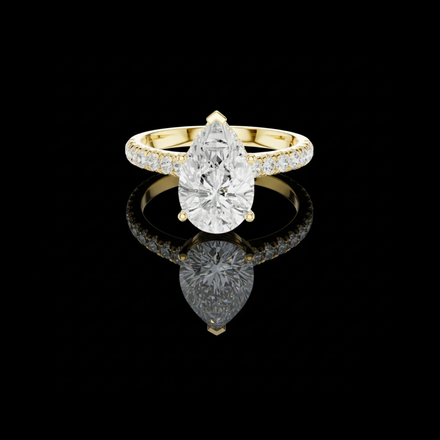
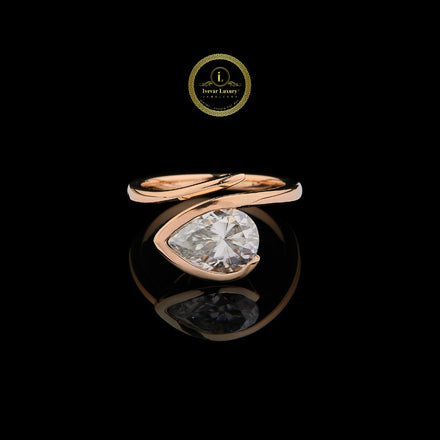
 Shown: Pear Cut Halo Moissanite Solitaire Ring
Who Should Choose Each?
Natural diamond
Buyers who value geological rarity and tradition above price.
Lab grown diamond
Buyers who want a real diamond, larger size and excellent value.
Moissanite
Buyers who love extra fire and want the most size per dollar.
Durability
All three are excellent for everyday wear. Diamonds (natural and lab) are the hardest; moissanite is close behind and harder than sapphire.
Shop at Ivevar
We offer lab grown diamonds and moissanite, handcrafted in our Surat workshop and clearly labeled. Every piece ships free worldwide, with 30-day easy returns. See our comparison page, loose lab diamonds and moissanite rings.
Shop Pear Lab Diamonds and Moissanite
 Pear Halo Moissanite RingShop Now
 Pear Bezel Moissanite RingShop Now
 Delicate Pear SolitaireShop Now
 0.50 Ct F VVS2 PearShop Now
 0.56 Ct F VVS2 PearShop Now
 0.40 Ct E VS1 PearShop Now
Swipe to see more → | View pear lab diamonds
Frequently Asked Questions
Is a lab grown diamond a real diamond?
Yes, chemically and physically identical to natural.
Is moissanite a diamond?
No, it is a different gemstone that looks similar.
Which is cheapest?
Moissanite, then lab grown, then natural.
Can people tell them apart?
Not natural vs lab by eye; moissanite shows extra fire.
Which lasts longest?
All three last a lifetime with normal care.
The Bottom Line
Natural for rarity, lab grown for real-diamond value, moissanite for maximum sparkle per dollar. All three make beautiful, lasting jewelry.
Related Guides
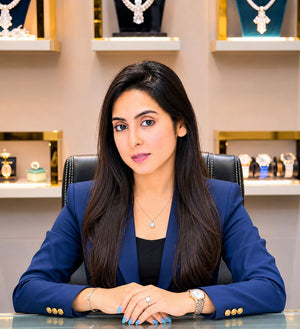
Author Bio
Aumsri Pradhan
Founder, Ivevar Luxury
Aumsri Pradhan is the founder of Ivevar Luxury, a Surat-based fine jewelry brand that designs and handcrafts lab grown diamond and moissanite jewelry in its own workshop. She leads the brand's design and customer experience, from engagement rings and bridal sets to custom pieces made to each client's story. Through the Ivevar blog, she shares practical guidance on lab grown diamonds, moissanite, diamond grading and ring design to help buyers choose with confidence.

SI1 vs VS1 Diamond Clarity

Custom vs Ready-Made Rings

Black Diamonds vs White Diamonds