

 Engagement Rings
 Anniversary Rings
 Solitaire Rings
 Halo Rings
 Toi Moi Rings
 Three Stone Rings
 Nature Inspired Rings
 Rose Cut Rings
 Fancy Color Rings
 Antique Cut Rings
 Wedding Rings
 Wedding Band Rings
 Exclusive Lab Grown Diamond Rings
 All Lab Grown Diamond Ring
 Engagement Rings
 Three Stone Rings
 Fancy Color Rings
 Antique Cut Rings
 Daily Wear Rings
 Wedding Band Rings
 Exclusive Moissanite Rings
 Earrings
 Bracelet
 Pendant
 Necklace
 Men's Ring
 Bridal Sets
 Rings
 Earrings
 Tennis chain
 Cuban Chains
 Custom Pendant
 Custom Ring
 Custom Teeth Grillz
 Round
 Oval
 Cushion
 Marquise
 Pear
 Emerald
 Heart
 Princess
 Rose Cut
 Radiant
 Antique Cut
 Brooch
 Cufflink
 Keychain
 Unique Products
 +91-9265051773
 Virtual Appointment
 log in




October Birthstone: Opal and Tourmaline Meaning, Colors and Care
by Ivevar Team on Sep 29, 2026
Short answer: October has two birthstones: opal and tourmaline. Opal is famous for its shifting rainbow play-of-color but is soft (5.5 to 6.5 on the Mohs scale), so it suits earrings, pendants and carefully set rings. Tourmaline comes in almost every color, with pink the most popular for October, and at 7 to 7.5 on the Mohs scale it is the more practical choice for everyday rings.
The October birthstones are opal and tourmaline, two gems prized for showing more color than almost any other stone. Opal flashes shifting rainbow colors across a single surface, while tourmaline comes in nearly every hue, and pink tourmaline has become the most popular choice for October birthdays.
Whether you are shopping for a gift or simply curious about the stone tied to your birth month, this guide covers what each gem looks like, where it comes from, what it has traditionally symbolized, how to judge quality and how well it holds up in everyday jewelry. For every month at a glance, see our complete birthstones by month guide.

Shown: Pink Oval Moissanite Double Halo Ring, handcrafted to order by Ivevar.
October Birthstone Quick Facts
| Feature | Opal | Tourmaline |
|---|---|---|
| Color(s) | White, black, crystal, orange (fire opal), with multicolor play-of-color | Pink, red, green, blue, yellow, black, bicolor |
| Mohs hardness | 5.5 to 6.5 | 7 to 7.5 |
| Traditional meaning | Hope, creativity, imagination | Compassion, balance, calm |
| Anniversary | 14th | 8th |
| Best jewelry use | Earrings, pendants, protected rings | Rings, earrings, pendants |
What Is the October Birthstone Color?
There is no single October birthstone color. Opal is best known for its play-of-color, the flashes of red, green, blue and violet that move as the stone tilts. Tourmaline covers almost the entire spectrum, but pink is the shade most people associate with October today. If you want one answer for a gift, soft pink and multicolor rainbow tones are the safest picks.
That flexibility is useful. If the person you are buying for already wears a lot of pink, a pink tourmaline or pink-toned piece fits right in. If they like color but not one specific shade, an opal or a multicolor design lets them enjoy the whole spectrum.
Opal: The Stone of Shifting Color
Opal Colors
Opal is not a crystal like most gems. It is made of tiny silica spheres with water trapped between them, and when light passes through that orderly structure it splits into spectral colors. The background color, called the body tone, defines the main types: white or light opal, black opal with a dark body that makes colors look intense, crystal opal that is transparent to translucent, and fire opal, which ranges from yellow to orange to red and may or may not show play-of-color.
Opal without play-of-color is called common opal or potch. It can be pretty in pastel blues, pinks and greens, but the flashing rainbow effect people picture when they hear "opal" belongs to precious opal.
Where Opal Is Mined
Australia has long been the leading source of precious opal, including the famous black opal from Lightning Ridge in New South Wales. Ethiopia became a major supplier in the 2000s, and Mexico is known for its bright fire opal. Brazil and the United States also produce opal in smaller amounts.
Opal History and Meaning
The name is usually traced to the Sanskrit word "upala", meaning precious stone, which passed into Greek and Latin. According to tradition, ancient Romans treated opal as a symbol of hope and good fortune because it seemed to hold the colors of every other gem. Much later, a nineteenth-century novel by Sir Walter Scott featured an opal linked to misfortune, and the idea that opals are unlucky spread from there. That belief is folklore, not fact. Today, the opal meaning most people cite is creativity, imagination and emotional openness, again as a matter of tradition rather than proven effect.
Opal Hardness and Durability
At about 5.5 to 6.5 on the Mohs scale, opal is softer than most gems used in rings. It can scratch, chip or crack if knocked, and sudden temperature changes can cause fine cracks called crazing. The opal birthstone works beautifully in earrings, pendants and occasional-wear rings. For a ring worn every day, a protective bezel setting helps. Our article on opal engagement rings and what they symbolize goes deeper into design choices that protect the stone.
Opal Types and Treatments: What to Ask Before You Buy
Not every opal in a jewelry case is a single solid stone. Knowing the main types helps you compare fairly and ask the right questions.
- Solid opal: One piece of natural opal from top to bottom. This is the most valued form and the easiest to care for, because there are no glued layers.
- Doublet: A thin slice of opal glued to a dark backing, which makes the colors look stronger. Doublets cost less but should not be soaked in water.
- Triplet: A doublet with a clear cap of quartz or glass on top for protection. The dome can look slightly glassy from the side.
- Lab-created and imitation opal: Opal can be made in a laboratory, and there are also imitations made of other materials. Both are fine choices if they are clearly described as such.
Tip: Look at an opal from the side. A solid opal looks like one continuous material. A visible straight line between layers usually means a doublet or triplet. Either is acceptable, but the seller should tell you which one you are buying.
What makes one opal better than another?
- Brightness: Strong, vivid flashes visible from across a room are prized over faint ones you only see up close.
- Color range: Red flashes are generally the most sought after, but a stone with many colors is also valued.
- Pattern: Some opals show broad flashes, others tiny pinpoints or mosaic-like patches. This is mostly personal taste.
- Body tone: Darker body tones make colors look more intense, which is why black opal is so admired.
- Soundness: Avoid visible cracks or crazing, which weaken the stone.
Tourmaline: The Rainbow in a Crystal
Tourmaline Colors
Tourmaline is a boron silicate mineral with an unusually complex chemistry, which is why it appears in so many colors. Traders gave some shades their own names: rubellite for rich pink to red, indicolite for blue, and Paraiba tourmaline for the vivid neon blue to green material colored by copper. Watermelon tourmaline shows pink at the center and green at the rim, and many crystals show two or more colors along their length.
Pink Tourmaline
Pink tourmaline is the tourmaline birthstone most shoppers look for. Its color ranges from pale blush to hot pink. Historically, California mines supplied large amounts of pink tourmaline to China in the late 1800s and early 1900s, where Empress Dowager Cixi was known to favor it. Today, Brazil, Nigeria, Mozambique, Madagascar and Afghanistan are important sources.
Where Tourmaline Is Mined
Brazil is one of the most important producers of tourmaline in many colors. African countries including Nigeria, Mozambique, Madagascar and Namibia supply fine material, and the United States has historic deposits in Maine and California.
Tourmaline History and Meaning
The name comes from the Sinhalese word "turmali", used in Sri Lanka for mixed colored gem gravels. For centuries, tourmaline was confused with other gems, and some red stones in old collections once thought to be ruby later proved to be tourmaline. Heated tourmaline builds up an electric charge and can attract light particles such as ash, a property Dutch traders reportedly used to clean their pipes. In folklore, pink tourmaline is linked to compassion and gentleness, and black tourmaline is traditionally considered a protective stone. These meanings are tradition, not science.
Tourmaline Hardness and Durability
At 7 to 7.5 on the Mohs scale, tourmaline is a solid choice for rings, earrings and pendants. It resists everyday scratches better than opal, though a hard knock can still chip it, so settings that protect the edges are a good idea for daily wear.
How to Choose a Good Tourmaline
Tourmaline is judged mainly on color, then on clarity and cut. A few practical points help you compare stones:
- Color first: Look for even, saturated color without strong gray or brown tones. Very pale stones can look washed out once set, while very dark ones can look almost black indoors.
- Clarity by color: Green and blue tourmaline is often fairly clean, while pink and red tourmaline commonly contains visible inclusions. Some inclusions are normal in pink stones, so judge them by how the stone looks at arm's length.
- Viewing direction: Tourmaline can look darker or a slightly different color when viewed down its length. A good cutter orients the stone to show its best face-up color.
- Cut: Tourmaline crystals are often long, so you will see many elongated shapes such as emerald cuts and ovals. A well-cut stone shows bright reflections across the whole face without a dull, see-through window in the center.
- Treatments: Some tourmaline is heated or irradiated to improve color. Ask whether a stone has been treated so you know what you are paying for.
Shop the styles in this guide




Opal, Tourmaline or a Harder Alternative?
If the jewelry will be worn every day, especially as a ring, it helps to compare the October stones with the harder gems often used alongside them.
| Stone | Mohs hardness | Daily-wear ring? | Look |
|---|---|---|---|
| Opal | 5.5 to 6.5 | With care and a bezel | Moving rainbow flashes |
| Tourmaline | 7 to 7.5 | Yes, with protective setting | Saturated color |
| Moissanite | 9.25 | Yes | Very bright, colorful fire |
| Lab grown diamond | 10 | Yes | Bright white sparkle, or fancy colors |
Moissanite has a refractive index of about 2.65, higher than diamond's 2.42, which gives it strong rainbow flashes. Lab grown diamonds are chemically, physically and optically the same as mined diamonds. Both make good accent stones around a softer birthstone, and both are available in pink tones for an October feel. Browse our fancy color moissanite rings to see the shades.
How to Care for Your Opal and Tourmaline Jewelry
- Opal: Clean with lukewarm water, mild soap and a soft cloth. Avoid ultrasonic and steam cleaners, harsh chemicals and sudden temperature swings. Do not soak opal doublets or triplets, since water can weaken the layers.
- Ethiopian opal: Much of it can absorb water and temporarily lose its color or turn transparent. It usually recovers as it dries, but keep it away from long soaks.
- Tourmaline: Warm soapy water and a soft brush work well. Skip steam cleaning and extreme heat, and avoid ultrasonic cleaning if the stone has fractures or has been filled.
- Storage: Store each piece separately so harder stones, including diamonds and moissanite, do not scratch softer ones.
- Daily habits: Take opal and tourmaline rings off for the gym, gardening, cleaning and swimming. Put them on after lotion and perfume.
For general cleaning advice on the metals and stones we use, see our jewelry care guide.
October Birthstone Gift Ideas
Ivevar handcrafts jewelry to order in 925 sterling silver and 10K, 14K and 18K gold. Our core stones are lab grown diamonds and moissanite, along with natural colored gemstones such as rainbow sapphire, so here are honest ways to celebrate an October birthday with us:
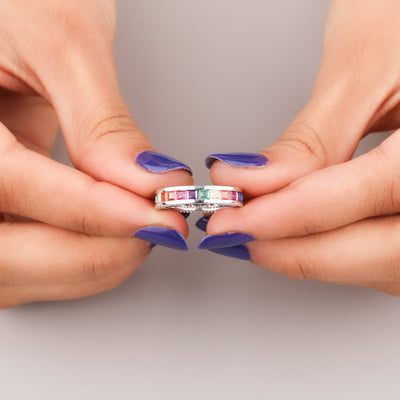
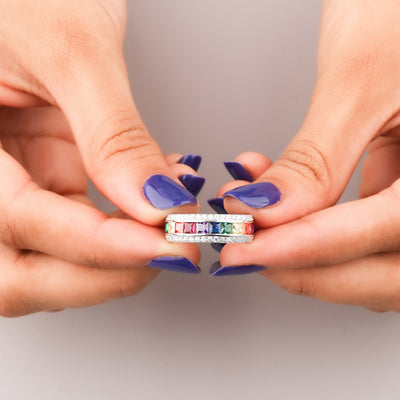
- Go multicolor: If the person you are shopping for loves opal for its rainbow flashes, our rainbow sapphire jewelry collection captures a similar spectrum in a harder, more wearable stone.
- Choose a pink-toned alternative: For pink tourmaline fans, browse fancy color lab diamond rings and ask us which colors are available for your design.
- Add diamond or moissanite accents: A center opal or tourmaline surrounded by a lab diamond or moissanite halo adds sparkle and some protection around the edges.
- Ask about a custom piece: If you want a true opal or tourmaline centerpiece, ask us about a custom order. We can talk through the setting, metal and accent stones that suit a softer gem.
- Match the metal to the stone: Rose gold flatters pink tourmaline and warm fire opal. White gold makes white and crystal opals look cooler and brighter.
Tip: Not sure of their ring size? A pendant or a pair of earrings is the easiest birthstone gift to get right, and softer stones like opal are safer away from the hands anyway.
Looking for more ready-made ideas? Browse our lab grown diamond birthday gifts and moissanite birthday gifts. Every order ships worldwide with free shipping and 30-day easy returns.
Shop October Birthstone Colors at Ivevar
These pink and multicolor pieces are handcrafted to order in 925 sterling silver or 10K, 14K or 18K gold. Choose your metal and size on the product page.


Frequently Asked Questions
What are the two October birthstones?
Opal and tourmaline. Opal has been linked to October the longest, and tourmaline was added as an alternative on the modern American birthstone list.
What is the October birth stone color?
October does not have one color. Opal is known for multicolor flashes, and tourmaline is most often chosen in pink, which makes pink the color most people associate with the month.
What does opal mean?
By tradition, opal symbolizes hope, creativity and imagination. These meanings come from folklore and cultural history rather than scientific evidence.
Is opal bad luck?
No. The unlucky reputation grew largely from nineteenth-century fiction. It is a superstition, and opal remains a popular gift and birthstone.
Can you wear an opal ring every day?
You can, but opal is relatively soft and sensitive to knocks and heat. A bezel setting, a lower profile and removing the ring for sports, cleaning or gardening help it last.
Is pink tourmaline durable enough for a ring?
Yes. At 7 to 7.5 on the Mohs scale, pink tourmaline handles regular wear well, especially in a setting that shields its corners.
What is the difference between an opal doublet and a solid opal?
A solid opal is one piece of opal. A doublet is a thin opal layer glued to a backing. Doublets cost less but should be kept out of water.
Why does my Ethiopian opal look clear after washing?
Many Ethiopian opals absorb water and temporarily lose their color. Let the stone dry naturally at room temperature and the color usually returns.
What is a good October birthday gift for someone who is hard on jewelry?
Choose a pink tourmaline in a protective setting, or a pink lab grown diamond or moissanite piece, which are far harder than opal.
Conclusion
The October birthstone gives you two very different options: opal for its moving rainbow of color and tourmaline for durable, saturated pinks and greens. Choose opal for earrings, pendants and carefully worn rings, and tourmaline when the piece needs to handle daily life. Pair either one with lab diamond or moissanite accents, or ask us about a custom piece built around the stone you love.


