

 Engagement Rings
 Anniversary Rings
 Solitaire Rings
 Halo Rings
 Toi Moi Rings
 Three Stone Rings
 Nature Inspired Rings
 Rose Cut Rings
 Fancy Color Rings
 Antique Cut Rings
 Wedding Rings
 Wedding Band Rings
 Exclusive Lab Grown Diamond Rings
 All Lab Grown Diamond Ring
 Engagement Rings
 Three Stone Rings
 Fancy Color Rings
 Antique Cut Rings
 Daily Wear Rings
 Wedding Band Rings
 Exclusive Moissanite Rings
 Earrings
 Bracelet
 Pendant
 Necklace
 Men's Ring
 Bridal Sets
 Rings
 Earrings
 Tennis chain
 Cuban Chains
 Custom Pendant
 Custom Ring
 Custom Teeth Grillz
 Round
 Oval
 Cushion
 Marquise
 Pear
 Emerald
 Heart
 Princess
 Rose Cut
 Radiant
 Antique Cut
 Brooch
 Cufflink
 Keychain
 Unique Products
 +91-9265051773
 Virtual Appointment
 log in




Short answer: The modern US birthstones are: January garnet, February amethyst, March aquamarine, April diamond, May emerald, June pearl, alexandrite or moonstone, July ruby, August peridot, spinel or sardonyx, September sapphire, October opal or tourmaline, November topaz or citrine, and December turquoise, tanzanite, zircon or blue topaz. For everyday rings, harder choices like diamond, sapphire and ruby last best; many people also use colored lab diamonds or moissanite to capture a birthstone color with extra durability.
Birthstone jewelry makes personal, meaningful gifts. A stone tied to someone's birth month feels chosen just for them, whether it sits in a pendant, a pair of studs or a ring they wear every day.
But birthstones vary enormously in hardness and care needs. A pearl and a sapphire may share a gift box, yet one scratches easily while the other is among the toughest gems there is. This guide lists every month's stones, explains which ones suit daily wear, and shows how to get the same color in a more durable stone when you need to.
Birthstones by Month
Here is the modern birthstone list, with each stone's typical color and hardness on the Mohs scale. The Mohs scale ranks resistance to scratching from 1 (softest) to 10 (hardest). For a ring worn every day, stones of about 8 and above hold up best.
| Month | Birthstone | Color | Mohs hardness |
|---|---|---|---|
| January | Garnet | Deep red | 6.5 to 7.5 |
| February | Amethyst | Purple | 7 |
| March | Aquamarine | Light blue | 7.5 to 8 |
| April | Diamond | Colorless | 10 |
| May | Emerald | Green | 7.5 to 8 |
| June | Pearl, alexandrite, moonstone | White, color-change, milky | 2.5 to 8.5 |
| July | Ruby | Red | 9 |
| August | Peridot, spinel, sardonyx | Lime green, varied | 6.5 to 8 |
| September | Sapphire | Blue | 9 |
| October | Opal, tourmaline | Multicolor, pink | 5.5 to 7.5 |
| November | Topaz, citrine | Golden yellow | 7 to 8 |
| December | Turquoise, tanzanite, zircon, blue topaz | Blue | 5 to 8 |
Several months have more than one stone. Lists have been updated over time to add choices in different colors and price ranges, so you can pick the option that best suits the wearer's style and lifestyle.
A Closer Look at Each Month
January: garnet
Garnet is best known in deep red, though the garnet family also includes orange, green and other colors. It is reasonably durable for pendants and earrings, and fine in rings with a protective setting. Red garnet looks especially warm in yellow or rose gold, and it is one of the more affordable birthstones, which makes it a good choice for larger statement pieces.
February: amethyst
Amethyst is purple quartz, ranging from pale lilac to deep violet. At 7 on the Mohs scale, it is good for most jewelry, though everyday ring stones can show wear on their facet edges over time. Strong sunlight over long periods can fade some amethyst, so store it away from bright windows. Purple pairs well with both white and yellow gold.
March: aquamarine
Aquamarine has a cool, clear sea-blue color. It is fairly hard and often comes in clean, bright stones, which makes it a popular choice for cocktail rings and pendants. Its pale color shows best in larger sizes, and white gold keeps the blue looking cool and fresh. It is also a lovely choice for a March wedding or anniversary.
April: diamond
Diamond is the hardest natural material, at 10 on the Mohs scale. April babies are lucky: their birthstone is ideal for daily wear. Lab grown diamonds are chemically, physically and optically the same as mined diamonds, and they are also available in fancy colors such as pink, yellow, blue and green. That means an April birthstone can be classic white or a bold color, with the same toughness either way.
May: emerald
Emerald's rich green is famous, but most emeralds contain natural inclusions that make them more brittle than their hardness suggests. They need gentle care and a protective setting in rings. Avoid ultrasonic and steam cleaners, which can make inclusions worse. For an everyday green ring, a green lab diamond or green moissanite is a sturdier option.
June: pearl, alexandrite and moonstone
Pearls are organic and soft, so they suit earrings and necklaces better than daily rings. Alexandrite is hard and famous for changing color between daylight and indoor light. Moonstone has a soft, floating glow but is relatively soft. If you want a June ring for daily wear, alexandrite is the most practical of the three.
July: ruby
Ruby is red corundum, at 9 on the Mohs scale. It is one of the most durable colored gems and an excellent choice for a ring worn every day. Its strong red looks rich in yellow gold and striking next to white diamonds in a halo or three-stone design.
August: peridot, spinel and sardonyx
Peridot is a bright lime green but moderately soft. Spinel comes in many colors and is harder, at about 8. Sardonyx is a banded stone often used in carved and cameo pieces. For an August ring, spinel is the most durable choice, while peridot works beautifully in pendants and earrings.
September: sapphire
Sapphire is best known in blue, but it also occurs in pink, yellow and other colors. Like ruby, it is corundum at 9 on the Mohs scale, so it is ideal for rings. Blue sapphire is a long-standing favorite for engagement rings, either as a center stone or as side stones flanking a diamond.
October: opal and tourmaline
Opal shows a play of color unlike any other gem, but it is relatively soft and can crack with sudden temperature changes or knocks. Tourmaline, often pink for October, is tougher and comes in a wide color range. Keep opal away from heat, harsh chemicals and long soaks in water, and choose a protective bezel setting if it goes in a ring.
November: topaz and citrine
Golden topaz and citrine bring warm yellow to orange tones. Topaz is hard but can split if struck at the wrong angle; citrine, a type of quartz, is a good everyday option for pendants and earrings. Both bring warmth that suits yellow gold. A yellow lab diamond or yellow moissanite gives a similar sunny color in a much tougher stone.
December: turquoise, tanzanite, zircon and blue topaz
December offers several blues. Turquoise is opaque and soft. Tanzanite has a violet-blue color but needs care. Zircon is brilliant but can chip on edges. Blue topaz is the hardest of the group at 8. For a December ring worn daily, blue topaz or a blue sapphire is the practical pick, while turquoise and tanzanite shine in earrings and pendants.
Which Birthstones Are Best for Everyday Rings?
If the birthstone will go in a ring worn every day, hardness and toughness matter. Hands knock into doors, desks and countertops all day, and softer stones slowly scratch, dull or chip.
| Durability | Birthstones | Best uses |
|---|---|---|
| Excellent for daily rings | Diamond, ruby, sapphire | Engagement rings, everyday bands |
| Good with care | Alexandrite, spinel, aquamarine, topaz, blue topaz | Rings with protective settings, pendants |
| Moderate | Garnet, amethyst, citrine, tourmaline, emerald, peridot | Pendants, earrings, occasional rings |
| Delicate | Pearl, opal, moonstone, turquoise, tanzanite | Earrings and necklaces, special-occasion wear |
Hardness is not the only factor. Emerald is fairly hard but brittle because of its inclusions, and topaz can split along a natural plane of weakness. A protective setting, such as a bezel, helps any stone last longer.
Tip: If you love a delicate birthstone, put it in earrings or a pendant rather than a ring. These pieces take far fewer knocks, so the stone keeps its polish much longer.
Durable Birthstone Alternatives
Softer birthstones can scratch in everyday rings. Colored lab diamonds, sapphires and colored moissanite offer similar colors with more durability:
- Pink tones (October): pink lab diamond or pink sapphire.
- Yellow (November): yellow lab diamond or yellow moissanite.
- Green (May, August): green lab diamond or green moissanite.
- Blue (March, September, December): blue sapphire or blue lab diamond.
- Red (January): ruby, at 9 on the Mohs scale, gives a deep red similar to garnet with far more scratch resistance.
 Shown: Fancy Intense Pink Oval Cut Floral Halo Lab Diamond Ring
Colored lab diamonds
Colored lab diamonds have the same hardness as any diamond: 10 on the Mohs scale. They are grown by the CVD or HPHT method and can be produced in strong pinks, yellows, blues and greens. IGI and GIA grade lab diamonds, and fancy color stones are described by hue and intensity, such as "Fancy Intense Pink" or "Fancy Vivid Yellow."
Colored moissanite
Moissanite is silicon carbide, a different gemstone from diamond. At 9.25 on the Mohs scale, it is harder than every colored birthstone except diamond. Its refractive index of about 2.65 is higher than diamond's 2.42, so it shows lively, colorful fire. Colored moissanite offers bold birthstone shades with excellent durability at a lower cost than colored diamonds.
Natural, Lab Grown and Treated Birthstones
When you shop for birthstones, you will see words like natural, lab created and treated. They describe where a stone came from and what has been done to it, and they matter for price and care.
- Natural: formed in the earth and then cut and polished.
- Lab grown or lab created: grown in a controlled setting with the same chemistry and crystal structure as the natural stone. Lab grown diamond, sapphire, ruby and emerald are all real versions of those gems, not imitations.
- Simulant: a different material that only looks similar, such as glass made to resemble a gem.
- Treated: many natural colored gems are routinely treated to improve their look. Heating is common for sapphire and ruby, and emeralds are often filled with oil or resin to make inclusions less visible.
None of these is wrong, but a good seller should tell you which you are buying. Treatments can also affect care: an oiled emerald, for example, should never go in an ultrasonic cleaner or near harsh solvents.
Moissanite sits in its own category. It is a distinct gemstone, silicon carbide, rather than a simulant of a birthstone, and it is valued for its brilliance and hardness in its own right.
How to Choose Birthstone Jewelry
- Think about wear: a ring worn daily needs a tougher stone than earrings worn on weekends.
- Pick the color first: if a month has several stones, choose the color the wearer already loves.
- Choose a matching metal: yellow gold warms reds and yellows; white gold makes blues and colorless stones look crisp; rose gold flatters pinks.
- Consider size: small birthstone accents are subtle and easy to combine with other jewelry.
- Check the setting: bezel and low settings protect softer stones better than tall prongs.
Matching birthstones to metal colors
| Birthstone color | Flattering metals |
|---|---|
| Red and pink (garnet, ruby, tourmaline) | Yellow or rose gold |
| Blue (aquamarine, sapphire, blue topaz) | White gold |
| Green (emerald, peridot) | Yellow gold |
| Yellow and orange (citrine, topaz) | Yellow gold |
| Colorless (diamond) | Any metal |
These pairings are guidelines, not rules. A blue sapphire in yellow gold has a rich, classic look, and many people mix metals freely.
Shop the styles in this guide




Birthstones in Engagement and Wedding Rings
Birthstones also work beautifully in bridal jewelry. Some couples choose a colored center stone; others keep a white diamond or moissanite center and add a birthstone in a quieter spot.
- Colored center stone: choose a durable option, such as sapphire, ruby, a colored lab diamond or colored moissanite, because an engagement ring is worn every day.
- Side stones: two small birthstones flanking a diamond in a three-stone ring.
- Hidden gem: a single birthstone set in the side of the setting or under the center stone, visible only to the wearer.
- Wedding band accents: a few birthstones mixed into a pave or eternity band.
Browse lab diamond engagement rings for settings that work well with a birthstone accent.
Birthstone Jewelry Ideas
- Mother's ring: a ring with each child's birthstone set side by side.
- Birthstone pendant: a simple pendant for a birthday or graduation.
- Hidden accents: birthstone accents inside a wedding band or under the center stone of an engagement ring.
- Stackable rings: one slim ring for each family member, worn together.
- Studs: birthstone stud earrings, an easy first piece of fine jewelry.
- Two-stone rings: a toi et moi ring pairing two partners' birthstones.
For couples, a two-stone design is a meaningful twist. Explore our lab grown toi et moi rings for ideas, or combine birthstone colors in a custom design.
Caring for Birthstone Jewelry
Care depends on the stone. These simple rules suit most birthstones:
- Clean gently: use warm water, mild soap and a soft brush for hard stones such as diamond, ruby and sapphire.
- Wipe delicate stones: pearls, opal and turquoise should only be wiped with a soft, damp cloth.
- Avoid chemicals: perfume, hairspray and cleaning products can dull porous or organic stones.
- Store separately: keep each piece in its own pouch so harder stones do not scratch softer ones.
- Skip ultrasonic cleaners: unless you know the stone is safe, as many colored gems, especially emerald, opal and pearl, can be damaged.
Colored Stones at Ivevar
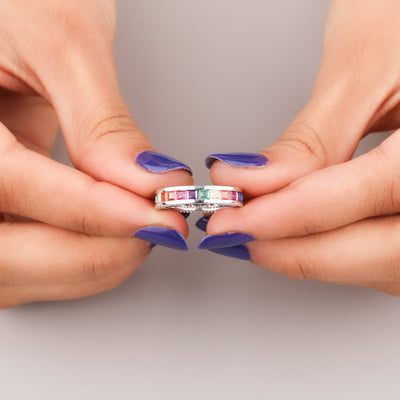
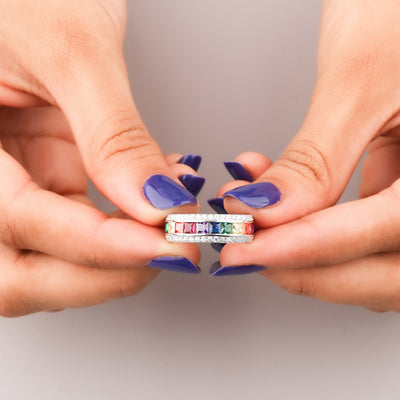
We handcraft colored lab diamond, sapphire and moissanite jewelry in our Surat workshop, including custom birthstone pieces in 10K, 14K or 18K gold. Many of our lab grown diamonds come with IGI certificates, and you can book a virtual appointment to plan a custom design. Every piece ships free worldwide, with 30-day easy returns. Browse fancy color rings, moissanite fancy color rings and the rainbow collection.
Shop Colorful Birthstone Alternatives
 Pink Oval Floral HaloShop Now
 Pink Oval Double HaloShop Now
 Vivid Yellow Oval HaloShop Now
 Pink Radiant Five StoneShop Now
 2.03ct Vivid Green HeartShop Now
 3.29ct Intense Blue HeartShop Now
Swipe to see more → | View fancy color rings
Frequently Asked Questions
What is the April birthstone?
Diamond. It is the hardest gemstone, at 10 on the Mohs scale, so it is ideal for everyday jewelry.
Which birthstones are best for everyday rings?
Diamond, ruby and sapphire, all 9 or 10 on the Mohs scale. Alexandrite and spinel are also good choices with sensible care.
Why do some months have several birthstones?
Lists have been updated over time to add options in different colors and price ranges.
Can I use a colored diamond instead?
Yes. A colored lab diamond gives a similar color with the full durability of diamond.
Is moissanite a good birthstone alternative?
Yes. Colored moissanite is 9.25 on the Mohs scale, harder than most birthstones, and shows strong fire.
Which birthstones should I avoid in rings?
Pearl, opal, moonstone and turquoise are soft or delicate. They are better in earrings and pendants.
Are birthstones good gifts?
Yes, they are personal and meaningful, and they suit birthdays, graduations, anniversaries and new babies.
Can I combine several birthstones in one piece?
Yes. Mother's rings, family pendants and stackable rings are popular ways to combine several birthstones.
The Bottom Line
Birthstones add meaning to jewelry. For everyday rings, choose durable stones or colored diamond and moissanite alternatives, and save softer stones for earrings and pendants.
Related Guides

Author Bio
Aumsri Pradhan
Founder, Ivevar Luxury
Aumsri Pradhan is the founder of Ivevar Luxury, a Surat-based fine jewelry brand that designs and handcrafts lab grown diamond and moissanite jewelry in its own workshop. She leads the brand's design and customer experience, from engagement rings and bridal sets to custom pieces made to each client's story. Through the Ivevar blog, she shares practical guidance on lab grown diamonds, moissanite, diamond grading and ring design to help buyers choose with confidence.


