

 Engagement Rings
 Anniversary Rings
 Solitaire Rings
 Halo Rings
 Toi Moi Rings
 Three Stone Rings
 Nature Inspired Rings
 Rose Cut Rings
 Fancy Color Rings
 Antique Cut Rings
 Wedding Rings
 Wedding Band Rings
 Exclusive Lab Grown Diamond Rings
 All Lab Grown Diamond Ring
 Engagement Rings
 Three Stone Rings
 Fancy Color Rings
 Antique Cut Rings
 Daily Wear Rings
 Wedding Band Rings
 Exclusive Moissanite Rings
 Earrings
 Bracelet
 Pendant
 Necklace
 Men's Ring
 Bridal Sets
 Rings
 Earrings
 Tennis chain
 Cuban Chains
 Custom Pendant
 Custom Ring
 Custom Teeth Grillz
 Round
 Oval
 Cushion
 Marquise
 Pear
 Emerald
 Heart
 Princess
 Rose Cut
 Radiant
 Antique Cut
 Brooch
 Cufflink
 Keychain
 Unique Products
 +91-9265051773
 Virtual Appointment
 log in




Short answer: A bezel set engagement ring holds the center stone inside a thin rim of metal instead of prongs. It is the most protective and snag-free setting you can choose, which makes it ideal for nurses, teachers, athletes, parents of young kids and anyone who works with their hands. A full bezel covers the whole edge of the stone; a half or semi bezel covers two sides for a lighter, more open look. The trade-off is that a bezel shows a little more metal and lets slightly less light into the sides of the stone.
If you have ever worried about a prong catching on a sweater, knocking a diamond against a counter, or losing a stone at the gym, a bezel setting is worth a close look. This guide explains how bezels work, the different styles, how they compare with prongs, which shapes and metals suit them best, and how to choose one that still looks bright and elegant.
What Is a Bezel Setting?
In a bezel setting, a jeweler forms a band of metal to the exact outline of the stone, then gently presses the top edge of that metal over the girdle, the thin outer rim of the diamond. The stone sits securely inside, like a picture in a frame. Because nothing sticks up above the metal rim, there are no claws to bend, snag or wear down over time.
Bezels are one of the oldest ways to set a gemstone, and they have come back strongly in modern design. Today's bezels are often slim, polished and minimal, so they read as sleek and contemporary rather than heavy.
The parts of a bezel ring
- Bezel wall: the strip of metal that wraps around the stone. Its thickness decides how much metal you see from the top.
- Seat: a ledge cut inside the wall where the girdle of the stone rests, so it sits level.
- Lip: the top edge of the wall that is burnished over the girdle to lock the stone in.
- Gallery: the area under the stone. It can be closed (solid metal) or open, which lets light and cleaning water in.
- Shank: the band itself, which can be plain, tapered, pave set or split.
Knowing these terms helps when you review a design. For example, you can ask for a thinner wall, an open gallery, or a tapered shank to make the stone look larger.
Full Bezel vs Half Bezel vs Semi Bezel
| Style | How it works | Protection | Look |
|---|---|---|---|
| Full bezel | Metal surrounds the entire edge of the stone | Maximum | Clean, modern, minimal |
| Half bezel | Metal covers two opposite sides, usually the left and right | High | More open, shows more of the stone's sides |
| Semi bezel | Partial metal arcs hold the stone, sometimes with small gaps | Good | Airy, architectural |
| Bezel with prongs | A thin rim plus small accent prongs at the corners | High | Mix of modern and classic |
For pointed shapes such as pear and marquise, a bezel or partial bezel on the tips is one of the best ways to prevent chipping. For east-west designs, where the stone sits sideways across the finger, a half bezel on the ends gives a striking, modern profile.
Which bezel style fits your life?
If you want the most protection possible, choose a full bezel. It guards every part of the girdle and leaves no gaps for dirt or fabric to catch. If you like the security of a bezel but want more of the stone's sides on show, a half bezel is a good compromise: the long sides stay open to light while the metal guards the ends. A semi bezel suits buyers who like an architectural, open design and are not especially hard on their hands.
Bezel vs Prong Setting
| Bezel | Prongs | |
|---|---|---|
| Security | Very high; stone fully held | High, but prongs can bend or wear |
| Snagging | Almost none | Can catch on fabric and hair |
| Protection from knocks | Excellent; metal shields the edge | Edges are exposed |
| Light and sparkle | Slightly less light from the sides | Maximum light entry |
| Visible metal | More | Less |
| Maintenance | Low; occasional check | Yearly prong check recommended |
| Resetting later | More work to remove the stone | Easier |
 Shown: East West Emerald Lab Diamond With Bezel Set Solitaire Ring
Prongs are still the most common setting, and they are a fine choice for many people. Their weakness is that each prong is a small point of metal that takes all the wear. Over years of daily life, prong tips thin out, and a bent prong can let a stone loosen without you noticing. A bezel spreads that pressure around the whole stone, so there is no single weak point.
The flip side is light. Prongs leave most of the stone's sides open, so light enters from every angle. A bezel blocks some side light, which is why cut quality and an open gallery matter more in a bezel ring. A well-cut stone in a slim bezel still sparkles brightly in everyday light.
Who Should Choose a Bezel Engagement Ring?
- Healthcare workers and caregivers who wear gloves and wash hands often; there is nothing to tear a glove.
- Teachers and parents of young children, since there are no prongs to scratch small hands.
- Athletes and outdoor lovers who climb, lift, garden or hike.
- Anyone who types, cooks or crafts all day and wants a ring they can forget about.
- Minimalists who love clean lines and modern design.
- People who are hard on jewelry and have already bent a prong or lost a small stone in the past.
A bezel is also a smart choice for a second ring you plan to wear every day while traveling, or for anyone who simply does not want to think about their ring catching on things.
When a bezel may not be the best fit
If maximum sparkle is your top priority, or you plan to upgrade or reset your center stone in a few years, a prong setting may suit you better. Removing a stone from a bezel is more work than opening prongs. And if you love a very tall, dramatic ring, a bezel will usually feel more understated.
How to Keep a Bezel Ring Looking Bright
A common worry is that a bezel will make the diamond look smaller or darker. A well-made bezel avoids both problems. Here is what to look for:
Choose a thin, polished rim
A slim bezel wall shows off more of the stone and keeps the ring delicate. Very thick bezels can make the stone look smaller. Ask to see the top view of the design so you can judge how much metal frames the stone.
Pick white metal for colorless stones
14K or 18K white gold around a white diamond keeps the stone looking icy, because the metal reflects white light into it. A yellow gold bezel can add warmth, which suits G to J color diamonds and vintage styles.
Consider an open back or gallery
An open back behind the stone lets light and cleaning water reach the diamond, helping it sparkle and making it easier to keep clean.
Go slightly larger or choose an elongated shape
Because the rim covers the girdle, some people choose a slightly larger stone or an oval, emerald or marquise shape to keep a generous look.
Prioritize cut quality
Since the bezel limits light from the sides, most of the sparkle you see comes from light entering through the top of the stone. A well-cut stone returns that light strongly. For lab grown diamonds, look at the cut and polish grades on the IGI or GIA report and watch a video of the actual stone.
Tip: If you love extra sparkle, consider moissanite in a bezel. With a refractive index of about 2.65 (a diamond is about 2.42), moissanite throws strong rainbow fire that stays lively even inside a metal rim. Remember that moissanite is its own gemstone, not a type of diamond.
Best Shapes for a Bezel Setting
- Round: the classic bezel solitaire, timeless and practical.
- Oval: soft and elegant, and it looks great set east-west.
- Emerald: the clean lines of a step cut pair beautifully with a crisp rectangular bezel.
- Marquise and pear: the bezel protects fragile points from chipping.
- Princess: a bezel covers its sharp corners, one of its weak spots.
- Cushion: its soft, rounded corners follow a bezel wall smoothly for a vintage-modern feel.
- Baguette: long and slim, it looks sharp in a half bezel set east-west.
| Shape | Why a bezel helps | Best bezel style |
|---|---|---|
| Round | Even protection all around | Full bezel |
| Oval | Guards the long sides from knocks | Full or half bezel |
| Emerald | Shields the clipped corners | Full bezel |
| Pear | Protects the fragile point | Full bezel or V-tip with half bezel |
| Marquise | Covers both delicate tips | Half bezel on the tips |
| Princess | Covers the sharp corners | Full bezel |
Browse lab diamond ovals or lab diamond emerald cuts if you want an elongated stone that keeps a generous look inside a bezel.
Shop the styles in this guide


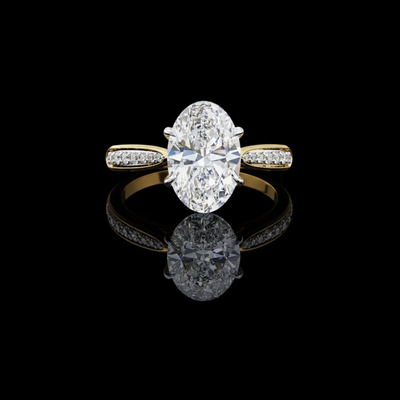
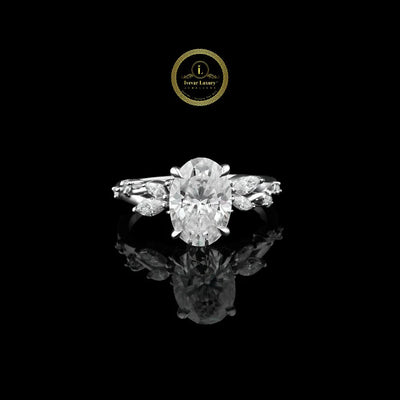


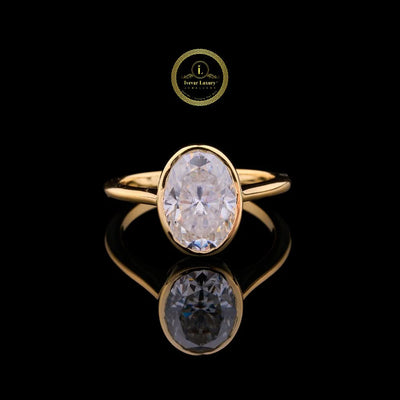


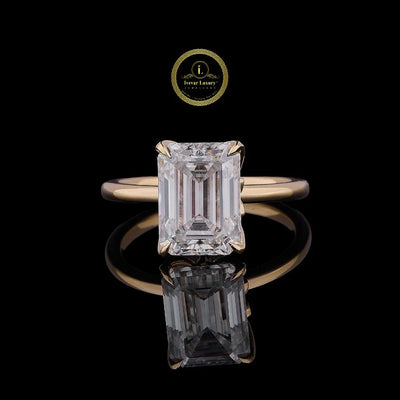


Choosing Metal and Band for an Active Life
The setting is only part of the story. The metal and band shape also decide how a ring wears day to day.
Gold karat
- 10K gold: the hardest of the three because it has the most alloy metals. It resists scratches and dents well and is a practical pick for very active hands.
- 14K gold: a popular balance of durability and rich color. A sensible default for most bezel engagement rings.
- 18K gold: richer color and more gold content, but softer, so it shows scratches sooner. Lovely for a bezel if you are gentle on your jewelry.
Band shape and width
A comfort-fit band, rounded on the inside, slides on easily and feels smoother during long days. A band of moderate width resists bending better than a very thin one, which matters if you lift weights or carry heavy bags. If you love a delicate look, choose a slim band in a harder alloy such as 10K or 14K.
Setting height
Bezels are naturally lower than most prong heads, which is part of why they snag less. If you want the lowest possible profile, ask for the stone to sit close to the finger. If you plan to wear a straight wedding band flush against it, check the side view so the two rings sit neatly together.
Pairing a Bezel Ring With a Wedding Band
Because a bezel holds the stone low and has a smooth outline, it usually pairs easily with a wedding band. Still, a few details are worth planning before you order.
- Straight bands: most round, oval and emerald bezels sit flush with a plain or pave straight band, as long as the bezel does not extend below the top of the shank.
- Curved bands: wide east-west stones and large ovals may push a straight band away, leaving a gap. A gently curved band follows the outline and closes it.
- Matching metal: wear the band in the same gold color and karat so both rings wear evenly over the years.
- Low-snag bands: if you chose a bezel for practicality, a plain polished band or a channel set band keeps the whole stack smooth. Small claw-set pave can catch more easily.
The simplest way to avoid surprises is to view the engagement ring and band together in one CAD or photo before production. Our lab grown diamond wedding bands include slim, low designs that sit neatly beside a bezel.
Caring for a Bezel Set Ring
Bezels are low maintenance, but they still need a little care. Soap, lotion and skin oils can collect under the stone and dull its sparkle. Soak the ring in warm water with a drop of mild dish soap, then brush gently with a soft toothbrush, paying attention to the back of the setting. Have a jeweler check the rim once a year; a hard knock can occasionally loosen or dent the metal edge.
- Take it off for heavy lifting: gripping bars and kettlebells can scratch and bend any gold band over time.
- Avoid harsh chemicals: chlorine and strong cleaners can dull gold. Remove your ring before swimming pools and deep cleaning.
- Store it separately: diamonds can scratch other jewelry, and other pieces can scratch gold. A soft pouch or lined box works well.
- Watch for gaps: if you see a gap between the rim and the stone, or the stone moves, stop wearing the ring and have it checked.
Tip: Rinse your ring after applying hand cream or sunscreen. A quick rinse stops a film from building up under the stone, which is the main reason a bezel diamond can start to look dull.
Bezel Rings at Ivevar
We form each bezel by hand in our own workshop in Surat, India, shaping the metal to your stone's exact outline for a snug, secure fit. We send you a CAD design for approval before production, and photos or a video before your ring ships with free worldwide shipping and 30-day easy returns. Choose a lab grown diamond, many with IGI certificates, or moissanite, set in 10K, 14K or 18K gold. If you want something unique, our custom service and virtual appointments make it easy to plan your design from anywhere.
Explore our lab grown diamond engagement rings, moissanite engagement rings and daily wear rings.
Shop Bezel and East-West Engagement Rings
 East West Emerald Bezel SolitaireShop Now
 East West Marquise Bezel RingShop Now
 East West Oval Semi Bezel RingShop Now
 Half Bezel Baguette RingShop Now
 East West Princess SolitaireShop Now
Swipe to see more → | View all engagement rings
Frequently Asked Questions
Does a bezel setting make a diamond look smaller?
Slightly, because the metal rim covers the girdle. A thin bezel, white metal for colorless stones, or an elongated shape keeps the stone looking generous.
Is a bezel setting more secure than prongs?
Yes. The stone is held all around its edge, so there are no prongs to bend or break.
Do bezel settings reduce sparkle?
They let in a little less light from the sides, but a well-cut diamond still sparkles beautifully, especially with an open back.
Can a bezel ring be resized?
Usually yes, within a size or two, because resizing happens on the band rather than the bezel itself.
Is a bezel good for a lab grown diamond?
Absolutely. Lab grown diamonds are real diamonds, chemically, physically and optically the same as mined diamonds, and look just as bright in a bezel.
Can I wear a bezel ring to the gym?
A bezel is the safest setting for an active life, but it is still wise to remove any ring for heavy lifting. Pressure from bars and handles can bend the band and scratch the metal.
Is moissanite a good choice for a bezel ring?
Yes. Moissanite is 9.25 on the Mohs scale, hard enough for daily wear, and its strong fire keeps it lively inside a metal rim.
Does a bezel collect dirt?
It can trap lotion and soap underneath the stone, especially with a closed back. Regular soaking and gentle brushing keep it bright, and an open gallery makes cleaning easier.
The Bottom Line
A bezel engagement ring is the smartest choice for an active life: secure, smooth, low maintenance and quietly modern. Choose a thin rim, match the metal to your stone color, pick a shape that shows off the outline, and select a durable gold karat for the band. You will get a ring you can wear through work, workouts and everyday life without a second thought.
Related Guides
- Engagement ring settings explained
- East west engagement rings guide
- Princess cut engagement rings: pros and cons

Author Bio
Aumsri Pradhan
Founder, Ivevar Luxury
Aumsri Pradhan is the founder of Ivevar Luxury, a Surat-based fine jewelry brand that designs and handcrafts lab grown diamond and moissanite jewelry in its own workshop. She leads the brand's design and customer experience, from engagement rings and bridal sets to custom pieces made to each client's story. Through the Ivevar blog, she shares practical guidance on lab grown diamonds, moissanite, diamond grading and ring design to help buyers choose with confidence.


