

 Engagement Rings
 Anniversary Rings
 Solitaire Rings
 Halo Rings
 Toi Moi Rings
 Three Stone Rings
 Nature Inspired Rings
 Rose Cut Rings
 Fancy Color Rings
 Antique Cut Rings
 Wedding Rings
 Wedding Band Rings
 Exclusive Lab Grown Diamond Rings
 All Lab Grown Diamond Ring
 Engagement Rings
 Three Stone Rings
 Fancy Color Rings
 Antique Cut Rings
 Daily Wear Rings
 Wedding Band Rings
 Exclusive Moissanite Rings
 Earrings
 Bracelet
 Pendant
 Necklace
 Men's Ring
 Bridal Sets
 Rings
 Earrings
 Tennis chain
 Cuban Chains
 Custom Pendant
 Custom Ring
 Custom Teeth Grillz
 Round
 Oval
 Cushion
 Marquise
 Pear
 Emerald
 Heart
 Princess
 Rose Cut
 Radiant
 Antique Cut
 Brooch
 Cufflink
 Keychain
 Unique Products
 +91-9265051773
 Virtual Appointment
 log in




Short answer: Choose a cushion cut if you want a soft, romantic square or rectangle with rounded corners and big, chunky flashes of light, a look that feels vintage and warm. Choose a radiant cut if you want a crisper outline with trimmed corners and intense, crushed-ice sparkle that feels bold and modern. Both are durable, both hide inclusions well, and both usually cost less per carat than a round.
Cushion and radiant are two of the most requested fancy shapes for engagement rings, and at first glance they look similar. The differences are in the corners, the facet pattern and the kind of sparkle each gives. This guide walks through each difference, from history and faceting to ratios, grading and settings, so you can pick the one that feels right.
Cushion vs Radiant at a Glance
| Cushion cut | Radiant cut | |
|---|---|---|
| Outline | Square or rectangle with rounded corners, like a pillow | Square or rectangle with cut (beveled) corners |
| Sparkle | Large, bold flashes; soft and romantic | Bright, intense, "crushed ice" sparkle |
| Style | Vintage, classic, feminine | Modern, glamorous, geometric |
| Hides inclusions | Well | Very well |
| Hides color | Fairly well; can show warmth in larger stones | Well |
| Durability | Excellent; no sharp corners | Excellent; corners are trimmed |
| Price per carat | Usually lower than round | Usually lower than round |
| Pairs with bands | Curved or straight bands | Straight bands sit neatly alongside |
The quickest way to tell them apart is to look at the corners. A cushion's corners are rounded and soft. A radiant's corners are cut off in a short straight line, giving it eight sides when you look closely. The second clue is the sparkle: cushions tend to show larger, distinct flashes, while radiants show a dense, glittering pattern across the whole face.
What Is a Cushion Cut?
The cushion cut descends from the "old mine" cut used in the 1700s and 1800s, when diamonds were cut by hand and by candlelight. It has rounded corners and larger facets, which create broad flashes of light and color. Modern cushions come in several styles:
- Classic or "chunky" cushion: bigger facets and a vintage look.
- Modified cushion: extra facets for a busier, more sparkly look.
- Old mine cushion: a high crown and small table for an antique glow.
- Elongated cushion: a rectangular outline that looks longer on the finger.
 Shown: Four Prong Cushion Moissanite Solitaire Engagement Ring
Chunky vs crushed ice cushions
Grading reports usually call every cushion either a "cushion brilliant" or a "cushion modified brilliant," so the report alone does not tell you how the stone sparkles. A chunky cushion shows a clear pattern of large facets, like a kaleidoscope. A crushed ice cushion, usually a modified brilliant, shows many tiny sparkles that can look almost like a radiant. If you specifically want the vintage look, ask for a video and look for broad, defined flashes.
What Is a Radiant Cut?
The radiant cut was introduced in the late 1970s to combine the elegant outline of an emerald cut with the brilliance of a round. It has trimmed corners and a full brilliant facet pattern on both the top and bottom, which is why it sparkles so intensely. Radiants can be nearly square or elongated, and elongated radiants have become especially popular for their long, slimming look.
Because the facets are small and numerous, a radiant reflects light in many directions at once. The effect is lively and glittering, and it stays bright even in softer indoor lighting. That busy pattern is also why radiants are so good at hiding small inclusions and slight body color.
Radiant vs emerald cut
People sometimes confuse radiants with emerald cuts because they share the same rectangular outline with clipped corners. The difference is the faceting. An emerald cut has long, parallel step facets that create a calm "hall of mirrors" effect. A radiant has brilliant facets that create sparkle. If you love the shape of an emerald but want more fire, the radiant is the bridge between the two.
Sparkle, Size and Light: How They Really Compare
Both shapes are brilliant cuts, so both can sparkle beautifully when well cut. The difference is the character of that sparkle.
- Cushion sparkle: fewer, larger flashes that move slowly as you tilt your hand. It reads as romantic and calm.
- Radiant sparkle: many small, bright points of light that flicker constantly. It reads as energetic and glamorous.
- Face-up size: at the same carat weight, both look similar. Radiants are sometimes cut deeper, which can hide weight underneath and make the top look a little smaller.
- Fire: both show colored flashes, especially under spotlights. Moissanite versions of either shape show stronger rainbow fire because moissanite has a higher refractive index (about 2.65) than diamond (about 2.42).
Tip: Compare the length and width in millimeters on the grading report, not just the carat weight. Two stones of the same weight can face up quite differently, and a well-proportioned stone with a larger face-up spread will look bigger on the hand.
How to Choose Between Them
Pick cushion if you love...
- A romantic, vintage or Old Hollywood feel.
- Big, slow flashes of light rather than constant glitter.
- Soft edges that feel gentle and feminine.
- Halo designs, which suit the rounded outline beautifully.
Pick radiant if you love...
- Maximum sparkle in a square or rectangle.
- Clean, geometric lines and a modern look.
- Three stone rings with baguette or trapezoid side stones.
- Colored stones; radiants concentrate color well.
Think about her hand and lifestyle
Elongated versions of both shapes make fingers look longer and slimmer. A square cushion can look wide on a petite hand, while a square radiant feels more compact and structured. If she works with her hands, both shapes are practical because neither has sharp corners, though a bezel or low setting adds extra protection.
Buying Tips for Each Shape
Cushion
- Ratio: 1.00 to 1.05 for a square; 1.15 to 1.30 for an elongated cushion.
- Color: larger cushions can show warmth, so choose G or better in white metal.
- Look at video: cushion faceting varies a lot; judge the sparkle pattern with your own eyes.
- Window and extinction: avoid stones with a washed-out center (a window) or large dark areas, both signs of poor proportions.
Radiant
- Ratio: 1.00 to 1.05 for square; 1.20 to 1.35 is a popular elongated range.
- Depth: radiants can be cut deep; very deep stones look smaller face-up.
- Clarity: VS2 is usually eye-clean thanks to the busy facet pattern.
- Bow-tie: elongated radiants can show a dark bow-tie shape across the middle. A faint one is normal; a strong one dulls the stone.
| Grade | Cushion: smart range | Radiant: smart range |
|---|---|---|
| Color (white metal) | D to G | D to H |
| Color (yellow or rose gold) | G to I | G to J |
| Clarity | VS2 or better, checked on video | VS2 or SI1 if eye-clean |
| Report | IGI or GIA for lab diamonds | IGI or GIA for lab diamonds |
These are practical starting points rather than rules. Always judge the actual stone on video, because two stones with the same grades can look different in real life.
Lab Grown Diamond or Moissanite?
Both shapes are available in lab grown diamond and moissanite, and each material brings something different.
- Lab grown diamond: chemically, physically and optically the same as a mined diamond, rated 10 on the Mohs scale. Grown by CVD or HPHT methods and often graded by IGI or GIA. A great choice if you want a real diamond at a more accessible price.
- Moissanite: a different gemstone (silicon carbide), rated 9.25 on the Mohs scale. It shows more rainbow fire than diamond and costs less, which makes it popular for larger cushions and radiants.
Colored cushions and radiants
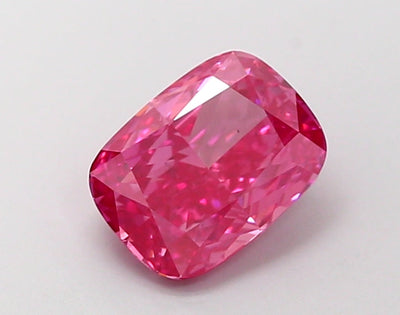
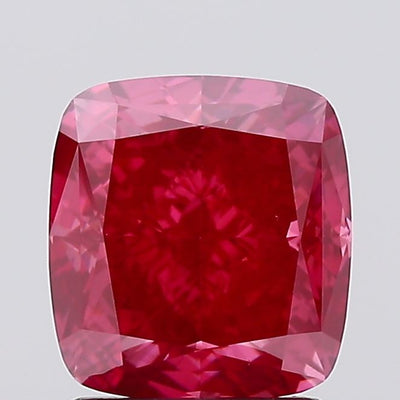
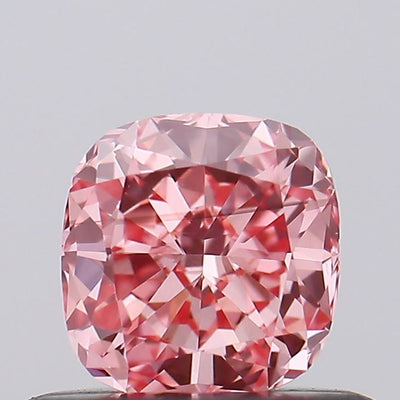
Both shapes are excellent for colored stones. Their deep, compact facet patterns bounce light around inside the stone, which concentrates and intensifies color. That is why so many fancy yellow and pink stones are cut as radiants or cushions. If you want a colored center, ask for the color grade on the report, such as Fancy Light, Fancy Intense or Fancy Vivid, and frame it with white side stones or a halo to make the color stand out. Our fancy color lab diamond rings include both shapes.
A radiant's busy faceting amplifies moissanite's fire, giving a very lively look. A chunky cushion in moissanite shows broad flashes of color. If you prefer a calmer, whiter sparkle, a lab grown diamond may suit you better. Browse lab diamond cushions and lab diamond radiants to compare loose stones and rings.
Shop the styles in this guide








Best Settings for Cushion and Radiant Diamonds
- Four-prong solitaire: shows off the outline; claw prongs suit both shapes.
- Hidden halo: adds side sparkle with a clean top view, especially lovely under radiants.
- Classic halo: makes a cushion look larger and more vintage.
- Three stone: radiant centers with trapezoid or baguette sides are a modern favorite.
- Pave band: adds sparkle down the shank for a glamorous finish.
- Bezel or east-west: a modern twist that protects the corners and suits an active lifestyle.
Keeping either shape bright
Cushions and radiants both have a large pavilion that collects lotion, soap and skin oil, which dulls sparkle quickly. Soak your ring in warm water with a drop of mild dish soap for a few minutes, then brush gently under the stone with a soft toothbrush and rinse. Do this every week or two if you wear the ring daily. Have the prongs checked once a year, paying special attention to the corner prongs, which take the most knocks. An open gallery under the stone makes cleaning easier and helps light reach the pavilion.
Choosing the metal
White gold keeps a colorless stone looking bright and icy. Yellow gold gives a warm, vintage feel that suits cushions especially well and can soften a stone with a hint of warmth. Rose gold adds a romantic blush. We craft settings in 10K, 14K and 18K gold, so you can balance durability, color and budget.
Wedding Bands for Each Shape
Think about the wedding band before you finalize the engagement ring, because the shape and setting height decide how well the two rings sit together.
Bands for a cushion
A cushion in a classic halo is wider than the stone alone, so a straight band may sit slightly apart from it. A gently curved band, or a slim pave band, sits close and continues the soft, vintage mood. Milgrain edges and scalloped pave suit the romantic character of the cushion very well.
Bands for a radiant
A radiant's straight sides line up neatly with a straight band, especially in a solitaire or hidden halo design. Channel set baguettes or a simple eternity band echo the radiant's geometric lines. For a three stone radiant with trapezoid sides, check the side view, because wide side stones can push a straight band out.
| Engagement ring style | Band that fits well |
|---|---|
| Cushion solitaire | Straight plain or pave band |
| Cushion with halo | Curved or slim pave band |
| Radiant solitaire or hidden halo | Straight eternity or channel band |
| Radiant three stone | Curved band or a band worn on the other side |
Browse our lab grown diamond wedding bands to find a match, or ask us to design a band to sit flush with your ring.
Common Mistakes to Avoid
- Buying from the report alone: two cushions with the same grades can look completely different. Always look at a video or real photos of the stone.
- Ignoring the ratio: a stone you thought was square may look slightly rectangular on the hand, and vice versa. Check the length-to-width ratio before you decide.
- Choosing a very deep radiant: extra depth adds carat weight without adding face-up size. Compare millimeter measurements.
- Overpaying for colorless grades in yellow gold: warm metal reflects into the stone, so a near-colorless grade often looks just as good.
- Forgetting the band: plan the wedding band early so you are not surprised by a gap between the rings.
- Skipping the side view: a ring can look perfect from the top and sit too high for daily life. Ask to see the profile.
Tip: If you are torn between the two shapes, look at both side by side on video in the same lighting. Most people know within seconds which kind of sparkle they prefer.
Cushion and Radiant Rings at Ivevar
We offer cushion and radiant designs in lab grown diamond and moissanite, handcrafted in our own Surat workshop. You approve a CAD design before we start, and we share photos or a video before your ring ships with free worldwide shipping and 30-day easy returns. Want something unique? Book a virtual appointment and we can design a custom ring around the shape you love.
Browse lab grown diamond engagement rings, moissanite engagement rings and radiant lab grown diamonds.
Shop Cushion and Radiant Engagement Rings
 Four Prong Cushion SolitaireShop Now
 Cushion Solitaire Pave BandShop Now
 Cushion Halo Three Stone RingShop Now
 East West Old Mine CushionShop Now
 Hidden Halo Radiant SolitaireShop Now
 Radiant Solitaire Pave BandShop Now
 Elongated Radiant Hidden HaloShop Now
Swipe to see more → | View all engagement rings
Frequently Asked Questions
Which sparkles more, cushion or radiant?
Radiant cuts usually give more intense, constant sparkle. Cushions give bigger, softer flashes of light.
Which looks bigger?
At the same carat weight they look similar. Elongated versions of either shape look larger than square ones, and a radiant cut very deep can look slightly smaller face-up.
Are cushion cuts old-fashioned?
No. They have vintage roots, but modern cushions are one of the most popular engagement ring shapes today.
Is a radiant cut durable?
Yes. Its trimmed corners make it much less prone to chipping than a princess cut.
Can I get either shape in a colored stone?
Yes. Both shapes show color beautifully, and radiants are a favorite for yellow and pink stones.
Which shape is better for an elongated look?
Both work. An elongated radiant looks sleek and modern, while an elongated cushion looks softer and more vintage. Aim for a ratio of roughly 1.20 or more for a clearly rectangular look.
What is a bow-tie and should I worry about it?
A bow-tie is a darker area across the middle of some elongated stones. Most radiants and elongated cushions show a slight one, which is normal. Avoid stones where it looks very dark on video.
Do cushion and radiant cuts cost less than round?
Usually, yes. Cutting a round wastes more of the rough crystal, so fancy shapes like cushion and radiant tend to cost less per carat at similar grades.
The Bottom Line
Cushion is soft, romantic and vintage; radiant is crisp, brilliant and modern. Both are durable, good value and flattering. Decide which sparkle and outline speak to you, check the ratio and proportions, watch a video of the actual stone, then choose a setting that makes that shape shine.
Related Guides
- Princess cut engagement rings: pros and cons
- Hidden halo engagement rings explained
- Three stone engagement rings

Author Bio
Aumsri Pradhan
Founder, Ivevar Luxury
Aumsri Pradhan is the founder of Ivevar Luxury, a Surat-based fine jewelry brand that designs and handcrafts lab grown diamond and moissanite jewelry in its own workshop. She leads the brand's design and customer experience, from engagement rings and bridal sets to custom pieces made to each client's story. Through the Ivevar blog, she shares practical guidance on lab grown diamonds, moissanite, diamond grading and ring design to help buyers choose with confidence.


