

 Engagement Rings
 Anniversary Rings
 Solitaire Rings
 Halo Rings
 Toi Moi Rings
 Three Stone Rings
 Nature Inspired Rings
 Rose Cut Rings
 Fancy Color Rings
 Antique Cut Rings
 Wedding Rings
 Wedding Band Rings
 Exclusive Lab Grown Diamond Rings
 All Lab Grown Diamond Ring
 Engagement Rings
 Three Stone Rings
 Fancy Color Rings
 Antique Cut Rings
 Daily Wear Rings
 Wedding Band Rings
 Exclusive Moissanite Rings
 Earrings
 Bracelet
 Pendant
 Necklace
 Men's Ring
 Bridal Sets
 Rings
 Earrings
 Tennis chain
 Cuban Chains
 Custom Pendant
 Custom Ring
 Custom Teeth Grillz
 Round
 Oval
 Cushion
 Marquise
 Pear
 Emerald
 Heart
 Princess
 Rose Cut
 Radiant
 Antique Cut
 Brooch
 Cufflink
 Keychain
 Unique Products
 +91-9265051773
 Virtual Appointment
 log in




Short answer: A diamond solitaire pendant is a single diamond on a chain, and it is one of the most versatile pieces of fine jewelry you can own. For everyday wear, 0.50 to 1.00 carat is a popular size; 1.50 carats and up makes a statement. Round stones give the most sparkle, while oval, pear, emerald, cushion and heart shapes add personality. Pair it with a 16 or 18 inch chain and a setting that suits your lifestyle, such as prong for sparkle or bezel for security.
A solitaire pendant works with everything from a T-shirt to an evening gown. It is simple enough to wear every day, special enough for a wedding or anniversary, and it never really goes out of style because there is nothing in the design to date it.
Because the design is so simple, every choice shows: the shape and size of the stone, how it is cut, the setting that holds it, the bail that connects it to the chain, and the chain itself. This guide walks through each decision in order, with practical advice on where to spend and where you can save.
Choosing the Shape
Shape sets the personality of the pendant. Start here, because it affects how large the stone looks, which settings work, and which chain length flatters it most.
| Shape | Look | Best for |
|---|---|---|
| Round | Maximum sparkle, classic | Timeless everyday wear |
| Oval or pear | Elongated, graceful | Lengthening the neckline |
| Emerald | Sleek, sophisticated | Minimal and Art Deco style |
| Cushion | Soft, romantic | Vintage lovers |
| Princess | Modern, geometric | Contemporary style |
| Heart | Romantic, meaningful | Gifts and anniversaries |
| Marquise | Dramatic, elongated | Standout everyday piece |
Which shapes look biggest?
Elongated shapes such as oval, pear and marquise spread their weight across a longer outline, so they tend to look larger from the front than a round stone of the same carat weight. Emerald cuts show a large, flat table that reads as clean and generous, though they sparkle in broad flashes rather than tiny points of light. Round brilliants are cut deeper, so they look slightly smaller per carat but return the most light.
Shape and neckline
Vertical shapes like pear, oval and marquise echo V-necks and add a lengthening line. Rounds and cushions sit well with crew necks, scoop necks and collared shirts. An emerald cut looks sharp with square necklines and tailored clothes.
Choosing the Size
- 0.25 to 0.50 ct: dainty and subtle.
- 0.50 to 1.00 ct: the most popular everyday range.
- 1.00 to 2.00 ct: noticeable and elegant.
- 2.00 ct and up: statement sparkle.
Lab grown diamonds make larger sizes much more affordable, so many buyers choose a bigger stone for the same budget. See our diamond size chart.
Carat is a measure of weight, not size, so it helps to think in millimetres. These are typical face-up diameters for well-cut round diamonds:
| Carat weight (round) | Approx. diameter | On the neck |
|---|---|---|
| 0.25 ct | About 4.1 mm | A delicate point of light |
| 0.50 ct | About 5.2 mm | Clearly visible, still subtle |
| 0.75 ct | About 5.8 mm | Noticeable everyday sparkle |
| 1.00 ct | About 6.5 mm | A classic, confident size |
| 1.50 ct | About 7.4 mm | Elegant and eye-catching |
| 2.00 ct | About 8.1 mm | Statement solitaire |
A pendant is seen from further away than a ring, so it can carry a little more size without looking heavy. If you are petite or prefer subtle jewelry, 0.50 to 0.75 carat sits beautifully. If you have a broader frame or want the pendant to be noticed across a room, look at 1.00 carat and above.
Matching size to your chain
Size also depends on the chain. A small stone on a heavy chain looks lost, and a large stone on a whisper-thin chain looks unbalanced and can twist or flip. As a rule, the chain should look slightly finer than the setting, so the diamond stays the focus. If you love a very delicate chain, keep the stone under about 1.00 carat; for bigger stones, step up to a medium cable, box or rope chain.
 Shown: Cushion Cut Lab Grown Diamond Solitaire Pendant
The 4Cs for a Pendant
The 4Cs (cut, colour, clarity and carat) apply to pendants just as they do to engagement rings, but a pendant is viewed from further away and moves with you, which changes where your budget does the most good.
- Cut: the most important C for a solitaire. A well-cut diamond is brighter and sparkles more, even from a distance. For rounds, look for an Excellent or Ideal cut grade.
- Colour: near-colourless grades (G to H) look white on the neck, especially in yellow or rose gold. Choose D to F if you want an icy look in white gold.
- Clarity: you only need an eye-clean stone, meaning no inclusions visible without magnification. VS2 or SI1 is often enough for a pendant, since no one examines it closely.
- Carat: spend what is left on size, once cut, colour and clarity are where you want them.
Lab grown diamonds are graded on the same scale as mined diamonds. Many larger lab grown stones come with an IGI or GIA report that lists these grades, so you can compare stones with confidence.
Reading a grading report
An IGI or GIA report lists the shape, measurements in millimetres, carat weight, colour grade, clarity grade and, for round stones, the cut grade. It also usually notes polish, symmetry and fluorescence. For a lab grown diamond, the report states that the stone is laboratory grown, and many lab grown diamonds carry a small laser inscription on the girdle that matches the report number. Check that the measurements on the report match the stone you are buying, especially if you are comparing two diamonds of the same carat weight.
Tip: Prioritise cut over everything else. A slightly smaller diamond with an excellent cut will look brighter and more alive on the neck than a larger stone with a mediocre cut.
Setting Styles
Prong
Three, four or six prongs hold the stone and let in the most light for maximum sparkle. Four prongs show more of the diamond; six prongs give extra security and make a round stone look slightly rounder. Three-prong "martini" style settings let the stone sit low and close to the chest.
Bezel or partial bezel
Metal surrounds the stone for a sleek look and extra protection. A bezel guards the edge of the diamond from knocks, which makes it a strong choice for active lifestyles, children who grab, and anyone who wants to wear a pendant around the clock.
V-prong
Protects pointed shapes like pear, marquise and princess.
Halo
A ring of small diamonds around the center stone. It makes the pendant look larger and adds extra sparkle. A halo turns a solitaire into a more glamorous piece, but some people prefer the clean look of a single stone.
Which setting suits which shape?
| Shape | Recommended setting |
|---|---|
| Round or cushion | Four or six prong, or a full bezel |
| Oval | Four or six prong, or a bezel |
| Pear | V-prong at the point plus prongs, or a bezel |
| Marquise | V-prongs at both points, or a bezel |
| Princess | V-prongs or corner prongs at all four corners |
| Emerald | Four corner prongs or a bezel |
The rule is simple: any sharp point or corner should be protected by metal, because points are the most likely place for a diamond to chip if it is knocked.
Bail styles
The bail is the loop that connects the pendant to the chain, and it affects both the look and how the pendant moves.
- Hidden bail: sits behind the stone, so the diamond appears to float on the chain.
- Visible bail: a small loop above the setting. Classic and easy to slide onto most chains.
- Fixed pendant: attached at a set point on the chain, so it stays centered and does not slide.
- Sliding pendant: moves freely along the chain, which makes it easy to swap chains later.
Choosing the Chain
- 16 inches: sits near the collarbone, great for most necklines.
- 18 inches: the most popular length, just below the collarbone.
- Cable or box chain: sturdy and classic.
- Adjustable chains: let you change the look with different necklines.
Choose a chain strong enough for the stone. A very fine chain suits a small pendant, but a 1.00 carat or larger diamond needs a sturdier link so the chain does not kink or wear through at the bail. Check that the bail opening is wide enough for the clasp, so you can change chains later.
Clasp types
A lobster clasp is the most secure choice for everyday wear. Spring ring clasps are common on fine chains and work well but are fiddlier to open. Whichever you choose, check the clasp every few months for wear.
Lab Grown Diamond vs Moissanite Pendants
Both make beautiful solitaire pendants. Lab grown diamonds are real diamonds, grown using CVD or HPHT, and they are chemically, physically and optically the same as mined diamonds. Moissanite is a different gemstone made of silicon carbide.
| Factor | Lab grown diamond | Moissanite |
|---|---|---|
| Hardness (Mohs) | 10 | 9.25 |
| Refractive index | About 2.42 | About 2.65 |
| Sparkle | Classic white brilliance | More rainbow fire |
| Grading | IGI or GIA reports available | Usually sold without a lab report |
If you want the look and meaning of a real diamond, choose a lab grown diamond pendant. If you love colourful fire and want a large stone for less, look at moissanite pendants.
Choosing the Metal
- White gold: makes the diamond look whiter and brighter; a modern, icy look.
- Yellow gold: warm and classic, and it flatters warmer skin tones. Near-colourless diamonds look whiter against it.
- Rose gold: soft and romantic, with a gentle pink glow.
We make pendants in 10K, 14K and 18K gold. 14K is the most popular balance of durability and colour; 18K has a richer colour and more gold content; 10K is the hardest and most budget-friendly. Choose a chain in the same metal colour as the setting for a seamless look.
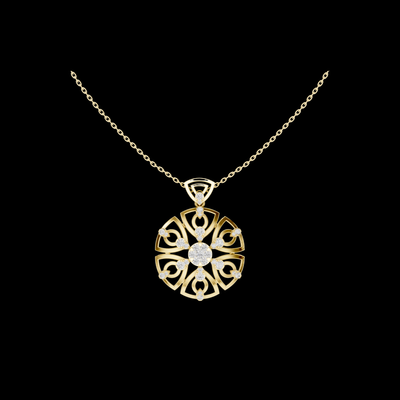
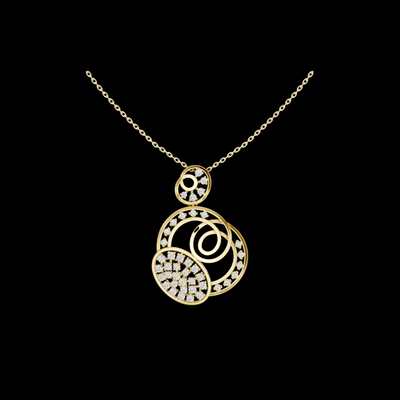
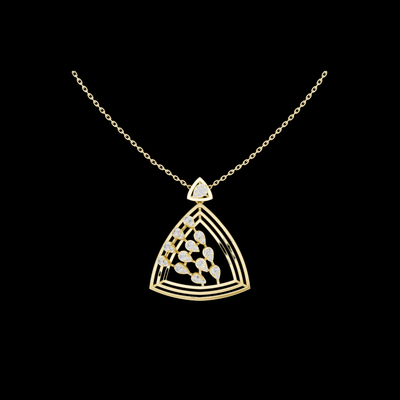
Shop the styles in this guide






How to Buy a Solitaire Pendant, Step by Step
- Set your budget: include the chain, which matters as much as the setting for everyday wear.
- Pick the shape: choose the outline you love first; everything else follows from it.
- Choose the stone: lab grown diamond for a real diamond, or moissanite for extra fire at a lower cost.
- Prioritise cut: then choose colour and clarity that look clean and white on the neck.
- Decide on size: use millimetres, not just carats, to picture the stone on you.
- Select the setting and bail: prongs for sparkle, a bezel for security, and a bail that suits the chain.
- Choose metal and chain length: 16 or 18 inches in the same metal as the setting suits most people.
- Check the paperwork: ask for the grading report for larger stones and read the returns policy.
Wearing, Layering and Gifting
Everyday wear
A 0.50 to 1.00 carat solitaire on an 18 inch chain is the classic daily pendant. It sits just below the collarbone, shows above most necklines and works with both work and weekend clothes.
Layering
Wear your solitaire on the shortest chain and add longer, simpler chains below it, about 2 inches apart. Keep one focal piece: the solitaire is the star, and the other chains should support it rather than compete.
From day to night
One of the best things about a solitaire is how easily it changes with your outfit. During the day it is a quiet, polished finish with a shirt or knit. In the evening, pair it with a lower neckline and matching diamond studs, or slide it onto a slightly longer chain so it sits in the open space of a V-neck or scoop neck.
For men
Solitaire pendants are not only for women. Men often prefer a bezel setting, a slightly larger stone and a sturdier chain of around 20 to 24 inches, worn either over or under a shirt.
As a gift
A solitaire pendant is one of the safest fine jewelry gifts because it does not need sizing. It suits birthdays, anniversaries, graduations, a new baby and milestone celebrations. A heart or pear shape adds a personal touch, while a round stone is the most universal choice. Browse gifts for her for more ideas.
Caring for Your Pendant
- Clean regularly: lotion and skin oils collect under the stone and dull the sparkle. Soak in warm water with a drop of mild soap and brush gently behind the setting.
- Check the prongs: a few times a year, make sure the diamond does not move and the prongs are not bent.
- Remove for some activities: take it off for swimming, the gym, cleaning and sleep to protect the chain and clasp.
- Store flat: lay the chain flat or hang it so it does not tangle or kink.
Solitaire Pendants at Ivevar
We hand-set solitaire pendants in our Surat workshop in many shapes and sizes. Every piece ships free worldwide, with 30-day easy returns. Browse lab grown diamond pendants.
Want a specific shape, carat weight or metal? We make custom jewelry, including custom lab diamond pendants, and many of our lab grown diamonds come with IGI certificates. Book a virtual appointment to compare stones before you choose.
Shop Solitaire Pendants
 Cushion Solitaire PendantShop Now
 Emerald Solitaire PendantShop Now
 Heart Solitaire PendantShop Now
 Princess V Prong PendantShop Now
 Round Partial Bezel PendantShop Now
 Marquise Solitaire PendantShop Now
Swipe to see more → | View all pendants
Frequently Asked Questions
What size diamond pendant is best for everyday?
About 0.50 to 1.00 carat is the most popular everyday range.
Which shape sparkles most?
Round brilliant diamonds give the most sparkle.
What chain length should I choose?
16 or 18 inches suits most necklines.
Is a bezel pendant less sparkly?
Slightly, but it is more secure and still bright.
Can I wear a solitaire pendant every day?
Yes. Choose a sturdy chain and secure setting.
What clarity do I need for a pendant?
An eye-clean stone is enough. VS2 or SI1 often looks perfectly clean on the neck.
Do lab grown diamond pendants come with a certificate?
Many lab grown diamonds, especially larger stones, come with an IGI or GIA grading report.
Is moissanite a diamond?
No. Moissanite is a separate gemstone. It is very hard (9.25 on the Mohs scale) and shows more rainbow fire than diamond.
Should I choose a fixed or sliding pendant?
A fixed pendant stays centered on the chain. A sliding pendant can move a little, but it is easier to put on a different chain later.
Can I upgrade the chain later?
Yes, if the bail is wide enough for the new chain's clasp to pass through. Check the bail opening before you buy.
Why does my pendant keep flipping?
Usually the pendant is top-heavy or the chain is too thin. A hidden bail, a sturdier chain or a fixed pendant helps it sit facing forward.
The Bottom Line
Pick a shape you love, a size that fits your style, an excellent cut, a secure setting and a 16 to 18 inch chain for a pendant you will wear for years.
Related Guides
- Day to night with lab grown diamond pendants
- Types of lab grown diamond necklaces
- Diamond shapes guide

Author Bio
Aumsri Pradhan
Founder, Ivevar Luxury
Aumsri Pradhan is the founder of Ivevar Luxury, a Surat-based fine jewelry brand that designs and handcrafts lab grown diamond and moissanite jewelry in its own workshop. She leads the brand's design and customer experience, from engagement rings and bridal sets to custom pieces made to each client's story. Through the Ivevar blog, she shares practical guidance on lab grown diamonds, moissanite, diamond grading and ring design to help buyers choose with confidence.


