

 Engagement Rings
 Anniversary Rings
 Solitaire Rings
 Halo Rings
 Toi Moi Rings
 Three Stone Rings
 Nature Inspired Rings
 Rose Cut Rings
 Fancy Color Rings
 Antique Cut Rings
 Wedding Rings
 Wedding Band Rings
 Exclusive Lab Grown Diamond Rings
 All Lab Grown Diamond Ring
 Engagement Rings
 Three Stone Rings
 Fancy Color Rings
 Antique Cut Rings
 Daily Wear Rings
 Wedding Band Rings
 Exclusive Moissanite Rings
 Earrings
 Bracelet
 Pendant
 Necklace
 Men's Ring
 Bridal Sets
 Rings
 Earrings
 Tennis chain
 Cuban Chains
 Custom Pendant
 Custom Ring
 Custom Teeth Grillz
 Round
 Oval
 Cushion
 Marquise
 Pear
 Emerald
 Heart
 Princess
 Rose Cut
 Radiant
 Antique Cut
 Brooch
 Cufflink
 Keychain
 Unique Products
 +91-9265051773
 Virtual Appointment
 log in




Short answer: To layer necklaces well, wear two to four necklaces spaced about 2 inches apart (for example 16, 18 and 20 inches), mix chain textures and pendant sizes, and put the largest or most eye-catching piece at the bottom. Keep one metal color or mix on purpose, and choose different chain styles so they are less likely to tangle. Double-layer necklaces are an easy shortcut, since the spacing is already done for you.
Layered necklaces look effortless, but the best stacks are planned. The difference between a polished layered look and a tangled cluster usually comes down to three things: length, weight and spacing. Get those right and almost any combination of chains and pendants will work together.
This guide walks through the formula we use when styling layered necklaces, how to adapt it to your neckline and face shape, which chains and pendants pair well, how to mix metals and stones, and how to keep everything from twisting into a knot by lunchtime.
The Layering Formula
Most good stacks follow the same basic structure: a short, light piece close to the neck, a medium piece with a small focal point, and a longer piece that carries the main pendant. Think of it as a frame that narrows toward a point, drawing the eye downward.
| Layer | Length | Idea |
|---|---|---|
| Top | 14 to 16 in | A delicate chain or small diamond station |
| Middle | 18 in | A small pendant or charm |
| Bottom | 20 to 22 in | A statement pendant or drop |
A 16-inch chain usually sits at the base of the neck or on the collarbone, an 18-inch chain falls just below the collarbone, and a 20-inch chain sits a little higher than the top of the chest. Where a chain actually lands depends on your neck size and build, so treat these as starting points and adjust with an extender if needed.
Why 2 inches matters
When chains are less than about 1.5 inches apart, pendants overlap and the layers read as one messy line. When they are much more than 3 inches apart, the stack loses its connection and looks like separate necklaces that happen to be worn together. Around 2 inches gives each piece its own space while keeping the group cohesive.
Two-layer and four-layer versions
- Two layers: try 16 and 18 inches, or 18 and 20 inches. Put a fine chain on top and a pendant below. This is the easiest stack for office and daily wear.
- Three layers: 16, 18 and 20 inches is the classic combination shown in the table above.
- Four layers: add a 14-inch choker or a 24-inch long chain. Keep at least two of the four very fine so the look stays light.
Layering Rules That Always Work
- Space them out: about 2 inches between each necklace.
- Vary the chains: mix cable, box and bead chains for texture.
- Grow the pendants: small at the top, largest at the bottom.
- Pick a metal strategy: one color for polish, or mix intentionally.
- Keep a theme: circles, florals or geometric shapes tie the look together.
- Choose one hero: only one piece should be the obvious focal point. Everything else supports it.
- Match the weight to the outfit: fine chains for light fabrics and summer necklines, slightly heavier chains for knits and structured clothing.
These rules work because they create visual order. Your eye naturally travels from the smallest detail at the top to the largest at the bottom. When the hero piece sits in the middle or at the top, the stack can look top-heavy and unfinished.
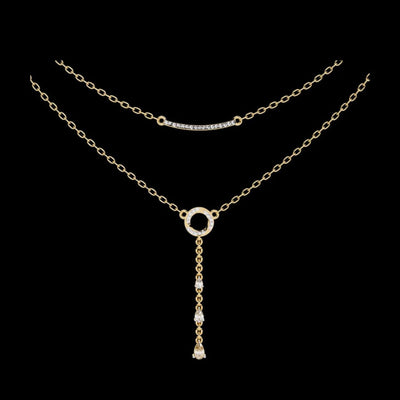
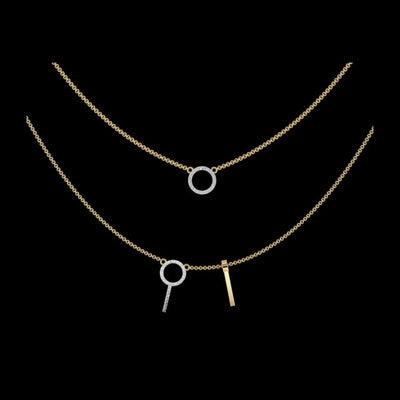
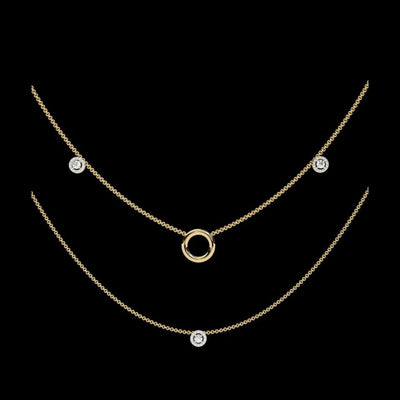
 Shown: Double Layer Pave Circle Lab Grown Diamond Station Necklace
Choosing Chains for Layering
The chain matters as much as the pendant. Different chain styles catch light differently and, just as importantly, behave differently when worn together.
| Chain style | Look | Best layer position |
|---|---|---|
| Cable chain | Simple oval links, classic and light | Any layer; ideal for pendants |
| Box chain | Square links with a smooth, structured feel | Middle or bottom |
| Bead or satellite chain | Small beads spaced along a fine chain | Top, as a texture layer |
| Diamond station chain | Small stones set at intervals | Top or middle |
| Paperclip chain | Long, flat open links | Middle or bottom |
| Tennis necklace | Continuous line of set stones | Top, as the sparkle anchor |
A good rule is to use no more than one heavy or highly textured chain in a stack. If you wear a tennis necklace or a bold paperclip chain, pair it with plain cable chains so the eye has somewhere to rest.
Tip: Chains of the same style and thickness tangle most because they move in exactly the same way. Combining a box chain with a cable chain, or a station chain with a bead chain, helps each layer sit separately.
Matching Layers to Your Neckline
The neckline of your outfit decides how much space you have to work with. Layering into the wrong neckline is the most common reason a stack looks crowded.
- V-neck: the best neckline for layering. Follow the V with lengths that drop toward the point, with your pendant sitting just above the deepest part of the neckline.
- Scoop neck: use two or three layers that sit inside the curve. Rounded pendants such as circles and hearts echo the shape nicely.
- Crew neck: wear layers over the fabric at 18 to 24 inches, or keep everything short and on the skin above the neckline. Avoid chains that land right on the seam.
- Collared shirt: one or two fine chains, open at the collar, look clean and professional.
- Strapless and off-shoulder: plenty of room. A choker plus one or two pendants frames the collarbones well.
- Turtleneck: skip short chains and wear one or two long pendants over the knit.
Layering for Your Build and Face Shape
Necklaces frame the face, so the lines they create can soften or lengthen your features. These are guidelines rather than rules, but they help when a stack does not look quite right and you cannot say why.
- Round or soft features: longer layers that form a V, such as an 18-inch chain with a 22-inch drop pendant, create vertical lines that lengthen the neck.
- Long or narrow face: shorter layers and chokers at 14 to 16 inches add width and balance. Round pendants work especially well.
- Angular or square jaw: curved shapes like circles, hearts and soft florals contrast nicely with strong lines.
- Petite frame: keep chains fine and pendants small. Two or three delicate layers look better than one heavy one.
- Taller or broader frame: you can carry slightly thicker chains, longer lengths and larger pendants without them looking overwhelming.
- Short neck: skip chokers and start your stack at 16 or 18 inches so the neck looks longer.
If you are unsure, take a photo of yourself wearing two possible stacks. Seeing them side by side on a screen often makes the better choice obvious.
Layering Ideas
Minimal everyday
A dainty diamond chain plus a small solitaire pendant. This two-layer stack is light enough for work, comfortable enough to forget you are wearing it, and simple enough to go with almost anything.
Romantic
A floral pendant at 18 inches with a heart or petal charm at 20 inches. Soft curves and rounded shapes keep the mood gentle. Yellow or rose gold adds warmth.
Modern geometric
Circle and bar pendants on different chain textures. Try a circle on a cable chain at 18 inches and a vertical bar on a box chain at 20 inches. Clean lines suit white gold or sterling silver.
Evening
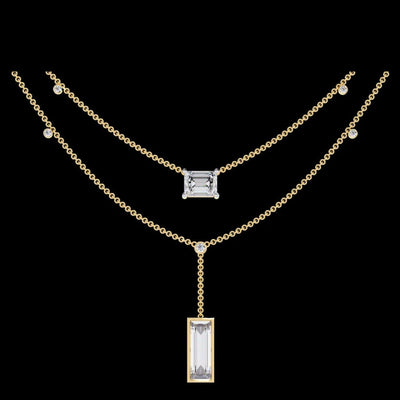
A diamond station necklace with a lariat or statement drop below. For dressier events, a tennis necklace at the top with a single larger pendant beneath creates a polished, high-sparkle look.
Personal story
Combine an initial pendant, a symbol that means something to you, and a plain chain. This is a lovely way to wear gifts from different people or different milestones together.
Mixing Metals and Stones
You can keep every layer in one metal for a calm, coordinated look, or mix metals on purpose. Mixing works best when each color appears more than once, or when one piece bridges the colors, such as a two-tone pendant.
- Single metal: the safest and most elegant option, especially for formal wear.
- Two metals: for example yellow gold and white gold. Repeat each at least twice across your necklaces, rings or bracelets.
- Three metals: possible, but keep the pieces very fine so the look stays intentional.
Stones can be mixed too. Lab grown diamonds and moissanite sit together comfortably in a stack. Lab grown diamonds are chemically, physically and optically the same as mined diamonds, while moissanite has a higher refractive index (about 2.65 compared with about 2.42 for diamond), so it shows more colorful sparkle. Next to each other at necklace distance, most people will simply see bright, clean stones.
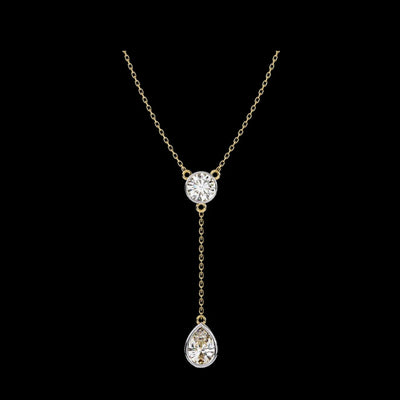
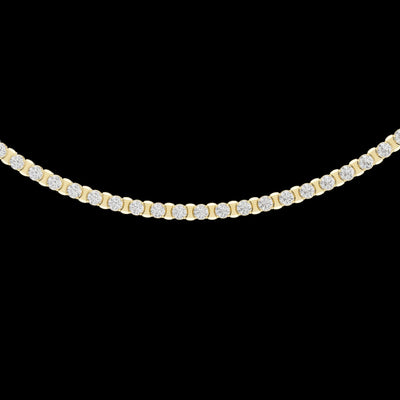
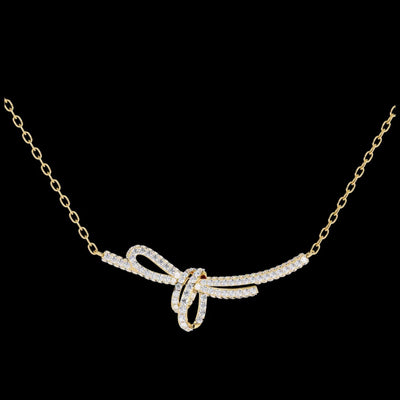
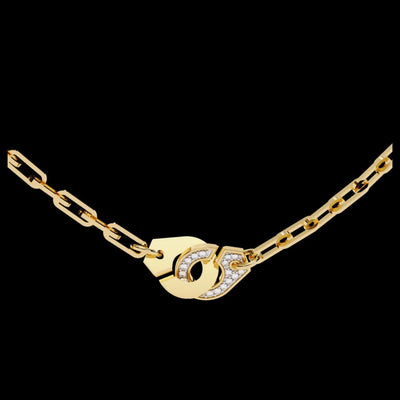
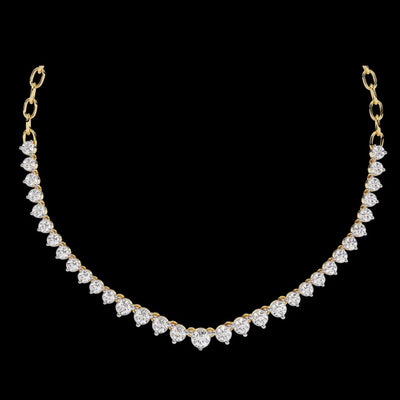
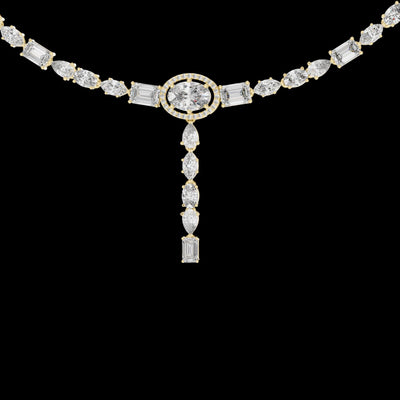
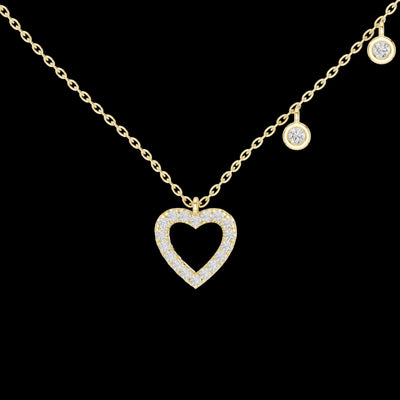
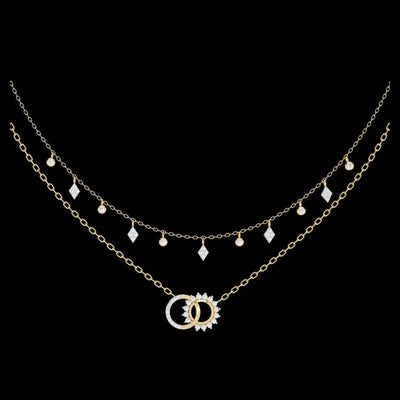
Shop the styles in this guide



Building a Layering Collection Step by Step
You do not need to buy a full stack at once. Most people build their layers over time, and the order you buy in makes a difference to how versatile each piece is.
- Start with a fine chain and a small pendant at 18 inches: this is the piece you will wear most, alone or as the middle layer. A small solitaire, a circle or an initial works with nearly everything.
- Add a short texture layer at 16 inches: a diamond station chain or a bead chain adds sparkle above your pendant without competing with it.
- Add a longer focal piece at 20 inches: this is where a slightly larger or more detailed pendant belongs, such as a drop, a cluster or a symbol with personal meaning.
- Finish with an occasional piece: a tennis necklace for evenings, or a long 24-inch chain for sweaters and high necklines.
Buying in this order means every new necklace works with what you already own. It also helps to stick with one or two metal colors while you are building, so you are never left with a piece that does not match anything.
Fine pendant or larger stone?
For the top and middle layers, small stones of about 0.10 to 0.30 carat are usually enough; they add light without weight. For the bottom layer, a bigger stone or a cluster gives the stack a clear focal point. When choosing a solitaire for layering, cut quality matters more than size, because a well-cut stone sparkles even when it is small and moving with you. Lab grown diamonds graded by IGI or GIA let you compare stones by the 4Cs, and moissanite offers a bright alternative at a lower cost.
Common Layering Mistakes
- Chains too close together: if pendants touch or overlap, lengthen the bottom chain with an extender or swap it for a longer one.
- Too many focal points: three large pendants compete for attention. Keep one bold piece and make the rest quieter.
- All the same chain: identical chains tangle more and look flat. Mix at least two textures.
- Ignoring the outfit: layers that land on a busy print or a thick seam disappear. Check the stack against what you are wearing in a mirror.
- Forgetting earrings: a full necklace stack usually looks best with simple studs or small hoops rather than large drops.
- Heavy chains on fine fabric: thick chains can pull at silk and light knits. Save them for structured clothing.
How to Prevent Tangling
- Vary chain weight and style: different chains move differently, so they cross each other less.
- Use a layering clasp: a connector or layering clasp keeps chains separated at the back of the neck.
- Choose pre-layered designs: double-layer necklaces have fixed spacing and one clasp, so they cannot drift together.
- Add a little weight at the bottom: a slightly heavier pendant on the longest chain keeps it hanging straight.
- Store each necklace separately: hang them or keep each in its own pouch so they do not knot in your drawer.
- Put them on in order: fasten the longest first and the shortest last, then check they all hang freely.
Caring for layered necklaces
Fine chains are strong when worn properly but can kink if they are pulled or stored badly. A few habits keep them in good shape.
- Take them off for sport and swimming: sweat, chlorine and sudden pulls are hard on fine chains and clasps.
- Put perfume on first: let lotion and perfume dry before you fasten your necklaces.
- Clean gently: warm water, a little mild soap and a soft brush bring back the sparkle on diamond and moissanite pendants. Dry with a soft cloth.
- Check clasps: if a clasp feels loose or a jump ring has opened, have it repaired before wearing it again.
Layering Necklaces at Ivevar
We handcraft double-layer necklaces and layering pendants in our Surat workshop, with lab grown diamonds and moissanite in gold and sterling silver. Every piece ships free worldwide, with 30-day easy returns. Browse necklaces and pendants, or explore moissanite necklaces for a bright, budget-friendly layer. If you have a specific stack in mind, our team can help you plan lengths and styles over a virtual appointment.
Shop Layering Necklaces and Pendants
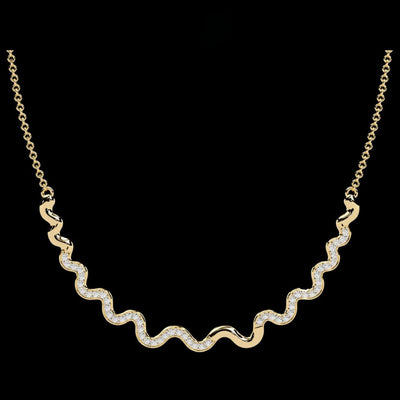
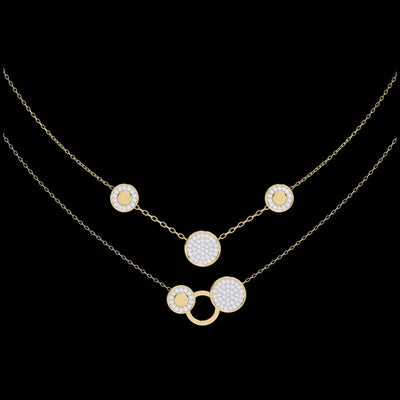
 Double Layer Circle NecklaceShop Now
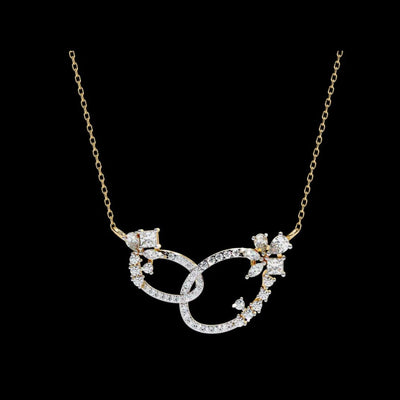
 Interlocking Circle NecklaceShop Now
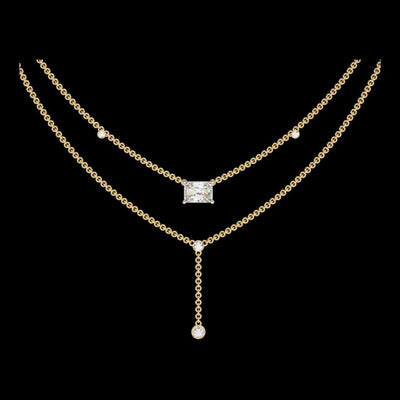
 Circle Drop Bar NecklaceShop Now
 Swirl Petal Layering PendantShop Now
 Floret Layering PendantShop Now
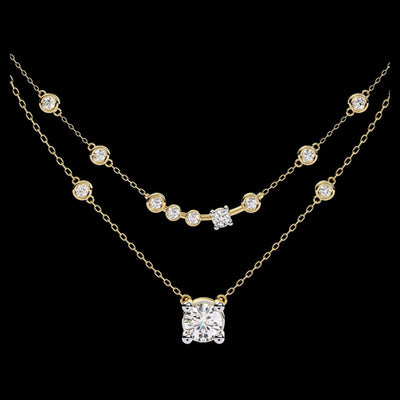
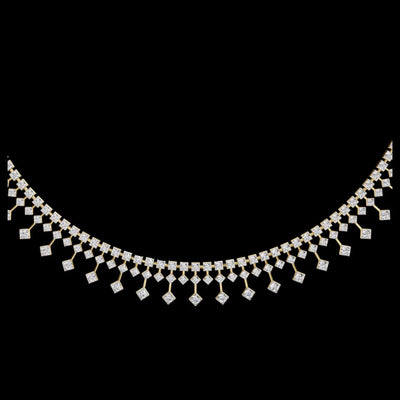
 Chandelier Droplet PendantShop Now
Swipe to see more → | View all necklaces
Frequently Asked Questions
How many necklaces should I layer?
Two to four usually looks balanced. Two is easiest for everyday wear; three is the classic layered look; four works best when most of the chains are very fine.
What lengths layer best?
16, 18 and 20 inches is a classic combination. Adjust by an inch or two depending on your neck size and neckline.
Can I layer gold and white gold?
Yes, if you repeat each color so it looks intentional. A two-tone piece can help connect the colors.
How do I stop necklaces tangling?
Vary chain styles, use a layering clasp, or choose double-layer designs. A slightly heavier pendant on the longest chain also helps.
Should all pendants match?
No, but a shared theme helps the look feel cohesive, such as all rounded shapes, all florals or all geometric pieces.
Can I sleep in layered necklaces?
It is better not to. Layers are more likely to tangle and kink overnight. Take them off and store them separately.
Can I layer a pendant with a tennis necklace?
Yes. Wear the tennis necklace short, at 15 to 16 inches, and the pendant on a plain chain about 2 inches longer.
Is layering suitable for men?
Yes. Two chains of different weights, such as a fine chain with a medallion and a heavier chain without a pendant, is a popular look.
The Bottom Line
Space your necklaces about 2 inches apart, mix chain textures, grow pendant size toward the bottom, and keep a theme. Start with two layers, add a third once you are comfortable, and let one piece be the star.
Related Guides

Author Bio
Aumsri Pradhan
Founder, Ivevar Luxury
Aumsri Pradhan is the founder of Ivevar Luxury, a Surat-based fine jewelry brand that designs and handcrafts lab grown diamond and moissanite jewelry in its own workshop. She leads the brand's design and customer experience, from engagement rings and bridal sets to custom pieces made to each client's story. Through the Ivevar blog, she shares practical guidance on lab grown diamonds, moissanite, diamond grading and ring design to help buyers choose with confidence.


