

 Engagement Rings
 Anniversary Rings
 Solitaire Rings
 Halo Rings
 Toi Moi Rings
 Three Stone Rings
 Nature Inspired Rings
 Rose Cut Rings
 Fancy Color Rings
 Antique Cut Rings
 Wedding Rings
 Wedding Band Rings
 Exclusive Lab Grown Diamond Rings
 All Lab Grown Diamond Ring
 Engagement Rings
 Three Stone Rings
 Fancy Color Rings
 Antique Cut Rings
 Daily Wear Rings
 Wedding Band Rings
 Exclusive Moissanite Rings
 Earrings
 Bracelet
 Pendant
 Necklace
 Men's Ring
 Bridal Sets
 Rings
 Earrings
 Tennis chain
 Cuban Chains
 Custom Pendant
 Custom Ring
 Custom Teeth Grillz
 Round
 Oval
 Cushion
 Marquise
 Pear
 Emerald
 Heart
 Princess
 Rose Cut
 Radiant
 Antique Cut
 Brooch
 Cufflink
 Keychain
 Unique Products
 +91-9265051773
 Virtual Appointment
 log in




Short answer: To stack bracelets beautifully, start with one anchor piece (such as a diamond bangle or tennis bracelet), add one or two slimmer pieces with different textures (a station bracelet, rope bangle or chain), and finish with a personal touch like a charm or bolo bracelet. Keep the stack to three to five pieces, mix rigid and flexible styles, and keep your watch on the other wrist or make it part of the stack on purpose.
A well-built arm stack looks effortless and personal, but it rarely happens by accident. The best stacks follow a few simple rules about balance, texture and fit. This guide gives you a formula anyone can follow, explains how to choose widths and metals, shows ready-made stack ideas for different occasions, and covers how to stop diamond pieces from damaging each other.
The Bracelet Stack Formula
Think of a stack as a small team where each piece has a job. When every bracelet plays a different role, the result looks deliberate instead of crowded.
| Role | What it does | Ideas |
|---|---|---|
| Anchor | Sets the tone and draws the eye | A diamond bangle, bypass bangle or tennis bracelet |
| Texture | Adds contrast and movement | A twisted rope bangle or chain bracelet |
| Sparkle accent | Adds light between bolder pieces | A bezel station or open circle bracelet |
| Personal touch | Makes the stack yours | A charm bangle or adjustable bolo |
You do not need all four roles every day. Two pieces (an anchor and a texture piece) already make a stack. Add the accent and personal touch when you want more presence.
Start with the anchor
Your anchor is the piece you would happily wear alone. It is usually the widest or brightest bracelet in the stack, such as a hinged diamond bangle, a pear bypass bangle or a tennis bracelet. Build everything else around it, so choose an anchor in the metal and style you wear most.
Add contrast, not copies
Three identical bangles can look striking, but most stacks are more interesting when each piece differs in at least one way: shape, width, texture or stone. A smooth bangle next to a twisted rope bangle, or a rigid bangle next to a fine chain, lets each piece stand out.
Stacking Rules
- Mix rigid and flexible: bangles hold shape; chains soften the look and fill gaps.
- Vary widths: pair one bolder piece with slimmer ones so the eye has somewhere to rest.
- Choose a metal plan: one metal for polish, or mix metals with repetition so the mix looks intentional.
- Protect your pieces: avoid stacking hard diamonds directly against soft metals every day.
- Balance your arms: a watch on one wrist, a stack on the other.
- Edit before you leave: if the stack feels heavy or noisy, take off one piece. It almost always looks better.
Textures that stack well together
Texture is what makes a single-metal stack interesting. Some reliable pairings:
- Polished and twisted: a high-polish bangle beside a twisted rope bangle shows off both surfaces.
- Solid and open: a solid diamond line next to an open circle or open marquise link adds air and lightness.
- Continuous and spaced: a tennis bracelet with an unbroken line of stones pairs well with a station bracelet, where stones are spaced along a chain.
- Geometric and soft: square or angular links contrast nicely with round bezels and smooth chains.
When in doubt, lay your bracelets side by side on a table before putting them on. If two pieces look almost the same, keep one and swap the other for something with a different surface or shape.
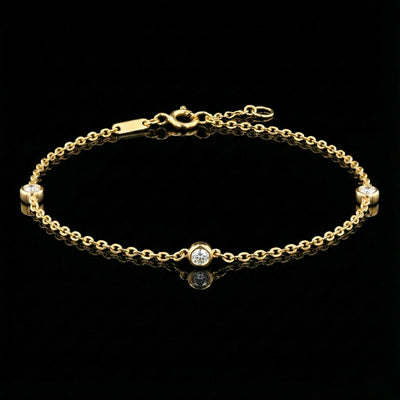
 Shown: Three Bezel Set Round Lab Diamond Station Bracelet
Choosing Widths and Proportions
Proportion is the difference between a stack that looks curated and one that looks cluttered. Your wrist size matters most.
| Wrist | Number of pieces | Width guide |
|---|---|---|
| Slim | 2 to 3 | Mostly fine pieces; one anchor up to medium width |
| Average | 3 to 4 | One medium anchor, two or three fine pieces |
| Larger | 4 to 5 | A wider anchor can lead; mix in medium and fine pieces |
A useful rule is odd numbers. Three or five pieces tend to look more natural than two or four, because the eye reads an odd group as a single composition. It is a guide, not a law, so trust what you see in the mirror.
Where to place the anchor
Most people put the anchor closest to the hand, where it is seen first, then add finer pieces further up the wrist. You can also place the anchor in the middle with fine pieces on either side for a symmetrical look. Hinged bangles stay where you put them, which makes them reliable anchors; slip-on bangles move around and tend to settle on top of other pieces.
How each bracelet type behaves in a stack
- Hinged bangles: stay put and make the most reliable anchors. Their rigid shape gives the stack a clean edge.
- Slip-on bangles: move freely and add a gentle clink. They slide over other pieces, so wear them furthest up the arm or accept a looser, layered look.
- Cuffs: work best as the single bold piece. Pair a cuff with one or two fine chains rather than other rigid pieces, which can crowd the opening.
- Tennis bracelets: bring continuous sparkle. Because every stone is exposed, give them a smooth neighbour, not another prong-set line.
- Chains and bolos: fill gaps, soften rigid lines and are the easiest pieces to adjust.
Mixing Metals the Right Way
Mixing yellow, white and rose gold is popular, but it works best with a plan.
- Repeat each metal: if you add one white gold piece to a yellow gold stack, add a second white touch, or choose a two-tone piece that links them.
- Let one metal lead: roughly two-thirds of one metal and one-third of another looks balanced.
- Use a bridge piece: a bracelet that combines two metals ties a mixed stack together.
- Match your other jewelry: if your rings are white gold, a white gold anchor connects your hands to your stack.
Ivevar makes bracelets in 10K, 14K and 18K gold, which makes it easy to plan a single-metal stack or a deliberate mix. Some designs are also available in 925 sterling silver.
Adding colour
A coloured stone is an easy way to make a stack feel personal. A single bracelet with sapphires, a fancy colour stone or a rainbow of gems works as a focal point between two plain or white diamond pieces. Keep the colour to one piece, or repeat one shade twice, so it reads as a choice rather than an accident. Our rainbow sapphire bracelets are designed to sit alongside white diamond pieces. Birthstone colours are another meaningful way to add colour, especially for gifts.
Stack Ideas
Everyday minimal
A bezel station bracelet with a slim open circle bracelet. Both sit low and smooth, so they work at a desk and under sleeves. Bezel settings wrap the stone in metal, which protects edges and avoids snagging.
Modern texture
A pear bypass bangle, a twisted rope bangle and a fine chain. The bypass shape crosses over itself, the rope adds texture, and the chain keeps the stack from feeling stiff.
Personal and playful
A charm bangle with hearts plus an adjustable bolo bracelet. Charms carry meaning, and the bolo lets you fine-tune the fit so the two pieces sit at different heights.
Evening glamour
A tennis bracelet anchored by two slim diamond bangles. Keep earrings simple so the wrist leads the look.
Wedding and festive
For weddings and celebrations, a wider stack of slim diamond bangles in one metal looks rich without clashing with traditional outfits. Add a tennis bracelet in the centre for extra light.
Office classic
One slim hinged bangle and one fine link bracelet. Quiet, comfortable and easy to wear for a full working day.
Stacks for men
Men's stacks follow the same formula with bolder proportions. A slim diamond tennis bracelet or link bracelet next to a plain metal cuff or a bead bracelet looks modern and easy to wear. Keep the count lower, usually two or three pieces, and match the metal to the watch on the other wrist. Matte or brushed finishes beside one polished diamond piece add contrast without looking busy.
Tip: Build your stack on the wrist you use less. Your dominant hand writes, types and opens doors, so pieces on that side take more knocks and rub against surfaces more often.
Lab Grown Diamonds and Moissanite in a Stack
You can mix stone types in one stack. Lab grown diamonds are chemically, physically and optically identical to mined diamonds and score 10 on the Mohs hardness scale. Moissanite scores 9.25 and has a higher refractive index (about 2.65 against diamond's 2.42), so it throws more colourful flashes of fire. Side by side, a careful eye may notice that moissanite shows more rainbow colour, while diamond looks whiter and crisper.
If that difference bothers you, keep each stack to one stone type. If you enjoy the contrast, put a moissanite bracelet next to a plain metal piece rather than directly beside a diamond bracelet, and the two will read as different textures rather than a mismatch. Many Ivevar lab grown diamonds come with IGI certificates, which is useful if you want documented quality for your anchor piece.
Stacking With a Watch
A watch can be part of the stack, but it needs care.
- Use a buffer: place a plain metal bangle, a soft bead piece or a leather band between the watch and any diamond bracelet.
- Keep it light: one or two slim pieces next to a watch look neat; more can crowd it.
- Match the tone: a gold watch pairs naturally with gold bracelets; a steel watch suits white gold or silver tones.
- Mind the crystal: diamonds are harder than most watch glass and steel, so direct contact can scratch the watch.
Watch size matters too. A large, thick watch case already takes up much of the wrist, so pair it with only one slim bracelet on the same arm, or move the stack to the other wrist. A small, slim dress watch can sit comfortably beside two or three fine pieces as part of a coordinated stack.
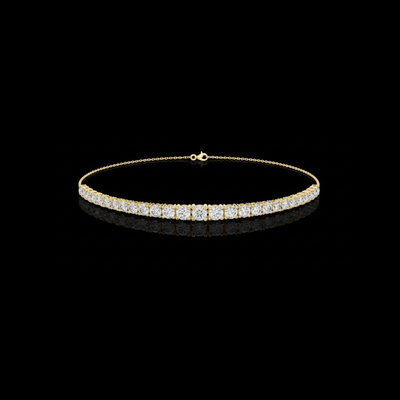
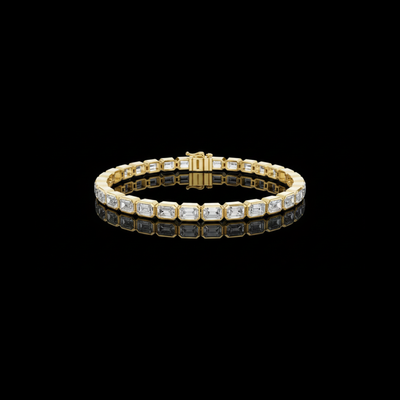
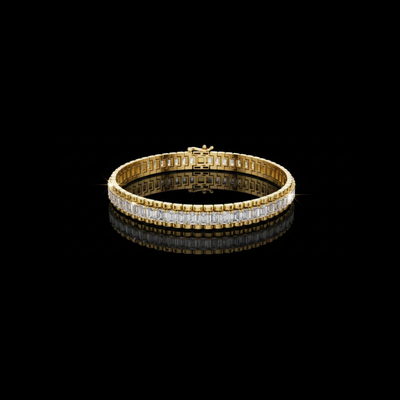
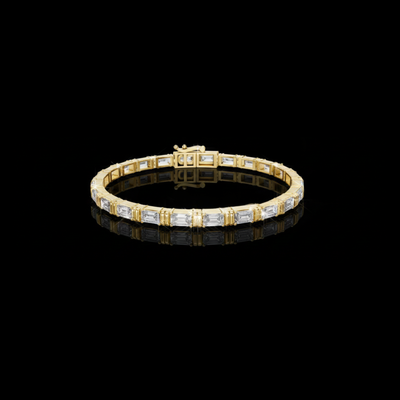
Shop the styles in this guide








Sizing Tips for Stacks
- Vary the fit: bracelets sit at different points on the wrist; slightly varied sizes look natural.
- Use adjustables: bolo and sliding bracelets make fitting a stack easy.
- Prefer hinged bangles: they stay in place better than loose slip-ons.
- Measure first: measure your wrist and add about 0.5 to 1 inch for link bracelets and hinged bangles; for slip-on bangles, measure the widest part of your hand.
- Size the anchor snug: a closer-fitting anchor stops the rest of the stack sliding over it.
Protecting a Stacked Collection
Bracelets in a stack touch each other all day. Over time that contact can scuff metal and, in rare cases, loosen settings.
- Separate hard and soft: diamonds can scratch gold, so put plain metal pieces between diamond bracelets where you can.
- Rotate pieces: do not wear the same full stack every day; give delicate pieces a rest.
- Check prongs and clasps: look at settings and clasps every few months, especially on tennis bracelets.
- Take it off for activity: remove your stack for the gym, swimming, cleaning and sleep.
- Store separately: keep each bracelet in its own pouch or compartment so they do not scratch in a drawer.
- Clean regularly: warm water, mild soap and a soft brush restore sparkle quickly.
Tip: If two bracelets keep catching on each other, swap their order or replace one with a smooth bezel-set or plain metal piece. Prong-set stones next to fine chains are the most common snag.
Common stacking mistakes
- Too many anchors: two wide statement pieces compete for attention. Let one lead.
- Everything the same width: a row of identical widths looks flat. Vary at least one piece.
- Prong against prong: two prong-set diamond lines side by side rub and snag. Separate them.
- Loose slip-ons over a tennis bracelet: a heavy bangle sliding over a line of stones every time you move puts strain on the settings.
- Ignoring the outfit: long, close-fitting sleeves need slimmer stacks; short sleeves and bare wrists can carry more.
Building a Stack Over Time
You do not need to buy a whole stack at once. A sensible order:
- First: an anchor you love wearing alone, such as a slim diamond bangle or tennis bracelet.
- Second: a texture piece in the same metal, such as a rope bangle or chain.
- Third: a sparkle accent, such as a station or open circle bracelet.
- Later: personal pieces like charms, initials or a coloured stone to mark milestones.
This approach makes every purchase wearable on its own and lets the stack tell a story. Bracelets also make thoughtful gifts to add to someone's existing stack. Our gift bracelets are a good place to start.
Bracelets at Ivevar
We handcraft stackable lab grown diamond bracelets in our Surat workshop. Every piece ships free worldwide and comes with 30-day easy returns. If you want a custom piece that fits an existing stack, our team can help through a virtual appointment. Browse lab grown diamond bracelets or explore all bracelets.
Shop Stackable Bracelets
 Three Bezel Station BraceletShop Now
 Open Circle BraceletShop Now
 Marquise Rope BangleShop Now
 Pear Bypass BangleShop Now
 Horizontal Cross BoloShop Now
 Heart Charm BangleShop Now
Swipe to see more → | View all bracelets
Frequently Asked Questions
How many bracelets should I stack?
Three to five usually looks balanced. Slim wrists often look best with two or three pieces.
Can I stack a watch with bracelets?
Yes, but diamonds can scratch watch cases; add a soft or plain metal spacer bracelet between them.
Should all bracelets match?
No. Mixing textures and styles looks more personal. Keep one element consistent, such as metal colour, for cohesion.
Do stacked bracelets damage each other?
They can rub over time; rotate pieces, separate diamond pieces with plain metal, and store them separately.
What is a bolo bracelet?
An adjustable bracelet with a sliding closure, which makes it easy to fit within a stack.
Can I mix gold colours in one stack?
Yes. Repeat each metal at least twice or use a two-tone bridge piece so the mix looks intentional.
Which wrist should I stack on?
Usually the non-dominant wrist, where bracelets take fewer knocks.
Can I stack lab grown diamond and moissanite bracelets together?
Yes. Moissanite shows more colourful fire, so a plain metal piece between them helps the two look intentional.
The Bottom Line
Anchor your stack, add texture and sparkle, finish with something personal, and keep it comfortable with three to five pieces. Plan your metals, protect your diamonds and build slowly, and your stack will feel like yours.
Related Guides

Author Bio
Aumsri Pradhan
Founder, Ivevar Luxury
Aumsri Pradhan is the founder of Ivevar Luxury, a Surat-based fine jewelry brand that designs and handcrafts lab grown diamond and moissanite jewelry in its own workshop. She leads the brand's design and customer experience, from engagement rings and bridal sets to custom pieces made to each client's story. Through the Ivevar blog, she shares practical guidance on lab grown diamonds, moissanite, diamond grading and ring design to help buyers choose with confidence.


